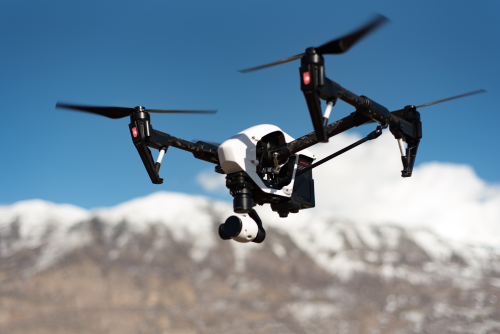
If you want real revenue from drone inspection work, the report is the product. Flight time gets you access, but usable reporting is what helps a client approve repairs, prioritize maintenance, document change, or justify a budget. How to package inspection reporting well comes down to one shift: stop selling “a drone job” and start selling clear, decision-ready deliverables.
Quick Take
- Clients rarely want raw footage by itself. They want evidence organized into findings and next steps.
- The easiest way to sell inspection work is to standardize 3 to 4 report packages instead of quoting every job from scratch.
- Price the office work separately from the flying. Annotation, review, reporting, revisions, and data handling are where margin gets lost.
- Be very clear about your role: observed condition is not the same as engineering diagnosis.
- Recurring inspections usually produce better revenue than one-off jobs because the workflow gets faster and the value becomes easier for the client to see.
- A strong inspection package usually includes a summary, a findings log, annotated imagery, limitations, and a clear handoff.
Why packaging matters more than flying time
A lot of pilots try to sell inspection work like this:
- 90-minute site visit
- 4K video
- 40 photos
- edited highlight reel
That sounds busy, but it does not sound useful.
Most clients are not buying drone minutes. They are buying reduced uncertainty. They want to know:
- Is there visible damage?
- Where is it?
- How serious does it appear?
- What should happen next?
- Can this be tracked over time?
If your offer is just “I’ll fly and send media,” the client still has to do the hard part themselves. That makes you easy to compare, easy to negotiate down, and easy to replace.
If your offer is “I’ll deliver a roof condition report with annotated findings, area references, maintenance priority labels, and a clean PDF your team can circulate internally,” you are no longer selling airtime. You are selling decision support.
That is where real revenue starts.
Start with the client’s actual question
Before you build packages, figure out what decision the report is supposed to support. This is the fastest way to avoid overselling, underpricing, or delivering something the client never really needed.
Ask these questions on every inspection lead:
-
What asset is being inspected?
Roof, façade, solar array, tower, warehouse, construction site, bridge, industrial plant, or something else. -
What triggered the request?
Routine maintenance, storm event, leak, warranty issue, handover, investor due diligence, insurance documentation, or change monitoring. -
Who will read the report?
A property manager, maintenance supervisor, insurer, engineer, asset owner, or procurement team. -
What action should the report help them take?
Approve repair work, call in a specialist, document condition, compare over time, or create a contractor punch list. -
How quickly do they need it?
Same day, next business day, or within a standard reporting window. -
What format is easiest for their team to use?
PDF, spreadsheet issue log, cloud folder, map, 3D model, or a mix.
These answers shape the package.
For example:
- A small contractor may only need an evidence pack to support a repair quote.
- A facility manager often needs a report that prioritizes issues and helps allocate maintenance budget.
- An engineering firm may want organized image evidence plus a structured dataset they can interpret themselves.
- A recurring asset owner may care less about flashy visuals and more about consistency month to month.
Build packages around use, not around gear
“Bronze, Silver, Gold” packages are common, but they often force the client to decode what those tiers mean. A better approach is to name packages by the job they do.
Four inspection packages that are easy to sell
| Package | Best for | Core deliverables | Revenue note |
|---|---|---|---|
| Evidence Pack | Small contractors, insurers, property managers | Organized media set, short summary, labeled photos, basic observations | Fast to produce and good for minimum-fee jobs, but weak if the client needs prioritization |
| Action Report | Facility teams, asset owners, maintenance managers | Executive summary, annotated imagery, findings log, simple priority labels, next-step guidance | Usually the best all-round commercial package |
| Baseline + Monitoring | Campuses, solar sites, repeated maintenance programs, construction change tracking | Initial benchmark report, repeat capture plan, periodic change reports, trend summary | Strongest recurring revenue model |
| Data Handoff Package | Engineering firms, consultants, enterprise teams | Structured dataset, quality-control notes, organized folders, optional orthomosaic or 3D deliverables where appropriate | Higher-value work, but only if your capture and file management are disciplined |
A few notes on these packages:
Evidence Pack
This is the simplest product. It works when the client mainly needs visual proof.
Typical contents:
- short site summary
- clearly named image set
- area or asset references
- 10 to 30 labeled stills
- optional short walkthrough video
This is not a full analysis product. Do not present it like one.
Action Report
This is where many pilots should focus first. It is specific enough to create real value but simple enough to standardize.
Typical contents:
- one-page summary
- issue-by-issue findings table
- annotated images with arrows, circles, and labels
- simple priority categories
- suggested next action such as “monitor,” “plan maintenance,” or “refer for specialist review”
This is often easier for a buyer to approve than a vague “inspection flight.”
Baseline + Monitoring
This is the best long-term model if you want predictable revenue.
Typical contents:
- first report establishes the baseline condition
- future visits repeat the same key capture positions
- change log shows what is new, worsening, unchanged, or repaired
- summary supports maintenance planning or compliance documentation
The key here is consistency. If your capture angles, naming, and reporting method change every time, trend reporting loses value.
Data Handoff Package
This is best when the client has in-house technical reviewers or external consultants.
Typical contents:
- organized image folders
- asset IDs or location references
- metadata and capture notes
- optional stitched map or 3D output where the job truly benefits from it
- short observation memo
A stitched aerial map is often called an orthomosaic, and a 3D model is a digitally reconstructed view of the asset or site. Both can be useful, but only when they help the client make a decision. Do not add them just to make the quote look bigger.
What every paid inspection report should include
A strong report does not need to be long. It needs to be usable.
Executive summary
This should help a non-technical reader understand the result in under a minute.
Include:
- what was inspected
- when it was inspected
- why it was inspected
- the main observations
- the most important next steps
If the report starts with 15 pages of images and no summary, many clients will never read it properly.
Findings log
This is the operational core of the report.
Each finding should have:
- a unique reference number
- asset area or location
- short observation
- priority category
- recommended next step
- linked image reference
This is what helps a maintenance team turn “interesting photos” into action.
A simple priority scale works better than a dramatic one. For example:
- Monitor
- Plan maintenance
- Prompt specialist review
That language is safer and more credible than pretending you can certify severity beyond your qualifications.
Annotated evidence
Annotations are visual callouts placed on an image to show the exact issue. A circle, arrow, label, or numbered tag can turn a confusing photo into useful evidence.
Good annotated evidence usually includes:
- a context shot showing where the issue sits on the asset
- a closer image showing the detail
- a label that matches the findings log
- consistent naming throughout the report
If the client has to guess what they are looking at, the report is underperforming.
Method, conditions, and limitations
This protects both you and the client.
State:
- date and time
- weather or lighting conditions that affected visibility
- access limits
- areas not captured
- whether the work was visual only or included thermal or mapped outputs
- any conditions that may affect confidence in the observations
For example, if parts of a roof were wet, shaded, obstructed, or not safely visible, say so clearly.
Next-step guidance and handoff
End the report with clear practical direction.
This might include:
- recommended maintenance follow-up
- need for closer physical inspection
- suggested repeat inspection interval
- raw media availability
- file retention period
- revision limits or version number
One important rule: if you are not qualified to diagnose structural, electrical, or engineering failure, do not write as if you are. You can document visible conditions and recommend specialist review. That is often enough to create value.
Price for total delivery, not just field time
This is where many pilots lose money.
A 90-minute site visit can easily create:
- pre-job calls
- planning and risk review
- travel
- setup and briefing
- flying
- media backup
- image sorting
- annotation
- report writing
- client revisions
- file storage
- invoicing
If you quote it like a short flight, your margin disappears in the office.
A simple pricing formula
Use a structure like this internally, even if the client only sees a fixed package price:
Total quote = mobilization + site capture + reporting/analysis + travel + specialist equipment or data processing + risk/compliance overhead + rush fee + revisions/archive
A few practical rules help:
1. Set a minimum job value
Every inspection job has admin, travel, and liability. Even the “quick look” job needs a minimum price floor.
2. Separate capture from reporting
Do not bury analysis inside flight time. Reporting is skilled labor. Make it visible in your pricing logic.
3. Estimate real labor hours
If a site visit takes 1.5 hours but the post-processing and reporting take 4 more, this is not a 1.5-hour job.
4. Charge for complexity
You should price higher when the job involves:
- multiple structures
- difficult access
- sensitive sites
- heavy compliance paperwork
- large media sets
- repeated annotations
- stakeholder meetings
- fast turnaround
5. Treat rush delivery as an add-on
Urgent reporting interrupts your workflow. Charge accordingly.
6. Put revisions in writing
One reasonable revision round is fine. Endless restyling is not.
7. Prefer package pricing externally
Clients often buy more confidently when they see a clear package instead of a complicated hourly breakdown. Internally, still track your hours so you know whether the work is actually profitable.
Add-ons that increase value without breaking your workflow
Instead of custom-building every quote, keep a small menu of add-ons.
Useful add-ons include:
- expedited turnaround
- spreadsheet issue log
- annotated video walkthrough
- cloud media access for a defined period
- site comparison with prior inspection
- presentation call with stakeholders
- recurring archive and version control
- thermal screening, if you are properly trained and your workflow supports it
This is important: not every job needs every output. More files do not automatically mean more value.
A straightforward workflow from inquiry to delivery
Packaging becomes much easier when your internal process is repeatable.
-
Qualify the lead
Confirm asset type, problem, decision-maker, timeline, and desired format. -
Confirm permissions and operating conditions
Verify you have the right site access, local operating authority where required, and any client-side approvals needed for the location. -
Define the scope in writing
State what will be inspected, what will be delivered, what is excluded, and how limitations will be handled. -
Capture with the report in mind
Do not just gather “nice footage.” Capture wide context, medium reference views, and close details that match how you will write the report. -
Triage findings quickly after the flight
Sort images, flag probable issues, and map them to sections before the memory of the site fades. -
Build the report from a standard template
Keep the layout consistent. This speeds production and makes your service look more professional. -
Quality check before delivery
Check numbering, labels, spelling, image references, and whether the conclusions actually match the evidence. -
Close the loop with a next-step offer
Ask whether the client wants a repeat inspection interval, updated baseline after repairs, or monitoring after a weather event.
That last step is often where recurring revenue starts.
Safety, legal, and compliance limits you need to build into the service
Inspection work is commercial work, and commercial work carries more exposure than casual flying.
Rules vary by country, region, site type, and the exact operation. Before accepting a job, verify what applies with the relevant aviation authority, site owner, and local regulator where needed.
Key areas to check:
- Flight legality: operating category, airspace restrictions, altitude limits, visual line of sight, night operations, and any special approvals.
- Site permission: the property owner or asset controller may have separate access rules even if airspace rules allow the flight.
- Sensitive infrastructure: power, telecom, rail, ports, energy, public facilities, and industrial sites often have added restrictions or safety procedures.
- Privacy and data protection: avoid unnecessary capture of neighboring properties, people, vehicle plates, or personally identifiable details.
- Insurance: some clients will require specific aviation liability or professional coverage. Confirm before the job, not after.
- Professional scope: do not market engineering, surveying, thermography interpretation, or formal certification unless you are qualified and allowed to do so locally.
- Job hazard planning: wind, rotor wash, nearby people, moving machinery, electrical hazards, traffic, and emergency procedures all matter.
If a report could influence a repair decision on a critical asset, it is especially important to define whether you are providing visual observations, technical interpretation, or support to another licensed professional.
Common mistakes that make inspection reporting hard to sell
Selling media instead of outcomes
A folder of images is not a product unless the client already has an internal review team ready to interpret it.
Underpricing report time
Many pilots quote the flight and “throw in” the report. That habit destroys margins.
Writing beyond your qualifications
Observed crack, loose flashing, staining, failed seal, heat anomaly, or missing fastener are observations. Declaring structural failure, electrical fault confirmation, or code compliance is different territory.
Making every report from scratch
Custom reports feel premium at first, but they are hard to scale. Standardize 80 percent of the workflow.
Using inconsistent naming
If one image says “north roof detail” and another says “IMG_4821,” your report becomes hard to reference internally.
Forgetting the reader
The maintenance manager, building owner, and external engineer may all want different levels of detail. Package for the primary decision-maker first.
Overloading the client with too much data
More imagery is not always better. The goal is clarity, not volume.
Failing to ask for repeat work
If you capture a clean baseline and never propose a monitoring schedule, you leave long-term revenue on the table.
FAQ
Should I sell raw footage or a finished report?
For most inspection clients, sell a finished report first and offer raw media as a supporting deliverable. Raw footage alone is usually easier to price-shop and harder for the client to use.
How long should an inspection report be?
As short as possible and as detailed as necessary. Many strong reports are only a few pages plus an evidence appendix. Length matters less than whether the report helps someone act.
Do I need to be an engineer or licensed inspector to offer inspection reporting?
You can often provide visual observations and organized evidence without being an engineer, but local rules and industry expectations vary. You should verify what statements, interpretations, or certifications require extra qualifications in your market. Never imply a credential you do not have.
Is thermal worth adding to my packages?
Only if it solves a real client problem and you can use it competently. Thermal can add value in some cases, but it also adds interpretation risk, training requirements, and workflow complexity. It should be an intentional service, not a default upsell.
I mostly fly recreationally now. Can I start selling inspection work?
Only after checking the commercial and operational requirements where you fly. Commercial drone work may require registrations, training, approvals, insurance, or client-specific compliance steps depending on the jurisdiction and site.
How should I price repeat inspections?
Keep the first job priced to cover setup, baseline capture, and template creation. Then price repeat visits based on capture time, reporting updates, change analysis, and travel. Recurring work should become more efficient, but it should still protect margin.
What formats do clients usually want?
A PDF summary is the safest default because it is easy to share. Many clients also benefit from a spreadsheet findings log and an organized media folder. Enterprise teams may want mapped outputs, structured datasets, or files aligned to their asset management system.
Can one report template work across different inspection niches?
Yes, if the structure is flexible. The summary, findings log, annotated evidence, and limitations sections can stay consistent across roofs, façades, solar, and general facility work. The asset-specific language and checklists can change inside the same framework.
The next move if you want real revenue
Do not wait until you have the perfect brand, the perfect aircraft, or the perfect software stack. Build one standard inspection template, name three clear packages, and quote your next job based on total delivery effort rather than flight time alone. When the report becomes the product, you stop competing like a pilot with a drone and start selling like a service business.
