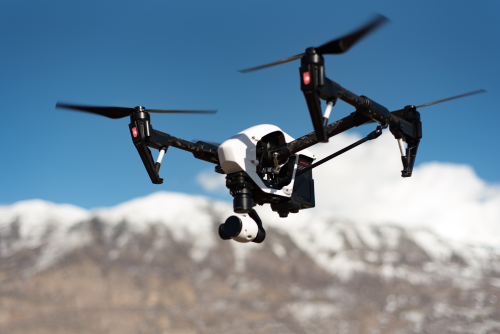
If you want to know how to pitch drone inspections to utilities without looking generic or undercutting your value, stop leading with the drone. Utilities rarely buy “aerial services” on their own. They buy safer access to hard-to-reach assets, faster defect confirmation, better maintenance prioritization, and less wasted field time.
That shift sounds simple, but it changes everything about your pitch: your message, your pricing, your proof, and the kind of pilot project you propose. Done well, you look like a specialist. Done badly, you look like a commodity bidder with a cheap aircraft and a vague promise.
Quick Take
Utilities usually do not care that your drone shoots 4K video or has a long flight time. They care whether your service helps them inspect assets more safely, produce repeatable findings, reduce unnecessary site visits, document defects clearly, and fit into their maintenance workflow.
Here is the short version:
- Pitch one utility problem at a time, not “all drone services.”
- Talk about assets, defect types, turnaround time, and reporting format.
- Show sample outputs that maintenance teams can use, not cinematic footage.
- Price the whole workflow: planning, mobilization, capture, analysis, quality control, reporting, and data handoff.
- Use a pilot project with clear boundaries and success criteria.
- Bring up safety, compliance, access, and data handling early, because utilities will.
Why most drone inspection pitches fail with utilities
Most operators sound generic because they describe what they do from their side of the fence:
- “We provide drone inspections for energy and utilities.”
- “We use advanced drones and AI.”
- “We are faster and cheaper than traditional methods.”
None of that tells a utility buyer what will actually improve.
Utilities are not short on vendors that claim to be fast, safe, and innovative. What they are short on is vendors who understand the operational reality behind the inspection request:
- Which assets matter most
- Which failure modes the client is trying to detect
- How findings will be triaged
- Which teams need the output
- What turnaround time is useful
- What level of repeatability is needed for future comparison
- How the inspection fits around access windows, outages, and safety controls
The fastest way to look generic is to sell “drone capability.” The fastest way to look valuable is to sell a defined inspection workflow tied to a maintenance decision.
A utility does not want 800 images dumped in a folder. It wants answers such as:
- Which assets need urgent follow-up
- Which findings are likely cosmetic versus operationally significant
- Which locations need a closer ground inspection
- Which parts of the network can wait until the next cycle
- Whether the output can be compared against the last inspection round
That is why utilities often reject pitches that sound impressive to other industries. They are not buying content. They are buying confidence.
What utility buyers actually care about
Different people inside a utility care about different things. If your pitch only speaks to one of them, it can stall.
| Stakeholder | What they usually care about | What your pitch should emphasize |
|---|---|---|
| Asset manager or engineer | Defect visibility, repeatability, condition trends, maintenance priorities | Asset-specific findings, defect categories, severity logic, comparison-ready outputs |
| Operations or field team | Minimal disruption, scheduling reliability, safe site behavior | Efficient site process, clear communication, practical turnaround, easy-to-use reports |
| Safety or compliance lead | Operational controls, crew competence, emergency planning, site rules | Risk assessment, crew procedures, safety documentation, conservative operating approach |
| Procurement | Scope clarity, apples-to-apples comparison, commercial predictability | Line-item pricing, assumptions, exclusions, service levels, contract structure |
| GIS or data team | File format, metadata, naming standards, storage, system compatibility | Clean handoff, consistent structure, export options, retention and access plan |
This is why a strong utility pitch usually sounds more like a workflow proposal than a creative services deck.
A useful line to keep in mind is this:
Utilities buy inspection outcomes, not drone flights.
Start with a narrow use case, not a broad claim
If you say you inspect “utility assets,” you sound like everyone else. If you say you help with one defined workflow, you start sounding credible.
Better examples:
- Distribution pole-top condition documentation for prioritized circuits
- Transmission structure visual inspection for hard-to-access spans
- Substation visual and thermal checks for planned maintenance windows
- Reservoir, tank, or treatment plant exterior condition surveys
- Storm-damage rapid assessment and exception reporting
- Vegetation encroachment screening for selected corridors
- Repeatable progress and condition capture for utility construction sites
You do not need to be everything to every utility. In fact, trying to be broad is often what makes you sound cheap.
A smaller provider can win by specializing in one or two inspection motions and doing them very well:
- one asset class
- one reporting format
- one turnaround promise
- one clear commercial model
That is much easier to trust than a vendor claiming to do inspections, mapping, training, media, FPV, AI analytics, construction updates, and emergency response all at once.
A better opening than “we offer drone inspections”
Instead of this:
“We provide advanced drone inspection services for utilities with high-resolution imagery and AI.”
Try something like this:
“We help distribution teams document pole-top condition on targeted circuits with repeatable imagery, defect-tagged reports, and a clear exception list for maintenance planning.”
Or:
“We support substation inspection programs with planned visual capture, thermal documentation where specified, and asset-organized reporting that maintenance teams can review quickly.”
Or:
“We help water utilities inspect hard-to-access roofs, facades, embankments, and perimeter conditions without relying on broad, manual visual checks alone.”
Specific beats impressive.
A six-step pitch that sounds utility-specific and protects your value
1. Diagnose the real problem before you sell the method
Do not assume the client wants “drone inspections.” They may actually want one of these:
- backlog reduction
- safer access to difficult assets
- post-storm assessment
- better documentation for maintenance planning
- fewer unnecessary climbs or truck rolls
- faster confirmation of suspected defects
- more consistent inspection records across regions or contractors
Your first conversation should uncover the operating pain behind the request.
Useful discovery questions:
- Which asset class is creating the biggest inspection bottleneck right now?
- Is the main goal condition assessment, compliance documentation, storm response, or maintenance prioritization?
- What does your current inspection process miss, delay, or make expensive?
- How are findings currently recorded and handed to maintenance teams?
- What turnaround time makes the data operationally useful?
- Do urgent findings need same-day escalation?
- Are you comparing against previous inspections, or is this mostly first-pass capture?
- What file formats or naming conventions does your team need?
- Are there site access, outage, or right-of-way constraints?
- Are there restrictions around cloud storage, data sharing, or critical infrastructure security?
Those questions do two things at once: they improve your scope, and they make you sound like a serious service provider instead of a drone owner looking for work.
2. Define the inspection scope in utility language
Once the problem is clear, define the job in terms the client can evaluate.
That usually means spelling out:
- asset type
- asset count or corridor length
- defect categories you are expected to observe
- sensor type if relevant
- output format
- turnaround time
- severity or escalation logic
- exclusions and limitations
For example, a utility-friendly scope sounds like this:
- 240 distribution poles across two named circuits
- visual pole-top image capture with asset-linked file naming
- defect register for visible hardware issues, insulator damage, attachment concerns, and obvious clearance risks
- urgent exception list delivered within 24 hours
- full reviewed report delivered within 3 business days
- reinspection only for assets blocked by access, weather, or safety limits
That sounds far more valuable than:
- 2 days flying
- drone photos and video
- edited media delivered online
The first version feels like an inspection product. The second feels like freelance production work.
3. Show how your workflow reduces friction, not just labor
Utilities care about workflow friction as much as field time. If your service creates a burden on scheduling, access, review, or data handling, the savings from flying the drone can disappear.
Your pitch should make the process feel easy to adopt.
Explain:
- how you prepare sites or corridors before deployment
- how the client needs to support access and escorts, if at all
- what the field crew setup looks like
- how you manage weather delays and rescheduling
- how urgent findings are flagged
- how you perform image review and quality assurance
- how the final package is delivered
If relevant, tell them whether you can support:
- repeat inspection intervals
- side-by-side comparison across cycles
- storm response surge capacity
- rapid mobilization in your region
- integration with an existing maintenance or asset workflow
Utilities do not want to buy a puzzle. They want a process.
4. Lead with deliverables the maintenance team can actually use
This is where many pitches fall apart. The vendor shows beautiful imagery, but the buyer still cannot see how a maintenance planner will use it on Monday morning.
Your deliverables should be practical, not decorative.
Useful utility inspection deliverables often include:
- asset-tagged still images
- thermal images where the scope specifically requires them
- a defect register with asset ID, location, finding, severity, and recommendation for follow-up type
- an exception report for urgent issues
- a map or corridor overview for navigation
- repeatable folder structure and naming standards
- summary dashboards or spreadsheets for planning teams
- reinspection flags and reasons when a capture was incomplete
If you use the term “defect register,” explain it in plain English if needed: a structured list of issues by asset, so the client is not left sorting through raw files.
Show a sample report, not just a showreel
For utilities, a sample report is often more persuasive than your best-looking footage.
A strong proof pack usually includes:
- 2 to 4 pages of anonymized example findings
- one example of urgent exception handling
- one example of asset-based file naming
- a short explanation of your review and quality control process
- a clear turnaround promise and what it includes
If your best sales asset is still a cinematic promo reel, you probably still look generic.
5. Price the workflow, not the flight hours
If you quote a utility like this, you invite price pressure:
- drone operator day rate
- half-day rate
- hourly flying
- discounted first job
That is exactly how you get pushed into undercutting your value.
Utilities are paying for a chain of work, not just airborne time. Your quote should reflect that.
Pricing models that usually work better
| Pricing model | Best fit | Why it protects value | Main risk to control |
|---|---|---|---|
| Per asset | Poles, towers, valves, tanks, repeatable discrete assets | Ties price to inspection unit and output | Hidden variability if asset difficulty differs too much |
| Per corridor length | Linear infrastructure like lines, pipelines, canals, roads | Useful for planning and repeat programs | Can become unprofitable if access or density assumptions are wrong |
| Per site | Substations, plants, reservoirs, treatment works | Easy for buyers to compare and budget | Scope creep if “site” is not tightly defined |
| Day rate | Exploratory, emergency, or undefined work | Flexible when scope is unclear | Encourages comparison on labor cost instead of outcome |
| Retainer or framework | Ongoing inspection program or storm response readiness | Rewards consistency, availability, and process maturity | Needs clear service levels and callout assumptions |
Whatever model you use, separate the components that actually create value:
- planning and pre-mission review
- mobilization and travel
- site-specific safety prep
- field capture
- analysis and annotation
- quality assurance review
- reporting and data packaging
- urgent escalation handling
- storage, transfer, or integration support if required
When you itemize this intelligently, you teach the buyer why your service costs what it costs. That is not the same as making the quote look expensive. It makes it understandable.
What to avoid in pricing
Avoid these traps:
- quoting before you understand asset count and access constraints
- burying analysis inside “free reporting”
- pricing thermal, zoom, or advanced analysis as if it takes the same effort as standard visual capture
- giving away rework caused by changing scope
- making rush turnaround standard without charging for it
- assuming the client’s data handoff needs will be simple
If you want to stop undercutting your value, stop acting like the flight itself is the product.
6. Propose a pilot project with boundaries, not a vague “trial”
A pilot can be a smart way into utilities, but only if it is tightly defined.
A bad pilot sounds like this:
- “We’ll come prove what drones can do.”
- “We can inspect a few assets for free.”
- “Let’s start and see what happens.”
A good pilot sounds like this:
- one asset class
- fixed geography or site list
- defined asset count
- agreed deliverables
- agreed turnaround time
- named success metrics
- what happens if the pilot succeeds
Strong pilot success metrics might include:
- percentage of assets captured to spec
- turnaround time achieved
- defect report usefulness rated by maintenance team
- reduction in unnecessary follow-up visits
- completeness of asset tagging and data structure
- ease of importing or using the outputs internally
You do not need the pilot to prove that drones can fly. You need it to prove that your workflow creates usable operational value.
How smaller providers can win without becoming the cheapest bidder
A lot of small drone companies assume utilities only buy from big engineering firms or national vendors. Large firms do have advantages, but smaller providers still win when they stop trying to compete on generic capacity.
You are more likely to win when you offer one of these:
- stronger local mobilization and regional knowledge
- a niche specialty in one asset type
- faster reviewed turnaround
- better field communication and flexibility
- cleaner reporting than bigger, slower competitors
- partnership with an engineering, survey, or maintenance firm that needs drone capture support
In other words, your edge is not “we are cheaper.” Your edge is “we solve this inspection workflow with less friction.”
If you do need to work with larger firms, think in terms of being a reliable specialist subcontractor rather than an all-purpose bidder.
Safety, legal, compliance, and operational realities to raise early
Utility inspection work sits close to regulated airspace, critical infrastructure, energized assets, private land, public roads, and sometimes emergency conditions. That means your pitch must show maturity before the client asks for it.
You do not need to recite regulations. You do need to show that you understand the checks.
Raise these topics early:
- aviation authorization requirements in the operating area
- any restrictions related to critical infrastructure or sensitive sites
- site induction, escort, and local safety rules
- minimum safe operating distances around energized equipment as required by site procedures and applicable law
- weather limits, wind limits, and no-go conditions
- privacy and data handling expectations
- cloud storage, cross-border data transfer, or local hosting restrictions if relevant
- emergency procedures and escalation contacts
- whether drone findings are screening inputs, confirmatory evidence, or part of a formal inspection record
Be conservative. Rules vary widely by country and sometimes by airspace, operator certification, site owner policy, and the type of mission involved. Before committing to a method, verify requirements with the relevant aviation authority, the utility client, the site owner, and any land-access authority involved.
Also remember that some utility sites may have internal rules that are stricter than national aviation rules. Winning the contract means very little if you cannot actually operate under the site’s procedures.
Common mistakes that make your utility pitch look generic or cheap
1. Leading with the aircraft
Most utility buyers do not care which drone you own unless it directly affects the output or site suitability.
2. Selling “faster, safer, cheaper” with no proof
Those words are overused. Replace them with specifics: asset count, turnaround, report format, exception handling, and operational limits.
3. Showing pretty footage instead of usable reports
Utilities need inspection evidence, not brand content.
4. Promising AI as the hero
AI-assisted review can be useful, but buyers will still care about false positives, human review, auditability, and how results are validated.
5. Quoting too early
If you price before understanding access, asset complexity, reporting expectations, and data needs, you will either overprice and lose or underprice and regret it.
6. Offering a free pilot with no scope guardrails
That often turns into unpaid consulting, vague expectations, and a hard-to-defend follow-on price.
7. Ignoring the internal buyer map
If you only impress the innovation contact but not operations, safety, procurement, and data stakeholders, the deal may stall.
8. Claiming drones replace every traditional inspection method
In many programs, drones complement existing methods, triage follow-up work, or reduce unnecessary manual inspection. Positioning them as a total replacement too early can hurt credibility.
FAQ
Should I offer a utility a free pilot project?
Sometimes, but only if it is tightly controlled. A better approach is usually a paid pilot or a subsidized pilot with a fixed asset count, defined deliverables, clear success criteria, and written assumptions. Free and open-ended almost always weakens your negotiating position.
Who should I pitch first inside a utility?
Usually start with the operational owner of the problem: asset management, maintenance, engineering, vegetation, or site operations. Then bring procurement, safety, and data stakeholders in early enough that they do not become blockers later. If you only pitch an innovation or technology contact, you may get interest without implementation.
How do I price when the utility cannot give me a clear asset count yet?
Use a budgetary estimate with explicit assumptions, or charge for discovery and scoping first. State what the price assumes about asset count, access, reporting depth, turnaround, and rework. Never let a vague scope force you into a fixed number you cannot defend.
Can a small drone operator really win utility work?
Yes, especially if you specialize. Small providers can win on local response, a narrow technical workflow, better reporting discipline, or partnership with a larger contractor. The key is to look like a process-driven specialist, not a generalist trying to do every kind of drone job.
Should I lead with thermal, LiDAR, or AI in the pitch?
Only if the use case truly depends on it. Start with the inspection problem and the decision the client needs to make. Then explain why a certain sensor or analysis method helps. Utilities are usually more interested in reliable outputs than in a list of technologies.
What proof matters most in a utility pitch?
An anonymized sample report, a clear method statement, evidence of quality control, realistic turnaround commitments, and examples relevant to the same asset class matter more than flashy marketing. If required by the client or local law, be prepared to provide proof of qualifications, authorizations, and insurance as well.
Do utilities expect drones to replace climbing crews, bucket trucks, or helicopters completely?
Not always. In many cases, drone inspections are used to screen, confirm, prioritize, or document issues so that manual follow-up is more targeted. Pitching drones as part of a smarter inspection mix is often more credible than claiming full replacement from the start.
What is the best first utility service to sell?
Usually the one with a clear pain point, repeatable scope, and simple output. That might be a pole-top documentation program, substation condition capture, storm-damage assessment, or a fixed-site visual inspection package. Start where your reporting can be consistent and the client can see operational value quickly.
The takeaway
If you want to pitch drone inspections to utilities without looking generic or undercutting your value, stop selling flights and start selling inspection outcomes. Be specific about the asset, the defect, the workflow, the deliverable, and the decision your data supports.
Your next step is simple: pick one utility use case, build one sample report, create one tightly scoped pilot offer, and rewrite your pitch so a maintenance manager can understand the value in under a minute. That is how you stop sounding like a drone vendor and start sounding like a utility service partner.
