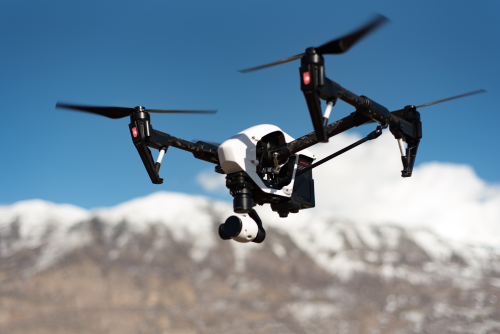
Construction firms hear a lot of drone pitches, and most of them blur together: aerial photos, fast turnaround, competitive rates. If you want to know how to pitch drone services to construction firms without looking generic or undercutting your value, the key is to stop selling drone flights as a commodity and start selling clearer reporting, safer visibility, and faster decisions. The firms worth working with are not usually hunting for the cheapest pilot. They are looking for a reliable process.
Quick Take
- Construction buyers do not really buy “drone services.” They buy visibility, documentation, reporting cadence, and fewer blind spots.
- A strong pitch is tied to one stakeholder, one project stage, and one useful outcome.
- Your proposal should define deliverables, frequency, turnaround time, and limitations, not just drone specs or flight time.
- Recurring progress reporting usually protects margin better than one-off photo shoots.
- If budget pressure appears, reduce scope, frequency, or extras before cutting your rate.
- Address compliance, site safety, data handling, and survey limitations early. It makes you look more professional, not more expensive.
- “Licensed and insured” is expected. It is not a differentiator by itself.
Why most construction drone pitches get ignored
Most drone operators pitch construction firms as if the buyer is shopping for footage. That is rarely the real buying behavior.
A project manager is usually trying to answer questions like:
- Are we on schedule?
- Can I show the client what changed since the last meeting?
- Can remote stakeholders see the site without another visit?
- Do we have visual evidence if a dispute appears later?
- Can we track earthworks, logistics, or site access more clearly?
A superintendent or site manager is thinking about coordination, staging, and how to keep work moving safely. A developer or owner rep wants consistent visibility without traveling to every site. A marketing team may want polished milestone imagery, but even then, they care about timing and message, not the aircraft you fly.
That is why generic pitches fail. They focus on the drone, not the jobsite workflow.
A weak pitch sounds like this:
- We provide high-quality aerial photography and video
- We use advanced drone technology
- We offer competitive prices
- We have fast turnaround
A construction-specific pitch sounds like this:
- We create fortnightly matched progress photo sets from fixed viewpoints for owner and lender updates
- We deliver a stitched site map, called an orthomosaic, plus annotated issue views after each capture
- We can document stockpile or earthwork change over time, with clear notes on accuracy and limitations
- We package visuals in a format your team can use in meetings, reports, or shared project files
The difference is not just wording. It is commercial positioning.
Start with the real buyer inside the firm
Construction companies are not one buyer. Your pitch gets stronger when you know who will benefit first.
| Stakeholder | What they care about | Strong pitch angle |
|---|---|---|
| Project manager | Progress evidence, delay visibility, owner communication | Matched progress photos, annotated reports, timeline comparisons |
| Site manager or superintendent | Site logistics, access routes, staging, coordination | Overhead site views, layout updates, rapid issue documentation |
| Commercial manager or estimator | Quantities, change tracking, disputes | Volume or change monitoring with clear accuracy notes and defined methodology |
| Developer or owner rep | Remote visibility across one or more sites | Consistent reporting cadence, executive summaries, visual dashboards |
| Marketing or leasing team | Milestone content, branding, sales material | Polished stills and short edits timed around key project milestones |
| Survey or engineering team | Data quality and usable site capture | Drone data collection aligned with required standards and verified by the right technical team where needed |
If you send the same “we do construction drone work” message to all of them, you sound interchangeable. If you speak to one role and one pain point, you sound useful.
Build your offer around a construction workflow, not a menu of drone tricks
A better offer is a packaged workflow with a clear purpose. Construction firms usually respond better to that than a long list of services.
1. Progress documentation and stakeholder reporting
This is often the easiest entry point.
Typical deliverables:
- Fixed-view progress photos taken from the same angles each visit
- A sitewide orthomosaic, which is a top-down map made by stitching many images together
- Annotated images showing key changes, risks, or completed areas
- A short summary delivered on a weekly, fortnightly, or monthly schedule
Why it sells: – It reduces site visit dependency – It supports owner, lender, and executive reporting – It creates a visual record over time
2. Earthworks, stockpile, or change monitoring
This can be valuable, but only when you state limits clearly.
Typical deliverables:
- Repeat site maps over time
- Volume estimates or cut-and-fill trend visuals
- Change reports focused on a defined area
- Notes on method, conditions, and expected limitations
Why it sells: – It helps track movement, progress, and potential discrepancies – It can support better planning conversations
Important limit: If the data will be used for legal boundaries, certified quantities, payment claims, formal engineering sign-off, or survey-grade decisions, verify local rules and involve the appropriate licensed survey or engineering professional where required.
3. Inspection and condition capture
This works well for roofs, facades, high structures, inaccessible zones, or large envelope reviews.
Typical deliverables:
- High-resolution stills of specific elevations or structures
- Condition overviews for planning repair or review work
- Before-and-after documentation
Why it sells: – It reduces manual access time in some scenarios – It helps teams identify what needs closer inspection
Important limit: Drone imagery does not replace every hands-on inspection method. Be clear about what the drone can and cannot confirm.
4. Milestone marketing content
This is a real service, but it should usually be pitched differently from technical reporting.
Typical deliverables:
- Hero images of project milestones
- Short recap edits for corporate or leasing use
- Interior and exterior visual progress storytelling
Why it sells: – It supports brand, leasing, investor, and public communications
Important limit: Do not let this become your only construction offer if you want recurring, higher-value work. Marketing content is useful, but reporting workflows often create stickier contracts.
How to pitch drone services to construction firms without looking generic
Here is the simplest way to make your outreach sound specific and commercially credible.
1. Research one live project before you write anything
Do not pitch the company in the abstract if you can avoid it. Find an actual project they are building or managing.
Look for: – Project size and type – Current stage of construction – Whether the firm is a general contractor, developer, or specialist contractor – Whether the site is urban, remote, large, multi-building, or logistically complex – Signs that remote reporting, earthworks tracking, or stakeholder updates would matter
Even five minutes of research can change your message from generic to relevant.
2. Pick one problem, not five
A common mistake is trying to sell everything at once: photos, video, inspections, mapping, marketing, and analytics.
That sounds broad, but it often signals weak positioning.
Instead, choose one use case such as:
- Monthly owner progress reporting
- Weekly site overview for a remote management team
- Earthwork change visibility on a large civil site
- Milestone content for a developer nearing leasing or launch
Depth beats breadth in the first pitch.
3. Describe the output, cadence, and business use
Construction firms respond better when they can picture how the service fits their calendar.
Good pitch elements include:
- What you deliver
- How often you deliver it
- How fast it arrives after capture
- Who can use it
- How it helps a meeting, report, or decision
For example:
“Rather than a one-off aerial shoot, I’d suggest a fortnightly progress package: matched viewpoints, one sitewide orthomosaic, and a short annotated summary delivered next business day for project and owner reporting.”
That sounds far more valuable than “we do drone photography for construction sites.”
4. Prove repeatability, not just creativity
A cinematic reel might impress a marketing manager. It does not prove that you can run a disciplined recurring jobsite service.
Better proof includes:
- A one-page sample progress report
- Before-and-after views from the same location over time
- Labeled examples showing what changed and why it matters
- A sample naming structure or delivery format
- A clear description of your site process
Construction buyers want to know that the third visit will be as reliable as the first.
5. De-risk the first engagement
If the client has never used drone reporting before, offer a low-friction first step that still respects your value.
Good first steps: – A paid pilot visit tied to one reporting need – A one-month trial cadence – A milestone-based capture at a key project stage
Less effective: – A vague free demo – A speculative flight with no defined deliverable – Giving away full work in the hope of later volume
A paid pilot tells the client you run a business. A free flight can make you look disposable.
6. Ask for a small next step
Do not end with “let me know if interested.”
Ask for something concrete: – a 15-minute call – permission to send a one-page reporting sample – a short discussion with the project manager – a scoping conversation around one active site
That moves the pitch from awareness to evaluation.
Language that sounds generic versus language that sounds useful
| Generic phrase | What the client hears | Better alternative |
|---|---|---|
| “We provide aerial photos and video” | Commodity media | “We deliver matched progress images and a sitewide visual update your team can use in weekly reporting” |
| “Advanced drone mapping” | Vague technical claim | “We create repeat top-down site maps for change tracking, with clear notes on intended use and accuracy limits” |
| “Fast turnaround” | Undefined promise | “Field capture completed on site, annotated summary delivered next business day” |
| “Competitive pricing” | Probably cheap, maybe inconsistent | “Fixed-scope monthly reporting package with defined outputs and reschedule terms” |
| “Licensed and insured” | Expected baseline | “Commercially compliant operation coordinated with site access, safety procedures, and required permissions” |
A short pitch example
You do not need a long email. You need a relevant one.
A simple structure:
- Mention the project
- Name the likely reporting problem
- Offer one defined service
- Show the result
- Ask for a short call
Example:
“I noticed your team is progressing the mixed-use project on the east side of the city. At this stage, many teams need a cleaner way to show owners and remote stakeholders what changed between reporting cycles. I offer a fortnightly progress package with matched aerial viewpoints, a stitched site map, and a short annotated summary delivered the next business day. If useful, I can send a one-page sample of how that reporting format looks and outline how site coordination and local flight approvals would be handled. Would a 15-minute call next week be worth it?”
That is short, specific, and not price-led.
Price for reliability and outcomes, not for time in the air
One of the fastest ways to undercut your value is to price drone construction work like a hobby shoot.
The client sees a flight. You are actually providing:
- pre-site planning
- safety and operational prep
- site coordination
- travel and mobilization
- capture discipline
- data processing
- annotation or reporting
- archive management
- repeatable viewpoints
- revision handling
- weather contingency
If you charge only for “30 minutes of flying,” you teach the buyer to ignore most of your work.
Pricing models that protect margin better
The strongest options are usually:
Recurring package
Best for progress documentation and repeat reporting.
Why it works: – predictable for the client – efficient for you – easier to standardize – less vulnerable to one-off price shopping
Pilot project leading to retainer
Best when the client is curious but not yet committed.
Why it works: – lets you prove workflow value – creates a path to recurring work – avoids free-spec work
Deliverable-based quote
Best when the output is more important than the flight time.
Why it works: – aligns price with what the client receives – keeps the conversation on results, not minutes
If the budget is tight, change scope before you change rate
This is one of the most important sales habits in service work.
Instead of discounting your rate, reduce one or more of these:
- capture frequency
- site area covered
- number of deliverables
- turnaround speed
- number of edited images or revisions
- archive period
- meeting or presentation support
That protects your positioning. Cheap rates are hard to raise later. Smaller scope is easy to expand.
What your quote should define
A construction quote should clearly state:
- site or project assumptions
- deliverables and frequency
- turnaround time
- reschedule and weather terms
- access, escort, or induction requirements
- any travel or multi-site assumptions
- revision limits
- data ownership, storage, and retention terms
- technical limitations, especially if mapping or measurements are involved
Clarity builds trust and reduces margin leaks.
Compliance, safety, and operational limits to address early
Construction firms care about compliance even when they do not lead with it. Bringing it up early makes you look like a professional operator.
Verify aviation and site permissions
Before flying commercially, verify: – local aviation authority rules – airspace restrictions or permissions – landowner or site operator approval – any site-specific restrictions around sensitive assets, nearby roads, airports, or populated areas
Do not guess. Rules vary widely by country and sometimes by project type.
Align with site safety procedures
Construction sites have their own risk environment.
You may need to discuss: – site induction requirements – personal protective equipment – safe takeoff and landing zones – exclusion areas around people, vehicles, cranes, or active lifts – communication with the site manager before launch
Be careful with survey, engineering, and legal-use claims
This is a major credibility issue.
If your deliverables may influence: – legal boundaries – certified quantities – engineering sign-off – payment applications – compliance submissions
then define the intended use carefully and verify whether licensed survey or engineering oversight is required in that jurisdiction.
Address privacy, confidentiality, and data handling
Many construction sites involve neighboring properties, workers, clients, or commercially sensitive designs.
Clarify: – what area you will capture – how data will be stored – who receives access – how long files are retained – whether raw imagery is included or restricted
Have a weather and contingency plan
Construction teams appreciate realism. State upfront how you handle: – high winds – rain or poor visibility – GNSS or signal issues – equipment failure – rescheduling windows
That is part of the service, not an awkward detail.
Common mistakes that make you look cheap or generic
Leading with the drone instead of the business outcome
Clients care about what improves, not what flies.
Showing only cinematic footage
Beautiful footage may help brand work, but it does not prove reporting discipline.
Pitching every service to every contractor
Specificity wins. A single relevant use case beats a general brochure.
Quoting before you understand the site
Without scope, you either underprice or pad the quote and look expensive.
Promising accuracy you cannot defend
Especially with mapping, measurements, or volume work, vague technical claims can damage trust quickly.
Using price as your main differentiator
If the only thing memorable about your offer is that it is cheap, your margins will stay weak and your clients will keep shopping.
Offering a free flight instead of a paid pilot
Free work often attracts curiosity, not commitment.
Ignoring the repeat-work opportunity
The best construction accounts usually come from recurring reporting systems, not random flight requests.
FAQ
How should I decide whether to pitch photos, video, or mapping first?
Start with the most useful operational outcome for that project. For many contractors, progress reporting is the easiest first service because it is easy to understand and repeat. Mapping or quantity-related work can be higher value, but only if the client has a real need and you can clearly define the technical limits.
Who inside a construction firm should I contact first?
Usually the project manager, site manager, preconstruction lead, or owner-side project representative is a better first contact than a generic marketing inbox. If your offer is clearly for branding or leasing content, then marketing may be the right entry point.
Is a free demo flight a good idea?
Usually no. A paid pilot project is better. It shows you have a process, protects your time, and frames the service as commercially valuable. If you want to reduce the client’s risk, narrow the first scope instead of making it free.
How do I avoid becoming “the cheap drone guy”?
Stop pricing around flight minutes alone. Package the service around deliverables, reporting cadence, turnaround, and workflow value. If the client pushes on budget, reduce scope before lowering your rate.
Can I offer maps or volume reports without being a licensed surveyor?
That depends on the jurisdiction and the intended use. In some places, basic visual mapping may be fine for internal planning, while legal, certified, or payment-related outputs may require licensed survey oversight. Always verify local rules and be explicit about the intended use of your deliverables.
What if I do not have construction case studies yet?
Build a sample reporting format anyway. Use a mock project structure, a practice site captured legally, or adjacent work that shows repeatable documentation discipline. Construction buyers will often trust a clear process more than a flashy reel with no workflow logic.
Should I include raw footage or raw data in the proposal?
Only if you intend to. Raw files can create storage, transfer, and expectation issues. Define whether the client receives processed outputs only, raw assets on request, or full data delivery as a separate line item.
How often should I suggest repeat site visits?
That depends on the project pace and reporting needs. Monthly can work for slower builds or executive visibility. Weekly or fortnightly is often more useful for fast-moving sites, major milestones, or multi-stakeholder reporting. The right answer is the cadence that matches decision-making, not the cadence that sounds impressive.
Final takeaway
If you want construction firms to take your pitch seriously, do not sell “drone services” as if they are interchangeable media jobs. Sell one clear outcome for one real stakeholder on one active project, with defined deliverables, repeatable process, and professional limits.
The fastest way to protect your value is simple: be more specific than your competitors, clearer than your competitors, and more disciplined than your competitors. Then, when price pressure shows up, cut scope before you cut worth.
