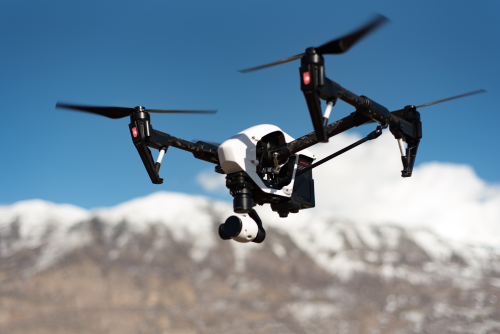
If you want to know how to pitch drone services to construction firms, start with this shift: stop selling drone flights and start selling site visibility, documentation, and decision support. Contractors rarely care about your aircraft model. They care about getting clearer progress records, fewer surprises, faster updates to stakeholders, and a vendor who can work safely on an active site.
Quick Take
- Construction firms do not usually buy “aerial content” in the abstract. They buy outcomes such as progress tracking, visual documentation, stakeholder reporting, inspections, and measurement support.
- The easiest entry offer for most pilots is a repeatable progress monitoring service, not a one-off cinematic video.
- Pitch the right person. A project manager, site manager, owner’s representative, estimator, or marketing lead will each care about different outputs.
- Show construction-specific samples: fixed-angle progress photos, annotated site overviews, simple reports, and before-and-after comparisons. A generic travel reel is weak proof.
- Price for the full workflow: travel, site induction, flight time, processing, reporting, revisions, storage, and risk. Most beginners undercharge the desk work.
- The fastest way to win trust is to offer a small pilot job with clear deliverables and turnaround, then convert that into a monthly retainer.
- Never overpromise on compliance or measurement accuracy. Verify local flight rules, site permissions, insurance, privacy expectations, and any mapping or survey requirements before you fly.
Why construction is worth pitching
Construction is one of the more attractive drone service markets because the work can repeat. A building site, road job, industrial expansion, solar build, or residential development may need aerial documentation for months. That creates a path to recurring revenue instead of constantly chasing one-off gigs.
But there is a catch: construction buyers are busy, risk-sensitive, and often unimpressed by flashy drone talk. They have probably already seen pilots pitch “stunning 4K footage” without explaining how it helps a project team do its job.
That is why the best commercial pitch is simple: show how your drone service saves time, improves visibility, supports reporting, or reduces friction in communication.
What construction firms actually buy
Across regions, terminology varies. Some clients may be main contractors, general contractors, civil contractors, developers, owner’s reps, or subcontractors. The buying logic is still similar.
Here is how different buyers inside a construction business usually think about drone services:
| Buyer | What they actually care about | Best drone deliverable | Strong pitch angle |
|---|---|---|---|
| Project manager or site manager | Progress visibility, issue tracking, proof of status | Scheduled progress photo sets, overhead site views, short summary reports | “Give your team a consistent visual record without extra site walks.” |
| Developer or owner’s representative | Remote oversight, investor/client updates | Monthly aerial progress pack | “See progress clearly without being on site every week.” |
| Pre-construction or estimating team | Baseline site conditions, access, staging, logistics | Pre-start aerial capture, top-down site map | “Improve planning before crews mobilize.” |
| Earthworks or measurement team | Material movement, stockpile tracking, terrain change | Orthomosaic maps, models, volume reports | “Track site change faster, with repeatable visuals and measured outputs.” |
| Marketing or business development | Milestone content, case studies, bid support | Edited photos/video, milestone capture | “Turn project progress into client-facing content.” |
The big lesson: one construction company may contain several possible buyers, but each wants a different result. If you pitch the same “drone video service” to all of them, you will sound generic.
Pick an offer before you pitch
Many pilots try to sell everything at once. That usually weakens the message. You will get more traction if you lead with one clear offer that matches your current skill level and workflow.
The best entry-level offers for construction
| Offer | Best for | Revenue shape | Watch-outs |
|---|---|---|---|
| Progress monitoring | Newer commercial pilots with reliable flying and basic editing/reporting | Strong recurring retainer potential | Consistency matters more than creativity |
| Pre-start or milestone documentation | Pilots building a construction portfolio | One-off jobs that can lead to repeat work | Do not make it look like a pure marketing service if the client wants operational value |
| Marketing and stakeholder visuals | Strong photographers/videographers | Good margins, but often less recurring | Can become revision-heavy if scope is vague |
| Mapping and measurement support | Pilots with solid capture and processing workflow | Higher-value jobs and recurring technical work | Never oversell accuracy or survey capability |
If you are just entering this market, progress monitoring is often the cleanest starting point. It solves a recurring problem and does not require you to sell complex technical claims.
A typical progress monitoring package might include:
- One or two site visits per month
- Fixed-angle photos from the same viewpoints each visit
- A short set of edited aerial stills
- A labeled site overview image
- Optional short video clip for internal updates
- Turnaround within a defined time window
That is much easier to pitch than “I can do anything with drones.”
Build proof that looks like construction work
Before outreach, create a proof pack that feels relevant to a contractor.
Show samples such as:
- The same site or similar location captured from identical angles over time
- Annotated overhead images showing zones, access roads, materials, or progress areas
- Roof, façade, or perimeter condition images
- Clean, date-stamped stills suitable for reports
- A simple one-page progress summary
What not to lead with:
- Cinematic mountain reels
- Fast FPV sequences with no practical context
- Portfolio pieces that look artistic but not useful
- Images with no labels, no reporting structure, and no client outcome
Construction buyers are not hiring you to prove you can fly. They are hiring you to prove you can deliver usable information.
A simple 6-step pitch process that actually works
1. Choose the exact problem you solve
Do not start with the drone. Start with the problem.
Examples:
- “You need a repeatable visual record of site progress.”
- “You need better stakeholder updates without extra travel.”
- “You need a faster way to document pre-start site conditions.”
- “You want aerial documentation of key milestones for client reporting.”
A weak pitch sounds like this:
- “I offer high-quality drone services for construction.”
A stronger pitch sounds like this:
- “I help contractors create a consistent aerial progress record with fixed-angle photos and simple update packs that project teams can review quickly.”
That second version is specific, business-focused, and easier to buy.
2. Research the firm before contacting them
A five-minute review of the company can dramatically improve your response rate.
Look for:
- Project type: residential, commercial, civil, industrial, roofing, energy, infrastructure
- Project size: single site, multi-site, regional portfolio
- Current project stage: pre-start, active build, closeout
- Obvious reporting needs: investors, clients, public agencies, remote stakeholders
- Existing visual habits: do they already share site updates, case studies, or project posts?
You do not need deep intelligence. You just need enough context to avoid a generic message.
If a company handles long-duration sites across several locations, emphasize repeatability and reporting. If it is a design-build firm that markets finished work heavily, include a milestone content angle. If it does earthworks, mapping may be relevant, but only if you can support that service properly.
3. Pitch the right person
The best contact depends on the outcome you sell.
Try these first:
- Project manager or site manager for progress monitoring
- Construction director or operations lead for portfolio-wide reporting
- Developer or owner’s representative for remote visibility
- Estimating or pre-construction lead for baseline site capture
- Marketing lead for milestone visuals and case-study content
If you are unsure, ask a simple question when calling or emailing the office: who handles project reporting, visual documentation, or progress communication for active sites?
That question sounds more credible than asking who “needs drone footage.”
4. Make the offer low-friction
Most construction firms will not hand a new vendor a long-term contract from the first email. What they may do is approve a small test.
A strong first offer is a pilot visit with defined outputs, such as:
- One site visit
- Ten to twenty edited progress stills
- One labeled overview image
- Optional short clip
- Delivery within 24 to 72 hours
- A clear option to roll into recurring visits if useful
This reduces buyer risk. It also gives you a real chance to show how organized you are.
A simple outreach message could sound like this:
- I help contractors create repeatable aerial progress records for active sites.
- For projects like yours, that usually means scheduled captures, fixed-angle photos, and a short update pack your team can use internally or share with stakeholders.
- If helpful, I can scope a small pilot visit so you can see whether the workflow is useful before committing to a recurring service.
That is much stronger than “Would you like drone photography?”
5. Ask discovery questions that uncover budget and fit
If you get a call or meeting, do not jump straight to price. First, learn how the job creates value.
Ask questions like:
- Who needs the output: site team, head office, client, owner, marketing, or all of the above?
- How often would updates be useful: weekly, fortnightly, monthly, or milestone-based?
- What format helps most: stills, short report, map, video, or a combination?
- How fast do you need the files after each visit?
- Are there fixed viewpoints or reporting standards you want repeated each time?
- Is the site in controlled airspace, near sensitive infrastructure, or subject to extra site restrictions?
- Who approves site access, inductions, and scheduling?
- Do you need visual documentation only, or are you expecting measured outputs?
These questions do two things. They show professionalism, and they prevent you from quoting a vague job that later becomes unprofitable.
6. Close with a scoped proposal, not a loose promise
After the conversation, send a concise proposal with a defined scope.
It should include:
- Site name and location
- Purpose of the service
- Deliverables
- Visit frequency
- Turnaround time
- Weather and rescheduling policy
- Revision limits
- Access and induction assumptions
- Any licensing or usage terms for media
- Payment terms
- Important limitations or disclaimers
If you offer mapping or measurement support, define the intended use carefully. For example, a top-down map may be useful for progress tracking and planning, but that does not automatically make it suitable for legal survey, engineering design, or claims resolution. If the client needs that level of precision, verify the workflow, approvals, ground control requirements, and any professional survey involvement needed in your jurisdiction.
How to price for real revenue
Most pilots lose money on construction work because they quote for the flight and ignore everything around it.
Your price should reflect the full job:
| Cost area | What it covers | Why it matters |
|---|---|---|
| Mobilization | Travel, parking, setup, waiting time, site coordination | Construction jobs often have hidden time costs |
| Flight operations | On-site capture, battery swaps, crew time | Large or complex sites take longer than expected |
| Processing | Editing, sorting, stitching, rendering, uploads | Desk work can exceed flight time |
| Reporting | Labeling, annotations, comparison layouts, exports | This is often the real client value |
| Risk and compliance | Extra planning, observers, approvals, insurance implications | Higher-complexity jobs should not be priced like easy open-field shoots |
| Storage and delivery | Retention, transfer, project archiving | Ongoing projects create admin overhead |
One-off vs retainer
If the client needs recurring progress visibility, propose a retainer, meaning a recurring monthly service agreement.
A good retainer structure usually defines:
- Number of visits per month
- Standard deliverables per visit
- Turnaround time
- Travel radius or travel terms
- Number of revisions
- Extra work rates for rush jobs, additional edits, or special visits
Retainers are where “real revenue” usually comes from. They stabilize cash flow and make your scheduling more predictable.
Do not underprice scope creep
Scope creep means the client starts asking for extra work that was never priced. In construction, that often sounds like:
- “Can you also do a short video?”
- “Can you mark up the image with areas of concern?”
- “Can you come back tomorrow for another angle?”
- “Can you store everything for the full project?”
- “Can you measure that stockpile too?”
None of those requests are unreasonable. They just need to be scoped and billed properly.
Compliance, safety, and operational risk you must get right
Construction drone work sits at the intersection of aviation risk and job-site risk. That means your sales process should make the client feel safer, not nervous.
At minimum, verify these points before accepting work:
Flight legality and airspace
Commercial drone rules vary by country and region. Verify:
- Whether your registration, pilot credentials, or operating permissions are valid for paid work
- Whether the site is in controlled or restricted airspace
- Whether local rules limit operations near people, roads, buildings, or infrastructure
- Whether additional permissions are required for the location or flight profile
If you are not sure, pause and verify with the relevant aviation authority before promising the job.
Site access and job-site rules
Active sites may have their own requirements beyond aviation law, including:
- Site induction or onboarding
- Personal protective equipment
- Restricted zones
- Crane and machinery coordination
- Radio or contact protocols
- Approved operating windows
Get written coordination from the site contact wherever possible.
Insurance and contract fit
Insurance needs vary by jurisdiction and contract type. Verify with your insurer and client whether you need appropriate aviation liability cover, equipment cover, and any professional liability protections relevant to the service you provide.
If your deliverables influence planning, measurement, or high-value decisions, do not assume a basic photography policy is enough.
Privacy, confidentiality, and data handling
Construction sites can expose sensitive layouts, worker activity, neighboring properties, and client information. Clarify:
- Who may receive the files
- How long you will store them
- Whether public marketing use is allowed
- Whether any restricted areas must not be captured
Accuracy limits
If you provide maps, models, or measurements, be precise about what they are for. A drone-derived orthomosaic, which is a stitched top-down map, can be excellent for progress visualization. It is not automatically a substitute for professional survey deliverables.
Never label outputs “survey-grade” unless your hardware, control, processing, quality assurance, and legal/professional standing genuinely support that claim in your market.
Common mistakes that cost pilots construction deals
Selling visuals when the client needs workflow
Pretty footage can help, but many construction buyers are really looking for repeatable reporting. Lead with utility first.
Talking too much about gear
Clients care about outcomes, turnaround, safety, and consistency. Your drone model is usually a secondary detail unless it directly affects the deliverable.
Pitching everyone the same way
A marketing lead and a project manager are not buying the same service. Tailor the pitch.
Showing the wrong portfolio
Travel reels and dramatic reveals do not prove you can document a build over time. Use construction-style samples.
Underestimating processing and reporting time
A site visit may take one hour. Sorting, editing, labeling, exporting, and delivering the files may take two or three more.
Overpromising accuracy
You can destroy trust quickly by sounding more technical than your workflow actually is. If a client needs formal survey outcomes, say so clearly and scope the work correctly.
Ignoring site culture
Construction teams notice whether you understand inductions, PPE, exclusions, weather judgment, and chain of command. Professional behavior is part of the sale.
Failing to follow up
Construction teams are busy. A polite follow-up with a sharper offer often works better than one long first email.
FAQ
What is the easiest construction drone service to sell first?
Progress monitoring is usually the easiest. It is simple to understand, useful on many active sites, and can turn into recurring monthly work.
Should I charge per flight or per month?
For one-off documentation or milestone capture, per project or per visit can work. For active sites that need regular updates, a monthly retainer is usually better for both you and the client.
Do I need mapping software to work with construction firms?
No. You can start with visual documentation and progress reporting. Mapping can add value, but it also adds processing time, quality control needs, and accuracy responsibility.
Who should I contact inside a construction company?
Start with the person closest to the problem you solve. That may be a project manager, site manager, operations lead, developer representative, estimator, or marketing lead.
Can I offer stockpile or measurement services with a standard camera drone?
Possibly, but only if your workflow is robust enough for the client’s intended use. Be careful with accuracy claims, and verify whether the task requires stronger control, different hardware, or a qualified survey professional.
What if the site is near an airport, city center, or sensitive infrastructure?
Do not guess. Verify local airspace and operating restrictions before accepting the job. If the permissions or conditions are unclear, tell the client you need to confirm them first.
Do construction clients care about cinematic video?
Some do, especially for milestones, marketing, or investor updates. But operational buyers usually care more about clarity, repeatability, and fast delivery than cinematic flair.
How many samples should I show in a pitch?
A small, relevant set is better than a large generic portfolio. Three to five strong, construction-style examples are usually enough to start the conversation.
Your next move
Pick one construction offer you can deliver consistently, build one simple sample report around it, and pitch that offer to the right person at ten to twenty firms in your area or niche. If your message is clear, your proof looks useful, and your scope reduces buyer risk, you stop sounding like “a drone pilot” and start sounding like a vendor construction teams can actually hire.
