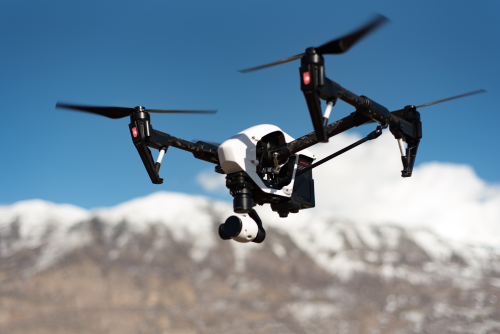
Learning how to turn one drone into multiple service lines without looking generic or undercutting your value is less about buying more gear and more about packaging what you already do. Most clients do not care how many aircraft you own. They care whether you can solve a specific problem, deliver consistently, and operate professionally.
That is the real opportunity: one drone can support several profitable offers if those offers are built around outcomes, not around “drone footage.” The moment you start selling flight time alone, you become easy to compare, easy to replace, and easy to push down on price.
Quick Take
- One drone can support multiple service lines if the services are adjacent and fit the aircraft’s real capabilities.
- The safest expansion path is not “offer everything.” It is “offer 2 to 4 related outcomes to clearly defined buyers.”
- Clients pay more for deliverables, reliability, and business relevance than for the drone itself.
- To avoid looking generic, change your messaging, shot lists, file delivery, and proof of work for each niche.
- To avoid undercutting your value, price by scope, planning, editing, reporting, and usage, not by minutes in the air.
- Do not promise survey-grade data, engineering conclusions, thermal analysis, or risky operations unless you truly have the aircraft, training, workflow, and approvals to back that up.
- If you only own one drone, build a contingency plan. A single aircraft can power a business, but it is also a single point of failure.
The core rule: diversify by outcome, not by aircraft
A common mistake is thinking that multiple service lines require multiple drones. In many cases, they do not.
A modern general-purpose camera drone can often support:
- property marketing
- construction progress updates
- contractor before-and-after documentation
- roof or façade visual documentation
- land and site overview content
- hospitality and venue marketing
What changes between those offers is not necessarily the aircraft. What changes is:
- who the client is
- what problem they need solved
- how the footage is captured
- what files they receive
- how quickly you deliver
- what business use the content supports
That is why “aerial photo and video for any industry” tends to feel cheap and interchangeable. It sounds like a generic tool description, not a business solution.
A real estate agent is not buying the same thing as a construction manager, even if both jobs are shot with the same drone on the same week. One wants listing-ready visuals that drive attention fast. The other wants consistent, repeatable documentation that helps stakeholders track progress.
If you want to turn one drone into multiple service lines without looking generic or undercutting your value, start with the buyer’s desired result.
Start with a capability audit, not a service menu
Before you add more offers, be honest about what your current setup can actually do.
Audit the aircraft you already have
Ask yourself:
-
What does the camera reliably produce? – clean stills – stabilized video – decent low-light performance – acceptable dynamic range for bright exterior scenes
-
What flying conditions can you handle well? – moderate wind – tight urban takeoff constraints – repeatable positioning for progress shoots – safe stand-off distance from structures and people
-
What post-production can you deliver confidently? – color-corrected stills – short-form social edits – client-ready folder organization – labeled progress sets – annotated images
-
What business and compliance limits do you have? – commercial permissions in your area – insurance coverage – experience with site briefings – confidence around active job sites or sensitive locations
-
What can you not honestly sell yet? – survey-grade mapping – thermal analysis – engineering conclusions – operations that require approvals you do not yet have – high-risk flights near crowds, roads, or restricted airspace
This audit matters because the fastest way to damage pricing power is to market services that sound advanced but are delivered at a beginner level.
The best service lines to add from one camera drone
For most pilots with one general-purpose camera drone, the smartest service lines are adjacent. They share similar capture needs, editing tools, and client expectations.
| Service line | What the client is really buying | Extra workflow you need | Why it can command better pricing |
|---|---|---|---|
| Property marketing | attention, context, listing appeal | fast edits, vertical clips, clean image delivery | speed and marketing value matter more than raw flight time |
| Construction progress updates | consistency and stakeholder visibility | repeatable angles, file naming, monthly archive discipline | recurring work and reporting reliability are valuable |
| Roof or façade visual documentation | safer visual access for initial review | annotated stills, careful disclaimers, safe stand-off capture | saves time and supports maintenance decisions |
| Land and development site overview | context, access visibility, site storytelling | simple overlays, stakeholder-ready summaries | useful for planning, investor decks, and sales discussions |
| Hospitality and venue marketing | atmosphere, scale, destination feel | storyboard thinking, short-form edits, seasonal planning | content can be reused across many channels |
| Contractor before-and-after documentation | proof of workmanship and project transformation | organized before/after delivery, branding consistency | helps the client win more work, not just archive media |
These are usually better starting points than jumping straight into highly technical survey, inspection, or industrial workflows.
Smart pairings that make commercial sense
If you want a practical path, pair services that share the same capture style.
Good combinations include:
- Real estate marketing + land overview
- Construction progress + contractor documentation
- Roof/façade visual documentation + exterior maintenance marketing
- Hospitality marketing + social media short-form packages
- Venue promotion + seasonal content refreshes
Each pairing lets you reuse core skills while sounding more specialized.
How to avoid looking generic
Looking generic is not just about your footage. It is about how your offer is framed.
If every prospect sees the same reel, the same package name, and the same line about “high-quality aerial content,” you look like a pilot with a drone, not a service provider with a business solution.
Sell a deliverable, not a drone flight
Compare these two offers.
Generic:
- 30-minute drone shoot
- edited photos and video
- fast turnaround
Stronger:
- 12 listing-ready aerial images
- 1 short vertical teaser for social
- 1 neighborhood context clip
- delivered in 24 hours in web-ready and full-resolution formats
The second one sounds more valuable because the client can picture how they will use it.
Change the proof you show for each buyer
Do not show a hotel manager the same reel you show a roofing contractor.
Your portfolio should be separated by use case, even if the aircraft is the same.
For property marketing, show:
- best-angle hero images
- boundary and access context where appropriate
- short edits that feel clean and fast
For construction, show:
- matched viewpoints across dates
- labeled progress stills
- stakeholder-friendly update clips
For roof or façade documentation, show:
- wide context first
- clear close-to-medium visuals from safe stand-off distances
- annotated examples that help a client understand what they are seeing
For hospitality or tourism, show:
- arrival sequences
- atmosphere
- surroundings
- edits that feel useful for websites and short-form platforms
The same drone can produce all of this. What makes it look specialized is the structure around it.
Use the client’s language
Every niche has its own words, timeline, and priorities.
A real estate client cares about listing launch speed.
A construction client cares about consistency, scheduling, and archive quality.
A venue marketer cares about reusable campaign assets.
A contractor cares about proof, presentation, and lead generation.
If you sound the same to all of them, your offer feels thin.
Add one non-flight output to every offer
This is one of the easiest ways to stop looking like a commodity.
Examples:
- a labeled image set
- a before-and-after comparison layout
- a short stakeholder recap video
- a shot map for recurring progress work
- an organized archive with naming conventions
- a version sized for web, social, and internal reporting
That small layer of business usability often matters more than adding one more cinematic orbit shot.
How to package multiple service lines without creating operational chaos
More offers should not mean a completely different process every time.
The goal is to build one efficient back-end workflow with several front-end offers.
Keep the capture process standardized
Your preflight and on-site workflow should stay mostly consistent:
- site brief
- weather and airspace review
- risk assessment
- batteries and media check
- client shot list confirmation
- core wide, medium, and detail capture sequence
- backup captures before landing
That consistency protects both quality and margin.
Change the shot list, not your entire business
Create separate shot-list templates for each service line.
For example:
Property marketing shot list – hero elevation – full lot context – street approach – surrounding amenities if relevant and lawful – short reveal clips – vertical social clip
Construction progress shot list – fixed reference angles – site ingress and access – wide site status – key work zones – materials and logistics areas – end-of-day or end-of-month archive set
Roof or façade documentation shot list – full structure context – each roof plane or elevation – drainage areas – penetrations or high-interest areas from safe distance – suspected issue zones clearly labeled for later review
When your templates are tight, it becomes much easier to offer several services without looking disorganized.
Price for value without undercutting yourself
Many drone operators unintentionally train the market to compare them like a commodity.
It usually starts with pricing language like:
- “cheap drone shoot”
- “30 minutes in the air”
- “lowest price in town”
- “includes one battery”
- “basic aerial package”
That framing makes the aircraft the product. It invites the client to shop on minutes, not outcomes.
A better pricing model
A commercial drone quote usually has several parts, even if you present them as one project fee:
-
Planning and coordination – scheduling – site review – permissions and paperwork where needed – client briefing
-
Capture complexity – location difficulty – timing window – active site conditions – weather sensitivity – repeatability requirements
-
Post-production and delivery – image processing – video editing – labeling or annotation – formatting and exports – archival organization
-
Usage and business value – internal documentation – marketing use – campaign use – multi-platform delivery – number of final assets
-
Travel, risk, and admin – transport time – insurance paperwork – venue coordination – rush turnaround – revision rounds
Even when two jobs require the same flight time, they may deserve very different pricing because the downstream value and effort are different.
Where to discount and where not to
| Safer places to discount | Areas to protect firmly |
|---|---|
| recurring monthly work | rush delivery |
| multiple sites booked together | difficult airspace or site access |
| flexible scheduling windows | extensive revisions |
| limited deliverable scope | added paperwork or insurance requirements |
| combined ground and aerial capture on one visit | broad marketing usage or ad campaigns |
If a client books recurring work, you can often reward scheduling efficiency. But do not discount the parts of the job that increase risk, admin burden, or business value.
Never let “same drone” mean “same price”
A common trap is thinking: “If I used the same drone, I should charge roughly the same.”
That is not how clients buy.
The same aircraft can create:
- a simple set of listing images
- a recurring progress archive for a builder
- branded content that helps a resort fill rooms
- documentation that helps a contractor win future projects
Those outcomes do not create the same value, so they should not be priced as if they do.
Build credibility when you only own one drone
Owning one drone does not make you look small. Acting unprepared does.
Clients usually care more about reliability than fleet size, especially for small and mid-sized projects.
What makes a one-drone business look credible
- clear niche-specific offers
- example deliverables, not just a highlight reel
- fast and organized communication
- realistic scheduling
- maintenance and battery discipline
- contracts that define scope, revisions, and usage
- a backup plan if weather or equipment issues intervene
If you can explain your process clearly, your “one drone” status often becomes irrelevant.
What makes a one-drone business look risky
- promising every service under the sun
- no clear examples by industry
- vague delivery terms
- no contingency plan
- charging too little “to get the job”
- overselling technical accuracy you cannot prove
In other words, professionalism scales faster than hardware count.
Safety, legal, compliance, and operational risks to check before expanding
The more service lines you add, the more likely you are to encounter different operating environments, privacy issues, and client assumptions.
Because rules vary globally, verify your requirements with the relevant aviation authority, landowner, site manager, venue, insurer, and local privacy or data regulator before operating commercially.
Areas to verify every time
- Commercial flight permissions: Your country may require registration, pilot certification, operating approvals, or category-specific rules for commercial work.
- Airspace and location restrictions: Rules near airports, urban centers, critical infrastructure, parks, heritage sites, and public events can differ sharply.
- Operations near people, vehicles, or roads: Many jurisdictions restrict flights over uninvolved people or active traffic.
- Night operations: These may require extra lighting, training, approvals, or may be restricted depending on the location.
- Privacy and data handling: Capturing neighboring properties, workers, guests, or public areas can create privacy concerns. Use a clear purpose and capture only what is needed.
- Insurance fit: Make sure your policy covers the type of commercial work you are doing, not just general recreational use.
- Sector boundaries: Visual documentation is not the same as certified inspection, surveying, engineering, or claims adjustment. Do not imply professional conclusions you are not qualified to make.
- Property and venue permissions: Even where airspace rules allow a flight, takeoff, landing, and on-site access may still require owner or venue permission.
The single-drone risk nobody should ignore
If your entire business depends on one aircraft, plan for interruption.
At minimum, have:
- spare props
- healthy batteries
- a charging plan
- backup media
- a pre-agreed weather reschedule clause
- a rental or replacement path if the aircraft goes down
One drone is enough to start. It is not enough to wing it.
Common mistakes when trying to expand from one drone
1. Adding too many service lines at once
Three focused offers beat ten vague ones. Expansion works best when each new service is adjacent to the last one.
2. Calling everything an “inspection”
That word can imply a level of technical authority the client may misunderstand. If you are providing visual documentation only, say so clearly.
3. Using one showreel for every niche
A cinematic reel is fine for awareness. It is not enough for commercial trust in specialized sectors.
4. Pricing by battery count or flight minutes
That makes you easy to compare with hobbyists and discount operators.
5. Ignoring post-production workload
Many operators underquote because the flying felt quick. The client pays for the finished result, and the editing, labeling, revision, and delivery process are often where the work really lives.
6. Failing to define usage and revisions
Marketing footage, internal reporting, and long-term campaign use are not always the same thing. State what is included.
7. Selling technical outputs before your workflow is ready
Do not market mapping, analytics, thermal work, or compliance-heavy operations just because software makes them sound easy.
A simple 90-day rollout plan
If you want to expand without overwhelming yourself, use a staged approach.
Days 1 to 30: choose your adjacent offers
Pick:
- one primary service line you already do well
- one adjacent service line that uses similar capture
- one add-on deliverable you can sell to both
Example:
- primary: property marketing
- adjacent: land overview
- add-on: vertical short-form clips
Days 31 to 60: build proof and process
Create:
- one tailored sample set for each service line
- one shot-list template per niche
- one pricing floor you will not go below
- one intake form with industry-specific questions
- one delivery structure with naming conventions
Days 61 to 90: test and refine
Reach out to a small list of ideal buyers and track:
- close rate
- editing time
- revision frequency
- profit by job type
- which offer gets easiest repeat work
Then double down on the service line with the best mix of demand, low friction, and margin.
FAQ
Can one standard camera drone really support multiple commercial services?
Yes, if the services are adjacent and match the aircraft’s real strengths. A general-purpose camera drone can often handle marketing, documentation, and progress-update work without needing a larger fleet.
What is the easiest second service line to add?
Usually the one that shares your current capture style. If you already shoot property marketing, land overview or contractor before-and-after work is often a smoother expansion than jumping into technical inspection or mapping.
Should I build one website for all services or separate brands?
Most small operators are better off with one brand and clearly separated service pages or portfolio sections. Separate brands can create more admin than value unless you are serving very different markets with very different positioning.
How should I price when the flight is short but the edit is heavy?
Price by project scope, not airtime. If a short flight leads to a demanding edit, fast turnaround, annotation, or multi-format exports, the quote should reflect that work.
Do I need different licenses or insurance for each service line?
Sometimes the core commercial authorization is the same, but the operating environment or type of work can change your requirements. Always verify with your aviation authority and insurer, especially for jobs near people, infrastructure, public venues, or sensitive sites.
Will clients take me seriously if I only own one drone?
Yes, if your process is strong and your offer is specific. Clear deliverables, a professional portfolio, and good communication usually matter more than fleet size for many small and mid-sized jobs.
When should I buy a second drone or a new payload?
Buy when the new equipment removes a proven bottleneck or unlocks a validated higher-value service line. Do not buy just to appear bigger. Buy when demand, workflow, or risk management clearly supports it.
What should I absolutely not promise with one general-purpose drone?
Do not promise survey-grade accuracy, certified engineering findings, thermal diagnostics, or risky flights you are not approved and equipped to perform. Those gaps can create safety, legal, and reputation problems fast.
The next move
Do not try to become a “full-service drone company” overnight. Pick two adjacent service lines your current drone can deliver well, package each around a clear business outcome, and set a pricing floor that respects planning, editing, risk, and reliability. If you do that, one drone can become several revenue streams without making your business look cheap, generic, or scattered.
