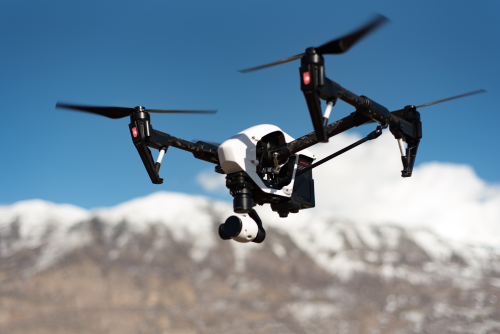
Government and NGO drone work can turn into real revenue, but only if you approach it like a contractor, not a creator hunting for a cool gig. If you want to know how to win government and NGO drone projects, the short answer is this: solve a public-interest problem, reduce procurement risk, and prove you can deliver usable data and reporting, not just flight time. The pilots who win consistently are usually the easiest to approve, the safest to deploy, and the clearest on scope, timeline, compliance, and output quality.
Quick Take
- These buyers purchase outcomes, not drone footage. Think maps, inspections, damage assessments, environmental monitoring, training, and decision-ready reports.
- Your biggest competitors are not always other pilots. You are often competing with survey firms, engineering consultancies, GIS teams, and local contractors that happen to use drones.
- Procurement readiness matters as much as flight skill. A clean capability statement, compliance documents, insurance, safety procedures, and sample deliverables often matter more than your showreel.
- Start smaller than your ego wants. Subcontracting, pilot projects, and local partnerships are usually the fastest path to credible references.
- Price the whole mission. Include planning, permits, travel, data processing, reporting, revisions, partner costs, and risk.
- Government and NGO buyers are different. Government often prioritizes auditability and formal process. NGOs often prioritize field practicality, donor reporting, and local sensitivity.
- Never guess on rules. Verify aviation permissions, insurance, privacy, customs, data handling, and any location-specific restrictions before bidding or mobilizing.
Why this market is worth your time
Government and NGO projects can be frustratingly slow to win, but they can also be more stable than one-off commercial shoots.
What makes them attractive:
- Recurring work: seasonal mapping, infrastructure monitoring, environmental surveys, public works documentation, disaster-response support
- Larger operational scope: multiple sites, repeat flights, training, and reporting
- Better lifetime value: one good project can lead to renewals, referrals, or framework agreements
- Less trend-driven demand: buyers care less about drone brand hype and more about dependable results
What makes them harder:
- longer sales cycles
- stricter paperwork
- formal evaluation criteria
- slower payments in some cases
- more scrutiny on safety, data handling, and legal compliance
That tradeoff is the whole game. If you want “real revenue,” this segment is often stronger than chasing random local gigs, but only if you build the business side properly.
Government and NGO buyers are not the same
Both may use drones for similar field tasks, but they usually buy differently.
| Aspect | Government buyers | NGO buyers | What you should emphasize |
|---|---|---|---|
| Main concern | Compliance, accountability, audit trail, continuity | Practical field impact, donor reporting, local context, speed | Show low-risk delivery and clear outcomes |
| Buying style | Formal tender or approved vendor process | Can be formal, but may also buy through project teams or implementing partners | Be easy to onboard and clear to evaluate |
| Useful proof | References, licensing, insurance, methodology, reporting quality | Field examples, adaptability, safeguarding, local partnerships, training capability | Tailor examples to mission conditions |
| Common friction | Slow approvals, pass/fail requirements, detailed admin forms | Unclear scopes, grant-driven timing, remote logistics, evolving needs | Build flexible but tightly scoped proposals |
| Extra value | Long-term support, repeatability, local compliance | Capacity building, handover, simple outputs, community sensitivity | Offer training and plain-English reporting |
A simple rule helps here:
- Government wants to know you are approvable.
- NGOs want to know you are deployable.
If your pitch does not make both of those obvious, you will lose to a less flashy but more organized competitor.
The drone services these buyers actually pay for
A lot of pilots still market themselves with cinematic footage. That can help for communications teams, but it is rarely the core budget line.
The work that gets funded more reliably usually falls into these buckets:
Mapping and geospatial data
This includes orthomosaics, elevation models, site progress maps, land-use documentation, drainage analysis support, agriculture monitoring, and basic GIS-ready outputs.
Buyers care about:
- area coverage
- repeatability
- positional accuracy
- file format compatibility
- reporting that non-pilots can understand
Inspection and asset documentation
Common use cases include roads, bridges, roofs, solar sites, utilities, public buildings, and post-storm condition checks.
Buyers care about:
- defect visibility
- consistent capture method
- annotated findings
- turnaround time
- safe access to difficult areas
Disaster and damage assessment
After floods, storms, earthquakes, fires, or landslides, drones can support rapid situational awareness.
Buyers care about:
- speed to deploy
- safe operations in unstable conditions
- chain of communication
- image labeling and location context
- compatibility with emergency workflows
Environmental and conservation monitoring
Projects may involve coastline change, erosion, forestry, wildlife habitat, wetlands, pollution indicators, or restoration tracking.
Buyers care about:
- repeat survey methodology
- seasonal comparability
- minimal disturbance
- defensible documentation
- careful permissions in protected areas
Training and local capacity building
Many NGOs and public agencies do not just want flights. They want internal capability.
That may include:
- pilot training
- standard operating procedures
- risk assessment templates
- maintenance routines
- basic processing workflow
- reporting and handover guidance
This is important because training can be easier to sell than field ops in places where outside contractors face permit or logistics barriers.
The smartest ways to enter this market
Most pilots should not start by chasing a giant national tender. The better move is to enter through a lower-risk path.
Best route for most solo pilots or small teams
-
Subcontract under a survey, engineering, or mapping firm
They already understand procurement and often need reliable flight capacity. -
Partner with a local consultancy or NGO implementer
You bring drone operations. They bring local relationships, admin capacity, and sector knowledge. -
Bid on small municipal or regional jobs
Smaller scopes are easier to win and easier to use as references later. -
Offer a tightly defined pilot project
For example: one drainage corridor, one school roof portfolio, one farm block sample, one district training workshop. -
Sell training plus limited field deployment
This works well when the buyer wants long-term internal capability, not permanent outsourcing.
If you are early in your business, being a strong subcontractor is often more profitable than being a weak prime contractor.
Build an offer that procurement can approve
A winning offer is usually simple, specific, and easy to compare.
1. Pick two or three service packages
Do not market yourself as “we do everything drone-related.”
Choose a few clear packages such as:
- infrastructure inspection and reporting
- mapping for land, agriculture, or environment
- disaster assessment and rapid documentation
- training and drone program setup
Narrow offers are easier to understand, price, and reference.
2. Create proof that matches the job
A cinematic reel is not enough.
Build sample deliverables such as:
- annotated inspection reports
- sample orthomosaic screenshots
- before-and-after site documentation
- damage assessment templates
- training outline and handover checklist
Show the end product the client will use, not just the aircraft in the air.
3. Prepare a vendor and compliance pack
Different countries and organizations ask for different documents, but many requests are predictable. Prepare these in advance where applicable:
- business registration documents
- tax registration details
- pilot qualifications and operator approvals
- aircraft list and sensor list
- insurance certificates
- safety manual or standard operating procedures
- risk assessment template
- incident response process
- data protection or confidentiality statement
- reference list and project summaries
- anti-corruption, safeguarding, or code-of-conduct statements if requested
- bank and supplier onboarding details
If you have to assemble this after a tender drops, you are already behind.
4. Build redundancy into your promise
Government and NGO buyers hate single points of failure.
If possible, show that you have:
- backup aircraft or partner access to one
- spare batteries and essential parts
- a second trained operator or observer when needed
- processing capability if one machine fails
- local contacts for transport, permissions, and field support
5. Write a one-page capability statement
This is one of the most useful documents in this market.
Include:
- who you serve
- what outcomes you deliver
- regions you can operate in
- key equipment and sensors
- safety and compliance strengths
- example deliverables
- relevant experience
- contact details
Keep it tight. Busy procurement teams will not read your life story.
How to find opportunities without wasting months
Many pilots spend too much time waiting for the perfect tender and too little time building visibility before it appears.
Good sources of opportunity include:
- public procurement portals and tender bulletins
- approved vendor registration programs
- engineering, survey, environmental, and development consultancies
- local governments and public works departments
- NGOs and implementing partners already running field programs
- disaster preparedness and resilience programs
- conservation and agriculture projects
- multilateral or donor-funded contractor ecosystems
Search for problem language, not just “drone.” Useful terms include:
- aerial survey
- mapping
- remote sensing
- orthomosaic
- site progress monitoring
- infrastructure inspection
- environmental monitoring
- damage assessment
- GIS support
- capacity building
You often win earlier by becoming known as a credible option before a formal request goes out. That does not mean gaming procurement. It means being visible, registered, and clearly relevant when the need arises.
What a winning proposal usually includes
A tender, request for proposal, or scope document is often scored line by line. Many bids lose because the operator writes a generic sales pitch instead of answering the buyer’s actual requirement.
Before you bid, ask five hard questions
- Are we legally eligible to operate there?
- Do we have a relevant example we can show?
- Can we actually deliver the data quality requested?
- Do we have enough cash flow to survive the payment timeline?
- Can we still make a profit after partner costs, travel, and reporting?
If the answer to several of those is no, pass.
Your proposal should usually cover these points
-
Problem understanding
Restate the mission in the client’s language. Show you understand why the work matters. -
Methodology
Explain how you will capture, process, quality-check, and deliver the output. -
Deliverables
Be precise: maps, image sets, inspection logs, dashboards, training materials, reports, file formats, review meetings. -
Timeline
Include mobilization, fieldwork, processing, review, and final delivery. -
Team and roles
Identify who flies, who observes, who processes data, and who manages client communication. -
Safety and compliance approach
Describe how you will verify airspace permissions, site access, people-and-property risk, and emergency procedures. -
Data management
Explain ownership, storage, confidentiality, backups, and handover. -
Commercials
Present a clean budget with assumptions, exclusions, and payment milestones. -
Optional extras that help
local training, knowledge transfer, low-bandwidth deliverables, multilingual reporting, partner coordination
One more rule: follow the submission instructions exactly. Plenty of technically good bids are rejected for missing forms, naming files wrongly, skipping signatures, or ignoring mandatory formats.
Price for margin, not just for the win
Low pricing wins attention. Sustainable pricing wins businesses.
A government or NGO project quote should usually account for more than flight days. Your real cost base often includes:
- pre-project planning
- local coordination
- permit and admin time
- travel and accommodation
- crew and vehicle costs
- flight operations
- data processing
- analysis and report writing
- revisions
- partner fees
- contingency
- tax treatment where applicable
- profit margin
A simple pricing discipline helps:
- Floor price: your minimum profitable number
- Target price: the number that supports healthy operations
- Walk-away price: below this, you do not bid
That last number matters. Underbidding to “get the reference” often creates the wrong kind of reference: a client who expects impossible pricing forever.
A better way to structure quotes
Instead of one vague lump sum, break pricing into logical blocks:
- mobilization and planning
- field operations
- processing and analysis
- reporting and presentation
- optional training or follow-up
- reimbursable travel if the buyer allows it
Also define assumptions clearly:
- number of sites
- size of area
- required resolution or detail
- number of flight days
- number of revision rounds
- re-flight conditions
- weather delay treatment
- deliverable formats
Clarity protects margin.
Safety, legal, compliance, and data risks to cover
This market touches regulated flight activity, public-interest work, and sometimes sensitive locations. Do not treat compliance as a footnote.
Before bidding or deploying, verify the relevant rules with the appropriate aviation authority and any local agency controlling the site or airspace. Depending on country and mission, you may need to confirm:
- operator and pilot authorization
- aircraft registration requirements
- airspace approvals
- rules for night operations
- rules for operations near people, roads, or buildings
- whether beyond visual line of sight, or BVLOS, is allowed
- whether mapping or surveying has extra restrictions
- insurance requirements
- privacy or image-consent expectations
- rules around government facilities, utilities, borders, ports, or critical infrastructure
- protected area permissions
- customs or temporary import rules for aircraft and batteries
- data ownership, storage location, and export restrictions
For NGO and humanitarian work, add extra discipline:
- community sensitivity
- safeguarding obligations
- avoiding flights that could create fear or misunderstanding
- data handling for vulnerable populations
- security conditions on the ground
- coordination with field staff and local authorities
In some places, the legal issue is not just the flight. It is the data. High-resolution imagery, mapping outputs, or infrastructure documentation can be sensitive. If you are not sure who can own, store, or export the data, do not guess.
Common mistakes that lose these deals
Leading with gear instead of outcomes
Buyers rarely care that you own a certain drone model. They care whether you can produce the deliverable safely and consistently.
Using a showreel as your main proof
A beautiful edit does not prove mapping accuracy, inspection logic, or reporting quality.
Bidding work you are not structurally ready for
If you cannot handle procurement forms, field logistics, data processing, and client updates, you are not ready just because you can fly well.
Ignoring local partners
A local firm, NGO, or field coordinator can be the difference between smooth delivery and a failed mobilization.
Forgetting that data work is part of the product
For many projects, the real labor starts after landing.
Underpricing to “get in”
This often destroys your margins and your credibility when delivery inevitably costs more than planned.
Promising restricted operations without approvals
Do not casually promise night flights, flights over populated areas, or advanced operations unless those approvals are actually available.
Treating procurement like normal sales
Formal buyers often score compliance first and excitement second.
A practical 90-day plan
Days 1 to 30
- choose two service niches
- build one-page capability statement
- prepare sample deliverables
- organize your compliance pack
- list the sectors and organizations that already buy adjacent services in your region
Days 31 to 60
- register with relevant supplier systems where possible
- contact engineering, survey, environment, and NGO partners
- refine your quote template and risk assessment template
- build two or three short case-study pages
- identify small opportunities you could realistically deliver
Days 61 to 90
- bid on a small number of well-matched opportunities
- offer one pilot project or paid scoping exercise
- ask partners for subcontract roles
- track every response and objection
- improve your proposal based on what buyers actually ask for
That process is boring compared with flying. It is also what builds revenue.
FAQ
Do I need expensive enterprise drones to win government or NGO work?
Not always. You need the right sensor, reliable performance, clear outputs, and a workflow that fits the job. In many cases, a modest platform with strong planning and reporting is more valuable than expensive hardware used badly. Redundancy and consistency matter more than pure prestige.
Should I bid directly or start as a subcontractor?
If you are new to formal procurement, start as a subcontractor or local partner whenever possible. It reduces admin burden, improves your odds of winning, and helps you collect references without carrying the full contract risk.
What documents are usually requested?
Common requests include business registration, tax details, operator or pilot credentials, insurance, safety procedures, references, and banking details. Some buyers also ask for anti-corruption, safeguarding, or data-protection documentation. Exact requirements vary, so verify each tender carefully.
How long does it take to win this kind of work?
It can take weeks or months. Smaller local jobs may move faster. Larger government or donor-funded projects may take much longer because of approvals, clarifications, and onboarding. Do not build your cash-flow plan around a quick decision.
Can a solo pilot win these projects?
Yes, but usually at smaller scope or with partners. Solo operators do best when they stay narrowly focused, keep their paperwork clean, and avoid overpromising. If the project is mission-critical, buyers may prefer teams with backup capacity.
How should I handle revisions and re-flights in my quote?
Define them upfront. State how many review rounds are included, what triggers a re-flight, and whether weather or access delays change the price. If you leave this vague, your margin will disappear during delivery.
What if I have no government references yet?
Use adjacent proof. Relevant private-sector mapping, inspections, environmental work, or training can still help if the deliverables are similar. You can also gain credibility through subcontracting, pilot projects, or partnerships with firms that already serve the public sector.
Are NGOs easier clients than governments?
Not automatically. NGOs can be faster and more practical, but they may operate in harder field environments and with less-defined scopes. Government buyers may be slower, but often more structured. Neither is “easy.” They are just different.
Your next move
If you want real revenue from government and NGO drone projects, stop trying to look impressive and start trying to look dependable. Pick one public-sector problem you can solve well, package it with clear deliverables and compliance proof, and go win a small contract you can deliver flawlessly. The fastest path into this market is usually not the biggest tender on the board. It is the most credible job you can turn into your next reference.
