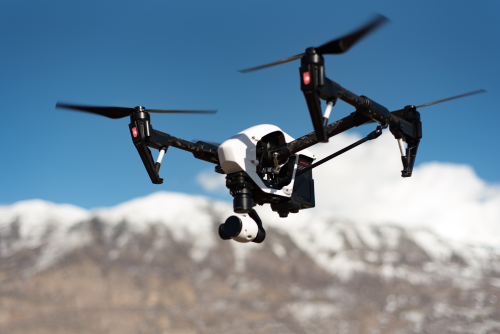
Many people think offering Drone-as-a-Service starts with buying a better drone and finding someone willing to pay for flights. In practice, the biggest mistakes people make when they try to offer Drone-as-a-Service have far less to do with stick skills and far more to do with positioning, pricing, compliance, workflow, and client trust. If you want a drone service business that lasts, you need to build an operation, not just fly missions.
Quick Take
If you only remember a few things, make them these:
- Drone-as-a-Service works best when you sell a business outcome, not “drone time.”
- Most new providers fail by being too broad, too cheap, or too informal.
- Flight time is only one part of the job. Planning, permissions, travel, data handling, editing, reporting, and revisions often take longer than the mission itself.
- Compliance, safety, privacy, and insurance are not admin extras. They are part of the product you are selling.
- A repeatable service with clear deliverables beats a long list of vague capabilities.
- One broken aircraft, one delayed approval, or one missing backup plan can wipe out a profitable week.
- The most reliable growth usually comes from one niche, one workflow, and a small number of repeat clients before expansion.
Where most Drone-as-a-Service offers go wrong
| Mistake | What happens | Better move |
|---|---|---|
| Starting with the drone, not the customer problem | You sound like a gear seller, not a service business | Define the problem, output, and value first |
| Trying to serve every market | Weak positioning, messy workflow, low trust | Start with one vertical and one core deliverable |
| Underpricing | Busy schedule, poor margins, burnout | Price for the full workflow and risk |
| Selling flights instead of deliverables | Clients compare you on cost alone | Sell reports, assets, insights, or recurring coverage |
| Ignoring compliance and privacy | Jobs stall, risk rises, enterprise buyers walk away | Build legal and operational checks into the process |
| Scaling too early | More drones, same chaos | Fix SOPs, margins, and sales process before growth |
What Drone-as-a-Service actually means
Drone-as-a-Service is not just commercial flying. It is a managed service where the client pays you to plan, capture, process, deliver, and sometimes interpret drone-based data or media.
That can include:
- Marketing footage for real estate, tourism, events, or hospitality
- Roof, tower, utility, and industrial inspections
- Construction progress monitoring
- Mapping, modeling, and stockpile measurement
- Agriculture imaging and field monitoring
- Security, emergency support, or post-incident documentation where allowed
- Recurring site visits and reporting
The customer usually does not care much about your aircraft model. They care about outcomes such as:
- Faster inspections
- Better visual records
- Safer access to hard-to-reach areas
- Reliable recurring documentation
- Usable data in the right format
- Less cost than traditional methods
- Fewer surprises and delays
That is why so many first-time operators struggle. They build the offer around the machine, while clients buy the result.
Mistake 1: Starting with equipment instead of a customer problem
This is the most common failure point.
A lot of new operators ask, “Which drone should I buy to start a business?” before they ask, “Which problem am I solving, for whom, and how often?” That leads to expensive gear, weak marketing, and services nobody urgently needs.
A client rarely wakes up wanting “a drone flight.” They want one of these instead:
- A weekly construction progress report
- A defect photo set for a roof insurance claim
- A short marketing video for a resort launch
- A measurement of stockpile volume
- A thermal check for suspected energy loss
- A set of map outputs for planning or documentation
If your offer begins with “I provide drone services,” you are still too generic. If it begins with “I help roofing firms document storm damage within 24 hours using structured photo sets and annotated reports,” now you have a service.
A better starting point
Define these five things before you buy more equipment:
- The customer type
- The business problem
- The deliverable
- The turnaround time
- Why your method is better than their current alternative
That framing will also tell you what aircraft, sensors, software, and crew setup you actually need.
Mistake 2: Trying to serve everyone
Many new Drone-as-a-Service businesses launch with a website that says they do real estate, weddings, mapping, agriculture, inspections, tourism, events, surveying, security, and FPV content.
That looks flexible to the founder. It often looks unfocused to the buyer.
Each of those markets has different expectations around:
- Turnaround time
- Data accuracy
- Editing quality
- Site access
- Airspace complexity
- Insurance expectations
- Compliance burden
- Seasonal demand
- Equipment needs
A pilot who shoots resort content one day and promises engineering-grade mapping the next day may be capable, but the business still looks inconsistent.
Why specialization wins early
Niche focus helps you:
- Build a repeatable workflow
- Learn one client language well
- Create better samples and case studies
- Quote faster and more accurately
- Improve margins through repetition
- Reduce training and gear sprawl
You do not need to stay narrow forever. But you usually need to start narrow enough to become trusted.
A strong early model is:
- One primary vertical
- One adjacent secondary service
- One clear hero deliverable
Example:
- Primary vertical: construction
- Secondary service: roof inspections
- Hero deliverable: monthly progress package with standardized stills, short video, and site comparison notes
That is much easier to sell than “full-service drone solutions.”
Mistake 3: Underpricing because they only count flight time
Underpricing kills more drone service businesses than bad flying.
New operators often charge based on battery count, flight minutes, or what a local hobbyist with a social media reel is asking. That ignores most of the real work.
Your price needs to cover the entire mission lifecycle:
- Lead qualification and proposal writing
- Site review and risk planning
- Travel and setup time
- Crew costs if you need an observer or second operator
- Airspace or site coordination where applicable
- Flight execution
- Battery wear and equipment depreciation
- Data transfer, backup, and organization
- Editing, processing, reporting, and quality control
- Revisions
- Insurance and overhead
- Admin and invoicing
- Weather-related rescheduling risk
A 20-minute flight can easily become a half-day or full-day job.
Common underpricing traps
- Copying rates from unrelated service types
- Offering “introductory” pricing for too long
- Including unlimited edits
- Absorbing travel costs without realizing it
- Failing to charge for rush turnaround
- Not pricing for specialized deliverables like thermal, modeling, or analytics
Better pricing logic
Use pricing that reflects the value and workload of the job, such as:
- Per site
- Per asset
- Per visit
- Per output package
- Per recurring monthly coverage plan
- Per inspection route or acreage where that fits the workflow
The main point is simple: do not sell your time in the air as if the rest of the operation is free.
Mistake 4: Selling flights instead of deliverables and decisions
Clients do not want raw files unless they already have a mature in-house team. Most buyers want something usable.
Instead of selling “a 30-minute drone inspection,” sell:
- An annotated roof defect report
- A construction progress package with matched camera angles
- A clipped and color-corrected social media asset pack
- A stockpile volume estimate with export formats the client can use
- A defect image set organized by asset and severity
- A recurring visual archive with date-stamped comparisons
When you only sell the flight, the conversation becomes price-driven. When you sell a finished output, the conversation shifts toward usefulness.
Your proposal should define
- Scope of work
- What will be delivered
- In what format
- Turnaround time
- Revision limits
- Weather and access assumptions
- What is excluded
- What the client must provide
- Acceptance criteria
That prevents a huge amount of confusion later.
Mistake 5: Ignoring the work that happens after landing
One of the biggest mistakes people make when they try to offer Drone-as-a-Service is underestimating the office work.
For media jobs, that means sorting footage, editing, color work, exporting, compressing, and sending versions.
For data jobs, it can mean:
- Uploading and backing up large files
- Processing maps or models
- Running quality checks
- Cleaning up mislabeled assets
- Generating measurements
- Writing summaries
- Formatting reports for client systems
The hidden danger is that post-flight work expands faster than flight work. You can add a second drone more easily than you can add a consistent data pipeline.
What gets missed most often
- File naming conventions
- Backup discipline
- Storage costs
- Processing time on large datasets
- Version control
- Data retention policies
- Secure handling for sensitive sites
- Staff time for quality assurance
If your business cannot reliably turn captured data into clean client-ready output, you do not yet have a service business. You have an acquisition habit.
Compliance, safety, and operational risk are not optional
If you are offering commercial drone work, your clients are also buying your risk management. This is especially true for enterprise, industrial, infrastructure, or public-facing projects.
Rules vary widely by country and sometimes by region, site type, and use case. Before operating commercially, verify what applies with the relevant aviation authority and, where needed, the property owner, park authority, venue, municipality, or infrastructure operator.
At minimum, verify these points
- Pilot competency or certification requirements
- Aircraft registration requirements
- Commercial operation rules in your jurisdiction
- Airspace restrictions and authorization requirements
- Visual line of sight and altitude limits
- Rules around operations near people, roads, airports, or sensitive areas
- Privacy, data protection, and filming consent expectations
- Insurance requirements or client minimums
- Site-specific permissions
- Additional requirements for thermal, mapping, or critical infrastructure work
Operational safeguards that buyers increasingly expect
- Written risk assessments
- Preflight and post-flight checklists
- Maintenance and battery logs
- Incident response procedure
- Weather decision thresholds
- Crew role clarity
- Data handling policy
- Proof of insurance where applicable
- Clear go/no-go authority on site
If you treat compliance as a box to tick after you win the job, you will eventually quote work you cannot legally or safely perform. That damages trust fast.
Mistake 6: Running the business without standard operating procedures
A lot of operators rely on memory, text messages, and improvisation. That works until you are busy, tired, or managing multiple jobs at once.
Standard operating procedures, or SOPs, do not have to be corporate and heavy. They just need to make repeatability possible.
You need SOPs for at least these areas
- Lead intake and qualification
- Estimating and quoting
- Pre-site research
- Client briefing and expectations
- Equipment prep
- On-site setup and crew communication
- Flight execution
- Data transfer and backup
- Delivery quality checks
- Invoicing and follow-up
- Incident, delay, and weather reschedule handling
Without SOPs, you will see the same problems over and over:
- Forgotten shots or missed angles
- Inconsistent file delivery
- Poor communication on delays
- Scope creep
- Last-minute site confusion
- Hard-to-train subcontractors
- Different quality depending on who flew the job
A service business becomes scalable when the process is reliable even on an average day, not just when the founder is personally supervising everything.
Mistake 7: Overpromising accuracy, speed, or automation
This mistake shows up in marketing copy all the time.
Operators promise:
- Survey-grade results without explaining conditions
- Same-day turnaround on complex processing jobs
- AI-powered defect detection as if it never needs human review
- Full-site coverage despite weather, access, or lighting constraints
- “No-permit-needed” style convenience language that may not hold across locations
That is dangerous for two reasons.
First, sophisticated buyers can spot weak claims. Second, unsophisticated buyers may believe you, which creates a delivery problem later.
Where realism matters most
- Mapping accuracy depends on workflow, site conditions, controls, and processing standards.
- Thermal interpretation depends on timing, environment, surface conditions, and expertise.
- Inspection quality depends on access, visibility, and safe standoff distances.
- Turnaround time depends on file size, software performance, QA, and client revisions.
Be especially careful when clients may rely on your outputs for engineering, legal, insurance, or safety decisions. In some markets, certain deliverables may require licensed professionals or formal sign-off beyond the drone flight itself. Verify local requirements before positioning your output as authoritative.
The best commercial language is clear and conservative. Promise what you can reproduce consistently.
Mistake 8: Having no redundancy in gear, crew, or scheduling
A one-drone business is fragile.
Batteries fail. Props get damaged. Memory cards corrupt. Weather shifts. The pilot gets sick. A software update causes an issue. A job runs long and knocks out the next client.
None of this is unusual. The mistake is pretending it will not happen.
Redundancy does not always mean buying a full second fleet
It can mean:
- A backup aircraft that can complete your core service
- Extra batteries, chargers, props, cards, and cables
- A tested pre-job equipment checklist
- A second pilot or subcontractor relationship
- Spare storage and backup workflows
- Real weather buffers in your schedule
- A client communication template for delays
- A plan for re-flying critical shots
If you are targeting business clients, resilience is part of your value. Reliability often matters more than maximum image quality.
Mistake 9: Treating sales like an afterthought
Many capable pilots assume good work will automatically create demand. Sometimes it does, but usually not at the pace needed to build a stable service business.
You need a sales process, even if it is simple.
What a basic sales system should include
- A clear target client profile
- A short, understandable offer
- Sample deliverables, not just cinematic highlight reels
- A qualification call or questionnaire
- A proposal template
- Follow-up timing
- A simple CRM or pipeline tracker
- Post-job upsell logic for repeat work
One of the biggest missed opportunities in Drone-as-a-Service is recurring revenue. Many operators chase one-off jobs when their best route to stability is a repeatable schedule.
Examples of repeatable work include:
- Monthly construction progress
- Quarterly asset inspections
- Seasonal property marketing refreshes
- Scheduled roof or solar checks
- Ongoing tourism and hospitality content
A recurring client lets you refine workflow, reduce sales cost, and forecast cash flow. One-off jobs are useful, but they are a poor foundation by themselves.
Mistake 10: Scaling before the unit economics make sense
Buying more drones, hiring more pilots, or adding new software will not fix a broken offer. It just makes the cost base larger.
Before scaling, you should know:
- Which service line is most profitable
- Which jobs create the most revision pain
- How long delivery actually takes
- What your average gross margin is
- How often you win quotes
- How long clients take to pay
- Which customers repeat
- Which lead sources produce serious buyers
- How many jobs each pilot can realistically handle without quality dropping
Warning signs you are scaling too early
- Revenue is growing but cash is tight
- You are busy yet still not paying yourself properly
- Every quote is custom and slow to produce
- Clients ask for things your team delivers differently each time
- Software costs keep rising without clearer output value
- You are adding service lines because the current one is messy, not because it is mature
The better path is usually to productize first:
- Standard package
- Standard scope
- Standard delivery timeline
- Standard exclusions
- Standard pricing logic
- Standard QA process
Then expand carefully into adjacent services.
A better way to launch or repair a Drone-as-a-Service business
If you are just starting, or if your current operation feels chaotic, use this sequence.
1. Pick one client type
Choose a market with a real reason to hire you repeatedly, not just once for novelty.
Good examples include:
- Construction firms
- Roofers and property inspectors
- Resorts and destination marketers
- Solar installers and maintenance teams
- Real estate developers
- Industrial asset owners
2. Define one repeatable deliverable
Make it specific enough that a buyer understands it immediately.
Examples:
- Monthly progress package for one site
- Standard roof documentation report
- Hospitality media pack for new property listings
- Visual inspection image set by asset ID
3. Build the workflow backward from delivery
Start with the final output, then define what capture plan, file handling, editing, reporting, and QA are required to deliver it consistently.
4. Write your operating and compliance checklist
Include:
- Job qualification
- Site permission verification
- Airspace and local rule checks
- Safety planning
- Gear prep
- Data backup
- Delivery and sign-off
5. Price for the full job, not the flight
Know your real cost per mission and your minimum acceptable margin. If you cannot explain your pricing, you probably do not understand your service economics yet.
6. Test with a small number of clients before broad expansion
Aim for a few repeat clients in one niche. The point is not just revenue. The point is learning:
- Where scope creep happens
- Which steps take too long
- What clients actually value
- What deliverables lead to repeat work
That learning is worth more than adding a new aircraft too soon.
FAQ
Is Drone-as-a-Service just another name for commercial drone flying?
Not exactly. Commercial flying is part of it, but Drone-as-a-Service usually means a managed offering that includes planning, capture, processing, delivery, and client support. The service is the full workflow, not just the aircraft in the air.
What is the best first niche for a new drone service provider?
Usually the best first niche is one with repeat demand, simple decision-makers, and deliverables you can standardize. Construction progress, property documentation, hospitality content, and some inspection workflows are often easier starting points than highly technical mapping or complex industrial work.
Should I start as a generalist and specialize later?
You can, but broad positioning usually slows trust and creates messy operations. It is often better to specialize in one core use case first, then expand once your workflow, pricing, and compliance process are stable.
How should I price a drone service if every job looks different?
Start with a base workflow model rather than pure flight time. Include planning, travel, on-site work, post-processing, reporting, revisions, overhead, and risk. Then package the work by site, asset, visit, or deliverable so clients understand what they are buying.
Do I need enterprise-grade software from day one?
Not always. Buy software when it solves a real delivery problem or saves meaningful labor. Many new providers overspend on tools before they have a repeatable workflow or enough volume to justify the subscription.
Is one drone enough to start a service business?
It can be enough to test a niche, but it is rarely enough for a reliable long-term operation. At minimum, you need contingency plans for hardware failure, battery issues, storage problems, and scheduling disruptions.
What should be in a client proposal?
At a minimum: scope, deliverables, format, turnaround time, assumptions, exclusions, revision policy, weather policy, site access expectations, and pricing. If the job involves regulated or sensitive operations, also clarify that execution depends on lawful and safe operating conditions.
Can a strong hobby pilot easily become a drone service provider?
Flying skill helps, but business readiness matters just as much. The hard part is often quoting, compliance, safety planning, client communication, data handling, and delivering consistent results under deadline.
Final takeaway
If you want to offer Drone-as-a-Service successfully, stop thinking like someone who rents out flight time and start thinking like someone who delivers a reliable business outcome. Pick one problem, one client type, one repeatable deliverable, and one compliant workflow you can execute consistently. When the service is clear, the drone becomes a tool instead of the whole business.
