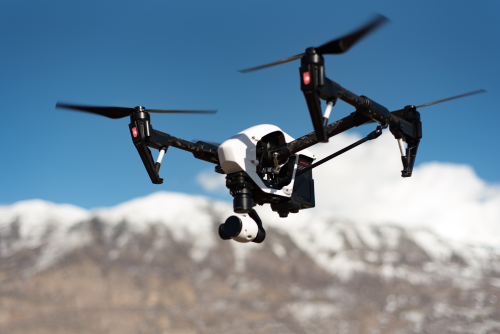
Many people assume a drone business starts with buying a better aircraft and posting cinematic clips. In reality, the biggest mistakes people make when they try to start a drone business are usually business mistakes, not flying mistakes. The operators who last tend to be the ones who pick a clear market, price properly, stay compliant, and deliver work clients can actually use.
Quick Take
If you want a drone business to become more than an expensive side hobby, focus on these points first:
- Clients do not buy drone flights. They buy outcomes: marketing assets, inspections, progress updates, maps, reports, or usable footage.
- The fastest way to struggle is to offer everything to everyone.
- Underpricing wins bad clients and weakens your business before it starts.
- Compliance, insurance, privacy, and site permissions are not admin extras. They are part of the job.
- A good pilot is not automatically a good service provider, salesperson, or project manager.
- Fancy gear matters less than consistent deliverables, backup plans, and a repeatable workflow.
- A strong portfolio explains the problem, the deliverable, and the result, not just how nice the footage looks.
- Cash flow, weather delays, maintenance, and revisions can destroy margins if you do not plan for them.
The pattern behind most failed drone businesses
Most drone businesses do not fail because the drone is bad. They fail because the operator confuses a tool with a business.
A drone can help you create value, but it does not create demand on its own. Demand comes from solving a real problem for a specific buyer. That buyer might be:
- a real estate agent who needs listings to move faster
- a contractor who needs repeatable progress documentation
- a resort that needs short-form content for campaigns
- a roofing company that wants safer visual assessments
- a production team that needs a dependable aerial unit
- an enterprise team that wants consistent data capture and reporting
That is why the most expensive mistakes usually happen before takeoff.
| Mistake | What goes wrong | Better move |
|---|---|---|
| Starting with gear instead of a market | Great footage, no paying clients | Pick one buyer and one problem first |
| Trying to serve everyone | Confused messaging and messy operations | Narrow to a service you can repeat well |
| Underpricing | Low margins, bad clients, burnout | Price around scope, risk, time, and overhead |
| Ignoring compliance | Jobs get blocked or risk increases | Verify rules, insurance, and site permissions early |
| Overbuying equipment | Cash tied up in gear that does not sell | Invest in backup, workflow, and reliability |
| No repeatable process | Missed shots, delays, inconsistent delivery | Build checklists, templates, and clear client expectations |
Common mistakes that cost new operators money
1. Starting with the drone instead of the customer problem
This is the biggest one.
A lot of people start by asking, “Which drone should I buy for my business?” The better first question is, “Who will pay me to solve what problem?”
A drone is just a capture tool. The value sits in what happens after capture.
For example:
- A real estate client wants clean, fast listing media.
- A construction client wants the same angles every week, on time.
- A tourism brand wants short edits that fit its content calendar.
- An inspection client wants useful visuals without unnecessary operational risk.
If you begin with the aircraft, you often end up with a service that sounds like this: “I do drone photography, drone video, FPV, events, mapping, inspections, and social content.” That sounds flexible, but to buyers it often sounds unfocused.
A better starting point is simple:
- Choose one buyer type.
- Choose one high-value outcome.
- Build your offer around that result.
2. Trying to serve every niche at once
New operators often think more services means more opportunity. In practice, it usually creates weak positioning and operational chaos.
Different drone services are not just different shooting styles. They are different businesses.
Consider how much can change between these jobs:
- cinematic brand work
- real estate
- roof assessments
- construction progress
- FPV interior tours
- mapping and data capture
- event coverage
- infrastructure inspection
Each one has its own:
- client expectations
- planning process
- risk profile
- editing or processing workflow
- equipment needs
- turnaround standards
- compliance questions
When you try to do all of them at launch, your portfolio gets muddled, your sales message gets vague, and your workflow becomes hard to control.
A better rule: narrow first, expand later.
Choose a niche where you can say yes to these questions:
- Is there real local or reachable demand?
- Can I deliver this safely and consistently?
- Is the buyer easy to identify?
- Can this lead to repeat work?
- Can I explain the value in plain language?
3. Underpricing just to win the first jobs
Underpricing feels smart when you are trying to build momentum. It is often one of the most damaging decisions you can make.
Why? Because low pricing does not just reduce profit. It shapes the entire business.
It can:
- attract clients who shop on price alone
- train clients to expect too much for too little
- leave no margin for revisions, weather, travel, or delays
- make it difficult to raise prices later
- force you to accept poor-fit jobs just to stay busy
A common mistake is to price only the flight time. But the job includes much more than time in the air:
- lead calls and messages
- route planning and site research
- travel
- weather monitoring
- setup and safety checks
- capture time
- editing or data processing
- file delivery
- revisions
- invoicing and admin
- battery wear, maintenance, software, storage, insurance, and taxes
If you are not pricing all of that, you are probably subsidizing the client with your own time and gear.
A better approach is to create a minimum profitable rate based on your real operating costs and the scope of the deliverable, not just the length of the flight.
4. Selling “drone footage” instead of clear deliverables
Clients get nervous when they do not know exactly what they are buying. New operators often describe the job too vaguely.
“Drone shoot for your business” is not a clear offer.
Better examples:
- 10 edited aerial photos plus 1 short vertical video
- weekly progress capture from fixed viewpoints with 24-hour delivery
- rooftop visual documentation package with labeled image set
- 30 to 60 second aerial brand edit for social and website use
- site overview flight with organized raw clips delivered same day
The clearer the deliverable, the easier it is to quote, shoot, edit, and avoid disputes.
This matters even more for technical work. If you offer mapping, inspection, or measurement-related outputs, be very careful not to promise a level of accuracy or analysis your workflow cannot support. Some clients hear “drone map” and assume exact measurements or survey-grade results. Do not let ambiguity create liability.
Define:
- what the client receives
- how many assets are included
- file format and resolution
- turnaround time
- revision limits
- what is not included
5. Treating compliance like something to figure out after the client says yes
This is where beginners can get themselves into real trouble.
Commercial drone work often involves more than general hobby flying. Depending on where you operate, you may need to verify rules around:
- commercial or business-related flight authorization
- pilot competency requirements
- aircraft registration or identification
- airspace restrictions
- site-specific permissions
- privacy and data protection
- insurance
- flights near people, buildings, roads, or sensitive locations
- night operations or other special conditions
Rules vary widely by country, and sometimes by city, site, park, or venue. A property owner saying “you can film here” does not automatically mean the airspace or operation is allowed.
Clients can also have their own requirements. Some enterprise or construction clients may ask about insurance, risk assessments, standard procedures, or proof of qualifications before they approve a vendor.
The mistake is not just legal. It is commercial. If you only discover a restriction after you have quoted and scheduled the job, you look unprepared.
6. Spending too much on gear and too little on reliability
A lot of new operators buy like creators and sell like businesses later. That order usually hurts.
It is easy to overspend on:
- a higher-end drone you do not yet need
- specialty accessories for jobs you do not have
- a second style of aircraft before your first service is working
- gear chosen for social media appeal rather than client value
Meanwhile, they underinvest in the things that make a real operation dependable:
- extra batteries
- backup media storage
- maintenance discipline
- a second workflow option if software fails
- organized file management
- a capable editing or processing setup
- quality cases and transport
- replacement planning if the aircraft is grounded
Clients care more about consistency than gear glamour. If you miss delivery because you had one aircraft, one memory card workflow, and no backup process, your premium drone did not help you.
A practical rule: build revenue before expanding your fleet. Reliability usually pays back faster than prestige.
7. Running jobs with no repeatable process
Many beginners improvise each project from scratch. That may work for one friendly client. It does not scale.
Without a repeatable system, common problems appear fast:
- unclear scope
- missed shots
- forgotten permits or site checks
- battery or storage issues
- inconsistent editing
- slow delivery
- unpaid invoices
- no documentation if a client disputes the job
You do not need a big operations team to avoid this. You need a basic operating system.
At minimum, create templates for:
- inquiry response
- quote and scope
- preflight planning
- on-site checklist
- client shot list or capture brief
- file naming and backup
- delivery note
- invoice and payment terms
This is boring work compared with flying. It is also the difference between freelancing randomly and running a service business.
8. Believing flying skill will automatically bring clients
A strong pilot can still be a weak business owner.
A lot of operators have excellent control, framing, and editing skills, but they do not know how to:
- identify a decision-maker
- write a useful proposal
- follow up without sounding desperate
- explain business value
- ask discovery questions
- handle objections
- build referral partnerships
The market does not always reward the best flyer. It often rewards the clearest, easiest, safest, and most reliable provider.
That is especially true in business-to-business work. A construction manager, agency producer, hotel owner, or property marketer is not judging you like another pilot would. They want confidence that you understand the brief, can work professionally, and will deliver on time.
If sales feels uncomfortable, simplify it. Talk less about the drone and more about the result.
Instead of: – “I shoot cinematic 4K drone footage.”
Try: – “I help contractors document site progress with same-angle weekly aerial updates delivered by the next business day.”
9. Building a portfolio that impresses pilots, not buyers
Many drone portfolios are full of sunsets, coastlines, reveal shots, and dramatic speed ramps. They look good, but they do not prove commercial value.
A buyer usually wants evidence of three things:
- You understand their type of job.
- You can produce the assets they actually need.
- You can do it consistently.
That means your portfolio should include context, not just highlights.
Better proof looks like:
- before-and-after examples
- a short case study
- the brief, the deliverable, and the turnaround
- examples for one specific industry
- raw-to-final comparisons when appropriate
- repeatable angle sets for progress work
- output samples in the formats clients use
A travel creator reel might help attract tourism or hospitality clients. A polished FPV interior tour can help with real estate or venue marketing. But in each case, you still need to show business fit, not just flying flair.
10. Ignoring cash flow, weather, downtime, and seasonality
A drone business can look profitable on paper and still feel unstable month to month.
That happens when operators forget that revenue is irregular while costs keep moving.
Common pressure points include:
- bad weather and rescheduling
- short seasonal demand windows
- hardware repairs or replacement
- slow-paying clients
- long edit cycles
- time spent on unpaid quoting
- one-off projects with no recurring revenue
If all your work depends on perfect weather and one-time bookings, you are more fragile than you think.
Try to build some stability into the model:
- use deposits or clear booking terms where appropriate
- define rescheduling and revision policies upfront
- pursue repeat clients, not just one-off shoots
- keep a cash reserve for maintenance and delays
- diversify carefully across two or three compatible offers, not ten random ones
Legal, safety, and operational risks people underestimate
Starting a drone business means taking on professional responsibility, not just getting paid to fly.
Before accepting commercial work, verify the requirements that apply in your operating area and at the exact job location. Do not assume online advice from another country fits your situation.
Pay close attention to these areas:
Aviation and site authorization
Check what your aviation authority requires for business use, pilot competency, aircraft registration, airspace access, and any operational limitations. Then separately verify whether the landowner, site manager, park authority, venue, or event organizer has its own approval process.
Insurance
Insurance needs vary by market and client type. Some jobs may require proof of liability coverage. Others may involve site-specific conditions. Do not assume “general coverage” applies to every operation. Confirm with your insurer what is actually covered.
Privacy and data handling
Filming homes, private property, people, worksites, or industrial facilities can create privacy and confidentiality issues. Clarify where you can capture, what can be published, and who owns the files.
Safety planning
Professional work needs more than a battery check. Consider weather, obstacles, people nearby, takeoff and landing area security, emergency procedures, crew communication, and whether the site is appropriate for the mission at all.
Claims about accuracy or analysis
If you provide mapping, inspection, or measurement-related outputs, do not overstate precision, certification, or decision value. If a client needs engineering, surveying, or regulated inspection outputs, make sure your workflow and qualifications actually support the claim, or partner with someone who can.
A smarter way to launch a drone business
If you want to avoid the biggest mistakes people make when they try to start a drone business, use a simpler launch path.
1. Pick one market and one offer
Examples:
- real estate listing media
- construction progress updates
- hospitality and tourism content
- simple roof and property visuals
- branded aerial content for agencies
Not forever. Just for launch.
2. Talk to real buyers before expanding gear
Have 10 to 20 conversations with likely clients. Ask:
- What do you currently use?
- What is frustrating about it?
- How often do you need it?
- Who approves the spend?
- What does “good” delivery look like?
This helps you build an offer people actually want.
3. Turn the offer into a package
Define:
- scope
- deliverables
- turnaround
- revisions
- usage terms if relevant
- travel assumptions
- booking and cancellation terms
Packaged services are easier to sell and easier to deliver consistently.
4. Build your real cost floor
Know the minimum number that keeps the job worth doing after:
- admin
- travel
- flight time
- editing or processing
- software
- maintenance
- insurance
- taxes
- risk
If a job comes in below that floor, it is probably the wrong job.
5. Create proof for that exact niche
You do not need 50 samples. You need a few relevant ones.
A short, targeted portfolio beats a generic reel every time.
6. Set up your basic operating system
Before you get busy, create:
- a checklist
- a quote template
- a client brief form
- a backup process
- a delivery method
- an invoice workflow
7. Stay small until the model proves itself
A lot of successful operators started part-time, refined one offer, built repeat clients, and only then expanded gear, team size, or service lines.
That is usually a better path than buying everything upfront and hoping the market catches up.
FAQ
Do I need a special license or authorization to start a drone business?
In many places, yes, business-related drone work can trigger different requirements than recreational flying. The exact rules depend on your country and the type of operation. Check with your national aviation authority and any site-specific authority before taking paid work.
What is the easiest drone service to sell first?
Usually, the best first service is not the most exciting one. It is the one with clear demand, simple deliverables, and repeat potential. For many operators, that can mean listing media, basic brand content, or scheduled progress documentation rather than highly technical inspection or data work.
Should I buy the most advanced drone I can afford?
Usually not at the beginning. A dependable aircraft that fits your actual service is more valuable than a premium model chosen for prestige. Early on, money is often better spent on batteries, storage, software, backups, insurance, and workflow reliability.
How should I price my first jobs?
Start with scope and cost, not guesswork. Price based on planning time, travel, flight time, editing or processing, revisions, risk, overhead, and the business value of the output. Avoid “cheap because I’m new” pricing if you want a sustainable business.
Is it better to charge hourly, by day, or by deliverable?
For many service businesses, deliverable-based pricing is easier for clients to understand and easier to manage internally. Day rates can make sense for production work. Hourly pricing is often the weakest option because it focuses attention on time rather than outcome.
Can I start a drone business part-time?
Yes, and for many people it is the smarter route. Part-time lets you test demand, refine pricing, build a portfolio, and improve your process before relying on the income. Just make sure your availability, turnaround, and communication stay professional.
Is social media enough to get clients?
Not usually. Social media can help with visibility, but most sustainable drone businesses also rely on direct outreach, referrals, partnerships, local networking, repeat clients, and a clear niche-specific portfolio. Views do not automatically become revenue.
When should I expand into more services?
Expand only after your first offer is working consistently. Good signals include repeat clients, stable pricing, predictable workflow, and enough demand to justify new gear or training. Expanding too early often creates confusion and weakens execution.
The next move that matters
If you are serious about starting a drone business, do not begin by asking how to fly more impressively. Begin by deciding who you help, what outcome you deliver, and how you will deliver it safely, legally, and profitably every time. The operators who win long term are not just the best pilots in the room. They are the clearest, most reliable businesses.
