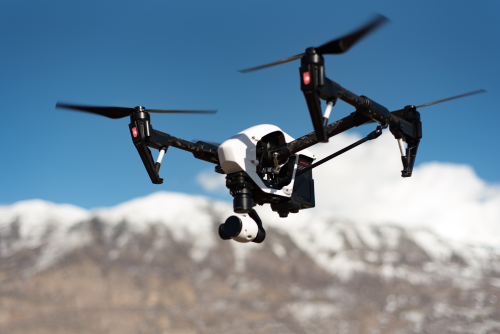
A lot of new operators assume one capable drone can become five businesses at once. On paper, the same aircraft can shoot a real estate listing on Monday, a construction update on Tuesday, a resort promo on Wednesday, and an inspection on Thursday. In practice, the biggest mistakes people make when they try to turn one drone into multiple service lines have less to do with flying skill than with workflow fit, client expectations, pricing, and compliance.
The hard truth is simple: one drone can support multiple revenue streams, but only when those service lines are truly adjacent. If the jobs need different sensors, different proof of competence, different software, different legal checks, and different turnaround expectations, you are not building “one flexible business.” You are building several small businesses that happen to share one aircraft.
Quick Take
- A drone is a capture tool, not a service line by itself.
- The safest and most profitable expansion path is to add adjacent services, meaning jobs that use similar gear, similar planning, and similar delivery formats.
- The biggest business mistake is selling “drone work” instead of clear deliverables, such as marketing photos, progress reports, short social clips, or repeatable monthly site documentation.
- The biggest operational mistake is assuming one standard camera drone can handle technical inspections, mapping, events, marketing, and indoor work equally well.
- The biggest pricing mistake is charging for flight time instead of charging for planning, travel, risk, editing, reporting, revisions, and turnaround.
- The biggest legal mistake is treating client permission as enough. Aviation rules, site rules, privacy rules, and insurance conditions still need to be checked for each type of job.
- If a new service requires a different sensor, a different portfolio, a different software stack, and a different risk profile, it is probably not an add-on. It is a new line of business.
Why one drone often turns into too many businesses
Diversification sounds smart. If real estate is slow, maybe events will fill the gap. If content work is seasonal, maybe inspections will stabilize income. That logic is not wrong.
What people get wrong is where the real work sits.
The aircraft is only one part of the job. The full service usually includes:
- lead qualification
- preflight planning
- safety and airspace checks
- site coordination
- capture workflow
- file management
- editing or data processing
- delivery formatting
- revisions
- invoicing
- follow-up
If those steps stay mostly the same across service lines, one drone can stretch surprisingly far. If those steps change completely, complexity rises much faster than revenue.
A good rule: add services that let you reuse most of your existing process. Avoid services that force you to rebuild the whole business around the same aircraft.
A realistic fit check: which service lines actually share one drone?
Here is where many operators overestimate “versatility.”
| Service line | Good fit for one standard camera drone? | What people commonly overlook |
|---|---|---|
| Real estate marketing | Yes | Fast turnaround, editing consistency, weather rescheduling, shot planning for different property sizes |
| Hospitality and venue content | Yes | Brand direction, polished edits, multiple aspect ratios, client revisions, on-site coordination |
| Construction progress documentation | Often yes | Repeatable framing, recurring schedules, site safety rules, standardized reporting |
| Social media clips for local businesses | Often yes | Creative direction, short-form editing, sound design, rights and approvals for people on site |
| Roof or exterior media documentation for sales and marketing | Sometimes | Visual documentation is not the same as a technical condition assessment; detail limits matter |
| Event highlights | Sometimes | Restrictions around people, tight timing, low-light limitations, venue permissions, backup plans |
| Mapping or measured site outputs | Sometimes | Structured capture, processing software, accuracy limits, repeatability, client expectations for measurement |
| Thermal, utility, or industrial inspection | Usually no | Sensor requirements, zoom needs, risk controls, client compliance standards, specialist reporting |
| Indoor FPV tours or high-speed action work | Usually no | Different aircraft, very different piloting skill, prop protection, editing style, risk profile |
That table points to a key business idea: adjacent services are not the ones that look similar in the sky. They are the ones that look similar in your workflow.
Real estate, hospitality, and local business promo content are often adjacent. So are construction progress, site marketing media, and recurring documentation. But industrial inspection, indoor FPV, technical mapping, and live event work usually pull you into very different operating models.
The biggest mistakes people make
Mistake 1: Treating the drone as the product instead of the deliverable
Clients do not buy “a drone flight.” They buy an outcome.
That outcome might be:
- 15 edited listing photos
- a 30-second vertical reel for social media
- monthly progress images from the same angles
- before-and-after documentation for a contractor
- overlapping photos that can be processed into a site map
- a short branded promo video
Those are deliverables, meaning the files or outputs the client will actually use.
When you sell the drone instead of the deliverable, two bad things happen:
- Clients compare you on price alone.
- You start saying yes to jobs without a clear scope.
A vague offer like “I do drone services” attracts vague inquiries. A clear offer like “monthly construction progress photo packages with fixed viewpoints and 48-hour delivery” attracts buyers who understand value.
What to do instead:
- Write every service as a one-sentence promise.
- Define exactly what the client receives.
- Define turnaround time.
- Define what is not included.
That one step removes a surprising amount of confusion.
Mistake 2: Expanding into non-adjacent service lines too early
This is the classic “my drone can technically do it, so I should sell it” trap.
A standard camera drone may be able to capture many things. That does not mean you can profitably package all of them. A new service line often brings hidden demands:
- new software
- new editing style
- new portfolio requirements
- new sales language
- new insurance questions
- new compliance checks
- new client expectations
For example, a pilot doing property marketing may be good at visual storytelling, fast edits, and client-friendly shoots. That does not automatically prepare them for recurring construction documentation, technical mapping, or industrial inspection.
A useful test is this: if the new service requires you to change the aircraft, the processing workflow, the proof of competence, and the way you quote the job, it is not really “another package.” It is a new business lane.
Mistake 3: Overpromising what one drone can actually do well
Versatile does not mean universal.
One camera drone might be excellent for marketing media and still be a weak fit for:
- close-detail inspections that need strong zoom
- thermal work that needs a thermal sensor
- low-light events
- windy or complex sites
- indoor tours
- jobs where the client expects dependable measurements rather than visuals
This is where many operators damage trust. They accept a job because the drone can fly there and record something. But the client is not paying for “something.” They are paying for a result that solves a problem.
A good example is roof work. A drone can absolutely help create visual documentation for contractors, property owners, or marketing teams. But visual media documentation is not the same as a formal condition diagnosis. If a client expects technical conclusions, you need to be very careful about what you are qualified to provide and what your equipment can reliably show.
The same applies to mapping. A regular camera drone may be enough for some visual site overviews or basic map products. But if a client expects highly dependable measurements, consistent repeatability, or survey-level confidence, you need to verify whether your aircraft, capture method, software, and ground controls are actually suitable.
The fix is simple: sell to the drone’s strengths and state its limits before quoting.
Mistake 4: Pricing by flight time instead of total job effort
This is one of the fastest ways to stay busy and stay broke.
A 20-minute flight can involve:
- client calls
- site research
- travel
- weather checks
- airspace review
- safety planning
- on-site waiting
- file backup
- editing or processing
- exports
- revisions
- delivery
- invoicing
If you price only for “time in the air,” you ignore most of the work that makes the service useful.
This becomes even more dangerous when you offer several service lines from one drone. Some jobs look similar during capture but are completely different in labor after the flight. A quick real estate shoot and a recurring progress report might both take a short flight. Their delivery burden is not the same.
A healthier pricing approach is to base quotes on:
- complexity of the site
- travel and access time
- type and number of deliverables
- urgency
- risk and compliance overhead
- editing or processing time
- revision expectations
- whether the work is one-off or recurring
You do not need a complicated spreadsheet at the beginning. But you do need to know your actual cost per job, including your time after landing.
Mistake 5: Underestimating post-production and data workflow
Many one-drone businesses fail on the ground, not in the air.
Every added service line creates more back-end work:
- different file naming
- different color grading or editing styles
- different export formats
- different client review cycles
- different storage needs
- different reporting templates
- different quality checks
If you offer marketing video, mapping outputs, and documentation reports from one drone, you may end up needing three very different delivery systems.
That is why “just adding another service” often crushes turnaround times. The drone is shared, but the back office is fragmented.
What to do instead:
- Standardize file handling from day one.
- Limit the number of delivery formats you promise.
- Use templates for recurring jobs.
- Build repeatable editing workflows before you advertise more services.
Clients usually value reliability more than range. A business that delivers two things quickly and well is easier to grow than one that promises eight things inconsistently.
Mistake 6: Marketing as a generalist before you have proof in any niche
A homepage that says “real estate, weddings, inspections, mapping, construction, tourism, social media, events, and more” feels flexible to the operator. To the buyer, it often feels unfocused.
Higher-value clients want confidence that you understand their use case. They do not just want a pilot. They want someone who understands what matters in their environment.
- Real estate clients care about flattering composition and fast delivery.
- Construction clients care about consistency, safety, and repeatability.
- Hospitality clients care about branding and emotion.
- Inspection clients care about detail, clarity, and risk control.
If your portfolio and messaging are too broad, buyers may assume you are still experimenting.
A smarter move is to choose an anchor niche, then add adjacent offers around it.
For example:
-
Anchor: real estate marketing
Adjacent: vacation rental content, hospitality promo, short-form property reels -
Anchor: construction progress
Adjacent: developer marketing media, recurring site documentation, before-and-after project visuals -
Anchor: local business content
Adjacent: venue promos, tourism visuals, social campaigns for restaurants and resorts
That gives you focus without locking you into one single job type.
Mistake 7: Ignoring compliance differences between service lines
This is one of the most serious mistakes because it can affect safety, insurance, client relationships, and your ability to keep operating.
The same drone can create very different legal and operational situations depending on the job.
Examples include:
- flights near airports or controlled airspace
- flights at night
- flights near roads, crowds, or public areas
- work on construction or industrial sites
- work near critical infrastructure
- operations around people who are not part of the crew
- privacy-sensitive properties
- cross-border travel with batteries and gear
- local filming permits or property permissions
Commercial work can also trigger different insurance expectations, contract language, or site induction requirements depending on the client.
Most importantly, client approval is not the same as aviation authorization. A property owner can invite you to film, but that does not automatically make the flight legal or safe under local aviation rules. The opposite can also be true: airspace approval alone may not give you the property rights or venue permission you need.
Before accepting a new service line, verify the requirements with the relevant aviation authority, property owner or site manager, insurer, and any local authority that governs the location.
Mistake 8: Running a one-drone business with no redundancy plan
If one aircraft supports all your income, it is a single point of failure.
Common failure points include:
- a minor crash
- damaged props
- battery issues
- firmware or app problems
- gimbal faults
- a lost or corrupt memory card
- bad weather that forces rescheduling across multiple clients
The mistake is not owning one drone. The mistake is building no continuity plan around that choice.
At minimum, a one-drone operator should have:
- spare props
- enough healthy batteries for the job type
- spare memory cards
- a reliable charging routine
- a maintenance log
- a backup data process
- a rule against doing major updates right before paid work
- a rental or partner fallback option if the aircraft goes down
Once you begin stacking multiple service lines, redundancy becomes even more important because one equipment problem can disrupt several client categories at once.
Mistake 9: Saying yes to every inquiry because the drone can technically fly the job
Early-stage businesses often confuse activity with traction.
A weak-fit job can still take your best weather window, your editing time, and your attention away from stronger clients. Worse, it can lead to disappointing results that hurt your brand.
Before accepting a new type of job, ask:
- Can my current drone produce the output the client truly needs?
- Can I complete it safely and legally in this location?
- Do I have examples or process proof that show I can deliver?
- Will the job still be profitable after editing, travel, and revisions?
- Does this job move me toward the business I want, or away from it?
If the answer to several of those is no, the job may be a distraction, not diversification.
Mistake 10: Waiting too long to specialize or invest in the right second tool
There is a stage where “one drone, many service lines” is efficient. Then there is a stage where it starts costing you money.
Watch for these signals:
- you keep losing jobs because you lack zoom, thermal, low-light performance, or indoor capability
- you spend too much time explaining why you cannot deliver certain outputs
- you are rescheduling too often because the aircraft is fully booked
- your turnaround times are getting worse
- your best clients want recurring work and stronger reliability
- you are maintaining too many portfolios and quoting styles for too many small jobs
- one service line is clearly more profitable than the others
That is usually the moment to choose one of two paths:
- specialize harder and stop offering poor-fit work
- add a second aircraft or sensor platform that directly supports proven demand
The wrong time to buy more gear is when you are bored. The right time is when demand and margin clearly justify it.
A simple fit test before you add another service
If you want a practical decision rule, use this six-part test. Only add the service if most answers are yes.
1. Does it use the same aircraft strengths?
If your current drone is a strong camera platform but weak for thermal, zoom, or indoor work, stay within its strongest use cases.
2. Does it reuse your current workflow?
Can you keep the same planning, capture style, editing process, and delivery method? If not, complexity rises fast.
3. Does it target a similar buyer?
Selling to real estate agents, hotels, developers, and industrial asset managers involves very different trust signals and sales conversations.
4. Does it fit your compliance envelope?
A service that regularly pushes you into more complex airspace, public crowds, night operations, or sensitive facilities may need more planning and a different risk appetite.
5. Can you build proof quickly?
If you cannot create a believable portfolio, sample deliverable, or clear package for the new service, you are not ready to market it.
6. Will it improve margin, not just revenue?
More service lines can increase sales and still reduce profit if they create more revisions, more software costs, and more admin.
A better expansion model for a one-drone business
If you want to grow without creating chaos, this sequence works better than broad “yes to everything” diversification.
1. Pick one anchor service line
Choose the job type where your current drone, your skill set, and local demand align best.
Good anchor examples:
- real estate marketing
- hospitality and venue content
- construction progress documentation
- social media content for local businesses
2. Productize it
Turn the service into a repeatable package with clear deliverables, price logic, turnaround, and limits.
3. Add one adjacent upsell
Examples:
- add short vertical social edits to real estate packages
- add monthly documentation to construction media work
- add before-and-after visuals to contractor marketing packages
4. Build templates
Create repeatable shot lists, export settings, file structures, and client questionnaires.
5. Track job-level profitability
Not just revenue. Profitability.
A small recurring package with low revisions may be better than a flashy one-off that eats two days of editing.
6. Let demand decide your next gear move
If buyers consistently ask for a capability your current setup cannot provide well, that is a real expansion signal. If you are only adding gear to broaden your menu without clear demand, pause.
Safety, legal, and operational limits to verify
If you are turning one drone into commercial services, do not skip the checks below. The details vary by country and sometimes by city, site, or client, so verify locally before flying.
Aviation rules
Confirm what your local aviation authority requires for commercial or professional operations, pilot competency, aircraft registration, airspace access, and operational limitations.
Site and property permissions
Aviation permission and property permission are separate issues. You may need approval from the landowner, venue, construction manager, park authority, or local authority depending on the site.
Operations near people, roads, or sensitive areas
Rules and risk controls can change significantly when flights involve uninvolved people, traffic, built-up areas, critical infrastructure, or night operations. Never assume a marketing job and an inspection job fall under the same operating conditions.
Privacy and data handling
Footage captured over private property, hospitality spaces, events, or workplaces may create privacy expectations or contractual limits on how content is stored, shared, or used.
Insurance and contract scope
Some clients require specific liability coverage, named entities, method statements, or safety documents. Check with your insurer that the type of work you are taking on is actually covered.
Role clarity
If you are capturing visuals for documentation, do not present yourself as providing engineering, surveying, roofing diagnosis, or other professional judgment unless you are qualified and authorized to do so.
FAQ
Can I start a drone business with just one drone?
Yes, but it works best when you focus on a narrow, repeatable use case first. One drone is usually enough to validate demand, build a portfolio, and refine your process. It is rarely enough to serve every type of drone client equally well.
Which service lines pair best with a standard camera drone?
The best pairs are usually visual marketing and documentation services, such as real estate, hospitality content, local business promos, and some construction progress work. They often share similar capture methods and editing workflows. Technical inspections, indoor FPV, and advanced thermal work are usually less natural fits.
Is mapping realistic with a normal camera drone?
Sometimes, yes, for basic visual map outputs or simple site documentation. But if a client needs dependable measurements, repeatability, or higher confidence in accuracy, you need to verify whether your aircraft, flight planning method, processing software, and ground controls are appropriate.
When should I buy a second drone?
Usually when lost bookings, downtime risk, or capability gaps are clearly costing you money. If your best clients need better reliability, a different sensor, or a different aircraft type, a second drone becomes an operational decision rather than a gear upgrade.
Should I market myself as a general drone company or a specialist?
Early on, specialist messaging usually wins. Buyers trust focused proof more than broad claims. You can still offer adjacent services, but your website, portfolio, and outreach should lead with one clear core use case.
How should I price jobs that seem similar from the air?
Price them based on the full job, not just the flight. Two short flights can have very different planning, editing, risk, and reporting loads. Include travel, setup, compliance effort, post-production, revisions, and delivery format in your pricing logic.
What should I verify before accepting a new type of drone job?
Verify four things: capability, legality, safety, and profitability. Make sure your current drone can produce the needed result, the flight can be conducted lawfully in that location, you can manage the operational risk, and the job is worth your time after all back-end work is counted.
The smarter next move
If you are trying to turn one drone into multiple service lines, do not ask, “What else can this drone do?” Ask, “Which services share the same workflow, the same buyer, and the same standard of proof?”
That one shift will save you from most expensive mistakes. Start with one anchor offer, add only adjacent services, price for the whole job, verify compliance every time, and let real demand tell you when it is time to specialize further or add a second platform.
