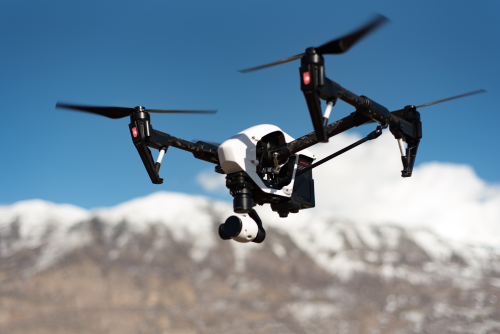
Drones can be a strong marketing tool, but the biggest mistakes people make when they try to use drones in a marketing agency usually happen long before takeoff. Agencies often focus on the aircraft, the “wow” factor, or the pitch value, while underestimating strategy, compliance, planning, editing, and client expectations. The result is often expensive footage that looks impressive but does little for the campaign or the agency’s margin.
Quick Take
- A drone is not a marketing strategy. It is a production tool that works best when tied to a clear campaign goal.
- The most common agency mistake is treating drone footage as a flashy add-on instead of part of a content package with defined deliverables.
- Many teams bring drone work in-house too early, before they have enough volume, process, or compliance discipline.
- Commercial drone work involves more than flying: location research, permissions, safety planning, weather decisions, insurance, editing, file delivery, and client management all matter.
- Agencies usually lose money on drone work by underpricing pre-production, post-production, travel, weather delays, and revision rounds.
- Specialized shots, especially fast FPV, indoor flight, or work near people, often require specialist operators and stricter risk review.
- The best agency drone workflows are repeatable: clear brief, shot list, fallback plan, compliance check, defined outputs, and post-campaign review.
Why agencies get drone work wrong
Drones sit in an awkward place inside many agencies. Creative teams see a storytelling tool. Sales teams see an upsell. Clients see premium production value. Operations teams often discover that the real work sits in risk management, scheduling, and post-production.
That gap is where most mistakes happen.
A drone can absolutely improve marketing outcomes when the job needs scale, location context, movement, access, or a dramatic opening shot. But it is rarely the whole answer. If an agency builds its drone offer around excitement instead of workflow, the service becomes hard to sell, hard to deliver, and easy to regret.
The biggest mistakes agencies make with drones
1. Starting with the drone instead of the campaign goal
This is the most common mistake.
An agency buys a drone or hires a pilot because drone footage looks premium. But the client does not actually need “drone footage.” The client needs a business outcome: more bookings, more property inquiries, more event attendance, better brand recall, stronger social engagement, or a more persuasive case study.
Drones are especially useful for:
- Showing location and surrounding context
- Revealing scale for resorts, venues, campuses, industrial sites, or developments
- Capturing movement through space
- Creating before-and-after visuals
- Producing short establishing shots for social, web, and ads
They are less useful when the core need is:
- Clear spoken explanation
- Product detail
- Emotional close-ups
- Audio-led storytelling
- Tight interiors without the right specialist setup
If the campaign goal does not benefit from altitude, motion, or spatial context, the drone may add cost without adding results.
2. Treating aerial footage as a standalone product
Aerial clips alone rarely solve a client’s content problem.
Many agencies sell “a drone shoot” as if that is the deliverable. It is not. The real deliverables are the final assets the client can use: edited videos, short vertical clips, website headers, launch teasers, ad variations, stills, or a content library.
Drone footage works best when it supports a broader package, such as:
- A brand film with aerial establishing shots
- A hospitality shoot with drone, ground footage, and short social cutdowns
- A real estate campaign with location overview, access routes, amenity highlights, and stills
- An event recap with energy shots, crowd scale, and sponsor visibility
- An industrial case study that shows site size, workflow, and operating environment
When agencies sell drone work as a standalone novelty, clients often like the footage but struggle to use it effectively.
3. Bringing drone work in-house before the business case is real
Owning a drone is easy. Running a reliable drone service line is not.
Agencies often assume that buying equipment will be cheaper than outsourcing. Sometimes it is. But only if the agency has consistent demand, someone qualified to operate legally and safely, time for planning and maintenance, and a workflow that keeps the gear earning.
If demand is irregular, outsourcing is often the smarter business decision.
In-house, freelance, or specialist partner?
| Model | Best when | Advantages | Watch-outs |
|---|---|---|---|
| In-house operator | You have frequent repeat shoots in a limited region | Faster scheduling, stronger brand control, easier content batching | Training, maintenance, compliance load, staffing risk, equipment downtime |
| Freelance pilot roster | You need flexibility across client types or locations | Lower fixed cost, scalable, easier to match pilot to project | Quality can vary, more coordination, less process consistency |
| Specialist drone production partner | You need higher-risk, high-skill, or technically demanding work | Better expertise for complex jobs, stronger operational discipline | Lower control over margin, requires tighter brief and vendor management |
A common mistake is choosing in-house because it feels more “full service,” even when the numbers say otherwise.
4. Assuming any good videographer can become a good commercial drone operator overnight
Flying for business is not just “camera work in the air.”
A strong drone operator needs several skill sets at once:
- Safe flight judgment
- Knowledge of local commercial rules and limits
- Location awareness
- Shot discipline
- Communication with crew and client
- Calm decision-making when weather or access changes
- Understanding of how footage will be edited and used
The reverse is also true: a technically competent pilot is not automatically a strong marketing shooter. They still need to understand brand tone, pacing, framing, platform formats, and what the client actually needs.
Agencies get into trouble when they assume: – the social media manager can “figure it out” – the in-house videographer can add drone services with no real process change – one person can handle client management, piloting, directing, and editing at a high level on every job
Sometimes one person can do it. Often, they become the bottleneck.
5. Leaving location research and permissions too late
A drone shoot that looks simple on the calendar can be complicated on the ground.
Common late-stage problems include:
- Nearby airports or controlled airspace
- Venue rules that prohibit takeoff or landing
- Property owners who did not approve the shoot
- Park, beach, heritage, or waterfront restrictions
- Wind exposure higher than expected
- No safe takeoff and landing area
- Traffic, crowds, or event density that changes the risk profile
- Bad sun position for the planned shot list
The mistake is thinking the drone can be handled on shoot day like another camera.
For agency work, pre-production matters more than most teams expect. Even a basic site review should confirm access, timing, sun direction, obstacles, crowd flow, backup angles, and whether the location is actually practical for drone use.
6. Underestimating post-production and platform adaptation
A lot of agencies budget the flight and forget the edit.
Drone content often needs more post-production thought than the raw clips suggest:
- Color matching with ground footage
- Speed changes and smoothing
- Cropping for vertical, square, and widescreen formats
- Short hooks for paid ads and social
- Different cut lengths for different platforms
- Brand-safe music pacing
- File naming and client-ready delivery
- Archive management for future reuse
A single aerial pass may need to become:
- one hero clip for a homepage
- three 10 to 15 second social cutdowns
- one ad variant
- one sales deck clip
- one internal archive asset
If this adaptation work is not scoped from the start, the agency ends up giving away a lot of labor after the shoot.
7. Pricing drone work as if it is just another camera angle
Drone production has hidden cost layers.
A profitable quote usually needs to account for:
- Pre-production and site research
- Pilot or operator time
- Travel and setup
- Weather contingency
- Compliance checks and admin
- Additional crew if required, such as a visual observer, meaning a second person who helps watch airspace and hazards
- Editing and format versions
- Revision rounds
- Asset delivery and storage
- Insurance and contract risk
- Possible rescheduling
The common mistake is rolling drone footage into a general video package without separating the operational effort behind it.
That leads to two bad outcomes:
1. the agency loses margin, or
2. the team starts rushing flights, planning, or editing to protect margin
Neither is good for the client or the business.
8. Promising shots that are unsafe, unrealistic, or too specialized
Clients love cinematic references. Agencies often overpromise to win the work.
But some shots need special conditions, specialist operators, different aircraft, added permissions, or a full re-think of the production plan. Examples include:
- Fast first-person view (FPV) flight through tight spaces
- Indoor drone sequences
- Close flight near people, vehicles, or structures
- Dynamic live-event shots
- High-wind coastal work
- Complex reveal shots with little room for error
The biggest business mistake here is not saying “that shot needs separate scoping.”
If a shot requires exceptional skill or carries extra risk, treat it like a separate production decision, not a default inclusion.
9. Forgetting that story still matters more than spectacle
Aerial footage can make weak creative look expensive, but it does not make it effective.
Many agency edits rely too heavily on sweeping overheads and reveal shots. After 20 or 30 seconds, the audience still does not know: – what is being sold – who it is for – why it matters – what action to take
Drone footage usually works best in support roles:
- opening context
- transition
- scale reference
- location proof
- emotional uplift
- before-and-after comparison
It usually needs support from interviews, copy, voiceover, close-ups, product visuals, human moments, and strong editing rhythm.
When agencies forget that, the client gets “nice footage” rather than useful marketing.
10. Offering the same drone package to every client
Not every industry needs the same aerial treatment.
A hospitality brand may want atmosphere, property flow, and surrounding scenery. A commercial property client may care more about access roads, tenant context, and neighborhood position. An industrial client may need safe, wide, descriptive shots rather than cinematic swoops. A tourism campaign may need multiple short vertical clips rather than one long hero film.
A one-size-fits-all drone package creates weak fit.
Better approach: – define the client’s funnel stage – identify where aerial content helps – match the shot list to the platform and audience – decide what outputs actually matter
This is where agencies turn drone work from “cool production” into “relevant marketing.”
11. Failing to measure results or build a repeatable system
A surprising number of agencies treat every drone job as a one-off creative exercise.
That hurts scale.
The agencies that make drone work reliable do three things well:
-
They review performance.
Which clips held attention? Which formats got used? Which shots helped the sales team, listing page, or ad campaign? -
They refine the package.
If clients repeatedly ask for short vertical edits, stills, and web-ready cutdowns, that should become the default offer. -
They systemize delivery.
Shot templates, preflight checklists, briefing forms, revision limits, file naming, and approval steps all protect margin.
Without systems, drone work stays exciting but chaotic. With systems, it becomes a credible service.
Safety, legal, and compliance risks agencies often underestimate
Commercial drone work is regulated in most places, but the details vary widely by country, region, city, park authority, venue, and event organiser. A flight that seems straightforward in one place may require extra approval or be prohibited elsewhere.
Before any commercial shoot, agencies should verify:
- Whether the pilot has the required credentials, registration, or commercial authorisation for that location
- Whether the airspace allows the planned operation
- Whether the property owner, venue, park, or event organiser allows takeoff and landing
- Whether flights near people, roads, traffic, or buildings trigger extra limits
- Whether night operations have different rules
- Whether privacy, consent, or local filming rules apply
- Whether insurance is appropriate for commercial work and matches the contract
- Whether weather, wildlife, terrain, or local sensitivities create additional risk
A few important points agencies often miss:
Aviation approval and property permission are not the same thing
Even if the flight is allowed under aviation rules, the location owner may still restrict filming or drone use.
Client pressure does not change the rules
“Just do one quick pass” is not a risk strategy. If the conditions, approvals, or location are wrong, the right answer may be no.
Crowded environments need extra caution
Live events, public spaces, and busy venues can raise the risk sharply. In some locations, the rules for flying near uninvolved people are strict or highly limited. Verify before planning the shot.
Sensitive sites can be off-limits even when they look ideal
Industrial facilities, ports, government buildings, transport hubs, energy sites, and heritage locations often have separate restrictions or security concerns.
When in doubt, verify with the relevant aviation authority and the location owner before the job is sold as feasible.
A smarter workflow for agencies using drones
If you want drones to work inside a marketing agency, use a workflow that starts with outcomes and ends with repeatable delivery.
1. Start with the client objective
Ask: – What business result is the campaign supposed to create? – Does aerial footage help explain scale, location, or movement? – Would ground footage do the job better?
2. Define the deliverables before the shoot
Decide exactly what the client will receive: – hero video – short social edits – paid ad versions – stills – website clips – asset library footage
This prevents vague promises and surprise editing work.
3. Choose the right operating model
Do not default to in-house. Decide whether this job is best handled by: – your internal team – a trusted freelance pilot – a specialist drone production partner
Match the model to the complexity and frequency of the work.
4. Build a shot list and a fallback plan
Your plan should include: – primary shots – must-have shots – safe alternatives – timing – sun and weather considerations – takeoff and landing area – no-fly or no-go conditions
If the best shot cannot be done safely, you should already know what replaces it.
5. Quote the whole job, not just the flight
Scope: – planning – travel – site checks – pilot time – post-production – revisions – asset management – contingency
That is how you protect margin.
6. Verify compliance before confirming production
Do not assume. Confirm: – local flight legality – property or venue approval – insurance – crew requirements – client responsibilities if access is needed
7. Review what performed and productize the winners
After delivery, ask: – Which shots did the client actually use? – Which formats performed best? – Which parts of the workflow caused friction?
Turn that learning into a standard offer.
FAQ
Should a marketing agency buy its own drone?
Only if the agency has enough repeat demand, a qualified operator, and a process that keeps the service safe and profitable. If jobs are occasional or complex, outsourcing is often the better business decision.
Can a regular videographer also handle drone work?
Sometimes, but not automatically. Commercial drone work requires flight judgment, compliance awareness, planning discipline, and risk management in addition to camera skills. It is a separate responsibility, not just another lens choice.
What are the best types of agency projects for drones?
Drones are especially useful for hospitality, real estate, tourism, events, destination marketing, industrial overviews, large venues, campuses, and projects where spatial context matters. They are less useful when the message depends mainly on interviews, product detail, or audio-driven explanation.
How should agencies price drone services?
Price the full workflow, not just airtime. Include pre-production, location research, compliance checks, travel, weather contingency, flight time, editing, platform versions, revisions, and delivery. If the job involves specialist shots or added risk, scope that separately.
When should an agency hire an FPV specialist?
Hire a specialist when the client wants fast, immersive, close-proximity movement, especially indoors or through tight spaces. FPV, or first-person view, can look outstanding, but it is more specialized than standard aerial filming and should not be treated as a routine add-on.
What should be in a drone shoot brief?
At minimum: – campaign objective – client use case – target platforms – required deliverables – shot list – location details – timing – access and permissions – no-go conditions – edit needs – approval process
A weak brief is one of the fastest ways to waste a drone day.
What should agencies verify before any commercial drone shoot?
Verify local aviation rules, airspace status, property or venue permission, insurance, pilot qualifications, crowd conditions, weather limits, and privacy considerations. Rules and restrictions vary by location, so always check the current requirements with the relevant authority and site owner.
How do agencies make drone footage perform better in marketing?
Use it with intent. Start with a strong hook, keep clips short, adapt versions for each platform, combine aerials with ground storytelling, and match the shots to the actual customer journey. Drone content performs best when it supports a message, not when it replaces one.
Final take
The biggest mistakes people make when they try to use drones in a marketing agency are not really about flying. They are about unclear strategy, weak scoping, unrealistic promises, poor pricing, and underestimating compliance and post-production. If you want drone work to be a real business asset, treat it like a service line: define what it is for, decide who should deliver it, scope the risk properly, and build a repeatable workflow before you sell the next aerial shoot.
