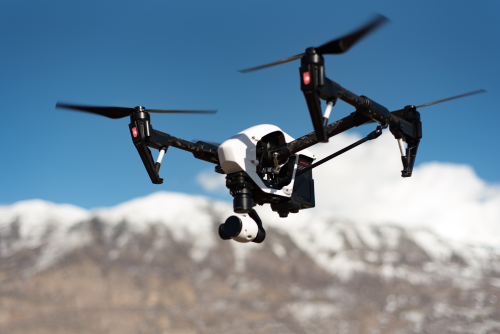
The biggest mistakes people make when they try to write drone proposals usually have very little to do with flying skill. Most weak proposals fail because they focus on gear instead of outcomes, leave scope vague, or ignore the legal and operational details that matter once the job starts. If you want proposals that actually win work and protect your margins, you need to sell clarity, not just airtime.
Quick Take
A strong drone proposal should answer five questions fast:
- What business problem is being solved?
- What exactly will be delivered?
- How will the work be done safely and legally?
- What does the price include, and what does it not include?
- What happens if weather, access, approvals, or scope changes?
The biggest mistakes usually look like this:
- Writing a generic proposal that could fit any client
- Pricing only the flight, not the full workflow
- Promising results before checking site, risk, or approvals
- Leaving deliverables, revisions, and usage rights unclear
- Making the proposal harder to read than it needs to be
In drone work, the proposal is not just a sales document. It is also a scope document, an expectation-setting document, and a risk-control document.
Why drone proposals fail so often
Drone services sit in an awkward middle ground between creative work, technical work, and regulated operations. A client may think they are buying “a drone shoot,” but what they are really buying could include planning, travel, permissions, risk assessment, filming, data capture, editing, reporting, file delivery, and revisions.
That is why so many first proposals fail in one of two ways:
- They are too thin, so the client cannot tell what they are paying for.
- They are too technical, so the client still cannot tell what they are paying for.
The best proposals are simple on the surface and disciplined underneath. They speak to business results, but they quietly protect the operator from bad assumptions, unpaid scope creep, and compliance mistakes.
The biggest mistakes people make when they try to write drone proposals
1. Leading with the drone instead of the client’s outcome
One of the most common mistakes is opening with equipment.
Clients rarely care first about your airframe, sensor size, or flight modes. They care about what the work will help them achieve: more bookings, faster inspections, better progress tracking, marketing content, site documentation, or safer data collection.
A weak proposal says:
- We use a professional 4K drone with stabilized footage.
A stronger proposal says:
- We will create a 45 to 60 second promotional video and 10 edited stills designed for your website, social channels, and paid campaign launch.
The drone is the tool. The proposal should sell the result.
This matters even more in business sectors such as construction, utilities, agriculture, public safety support, real estate, tourism, and brand marketing. Each buyer has a different definition of value. Your proposal needs to mirror that definition back to them.
2. Sending a generic template without doing real discovery
A proposal written before a proper discovery call is usually just a guess with branding on top.
Discovery means learning what the client actually needs before you price or promise anything. That includes:
- The business goal
- Site location and access conditions
- Type of deliverables needed
- Intended audience
- Deadline and approval chain
- Need for editing, mapping, reporting, or raw files
- Sensitivity around privacy, people, property, or critical infrastructure
- Whether the client already has permission to operate on-site
Without discovery, you can easily underquote, mis-scope the work, or promise a shot list that is impossible under local conditions.
Beginners often skip this step because they want to “respond fast.” Fast matters, but not at the cost of accuracy. A short, smart proposal beats a quick wrong one every time.
3. Being vague about deliverables
“Drone coverage” is not a deliverable.
Neither is:
- Edited footage
- Marketing visuals
- Site documentation
- Inspection images
A deliverable is the exact thing the client receives. If you do not define it, the client will define it later, usually in a way that creates extra work for you.
Be specific about:
- Number of images, clips, maps, or reports
- Video duration
- File type and delivery format
- Resolution or output standard
- Whether files are edited or raw
- Turnaround time
- Number of revision rounds
For technical work, also define the limit of the output. For example, a mapping or inspection proposal should avoid implying survey-grade accuracy or engineering judgment unless that is truly part of the service and supported by the right workflow, people, and approvals.
Clear deliverables reduce rework, disputes, and “I thought that was included” conversations.
4. Pricing based only on flight time
A drone project is almost never just the time the aircraft is in the air.
If you price by flight time alone, you will undercharge on many jobs and train the client to undervalue the service. Flight is only one part of the workflow.
A realistic drone proposal may include:
- Pre-project planning
- Site research
- Travel time and transport
- Crew time
- Equipment prep and backup gear
- Permissions or application support where applicable
- On-site setup and safety briefing
- Flight operations
- Data offload and backup
- Editing or post-processing
- Reporting or file organization
- Delivery and revisions
This is especially important for one-off commercial shoots, inspections, and enterprise work. A 20-minute flight may represent half a day or more of total labor.
If you want healthier margins, price the workflow, not the battery cycle.
5. Forgetting that every sector buys for different reasons
A hotel, a roofing contractor, a property developer, an events company, and a solar inspection team may all ask for “drone services,” but they are not buying the same thing.
What each client wants to reduce or improve is different:
- A marketer wants attention and conversions.
- A construction team wants consistent documentation.
- An asset owner wants reliable visual evidence.
- A tourism brand wants aspirational storytelling.
- A real estate agent wants speed, polish, and easy reuse across listings.
When proposals ignore sector context, they feel generic and weak. The client should feel that you understand not only how to fly, but also how their business uses the output.
Use the client’s language carefully. If they care about progress visibility, stakeholder reporting, tenant attraction, defect identification, or social-ready deliverables, reflect that in the proposal structure.
6. Underestimating scope creep
Scope creep is when the work quietly expands beyond what was agreed. It is one of the fastest ways to turn a profitable job into a frustrating one.
In drone work, scope creep often looks like this:
- One location becomes three
- One video becomes video plus photos plus vertical edits
- A basic capture job suddenly needs script support or music selection
- One revision round becomes unlimited tweaking
- A shoot day extends because site access is delayed
- A marketing shoot turns into a same-day social delivery request
The fix is simple: define the scope in plain English.
Your proposal should clearly state:
- Included locations
- Included shoot duration
- Included deliverables
- Included revision rounds
- Assumptions about site access and schedule
- What triggers additional charges
If scope changes, use a change order. That simply means a written approval for added work before you do it.
7. Promising outcomes you do not control
This mistake is common because people think strong sales language means certainty. In drone work, false certainty is dangerous.
You do not fully control:
- Weather
- Wind
- Rain
- Visibility
- Site access
- Crowd conditions
- Aviation or venue approvals
- Landowner permission
- Last-minute operational restrictions
- Travel disruptions for remote jobs
A bad proposal guarantees the mission before those variables are checked.
A better proposal uses clear conditional wording, such as:
- Proposed schedule subject to safe weather conditions
- Final flight plan dependent on site access and required approvals
- Deliverables based on safe, lawful, and practical operating conditions on the day
That does not make you look weak. It makes you look professional.
8. Treating compliance as a footnote
This is one of the costliest mistakes in commercial drone work.
If a proposal touches flight activity, inspections, events, critical sites, tourism locations, or any commercial operation near people or sensitive areas, compliance cannot be an afterthought. Even where the client is focused only on speed and price, you still need to show that the job will be approached responsibly.
Depending on the country and the type of mission, you may need to verify:
- Pilot competency or certification
- Operator registration
- Airspace or local authority requirements
- Landowner or venue permission
- Privacy-sensitive restrictions
- Insurance suitability
- Safety perimeter planning
- Whether the task itself is appropriate for drone operations
Do not list approvals you do not yet have as if they are guaranteed. Instead, state that the operation is contingent on all required permissions and safe conditions.
This protects you and also reassures serious clients that you are not improvising.
Safety, legal, and operational risks your proposal should address
A surprising number of drone proposals mention none of this, even when the job obviously needs it.
You do not need to turn the proposal into a legal memo. But you should show that the operation will be managed properly.
Include a short section covering points like these:
- Operations will be conducted only where lawful and safe
- Final flight activity depends on required approvals and site permissions
- Work may be rescheduled due to unsafe weather or changing site conditions
- The client is responsible for confirming site access, stakeholder coordination, and any property permissions they control
- The operator is responsible for flight safety decisions and may decline any unsafe or non-compliant request
- Privacy, data handling, and sensitive-area considerations will be reviewed before the mission
- Insurance details can be provided on request or at contracting stage, if applicable in your market
For higher-risk projects, you may also need to mention:
- Crew roles
- Emergency procedures
- Exclusion zones around people or vehicles
- Data security expectations
- Whether subcontractors are involved
- Any limitations around night work, event work, or urban environments
The key principle is simple: do not promise a flight where compliance is still unknown. Promise a professional process to verify whether and how the work can be done.
9. Ignoring usage rights, ownership, and data handling
Many operators get the shoot done and only then discover that the client assumed they owned everything forever, including raw footage.
Your proposal should make this clear upfront, especially for creative, branded, tourism, real estate, event, and social media work.
Address questions like:
- Does the client receive edited files only, or raw files too?
- Who owns the raw footage?
- What usage rights are included?
- Can the client reuse the content across paid ads, websites, listings, internal reports, or broadcast?
- How long will you store project files?
- Are there confidentiality or non-disclosure expectations?
- For technical data, who can access, download, or redistribute the files?
If you do not spell this out, you are inviting tension later.
The same applies to data handling. For inspections, mapping, infrastructure, or enterprise work, clients may care deeply about where files are stored, how long they are retained, and who sees them. A proposal that ignores this may look immature even if the flying is excellent.
10. Making the proposal hard to skim
Even good operators lose work because their proposals are painful to read.
A client should be able to scan your proposal in two minutes and understand:
- The problem
- The solution
- The deliverables
- The timeline
- The price
- The next step
What makes proposals hard to buy?
- Long walls of text
- Technical jargon without explanation
- Buried pricing
- No summary
- No timeline
- No assumptions
- No clear approval step
Decision-makers are busy. Procurement teams are busier. A proposal that is easy to skim often beats a proposal that is more impressive but less clear.
Think like an editor: use headings, bullets, short sections, and direct language.
What a strong drone proposal should include
Here is a practical structure that works well across many commercial drone projects.
| Proposal section | What it should answer | Why it matters |
|---|---|---|
| Client objective | What result is the client trying to achieve? | Keeps the project outcome-focused |
| Scope of work | What exactly is included? | Prevents misunderstandings |
| Deliverables | What files, reports, images, or videos will be provided? | Makes value visible |
| Operational assumptions | What site, access, timing, and environmental assumptions are being made? | Protects against unknowns |
| Compliance and safety approach | How will the work be reviewed for lawful and safe execution? | Builds trust and reduces risk |
| Schedule | When will capture, editing, and delivery happen? | Helps the client plan internally |
| Pricing | What is included in the fee? | Supports margin and reduces negotiation noise |
| Revisions and changes | How many revisions are included, and what triggers extra cost? | Controls scope creep |
| Rights and data terms | Who owns what, and how will files be handled? | Avoids disputes |
| Approval step | What does the client need to do next? | Makes it easier to close |
A simple process for writing better drone proposals
If your proposal quality varies from job to job, standardize the process.
1. Start with discovery, not design
Before drafting, gather the facts:
- Business goal
- Location
- Deliverables
- Deadline
- Risks
- Stakeholders
- Budget range if available
2. Define the scope in plain language
Scope means the exact work included. Write it so a client with no drone background can understand it.
3. Build pricing from the whole workflow
Include planning, travel, capture, post-production, review, delivery, and risk. Do not build the price around airtime alone.
4. Add assumptions and boundaries
State what the proposal assumes about access, timing, weather, approvals, and client inputs.
5. Review for margin and risk before sending
Ask yourself:
- If the day slips, do I still make money?
- If the client asks for more edits, is that covered?
- If approvals are delayed, does the proposal handle that?
- If the site is more complex than described, what happens?
6. End with a clear next step
Tell the client exactly how to proceed:
- Approve proposal
- Confirm location access
- Select package
- Schedule shoot window
- Review contract or service agreement
A proposal that does not tell the buyer what to do next often stalls.
FAQ
How long should a drone proposal be?
Long enough to remove doubt, short enough to read quickly. For many small to mid-sized jobs, two to five pages is enough if the structure is clear. More complex technical, enterprise, or multi-site projects may need more detail.
Should I include my pilot certification or credentials in the proposal?
Yes, if they are relevant and verified. Keep it brief. Mention qualifications, operational experience, or insurance status where it helps the client assess risk. Do not pad the proposal with credentials that do not affect the job.
How should I price a drone project if the client asks for “just a quick shoot”?
Break the work into the full workflow, even if the flight itself is short. A quick shoot may still require travel, site coordination, safety checks, setup, post-production, and delivery. Price the service, not the minutes in the air.
Is it better to send one price or multiple package options?
It depends on the client. One clear price works well when the scope is tightly defined. Two or three options can help when the client is still deciding between a basic capture job, a standard edited package, and a more complete production or reporting package. Too many options can slow decisions.
Do I need to mention permits, permissions, or insurance if the client did not ask?
Yes, where relevant. You do not need to overdo it, but commercial proposals should show that lawful and safe operation matters. If approvals or site permissions may affect the job, say so clearly and state that the mission depends on them being in place.
Should the client own the raw footage?
Not automatically. That depends on your business model and the type of project. Some operators include only edited deliverables, while others license or sell raw files separately. The important thing is to define it before the job starts.
What if the client wants a shot that may be unsafe or non-compliant?
Do not promise it. State that all operations are subject to safe and lawful conditions and that the final flight plan may change after reviewing the site, permissions, and operating environment. A professional client will respect that.
Can I reuse one proposal template for every job?
You should reuse a structure, not the actual thinking. Templates are useful for speed and consistency, but every proposal should be customized around the client’s outcome, deliverables, risks, and commercial terms.
Final takeaway
Most bad drone proposals fail before the aircraft ever leaves the ground. They are unclear on outcome, vague on deliverables, weak on pricing logic, and silent on the compliance and operational realities that shape the job. If you want to win better work, write proposals that make buying easy, expectations clear, and risk visible before it becomes your problem.
