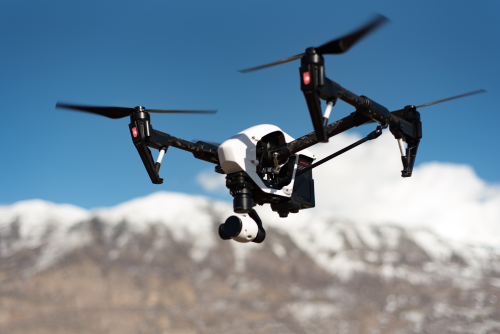
If you are shopping for the best drones under $1,500, the smart choice is usually not the most expensive model you can stretch to. It is the drone that matches how you will actually fly: easy enough for a beginner, small enough for travel, and capable enough that you will not outgrow it in a month. In this price band, the winners are clear once you sort buyers into three groups: beginners, travel creators, and everyday flyers who want a drone they will genuinely keep using.
Quick Take
For most people, the best drone under $1,500 is the DJI Mini 4 Pro. It is the easiest recommendation because it balances portability, safety features, camera quality, and low-friction travel better than almost anything else in this budget range.
If your priorities are different, these are the strongest fits:
- Best overall for most beginners and travelers: DJI Mini 4 Pro
- Best step-up for better image flexibility and stronger windy-day performance: DJI Air 3 or Air 3S
- Best for immersive fun and FPV-style flying: DJI Avata 2
- Best value buy if you want to spend less and keep room for accessories: DJI Mini 3
- Best non-DJI travel alternative: Autel EVO Nano+
A practical note: under-$1,500 pricing can vary a lot by country, tax, bundle, and whether you buy a basic kit, a combo, or refurbished. Think in terms of the drone class and the total system cost, not just one advertised sticker price.
| Drone | Best for | Why it stands out | Main tradeoff |
|---|---|---|---|
| DJI Mini 4 Pro | Most buyers | Sub-250 g class, excellent portability, strong safety features, mature ecosystem | Smaller platform can feel less planted than a larger drone in stronger wind |
| DJI Air 3 / Air 3S | Serious travel creators, everyday flyers stepping up | More camera flexibility, stronger all-round feel, better fit for creator-focused work | Bigger, heavier, less travel-light friendly, often more regulated |
| DJI Avata 2 | Fun-first pilots, immersive content | FPV experience without building your own system, protected design | Not the best traditional photo drone, steeper learning curve |
| DJI Mini 3 | Value-conscious buyers | Lower entry cost, very travel-friendly, still a meaningful upgrade over toy drones | Fewer advanced safety features and less room to grow |
| Autel EVO Nano+ | Buyers wanting a non-DJI compact drone | Small, travel-friendly, credible sub-250 g option | Local support, accessories, and ecosystem strength vary by market |
Start With These 4 Buyer Questions
Before you pick a model, answer these first.
1. Do you want a camera drone or an FPV drone?
A camera drone is made for stable, easy aerial shots. An FPV drone is made for immersive flying, faster movement, and a more hands-on learning curve.
- If you want landscapes, travel clips, family trips, and easy flying, choose a camera drone.
- If you want excitement, dynamic motion, and goggles-based flying, look at FPV.
2. Will you travel with it often?
If the drone will live in a backpack, cabin bag, or daily carry pouch, size matters more than most people admit.
- Frequent travelers usually stay happiest with a compact foldable drone.
- Larger drones can deliver better presence in wind and more camera flexibility, but they are less casual to bring everywhere.
3. Do local rules get stricter above the lightest weight class?
In many countries, lighter drones can be easier to own and travel with. That does not mean they are rule-free, but it can reduce friction.
- If you want the easiest path into the hobby, a sub-250 g class drone is often the safest bet.
- If you already know you will accept more paperwork or operating limits, a bigger model may be worth it.
4. Are you buying just the drone, or the whole flying system?
The real cost is not only the aircraft.
You will usually want:
- Extra batteries
- Spare propellers
- A charger or charging hub
- A memory card
- A case or safe carry setup
- A repair or care plan, if available in your market
A cheaper drone with the right extras is often a better buy than a more expensive drone you can barely afford to operate.
The Best Drones Under $1,500
DJI Mini 4 Pro
For most buyers, this is the best drone under $1,500 full stop.
The Mini 4 Pro sits in the sweet spot between “beginner-friendly” and “serious enough to keep.” It is small, easy to carry, and far less intimidating than a mid-size drone, yet it still gives you a very capable stabilized camera, strong flight assistance, and a polished app and accessory ecosystem.
Why it is the safest recommendation
- It is genuinely travel-friendly.
- It is easier for beginners to live with than a larger drone.
- It gives you room to learn without feeling like a toy.
- In its standard battery configuration, it sits in the sub-250 g class, which can matter for regulation and travel convenience in many places.
Best for
- First-time drone buyers
- Travelers who want a drone they will actually pack
- Casual creators and social video shooters
- Everyday flyers who want low-friction setup
What you are really paying for
Not just the camera. You are paying for fewer regrets.
The Mini 4 Pro is one of those drones that works for many buyer types at once:
- A beginner can learn on it.
- A traveler can carry it.
- A creator can produce polished footage.
- A hobbyist can fly it often without turning the whole outing into a gear event.
Tradeoffs to know
- A larger drone will usually feel more stable in stronger wind.
- If you care deeply about more advanced camera flexibility, an Air-class drone is a more serious creative tool.
- Sub-250 g classification may change if you use certain battery options, so verify that in your region and configuration.
Buy it if
- You want one drone to cover beginner flying, travel, and everyday use.
- You value portability as much as image quality.
- You do not want your first drone to feel like too much aircraft.
Skip it if
- You regularly fly in windier areas and want more platform confidence.
- You are buying mainly for more advanced creator work and can accept a larger drone.
- You actually want FPV, not traditional camera-drone flying.
DJI Air 3 / Air 3S
If the Mini 4 Pro is the best all-rounder, the Air 3 line is the best step-up buy.
This is the choice for people who already know they care about image flexibility, stronger presence in the air, and a more “serious” creator setup. Depending on your local market, bundle, and current pricing, either the Air 3 or Air 3S may fall inside your $1,500 ceiling.
Why people step up to Air-class drones
The Air 3 family gives you a more robust everyday flying experience than a mini drone:
- Better wind confidence
- More flexible framing thanks to the dual-camera approach
- A stronger fit for travel creators who edit intentionally rather than just posting quick clips
- A more natural bridge between hobby flying and lighter professional-style work
Best for
- Creators who want more than a tiny travel drone
- Buyers who fly in open areas and occasional wind
- Pilots who want a drone that still feels relevant as their skills improve
- Small operators doing simple content capture where local rules allow it
What makes it better than a Mini for some buyers
The big difference is not just image quality. It is creative flexibility.
A larger drone with a more versatile camera setup changes how you shoot:
- Wider scene coverage when you need context
- Tighter framing when you want subject separation
- More room to build a sequence, not just one pretty aerial shot
That matters if you are filming travel stories, property, events in permitted environments, or destination content.
Tradeoffs to know
- It is bigger and less casual to pack.
- In many countries, a drone in this size class brings more regulatory obligations than a sub-250 g model.
- If your use is mostly quick vacation clips, the extra size may annoy you more than the extra performance helps you.
Buy it if
- You already know you will use the camera seriously.
- You want a better balance of portability and creator capability.
- You are okay with a heavier drone and the compliance checks that often come with it.
Skip it if
- You want the easiest possible travel companion.
- You mostly shoot for social media and casual memories.
- You are not ready to deal with a larger drone’s transport and legal friction.
DJI Avata 2
The Avata 2 is the best answer in this budget if “fun” is your top priority.
This is not a normal beginner recommendation, but it is a very good recommendation for the right kind of beginner: someone who wants the FPV experience without building a custom setup from scratch.
FPV means “first-person view,” usually flown through goggles for an immersive perspective. It is one of the most exciting ways to fly, but it is also less forgiving than traditional camera-drone flying.
Why the Avata 2 deserves a place on this list
- It gives you a much easier entry into FPV than building your own rig.
- Its protected design makes it friendlier for learning than an open-prop FPV setup.
- For social content, dynamic reveals, and fun flights, it offers a kind of experience camera drones do not.
Best for
- Buyers who want the flying experience as much as the footage
- FPV-curious creators
- Pilots who value motion, proximity, and immersion over classic aerial photography
The biggest mistake people make here
They treat the Avata 2 like a normal camera drone.
It is not.
Yes, it can capture great footage. But if your real goal is smooth scenic travel shots, hovering landscapes, and easy beginner learning, a Mini or Air is the better choice.
Tradeoffs to know
- The learning curve is real.
- You should use a simulator if you are serious about flying well and safely.
- FPV footage style is not right for every project.
- Battery rhythm and session planning feel different from standard aerial flying.
Buy it if
- You want immersion and dynamic movement.
- You are willing to practice, not just unbox and freestyle near people.
- You understand that FPV is its own discipline.
Skip it if
- You mainly want a travel camera drone.
- You are buying for stills, scenic hover shots, or simple beginner confidence.
- You want the easiest possible path into drone ownership.
DJI Mini 3
Not everyone should spend near the top of the budget.
If you want a smart, lower-cost entry point and you are okay giving up some advanced safety and convenience features, the Mini 3 remains one of the best value buys in the market, especially when found at a good street price or from a reputable refurbished source.
Why it is still worth recommending
- It is compact and easy to travel with.
- It feels meaningfully more capable than cheap starter drones.
- It leaves more room in your budget for batteries, training, and repairs.
For a lot of buyers, that matters more than chasing the newest model.
Best for
- Budget-conscious beginners
- Travelers who want a light kit
- Buyers who would rather spend less now and upgrade later
What you give up versus the Mini 4 Pro
The core compromise is not that the Mini 3 is bad. It is that the Mini 4 Pro gives you more confidence and headroom.
Expect the newer, higher-tier model to be stronger in areas like:
- Flight assistance
- Obstacle awareness
- Subject tracking and general convenience
- Long-term “keep it” value
Buy it if
- You want a real drone without overspending.
- You care more about travel convenience than max features.
- You would rather keep money back for the rest of the kit.
Skip it if
- You know you will quickly want more safety features.
- You want the least-regret buy for several years of use.
- You plan to push harder into creator work.
Autel EVO Nano+
The EVO Nano+ is the strongest non-DJI travel-friendly alternative worth shortlisting if you want a compact drone and have solid local Autel availability.
It is easy to default to DJI in this part of the market, and for many buyers that is still the easiest ecosystem choice. But not every buyer wants that, and not every region has the same brand preferences, import conditions, or support realities.
Why it matters
A good drone is not just the aircraft. It is the system around it:
- App stability
- Firmware support
- Battery and propeller availability
- Repair turnaround
- Local distributor support
If Autel support is credible in your market, the EVO Nano+ remains a legitimate compact option.
Best for
- Buyers who want a non-DJI sub-250 g class travel drone
- Users who value compact size and lighter travel friction
- Shoppers with reliable local Autel supply and service
Tradeoffs to know
This is the main caution: support strength varies a lot by region.
Before buying, check:
- Spare battery availability
- Local repair channels
- App/device compatibility
- Accessory stock
- Firmware cadence and user feedback in your market
Buy it if
- You want a compact non-DJI option.
- Your local seller and service network are trustworthy.
- You have done the ecosystem homework.
Skip it if
- You want the simplest possible ownership experience.
- Your local market is thin on parts or support.
- You want the safest “everyone uses it” ecosystem choice.
How to Spend a $1,500 Drone Budget Without Regret
A lot of buyer’s remorse happens because people spend all their money on the aircraft and leave nothing for the things that make flying practical.
A better split usually looks like this:
- Drone and controller: the core purchase
- Two or more extra batteries: often more important than a slightly higher-tier body
- Charger or charging hub: saves frustration
- Memory card and spare props: small cost, high importance
- Case or protective carry setup: especially for travel
- Repair coverage, service plan, or insurance where relevant: worth considering if available locally
Where beginners often overspend
- Fancy filters before learning manual exposure
- Premium bags before buying spare batteries
- Bigger drone body when a compact drone actually fits their life better
- Extra accessories for a drone they have not yet proven they will use often
If your budget is tight, the best upgrade is usually not a luxury add-on. It is more flight time.
Safety, Legal, and Travel Checks Before You Buy
Drone buying is not only a gear decision. It is also an operational one.
Because this guide is global, do not assume your country follows the same rules as someone else’s.
Verify these before purchase
-
Registration and pilot requirements – Some countries require registration for the drone, the operator, or both. – Some require an online test or certificate even for lighter drones.
-
Weight-class impact – A sub-250 g drone may reduce regulatory friction in some markets, but not all. – It does not automatically make flights over people, in cities, or near sensitive areas legal.
-
Remote identification and broadcast rules – Some regions require identification features or specific firmware behavior. Check current local requirements.
-
Travel battery rules – Airlines often require lithium drone batteries to travel in cabin baggage, not checked luggage. – Battery quantity and watt-hour limits can vary. Verify with your airline before travel day. – Protect battery terminals and transport batteries safely.
-
Airspace and local site restrictions – Aviation law is only one layer. – Parks, beaches, heritage sites, urban authorities, private venues, and event organizers may have separate no-fly or permit rules.
-
Commercial use – If you plan to earn money, the legal standard may differ from casual recreational flying. – Verify local licensing, insurance, and operating permissions before taking paid work.
A practical rule
If you want the easiest global ownership path, a compact drone in the lightest class usually creates the fewest headaches. Not no headaches. Fewer.
Common Mistakes Buyers Make
1. Buying for imagined future work instead of current use
A lot of people buy a bigger, heavier drone because they think they might “grow into it.” Then they stop taking it anywhere.
If you mainly want travel and everyday flying, portability is not a minor feature. It is the feature.
2. Assuming obstacle sensing makes a drone crash-proof
Obstacle sensing is a safety aid, not a shield.
It can miss:
- Thin branches
- Wires
- Fast closing angles
- Complex low-light environments
- Side or rear risks, depending on the model and situation
Good habits still matter more than automation.
3. Treating sub-250 g as “no rules”
This is one of the most common and expensive misunderstandings.
Lighter drones may be easier to manage legally in some places, but you still need to verify:
- Registration rules
- Airspace restrictions
- Privacy expectations
- Park or venue restrictions
- Travel requirements
4. Choosing FPV because it looks exciting, without accepting the training curve
FPV is incredibly rewarding, but it is not the easiest beginner path.
If you mainly want easy travel footage, choose a camera drone first.
5. Ignoring ecosystem support
A well-priced drone is not a bargain if you cannot get batteries, propellers, app support, or repairs.
This matters even more if you live outside the biggest consumer drone markets.
6. Spending too little on batteries
A one-battery drone often becomes a drawer drone.
Short sessions lead to less practice, less confidence, and less value from the purchase.
FAQ
What is the best drone under $1,500 for most beginners?
For most buyers, the DJI Mini 4 Pro is the safest recommendation. It offers the strongest balance of ease of use, travel portability, image quality, and long-term satisfaction.
Is the Air 3 or Air 3S worth it over the Mini 4 Pro?
Yes, if you care more about creator flexibility, stronger wind performance, and a more robust flying platform than compact travel convenience. No, if you mostly want a drone that is easy to carry everywhere.
Is a sub-250 g drone always the best travel choice?
Often, but not always. It can reduce friction in some countries, yet local rules still vary, and larger drones can perform better in wind. If travel simplicity is your top goal, sub-250 g is usually the best place to start.
Should I buy an FPV drone as my first drone?
Only if FPV is the reason you want a drone in the first place and you are willing to practice seriously. If you mainly want easy aerial shots, a traditional camera drone is a better first buy.
How much of my budget should go to accessories and extras?
A good rule is to leave roughly 15 to 25 percent of your total spend for batteries, spare props, charging, storage, and any care or repair plan you may want.
Is buying refurbished or last-generation smart?
Yes, if you buy from a reputable source and the price gap is meaningful. The DJI Mini 3 is a good example of a last-generation drone that can still be a very smart purchase.
Can I use these drones for paid work?
In many cases the drone can technically do the job, but the legal answer depends on local rules. Commercial work may trigger additional training, registration, insurance, or operational restrictions. Verify that before accepting paid flights.
What if DJI support or import conditions are weak in my region?
Then ecosystem strength matters more than headline specs. Check local sellers, repair channels, battery availability, app support, and return policies before choosing any model. In some markets, a slightly less popular drone with better local support is the better buy.
The Practical Bottom Line
If you want one clear answer, buy the DJI Mini 4 Pro. It is the least-regret choice for the widest mix of beginners, travelers, and everyday flyers.
If you know you want more creative reach and can live with a bigger drone, step up to the DJI Air 3 or Air 3S. If flying itself is the point, not just the footage, choose the DJI Avata 2. And if value matters most, the DJI Mini 3 remains one of the smartest ways into the hobby.
Before you check out, do one more thing: price the full kit, not just the drone. The right drone with extra batteries and a realistic compliance plan will beat the wrong drone with a bigger spec sheet every time.
