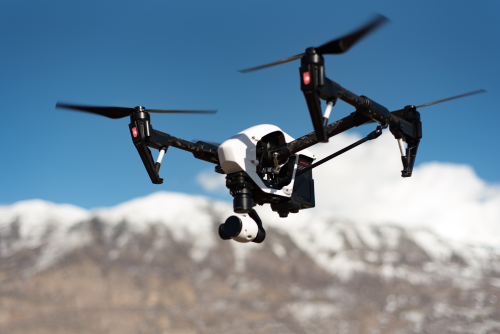
Shopping for the best drones under $750 for mapping, inspection, and small business work is less about chasing the biggest spec sheet and more about avoiding the wrong workflow fit. In this budget, you can absolutely produce useful roof photos, construction updates, property overviews, and basic photogrammetry outputs, but you are not buying an enterprise survey platform. The right choice depends on what you sell to clients: visuals, repeatable documentation, or measurements.
Quick Take
If you want one practical answer, the safest new-buy recommendation for most small businesses is the DJI Mini 3. If mapping is your main paid deliverable and you are open to certified-refurbished or clean used gear, the DJI Air 2S is often the smarter value play. If your budget is tight and you mostly need aerial documentation, the DJI Mini 4K and Potensic Atom make more sense than overspending on features you may never use.
Because drone pricing moves by region, tax, bundle, and refurb availability, treat this as a workflow-first guide to models that commonly fit at or near the $750 ceiling.
| Drone | Best for | Why it stands out | Main tradeoff |
|---|---|---|---|
| DJI Mini 3 | Best overall new buy | Strong all-around image quality, portable, easy to live with | Verify mapping app support before buying |
| DJI Air 2S (used or certified refurb) | Best value for mapping-first buyers | Better wind handling, stronger camera, more serious work feel | Heavier, older, usually not a new-under-budget option |
| DJI Mini 4K | Best strict-budget starter | Reliable, simple, low-risk entry point | More basic camera and fewer advanced workflow features |
| Autel EVO Nano+ | Best non-DJI option | Compact, capable, good fit for light commercial visuals | Ecosystem and regional support can be thinner |
| Potensic Atom | Best lowest-risk business starter | Affordable, highly portable, enough for occasional paid use | Lower ceiling for long-term commercial workflow |
What this budget can realistically do
A drone under $750 can be a useful business tool, but only if your expectations are aligned.
What this budget is good for:
- Roof, gutter, facade, and property-condition photos
- Construction progress updates
- Marketing footage for real estate, resorts, venues, and local businesses
- Small-site overviews
- Basic photogrammetry, which means creating maps or 3D models from overlapping photos
- Internal documentation for contractors, landscapers, solar teams, and property managers
What this budget is usually not good for:
- Thermal inspections
- Zoom-based utility inspection
- LiDAR payloads
- RTK-grade mapping, meaning high-precision positioning built into the aircraft
- Large industrial inspections in difficult wind
- Legal boundary surveying without proper controls, methods, and local professional approval
The biggest buyer mistake here is assuming any drone that shoots 4K video is automatically a good mapping drone. It is not. For mapping, software support, repeatable flight paths, image overlap, and geotag quality matter just as much as the camera.
How to choose the right drone in 10 minutes
1. Decide what your client is really paying for
Ask yourself one simple question: are you being paid for a picture, a repeatable record, or a measurement?
- If it is mostly a picture, almost any stable camera drone in this list can work.
- If it is a repeatable record, like monthly site progress from the same angles, flight stability and waypoint or route consistency matter more.
- If it is a measurement, mapping workflow matters first, and the drone comes second.
That last point is where many buyers go wrong. A newer, smaller drone may look better on paper but still be the wrong purchase if your preferred mapping app does not support it well.
2. Check software before hardware
Before you buy a drone, check the capture and processing tools you plan to use.
For mapping or model generation, buyers commonly look at tools such as:
- DroneDeploy
- Pix4D
- WebODM
- RealityCapture or similar photogrammetry workflows
Support changes over time by drone model, firmware, mobile device, and region. Do not assume your drone will work with your preferred app just because the brand is popular. If mapping is a paid deliverable, software compatibility should be confirmed before checkout.
3. Be honest about wind and site conditions
Ultra-light drones are great for travel and easy compliance in some countries, but they are not magic.
If you often work around:
- open rooftops
- coastal properties
- quarry edges
- exposed construction sites
- taller buildings
then wind performance matters more than many first-time buyers expect. A very light drone may still get the shot, but the experience is usually less relaxed and less repeatable.
4. Decide whether sub-250g matters in your country
In many places, a drone below 250g can reduce some registration, operating-category, or training burden. In other places, the difference is smaller than buyers think. And even where sub-250g helps, it does not erase privacy rules, no-fly zones, local park bans, or commercial operating obligations.
If you travel or work across borders, always verify the current rules with the relevant aviation authority before you fly.
5. Budget for the workflow, not just the aircraft
A business drone is never just the drone.
For serious use, budget for:
- at least one or two extra batteries
- spare propellers
- a reliable memory card
- a case or bag
- processing software if you do maps or models
- a maintenance or repair reserve
A cheaper drone with enough batteries and a working software pipeline is more useful than a more expensive drone that leaves you short on the tools needed to finish the job.
Best drones under $750 for mapping, inspection, and small business work
DJI Mini 3
The DJI Mini 3 is the best overall new-buy option for most people who need one drone to cover light inspection, site documentation, and business content work.
Why it stands out:
- Good image quality for a very portable aircraft
- Easy to carry daily, which means you are more likely to actually use it
- A strong fit for roof photos, construction updates, property overviews, and creator-style client content
- Broad accessory and resale ecosystem
- Lower hassle than larger drones in many travel and local-rule situations
Where it fits best:
- Roofers and contractors who need before-and-after visuals
- Real estate or hospitality teams that also want marketing footage
- Solo operators who need a compact, practical business drone
- Small businesses that want one tool for both client work and internal documentation
Its biggest limitation is not the camera. It is workflow certainty. If mapping is a major reason for the purchase, verify software support and your capture method first. The Mini 3 can absolutely collect useful images for manual photogrammetry workflows, but a smooth commercial mapping pipeline is not something you should assume.
Skip it if:
- your work is mostly measurement-driven mapping
- you often fly in gusty, exposed conditions
- you need a more confidence-inspiring platform around bigger sites
For many buyers, though, the Mini 3 is the sweet spot: capable enough to charge money with, simple enough not to become a burden.
DJI Air 2S (used or certified refurb)
If mapping is the priority and you are comfortable buying older gear from a reputable source, the DJI Air 2S is often the most serious work drone you can get under this budget.
Why it stands out:
- Larger 1-inch type sensor gives you more image headroom
- Better wind handling than ultra-light mini drones
- Feels more planted on open sites and larger properties
- Better suited to buyers who care more about data capture and image quality than pocketability
Where it fits best:
- Construction progress capture
- Small-site mapping and modeling
- Property developers and contractors working in more open terrain
- Buyers who need a more stable platform for repeated work
Why this recommendation comes with an asterisk: it is usually a used or certified-refurb play at this budget, not a simple new-in-box answer. That means condition matters.
If you buy used for business work, check:
- battery health and swelling
- gimbal condition
- crash history if known
- controller pairing and firmware status
- charger and accessory condition
Also remember that a larger drone may trigger stricter operating requirements in some countries than a sub-250g model. That can be worth it, but only if the extra capability actually serves your jobs.
If your business depends on visual mapping more than social content, the Air 2S is often the smartest under-$750 choice.
DJI Mini 4K
The DJI Mini 4K is the best strict-budget starter for people who need reliable aerial documentation without pretending they are buying a mini enterprise platform.
Why it stands out:
- Low entry cost
- Stabilized footage and photos that are more than good enough for many routine business tasks
- Easy to learn and easy to justify financially
- Sensible first step for businesses still validating demand
Where it fits best:
- Tradespeople who need occasional roof or site photos
- Property managers who want simple aerial records
- Real estate teams on a tighter budget
- First-time operators building flight discipline before moving up
What you give up:
- less camera headroom than stronger options
- fewer “future proof” workflow advantages
- less comfort for serious mapping ambitions
This is the drone for the buyer who wants to start working now, not the buyer who wants to tell themselves they need more drone than the business actually requires. If your paid work is mostly visual documentation and basic inspection imagery, the Mini 4K can absolutely earn its keep.
If your goal is to build a dedicated mapping service, however, this is more of a temporary platform than a long-term answer.
Autel EVO Nano+
The Autel EVO Nano+ is the best non-DJI pick for buyers who want a compact commercial-friendly drone without entering the DJI ecosystem.
Why it stands out:
- Very portable
- Good still-image performance for its size
- Useful alternative for buyers who prefer a different brand for policy, procurement, or personal reasons
- Capable enough for light business visuals and inspection documentation
Where it fits best:
- Travel-heavy business users
- Light property inspection and site overview work
- Small teams that want a non-DJI option
- Buyers who value a compact airframe but want something more business-like than ultra-budget brands
The caution here is ecosystem depth. Before buying, confirm:
- battery and prop availability in your region
- service or repair support
- controller/app experience on your mobile device
- mapping workflow compatibility if that is important to you
The Nano+ makes the most sense for buyers whose work is mainly visual and who already know they want an alternative to DJI. It makes less sense for people who want the safest default choice.
Potensic Atom
The Potensic Atom is the best lowest-risk entry point for a small business owner who wants occasional aerial capability without tying up too much cash.
Why it stands out:
- Affordable and portable
- Good fit for simple documentation jobs
- Lower financial risk if your drone work is not yet a major revenue line
- Practical for contractors or local businesses that need aerial context more than technical deliverables
Where it fits best:
- Roofers, landscapers, solar sales teams, and small contractors
- Internal site documentation
- Basic marketing visuals
- Learning to work with checklists, batteries, and client expectations before buying higher
The tradeoff is ceiling. Compared with DJI’s stronger mainstream options, you should expect:
- less confidence in long-term workflow growth
- a thinner support ecosystem
- a lower resale and upgrade path
That does not make it a bad buy. It makes it a very specific buy. If the drone is an occasional tool rather than the center of your service business, the Atom can be the most sensible place to start.
The reality of mapping on a $750 budget
If the word “mapping” is what brought you here, this is the section to read twice.
A drone in this budget can create:
- stitched top-down site maps
- 3D site models
- progress comparisons over time
- visual stockpile context
- planning visuals for contractors and clients
But accuracy depends on:
- image overlap
- flight consistency
- ground control or check points if used
- site size and terrain
- processing quality
- operator skill
Under $750, you are usually working with consumer-grade camera systems. That is enough for many practical jobs, especially internal use and basic client reports. It is not the same as promising survey-grade deliverables.
If you plan to advertise measurements, volumes, or map outputs as decision-grade or legal-grade products, verify local professional requirements and your accuracy process first. In some places, that may involve licensed survey professionals or stricter standards than a casual drone buyer expects.
The accessories and software that matter more than one extra camera spec
A lot of business buyers overspend on the aircraft and underbuy the workflow.
Prioritize these first:
- Extra batteries: repeat flights and reshoots are normal on paid jobs.
- Spare props: small damage can end a workday if you have no backup.
- Storage discipline: use good memory cards and organize footage by client and date.
- A bright screen setup: midday inspection work is harder than it looks.
- Processing software: for mapping, this may matter more than the drone model.
- A simple checklist: preflight, battery, airspace, weather, and data backup.
If you are between two drones, choose the one that leaves room for batteries and software.
Safety, legal, and compliance limits to know
Commercial drone work is regulated differently across the world, and rules can change. Before flying for business, verify the current requirements with your national aviation authority and any local authority controlling the site.
Pay special attention to:
- operator registration
- pilot competency or certification requirements
- airspace permissions
- remote identification requirements where applicable
- flights near people, roads, or active worksites
- privacy and data handling obligations
- insurance expectations from clients or local law
A few important realities:
- A sub-250g drone may reduce some burden, but it is not a free pass.
- Property owner permission does not automatically mean airspace permission.
- Industrial sites, ports, utilities, prisons, parks, and government areas may have extra restrictions.
- Inspection flights close to structures raise collision risk quickly.
- Power lines, towers, and energized infrastructure should not be approached casually.
Also, do not market outputs as “survey-grade” unless your method, controls, validation, and local professional authority genuinely support that claim.
Common mistakes buyers make
Buying for camera specs instead of workflow
A slightly better sensor does not help if your mapping software does not support the drone you bought.
Underestimating wind
Many first-time buyers discover that exposed rooftops and construction sites are much harsher than open-field practice.
Treating sub-250g as “no rules”
That assumption creates compliance problems fast, especially in cities, near infrastructure, and on paid jobs.
Forgetting battery math
One battery is a demo. Multiple batteries are a workflow.
Promising measurements too early
Visual maps and progress models are one thing. Defensible measurements are another.
Buying too cheap for a growing business
If drone work will become a serious service line, the cheapest acceptable drone may cost you more in replacements, lost efficiency, and workflow friction.
FAQ
Can a drone under $750 do paid mapping work?
Yes, for basic photogrammetry, progress maps, visual site models, and internal planning outputs. No, not automatically for high-precision or legal-grade surveying. Your method and software matter as much as the aircraft.
Which is better for business: a mini drone or a larger used drone?
A mini drone is usually better for portability, travel, and lower-friction day-to-day use. A larger used drone like the Air 2S is often better for wind, image headroom, and more serious data capture. Choose based on the jobs, not the spec sheet.
Do I need waypoint missions for small business work?
Not always. For one-off visuals, manual flying is often enough. For repeatable inspections, progress tracking, and mapping, waypoint or repeatable flight planning becomes much more valuable.
Is buying used a bad idea for commercial work?
No, if you buy carefully. For business use, condition matters more than the bargain. Buy from a reputable source, check battery and gimbal condition, and do not trust a used drone on a paid job without thorough testing.
Can these drones inspect roofs and solar arrays?
Yes, for visual inspection from a safe stand-off distance. But do not treat them as close-proximity industrial inspection tools, and do not fly casually around energized infrastructure, people, or tight obstacles.
What should I buy first besides the drone?
At minimum: extra batteries, spare propellers, a quality memory card, and whatever software you need to turn images into deliverables. Those usually matter more than optional filters or flashy accessories.
When should I skip this budget and save for more?
Save longer if your business depends on thermal work, zoom inspection, frequent high-wind operations, or repeatable mapping outputs where accuracy is a selling point. Those needs usually sit above the under-$750 class.
Final decision
Buy the DJI Mini 3 if you want the safest new all-rounder. Buy the DJI Air 2S from a reputable refurb or used source if mapping and wind performance matter more than portability. Buy the DJI Mini 4K or Potensic Atom if you need to prove demand before investing harder. Buy the Autel EVO Nano+ if you want a compact non-DJI alternative. Then, before you place the order, verify your software workflow and local operating rules, because those two checks matter more than any marketing spec.
