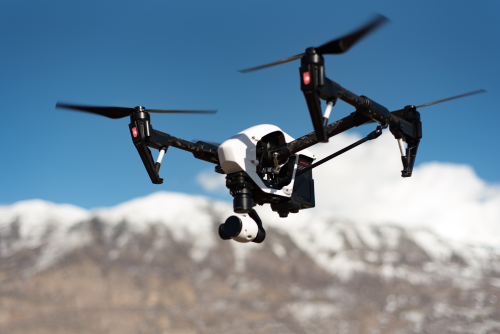
Choosing a charging hub for your drone sounds simple until you realize that many hubs are not actually “faster chargers” at all. Some charge batteries one at a time, some need a separate power brick, and some make sense only for specific workflows like FPV racing, travel, or paid field work. If you want to know how to choose charging hubs for your drone without wasting money, the trick is to buy for your charging workflow, not for the biggest slot count or the boldest marketing claims.
Quick Take
If you want the short answer, use this checklist before you buy:
- Buy a charging hub only after you know how many batteries you actually drain in a typical session.
- For most camera-drone owners, the safest low-regret choice is the official hub made for that battery system.
- A hub with more slots does not automatically mean faster charging.
- Check whether the hub charges batteries sequentially or simultaneously.
- Confirm whether it includes a power adapter, whether it supports USB-C Power Delivery, and what wattage it actually needs.
- If you fly casually and usually charge overnight, you may not need a hub at all.
- If you travel often, prioritize compact size, universal input voltage on the charger, and airline-compliant battery handling.
- If you fly FPV, battery charging is a different world: balance charging, cell count, charge rate, and parallel charging safety matter much more than “smart hub” convenience.
Key points before you spend
- The right hub is the one that fits your battery count, turnaround time, and power source.
- Official hubs usually win on compatibility and lower risk.
- Third-party hubs can be good value, but only from reputable brands with clear specs and support.
- Fast charging is useful only if your batteries, cables, and power adapter can all support it.
- Commercial teams should value reliability, repeatability, and replacement support over small upfront savings.
- Travel creators should care more about packability and power flexibility than about maximum slot count.
What a charging hub actually does
A charging hub is often misunderstood.
In many drone ecosystems, the hub is not the charger itself. It is a dock or distribution accessory that manages power from a separate charger or adapter and sends that power to multiple batteries in a particular order.
That matters because two hubs with the same number of battery slots may behave very differently:
- One may charge four batteries one after another.
- Another may charge two at a time.
- Another may prioritize the battery with the highest remaining charge so you can get one pack back in the air sooner.
- FPV charging boards may allow true parallel charging, which is faster but demands more knowledge and more discipline.
If you assume “four slots” means “four batteries charging at full speed,” you can waste money quickly.
The first question: do you even need a charging hub?
A lot of pilots buy a charging hub too early.
You probably do not need one yet if:
- You own only one or two batteries
- You mostly fly on weekends
- You charge at home overnight
- Your drone already comes with a practical charging solution
- You do not travel with multiple packs often
You probably do need one if:
- You own three or more batteries
- You regularly fly multiple locations in one day
- You need predictable turnaround for client work
- You share batteries across a team
- You want a more organized charging routine at home or on the road
A good hub solves a workflow problem. If you cannot clearly describe that problem, the purchase may be unnecessary.
Start with your actual charging workflow
Before comparing brands or hub designs, answer these five questions.
1. How many batteries do you usually empty in one session?
This is the most important filter.
- 1 to 2 batteries: a hub may be optional
- 3 to 4 batteries: a hub usually improves convenience
- 5+ batteries: the hub becomes part of your operating system, not just an accessory
Do not buy for the biggest day you might have once a year. Buy for your normal flying pattern.
2. How fast do you need batteries ready again?
There is a big difference between:
- charging overnight at home
- topping up between sightseeing stops
- reloading packs during a real estate shoot
- cycling batteries all day on a survey or inspection job
If you do not need rapid turnaround, paying more for speed features often brings little value.
3. Where do you charge most often?
Your main charging environment should drive your decision.
Home or studio
Look for:
- tidy desktop footprint
- reliable thermal management
- easy battery labeling
- predictable full-charge cycles
Hotel or travel
Look for:
- compact design
- USB-C input if possible
- support for global mains voltage through the charger you use
- fewer loose cables and accessories
Car or field
Look for:
- vehicle-compatible input options, if supported
- durable construction
- sensible cable strain relief
- charging behavior that makes sense when time is limited
4. What kind of batteries are you using?
This separates camera-drone buyers from many FPV pilots.
Smart batteries
Many consumer and enterprise camera drones use smart batteries with built-in battery management systems. These batteries often talk to the hub and the charger. Compatibility matters a lot.
In these cases, official hubs are usually the least risky option.
Standard LiPo batteries
Many FPV drones use lithium polymer batteries that require balance charging and careful attention to cell count, charge rate, and battery condition.
For FPV, a charging setup is more than a convenience accessory. It is a core safety tool.
5. What power source do you already own?
A lot of wasted money comes from buying a hub and then discovering you also need:
- a higher-wattage charger
- a specific cable type
- an AC adapter sold separately
- a car power solution
- a DC power supply
Always cost the full charging setup, not just the hub.
The main hub types and who they suit
| Hub type | Best for | Main advantage | What to watch |
|---|---|---|---|
| Official smart-battery hub | Most camera-drone owners | Highest compatibility, low setup friction | May charge sequentially, often not the cheapest |
| USB-C charging hub | Travel creators, casual flyers | Flexible power options, lighter kit | Speed depends heavily on charger and cable |
| AC multi-bay desktop charger | Home base, heavier users | Clean workflow, one station for multiple packs | Less portable, may still require proprietary adapters |
| Car or field charging solution | Road crews, remote operators | Useful away from wall power | Slower than expected if vehicle output is limited |
| FPV balance charger with parallel board | Experienced FPV pilots | Efficient multi-pack charging | Higher safety risk if used incorrectly |
| Enterprise charging station | Teams and fleet operators | Repeatable, organized workflow | Higher upfront cost, only worth it for real operational volume |
Sequential vs simultaneous charging: the detail that changes value
This is where many buyers get tripped up.
Sequential charging
The hub charges one battery at a time.
Benefits: – often simpler and safer for smart-battery systems – can be cheaper and more compact – may prioritize one battery to get you flying again sooner
Downside: – total time to charge several batteries may be much longer than you expected
Sequential hubs are often perfectly fine for hobbyists and travel creators.
Simultaneous charging
The hub charges more than one battery at the same time.
Benefits: – better for high-volume shooting days – reduces total charging time – more useful for teams or time-sensitive work
Downside: – often requires higher input power – can cost more – may create more heat and place greater demands on power adapters and cables
Do not assume a simultaneous hub is automatically better. If you only charge at night, you may not notice the difference.
OEM vs third-party: where saving money makes sense, and where it does not
When the official hub is worth it
An official hub is usually the safest buy when:
- your drone uses smart batteries
- firmware compatibility matters
- you rely on warranty support
- your flights are for client work or business use
- you do not want to troubleshoot charging behavior
You are paying for lower compatibility risk, not just the plastic dock.
When a third-party hub can be a smart buy
A reputable third-party option may be worth considering when:
- reviews consistently confirm reliable performance
- specs are clear and complete
- the brand has real support channels
- the battery system is simple and well understood
- you want features the official model does not offer, such as different power inputs or extra portability
When third-party savings are false economy
Skip bargain-basement charging gear if:
- the brand is unknown and specs are vague
- the seller does not clearly state voltage, current, or battery support
- build quality looks inconsistent
- there is no mention of safety protections
- you fly commercially or around client deadlines
Saving a little on a charging accessory is not smart if it costs you downtime, battery wear, or replacement headaches.
The specs that matter more than marketing
When evaluating a charging hub, focus on these details.
Input power requirements
A hub is only as useful as the power feeding it.
Check:
- supported input type
- required wattage for full-speed charging
- whether the charger is included
- whether your existing USB-C charger actually meets the requirement
- whether your cable can carry the needed power
Many “slow hub” complaints are really “underpowered adapter” problems.
Battery slot count
More slots are only useful if you regularly use them.
A four-bay hub looks great until you realize:
- you only own three batteries
- it is much larger than you expected
- it still charges one battery at a time
Slot count should follow battery ownership and workflow, not ego.
Charge management behavior
Look for clarity on whether the hub:
- charges sequentially or simultaneously
- prioritizes the fullest battery or the emptiest battery
- stops at full charge reliably
- offers storage charge support, if applicable
For many pilots, charge logic matters more than advertised speed.
Thermal management
Lithium batteries and heat are a bad combination.
Look for:
- ventilation around the dock
- sensible spacing between batteries
- documented operating conditions
- consistent charging behavior during longer sessions
If a hub runs very hot or charges hot batteries immediately after landing, that is not a feature.
Portability
For travel, size and cable simplicity often matter more than peak performance.
Ask:
- does it fit in your drone bag without becoming awkward?
- do you need a separate bulky brick?
- can one charger serve your drone, phone, tablet, and laptop?
- how many cable standards are involved?
A slightly slower USB-C-based setup can be the better buy for mobile creators.
Match the hub to your flying style
Casual hobbyist
Your best choice is usually:
- a simple official hub
- modest slot count
- reliable overnight charging
You are probably overbuying if you choose the biggest, fastest, or most field-oriented option.
Travel creator
Prioritize:
- compact size
- easy packing
- USB-C compatibility if available
- clean cable management
- charging from common travel power sources
A large desktop-style hub can become dead weight in a carry-on.
Aerial photographer or solo pro
Prioritize:
- predictable turnaround
- battery labeling and rotation
- compatibility over experimentation
- enough slots for a full shoot day
You may need two smaller reliable charging solutions rather than one “ultimate” setup that becomes a single point of failure.
FPV pilot
Prioritize:
- a proper balance charger
- correct charge rates
- battery chemistry knowledge
- safe parallel charging practices, if you use them
- quality power supply
For FPV, the wrong charger is not just inconvenient. It can be dangerous.
Enterprise or team operator
Prioritize:
- repeatability
- fleet standardization
- replacement support
- documented charging procedures
- charging logs or battery rotation discipline
In a team setting, the cheapest solution often costs more in errors and inconsistency.
Safety, travel, and compliance limits to know
Charging hubs themselves are usually straightforward accessories, but the batteries they manage are still lithium batteries. That means the real risks sit around battery condition, transport, and charging habits.
Charging safety basics
- Do not charge swollen, damaged, punctured, or wet batteries.
- Let batteries cool down after flight before charging.
- Charge on a stable, non-flammable surface.
- Do not bury charging batteries inside a packed bag.
- Avoid leaving batteries charging unattended for long periods.
- Use the correct charger, power adapter, and cable combination.
Travel considerations
If you fly with drone batteries internationally or domestically, verify current airline and airport rules before you travel. Spare lithium batteries often have specific carry-on requirements, and airlines may set their own limits.
Also verify:
- battery transport rules from your airline
- destination-country import restrictions, if any
- local hotel or venue power availability
- plug type and voltage compatibility for your charger
A charging hub may travel easily, but your battery plan still needs checking.
Commercial operations
If you rely on your drone for paid work, think beyond convenience:
- Have a backup charging path.
- Label batteries by number or cycle history.
- Do not depend on one hub if missing a day would cost real revenue.
- Verify whether your field location has power restrictions, vehicle access limits, or generator limits.
The cheapest setup is rarely the most resilient one.
Common mistakes that waste money
Buying for capacity you do not use
If you normally drain two batteries, a heavy six-bay solution is probably wasted spend and wasted bag space.
Confusing a hub with a full charging kit
Many hubs need a separate adapter. Some need a higher-wattage adapter than you already own.
Ignoring charge order
A hub that charges one battery at a time can still be fine, but not if you expected a fully loaded fast-charge station.
Chasing wattage without checking bottlenecks
Your hub might support high-speed input, but if your cable or power brick does not, you will not see the benefit.
Buying ultra-cheap third-party gear for critical work
For hobby use, experimentation is one thing. For a paid shoot, poor charging reliability is expensive.
Using the same mindset for camera drones and FPV
Smart-battery hubs and FPV balance charging are not interchangeable topics. Do not apply one buying logic to the other.
Charging hot batteries immediately
This is a common way to add heat stress and reduce battery life over time.
Forgetting the upgrade path
If you plan to change drone platforms soon, think carefully before buying a premium charging setup tied to one battery ecosystem.
A simple buying framework
If you want a practical decision process, use this order.
1. Count your real battery usage
How many batteries do you actually cycle in a normal day?
2. Define your charging deadline
Overnight, during lunch, between client locations, or continuously in the field?
3. Identify your main power source
Wall outlet, USB-C PD charger, vehicle, or field power station?
4. Confirm battery type
Smart battery or standard LiPo?
5. Check the full system cost
Hub, power adapter, cables, car lead, spare charger, and case space.
6. Choose reliability level
Casual flying can tolerate minor inconvenience. Paid work usually cannot.
7. Buy the simplest setup that solves the problem
Not the most impressive setup. The simplest one that works.
If you are between two options, choose based on regret risk
When buyers hesitate, the better question is not “Which one is best?” It is “Which mistake is more expensive?”
- If your biggest risk is incompatibility, buy official.
- If your biggest risk is travel bulk, choose the lighter USB-C-friendly option.
- If your biggest risk is downtime on jobs, choose the more robust workflow-oriented system.
- If your biggest risk is overspending on gear you rarely use, buy the smaller hub or skip the hub entirely for now.
That thinking prevents accessory creep, which is how many drone kits become expensive without becoming better.
FAQ
Do I need a charging hub if I only own two batteries?
Probably not. If you mostly charge at home and have no time pressure, a standard charger may be enough. A hub becomes more useful once you regularly manage three or more batteries.
Is an official charging hub always better than a third-party one?
Not always, but it is usually the lower-risk choice for smart-battery drones. Third-party hubs can offer good value if the brand is reputable, the specs are clear, and users report consistent performance.
What is the difference between sequential and simultaneous charging?
Sequential charging means the hub charges one battery at a time. Simultaneous charging means it charges multiple batteries at once. Sequential is often fine for overnight use; simultaneous matters more when turnaround time is critical.
Can I leave batteries in the hub after they are fully charged?
You should follow the battery and manufacturer guidance for your specific system. In general, it is better not to treat the hub as long-term storage. For longer storage periods, confirm the recommended storage charge behavior for your batteries.
Are car charging hubs worth it?
They can be, especially for road-based operators and travel creators. But performance depends on the vehicle power output and the hub’s charging design. They are most valuable when wall outlets are unavailable for long stretches.
What should FPV pilots prioritize when choosing a charging setup?
FPV pilots should prioritize balance charging quality, charge rate control, correct cell-count support, reliable power supply, and safe charging practices. Convenience matters, but safety and battery health matter more.
Can one USB-C charger power all my drone charging gear?
Sometimes, but not always. You need to verify power delivery standard, supported voltage and wattage, and cable capability. A single charger can simplify travel, but only if it actually meets the hub’s requirements.
Will a faster charging hub reduce battery lifespan?
Fast charging can increase heat and stress if used aggressively or with hot batteries. Occasional fast charging is often practical, but constant high-speed charging is not always best for long-term battery health. Follow the battery maker’s guidance when available.
The smart buy is usually the less exciting one
The best charging hub is rarely the one with the most slots or the biggest speed claim. It is the one that fits your battery count, your power source, and your real flying routine without adding complexity you will not use. For most pilots, that means a reliable, compatible hub with clear charging behavior and a proper power adapter, not the flashiest accessory on the shelf.
If you are still unsure, do this: count your batteries, define your turnaround time, and decide whether you charge mostly at home, on the road, or on client jobs. That alone will eliminate most bad buys.
