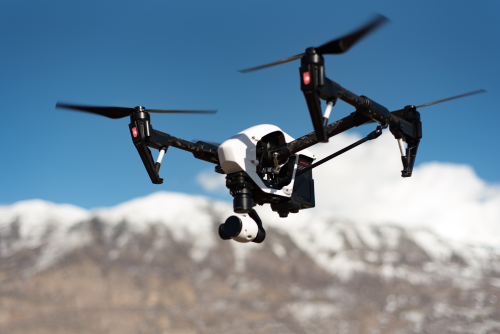
Most people shopping for an FPV drone do not actually need the fastest quad. They need the right mix of movement, image quality, safety margin, repairability, and workflow for the shots they plan to create. The best drones for FPV-style footage depend far more on your shot list than on marketing claims, which is why the wrong “best” buy often becomes an expensive regret.
Quick Take
If you want the shortest path to real FPV-style footage with the least setup friction, an all-in-one option like the DJI Avata 2 is the easiest recommendation for most beginners and travel creators.
If you want the most professional-looking close-proximity fly-throughs for real estate, hospitality, events, or indoor spaces, a 2.5-inch to 3.5-inch cinewhoop is often the better tool than a larger freestyle quad.
If you want speed, wind performance, aggressive lines, and the best chance at premium action-cam footage, a 5-inch freestyle FPV drone is still the benchmark, but it also carries the highest skill, safety, and repair burden.
If you are completely new to manual FPV flying, the smartest first buy may be a simulator and a small micro quad, not the “best” drone on YouTube.
Key points before you buy
- “FPV-style footage” is not one thing. Indoor fly-throughs, mountain lines, sports chase, and cinematic travel passes require different drones.
- The best first purchase is usually the drone you can fly safely, repair affordably, and keep in the air often.
- For filming-first buyers, digital video systems are usually easier than analog.
- Prop guards help, but they do not make a drone safe to fly carelessly near people or property.
- Budget for the whole system: batteries, charger, spare props, spare arms or ducts, goggles, controller, tools, and repair parts.
- If most of your work is still landscapes or static reveals, a regular camera drone may remain your main aircraft, with FPV as a second tool.
What FPV-style footage actually means
FPV stands for first-person view. In practice, buyers usually mean footage that feels more immersive and dynamic than a typical GPS camera drone shot.
That look often includes:
- Low, flowing movement through space
- Tight passes near objects or architecture
- Dives, rises, and directional changes with more energy
- One-take routes through indoor or mixed environments
- Chase footage that feels attached to the subject rather than floating beside it
This matters because not every drone that records good video can create that feeling.
A conventional camera drone is excellent for stable reveals, orbit shots, top-downs, and repeatable travel footage. But it is usually not the right tool for close fly-throughs, tight gap work, or manually controlled lines that define true FPV-style footage.
The four drone types that actually matter
There is no single best FPV drone for everyone. There are four realistic buying paths.
| Drone type | Best for | Main strengths | Main tradeoffs | Best fit |
|---|---|---|---|---|
| All-in-one FPV camera drone | Travel creators, hobbyists, beginners who want usable footage fast | Easiest setup, integrated camera, less tuning, cleaner learning path | More proprietary, less repair-friendly, less raw performance than custom builds | Buyers who want the least friction |
| 2.5-inch to 3.5-inch cinewhoop | Real estate, hospitality, indoor work, controlled close-proximity filming | Prop guards, tighter spaces, smoother low-speed work, can be client-friendly in the right hands | Short endurance, tuning and maintenance, less speed and wind authority | Creators and service providers doing fly-throughs |
| 5-inch freestyle FPV quad | Sports, mountain lines, chase work, aggressive cinematic motion | Best power, best wind handling, broad parts ecosystem, can carry action cams well | Higher crash risk, less suitable near people, steeper learning curve | Skilled pilots or committed learners |
| Micro/sub-250g FPV quad | Practice, small spaces, travel, low-cost repetition | Lower cost of crashes, portable, great for skill building | Limited image quality and wind performance | Beginners who want to learn before scaling up |
The easiest all-in-one choice
For many buyers, the all-in-one category is the safest recommendation. The clearest example is the DJI Avata 2.
Why it works:
- You get a streamlined ecosystem
- You can start capturing usable footage sooner
- The setup burden is lower than a custom build
- Travel packing is simpler
- Straight-out-of-camera results are good enough for many creator and light commercial jobs
Why it is not perfect:
- You are buying into a more closed ecosystem
- Repairs and parts flexibility are not the same as a standard carbon-fiber FPV build
- It does not replace a true 5-inch quad for speed, power, or customizability
- If you only use a motion-style controller, you may delay learning proper two-stick manual control
For beginners who want to make travel videos, tourism content, light social work, or hobby footage without becoming a full-time FPV tinkerer, this category makes a lot of sense.
The best tool for indoor fly-throughs
A 2.5-inch to 3.5-inch cinewhoop is often the right answer for the jobs people incorrectly try to do with bigger FPV drones.
A cinewhoop is a smaller FPV quad, often with ducts or strong prop protection, built for controlled, close work. It is common in real estate, restaurants, hotels, gyms, event spaces, and behind-the-scenes productions.
Why it works:
- Safer geometry for controlled close passes
- Better fit for indoor spaces
- Smoother at modest speed
- Can carry a lightweight action camera, depending on build
- Easier to justify for client work in tighter environments
Its tradeoffs:
- Wind can ruin the experience outdoors
- Battery life is limited in real use
- A bad tune or poor build quality hurts footage fast
- Ducted designs can be louder than buyers expect
If your dream shot is a one-take move through a lobby, down a hallway, past a dining area, and out over a pool, a cinewhoop is usually a smarter buy than a freestyle 5-inch.
The performance benchmark
The 5-inch freestyle quad remains the serious choice for buyers who want the broadest FPV capability and do not mind the learning curve.
This is the class most people picture when they think of “real FPV.” It is fast, powerful, highly repairable, and supported by a huge aftermarket.
Why it works:
- Strong power-to-weight ratio
- Better wind handling
- Great for action-camera payloads
- Huge repair and upgrade ecosystem
- Best fit for chase footage, big terrain, and aggressive lines
Why it is often the wrong first buy:
- It is less forgiving
- It is usually the worst choice for indoor commercial work
- Crashes cost more
- Safety margins around people and property are much tighter
- You need real stick discipline, not just confidence
If you see yourself doing sports follow shots, mountain dives, off-road content, or high-energy cinematic work in open areas, this is the class that usually grows with you the longest.
The smartest low-risk start
A small micro FPV quad, including tiny whoops and sub-250g micros, is often the most rational place to begin.
It will not give you the most impressive final footage, but it gives you something more valuable at the start: repetitions. You can learn throttle control, yaw coordination, and smooth line choice without turning every mistake into a major repair bill.
This route makes sense if:
- You are brand new to manual flying
- You want to pair real flight with simulator practice
- You need a travel-friendly training tool
- You want to reduce early crash stress
For many pilots, the “best” long-term buying sequence is simulator, micro quad, then cinewhoop or 5-inch based on use case.
What actually matters before you buy
1. Your shot list matters more than the drone’s hype
Before you compare models, write down the three shots you want most often.
Examples:
- Indoor real estate fly-through
- Hotel or resort one-take reveal
- Mountain ridge cruise
- Cyclist or snowboard chase
- Car content on a controlled set
- Low travel passes over roads, beaches, or ruins where legal and safe
- Social-first creator footage with minimal post-production
Then ask one question: what is the smallest, safest drone that can reliably get those shots?
That question saves buyers from the classic mistake of purchasing a big, fast freestyle quad when what they really needed was a cinewhoop.
2. Your willingness to learn manual mode
True FPV-style footage is closely tied to manual mode, also called acro mode. That means the drone does not self-level the way a typical camera drone does.
This matters because:
- Manual mode gives the movement people actually want
- It also raises the learning curve sharply
- Simulator time is not optional if you want to progress quickly and safely
If you do not want to spend time in a simulator and learn proper stick control, be honest about that before buying. An integrated FPV drone may still make sense, but a fully custom build may become frustrating instead of rewarding.
3. Camera quality is only part of the equation
Many buyers overfocus on resolution and underfocus on motion quality.
For FPV-style footage, what matters is:
- How smooth the line looks
- How stable the footage feels after stabilization
- How wide the field of view is
- How well highlights and shadows hold up
- Whether the camera survives repeated vibration and hard landings
There are three common capture paths:
Integrated onboard camera
Best for simplicity. Great for travel creators and fast turnaround. Usually enough for social, web, and many creator workflows.
Action camera on top of the drone
Best for premium image quality and more grading flexibility. Common on 5-inch quads and some cinewhoops. Adds weight, cost, and crash exposure.
Stabilized footage in post
If you are comfortable using gyro-based tools such as Gyroflow or your camera’s own stabilization workflow, you have more flexibility. If you want good results straight from the file, prioritize an easier camera pipeline.
For many buyers, the best image setup is not the one with the biggest spec sheet. It is the one that fits their edit speed and crash tolerance.
4. Size, prop guards, and where you will actually fly
Drone size directly affects safety margin, noise, and where the drone feels usable.
In broad terms:
- Larger open-prop drones are better in wind and at speed
- Smaller guarded drones are better near walls, doorways, and controlled interior routes
- Micro quads are great for practice and low-risk environments but limited outdoors
Prop guards matter, but buyers sometimes misunderstand them. They reduce some contact risk and can prevent minor touches from becoming immediate disasters. They do not make it acceptable to fly close to uninvolved people, crowded locations, or delicate property.
If your environment is mostly indoor, architectural, or tight, buy smaller than your ego wants.
5. Repairability and parts support
This is one of the least glamorous buying factors and one of the most important.
Ask before buying:
- Can I get spare props easily?
- Can damaged arms, ducts, motors, or camera mounts be replaced?
- Are batteries easy to source?
- Is there local support or at least common parts availability in my region?
- If I crash, can I repair this myself?
A custom 5-inch or cinewhoop often wins on repairability. An integrated consumer-focused FPV drone often wins on convenience but can lose when something breaks.
Buyers doing commercial work should care even more. Downtime costs money. A drone that flies brilliantly but sits waiting for one proprietary part is not always the best business tool.
6. Ecosystem lock-in: goggles, radio, and video system
This is where buyers can make expensive long-term mistakes.
Your drone choice often determines:
- Which goggles you need
- Which controller works with it
- Which future drones you can add without rebuying everything
- Whether your system is open or more closed
For custom FPV builds, digital video is the default recommendation for most filming-first buyers. The main reason is simple: better viewing quality and a better overall filming experience.
Analog still has a place for low-cost builds and some racing use cases, but if your main goal is good-looking footage, digital is usually the easier path.
For radio systems, many custom-build buyers now prefer widely adopted open ecosystems such as ELRS, short for ExpressLRS, because it gives them flexibility across multiple aircraft.
If you think this hobby might grow beyond one drone, ecosystem decisions matter a lot.
7. Real operating day: batteries, charging, noise, and travel
Do not buy based on one perfect flight. Buy for the whole day.
Think through:
- How many batteries you need to complete a shoot or outing
- How long charging takes
- Whether your charger setup is practical while traveling
- How loud the drone is in public or client environments
- Whether the kit packs cleanly into a backpack
- Whether you can fly it where you typically create
A drone that looks ideal online but needs a bulky charging setup, sounds aggressive in quiet spaces, and drains your bag space may get left at home.
For travel creators especially, portability often beats maximum performance.
Which drone fits which buyer?
Here is the practical short version.
Buy an all-in-one FPV drone if you are:
- A beginner who wants results quickly
- A travel creator who values portability and simplicity
- A hobbyist who wants real FPV-style movement without diving deep into building and tuning
- A solo operator who needs a clean, self-contained kit
Buy a 2.5-inch to 3.5-inch cinewhoop if you are:
- Shooting real estate or hospitality fly-throughs
- Working in controlled indoor or tight environments
- Prioritizing smooth low-speed proximity work
- Comfortable with more setup and maintenance than an all-in-one system
Buy a 5-inch freestyle quad if you are:
- Willing to learn manual flying properly
- Comfortable repairing crashes
- Shooting sports, action, terrain, or open-area cinematic lines
- Chasing maximum movement quality rather than maximum convenience
Buy a micro FPV quad first if you are:
- Totally new to FPV
- Budget-conscious
- Practicing regularly in small spaces
- Not yet sure which larger class you actually need
Safety, legal, and operational checks before first flight
FPV flying can trigger more compliance and operational issues than buyers expect.
Before you fly, verify the rules that apply in your location with the relevant aviation authority, land manager, venue, or client. Do not assume rules are the same across countries, parks, cities, or indoor venues.
Pay special attention to:
- Registration or identification requirements for your drone class
- Whether FPV goggles require a visual observer or spotter in your jurisdiction
- Restrictions near airports, heliports, crowds, events, or sensitive sites
- Rules for flying over people, roads, or moving vehicles
- Commercial filming permissions at venues, hotels, attractions, or private property
- Battery transport rules for airline travel
- Insurance expectations for commercial shoots or client locations
- Privacy expectations when filming around homes, guests, or the public
Two important reminders:
- “Indoor” does not automatically mean “no rules.” Even where aviation rules differ indoors, site permission, safety management, and liability still matter.
- Prop guards do not remove the need for separation, planning, and disciplined flying.
If the job involves people, vehicles, public spaces, or paid work, plan more conservatively than you think you need to.
Common mistakes buyers make
Buying for speed when they really need control
Many buyers want dramatic footage and assume that means a bigger, faster drone. In reality, a lot of commercial FPV work is slow, deliberate, and precision-focused.
Ignoring simulator time
Manual FPV skills come from repetition. The buyers who improve fastest usually treat simulator practice as part of the purchase, not an optional extra.
Budgeting only for the drone
The real cost includes:
- Goggles
- Controller
- Batteries
- Charger
- Spare props
- Repair parts
- Tools
- Case or bag
- Action camera, if needed
Choosing a closed system without thinking ahead
A one-drone buyer may be fine with a proprietary ecosystem. A buyer planning multiple aircraft should think harder about parts, compatibility, and future upgrade paths.
Using a 5-inch where a cinewhoop belongs
This is common in real estate and hospitality. The result is usually too much noise, too much risk, and not enough precision.
Assuming sub-250g means no rules everywhere
Weight thresholds differ by jurisdiction, and site restrictions can apply regardless. Always verify locally.
Overvaluing camera specs and undervaluing repairability
A slightly better image is meaningless if the drone is grounded for weeks after a minor crash.
FAQ
Can a regular camera drone create FPV-style footage?
Sometimes, but only to a point. A conventional camera drone can imitate some low, smooth, forward-moving shots. It usually cannot match the line choice, proximity, agility, or immersive feeling of a true FPV platform.
Is the DJI Avata 2 good enough for professional work?
Yes, for some work. It can be good enough for creator projects, tourism content, social deliverables, light commercial jobs, and some fly-through use cases. For heavier action-cam workflows, maximum repairability, or more aggressive flying, many professionals still prefer custom FPV builds.
Should a beginner start with a 5-inch FPV drone?
Usually not. Most beginners progress better by starting with a simulator and either an all-in-one FPV system or a micro quad. A 5-inch can be a great second step once basic manual control is consistent.
Do I need an action camera on the drone?
Not always. If you want the simplest workflow, an integrated camera may be enough. If you want higher-end image quality, more grading flexibility, or you already use an action-cam workflow, then yes, it can be worth it.
What is better for real estate and hospitality work: cinewhoop or camera drone?
For exterior reveals and safe, stable wide shots, a regular camera drone is often better. For interior one-take fly-throughs and immersive movement through a space, a cinewhoop is usually the right tool.
Is digital or analog better for filming?
For most filming-focused buyers, digital is better. It gives a cleaner view in the goggles and a simpler modern experience. Analog still makes sense for budget builds and some racing-focused pilots, but it is rarely the easiest path to premium-looking footage.
What should I buy besides the drone itself?
At minimum, plan for a proper controller, multiple batteries, a charger, spare props, basic tools, and a safe way to transport the kit. If you are buying a custom FPV platform, also plan for repair parts and simulator practice.
Can I travel internationally with an FPV drone?
Yes, but you need to verify two things separately: transport rules for batteries and the local rules for flying at your destination. Airline acceptance, drone registration, park restrictions, and FPV operating rules can all vary.
Final decision
If you want one simple answer, here it is: buy the smallest, safest FPV-capable drone that can reliably capture your real shot list.
For most beginners and travel creators, that points to an all-in-one FPV option like the Avata 2. For indoor fly-through work, it points to a 2.5-inch to 3.5-inch cinewhoop. For serious action and open-area cinematic flying, it points to a repairable 5-inch freestyle quad. If you are not sure yet, start smaller, practice more, and let your second drone be the expensive one.
