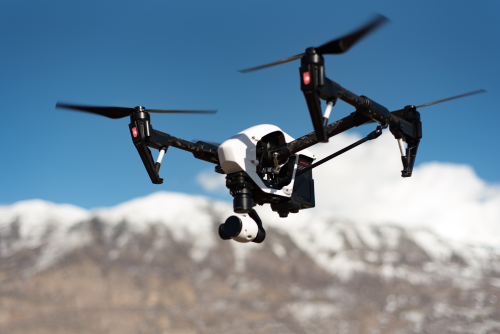
When people search for the best drones for land mapping, they often start with camera specs. That is rarely the deciding factor. For mapping, the real questions are whether the drone can fly repeatable missions, capture distortion-resistant images, geotag them accurately, and fit the software and compliance workflow you actually need.
If you are learning on small plots, creating visual maps alongside content, or buying for paid client work, the right drone changes fast once accuracy, acreage, and automation enter the picture. Here are the land mapping picks that make sense for beginners, creators, and working pros without overspending or buying the wrong tool.
Quick Take
If you want the short version, this is the buying logic:
- Best overall for serious paid land mapping: DJI Mavic 3 Enterprise
- Best ultra-portable option for beginners and creators: DJI Mini 4 Pro
- Best used-market mapping value: DJI Phantom 4 RTK
- Best for large sites and corridor work: WingtraOne GEN II
- Best scale-up platform for professional survey teams: DJI Matrice 350 RTK with Zenmuse P1
The biggest mistake buyers make is choosing a drone by photo quality alone. For land mapping, automation support, shutter behavior, positioning accuracy, and processing workflow matter more than cinematic marketing.
The best drones for land mapping at a glance
| Drone | Best for | Why it stands out | Main limitation |
|---|---|---|---|
| DJI Mini 4 Pro | Beginners, creators, travel-light users learning mapping basics | Very portable, approachable, good image quality for small visual maps and practice workflows | Not a survey-first platform; workflow support and accuracy expectations must be checked carefully |
| DJI Mavic 3 Enterprise | Small businesses, survey-adjacent work, construction, property documentation | Purpose-built mapping workflow, mechanical shutter, RTK option, strong ecosystem fit | Higher upfront cost than consumer drones |
| DJI Phantom 4 RTK | Buyers wanting a proven used-market mapping platform | Still respected in photogrammetry workflows, dependable mapping heritage | Aging platform, parts and long-term support need careful verification |
| WingtraOne GEN II | Large-area mapping, agriculture blocks, corridors, mines | Covers big areas efficiently, fixed-wing productivity with VTOL convenience | Bigger budget, more training, less suited to tiny jobs |
| DJI Matrice 350 RTK + Zenmuse P1 | Professional survey teams, enterprise operations, heavy throughput | High-end photogrammetry workflow, payload flexibility, team-scale capability | Cost, transport burden, training, and compliance overhead |
What actually matters in a land mapping drone
A mapping drone is not just a camera in the sky. It is part of a capture system.
For most buyers, land mapping success depends on five things:
1. Repeatable flight missions
Photogrammetry works by stitching many overlapping photos into a map. That means the drone needs to fly a consistent grid or corridor pattern, maintain overlap, and hold altitude well.
If your drone cannot reliably run that workflow, the best camera in the world will not save the job.
2. Shutter type
This is one of the most overlooked buying factors.
- Mechanical shutter: better for mapping because it reduces image distortion caused by motion
- Rolling shutter: reads the image line by line, which can introduce skew or warping when the drone is moving
Rolling shutter drones can still produce useful maps, especially for smaller or lower-stakes work. But if you are selling mapping deliverables, mechanical shutter is the safer choice.
3. Positioning accuracy
There is a huge difference between:
- a visually useful overhead map
- a map that supports measurements
- a map trusted for engineering, surveying, or legal workflows
This is where RTK matters. RTK stands for real-time kinematic positioning. In plain English, it helps the drone tag image positions far more accurately than standard GPS alone.
RTK does not magically make every map perfect. You may still need:
- GCPs: ground control points, meaning clearly marked points surveyed on the ground
- Checkpoints: surveyed points used to test final map accuracy
- quality control in your processing software
4. Software compatibility
This may be the single biggest buyer-regret issue.
Before you buy a drone, confirm:
- which flight-planning apps support it
- which controllers and mobile devices support those apps
- which processing software accepts the image and location data cleanly
- whether your workflow needs cloud processing, desktop processing, or both
A lot of buyer frustration starts when a drone is technically excellent but does not fit the mission-planning app or processing stack the operator intended to use.
5. Site size
The best mapping drone for a 5-hectare site is not the best drone for a 500-hectare corridor.
As a rule:
- Small sites: multirotors are usually easiest
- Medium sites: multirotors still make sense, especially with RTK
- Large sites and long corridors: fixed-wing systems become much more efficient
The right picks for beginners, creators, and working pros
DJI Mini 4 Pro
Best for beginners, travel-light users, and creators making visual maps
If you are just getting into land mapping, the DJI Mini 4 Pro is the easiest low-burden way to learn the basics of aerial data capture. It is compact, easy to carry, less intimidating than enterprise platforms, and good enough for small visual mapping jobs if you understand its limits.
This is the drone for people who want to learn:
- image overlap
- flight planning discipline
- photogrammetry processing basics
- how wind, speed, and altitude affect results
It is also a reasonable choice for creators who sometimes need:
- a simple overhead site layout
- a campsite or property overview
- a rough land-use visual
- social and marketing content from the same kit
Buy it if
- You are learning mapping, not promising survey-grade results
- You need a highly portable drone
- You travel often or work light
- You mainly want visual maps, planning references, or content-friendly overheads
Skip it if
- You need dependable client-grade measurement workflows
- You need RTK
- You need a mechanical shutter
- Your workflow depends on automated mapping support that has not been confirmed for your exact app and controller setup
The honest tradeoff
The Mini 4 Pro is not the “cheap Mavic 3 Enterprise.” It is a smart learning and creator option, not a direct professional mapping substitute.
If your business starts charging for maps rather than just photos, you will likely outgrow it.
DJI Mavic 3 Enterprise
Best overall for serious land mapping work
For most buyers who want one drone that can actually earn money in land mapping, the DJI Mavic 3 Enterprise is the strongest all-around answer.
Why? Because it was built with mapping in mind rather than adapted into the role later.
Its biggest advantages are practical, not flashy:
- mechanical shutter for cleaner photogrammetry capture
- RTK support for improved positioning
- strong mission-planning and enterprise workflow fit
- compact enough to deploy quickly
- capable enough for construction, aggregates, property documentation, stockpiles, and many survey-adjacent jobs
This is the platform that makes sense for:
- solo operators
- small drone service businesses
- construction teams
- engineering support crews
- utilities and infrastructure documentation
- organizations moving from casual drone use to repeatable data capture
Buy it if
- You want a mapping-first multirotor
- You plan to charge for maps, volumes, or progress documentation
- You need a drone that fits established photogrammetry workflows
- You want a strong balance of portability and professional output
Skip it if
- You only fly occasionally for hobby or content use
- Your sites are so large that fixed-wing efficiency matters more
- Your work truly requires a larger enterprise airframe or specialized payloads
The honest tradeoff
This is where many buyers should start if mapping is the goal, even if it feels more expensive than a consumer drone. In practice, it often saves money by reducing workflow friction, accuracy headaches, and failed missions.
If you are a working pro and unsure what to buy, this is the safest recommendation in the group.
DJI Phantom 4 RTK
Best used-market value if you know what you are buying
The Phantom 4 RTK is older, but it remains one of the most widely recognized mapping drones in photogrammetry workflows. There is a reason it earned that reputation: it was built for the job and became a standard for many teams.
For the right buyer, it still makes sense.
Buy it if
- You already know the Phantom workflow
- You are expanding an existing Phantom-based operation
- You find a clean, well-supported used package from a reputable seller
- You want a proven mapping platform without moving fully into newer enterprise pricing
Skip it if
- You want a future-proof new-fleet purchase
- You cannot verify battery health, repair options, and spare parts
- You need long-term support confidence
- You want the best portability
The honest tradeoff
The Phantom 4 RTK is not the wrong choice. It is just no longer the easiest default choice for a brand-new buyer.
If you buy one now, do it with your eyes open:
- check support
- check battery cycle health
- check parts availability
- check controller condition
- check whether your software stack still supports your intended workflow cleanly
For the right used deal, it can still be a very practical mapping machine.
WingtraOne GEN II
Best for large-area and corridor mapping
When acreage gets big, multirotors start losing the productivity argument. That is where a fixed-wing system like the WingtraOne GEN II earns its place.
Wingtra’s appeal is simple: it can cover much larger areas efficiently while still using vertical takeoff and landing, which reduces some of the launch and recovery headaches traditional fixed-wing systems can bring.
This type of drone makes sense for:
- large farms
- mining areas
- long transport corridors
- environmental and land-management teams
- jobs where total site coverage matters more than hovering flexibility
Buy it if
- You routinely map large areas
- Your team needs higher daily coverage
- You have the training and workflow maturity to use a larger mapping system well
- You are trying to improve productivity per field day
Skip it if
- Most of your jobs are small urban or construction sites
- You work in tight spaces with awkward takeoff and landing environments
- You do not need fixed-wing efficiency
- Your budget is better spent on a smaller RTK multirotor and stronger software workflow
The honest tradeoff
WingtraOne is a specialist’s tool. It is fantastic when the mission matches the platform, but it is overkill for many buyers.
If your jobs are small to medium and frequent, a Mavic 3 Enterprise-style workflow is usually simpler. If your jobs are huge, Wingtra starts looking very smart very quickly.
DJI Matrice 350 RTK with Zenmuse P1
Best for professional survey teams that need scale and flexibility
If the Mavic 3 Enterprise is the pro sweet spot, the Matrice 350 RTK with Zenmuse P1 is the scale-up answer for teams with heavier operational demands.
This is not a “first mapping drone.” It is a business platform for organizations that need:
- higher throughput
- team workflows
- enterprise fleet management
- payload flexibility
- stronger operational redundancy
- room to grow into more advanced missions
The P1 is a serious photogrammetry payload, and the Matrice platform is meant for organizations rather than casual owner-operators.
Buy it if
- You run a survey, engineering, infrastructure, or industrial drone team
- You need a larger enterprise workflow
- You expect frequent professional mapping missions
- You may need the flexibility to use other payloads over time
Skip it if
- You mostly map small sites
- You are still learning photogrammetry fundamentals
- You do not have the workload to justify the system
- You need a lightweight, travel-friendly solution
The honest tradeoff
This platform is excellent, but many buyers reach for it too early. Bigger is not automatically better in mapping.
If you are a solo operator doing standard site mapping, the Mavic 3 Enterprise is often the more profitable choice. Move to a Matrice-class system when client requirements, payload needs, or throughput clearly justify it.
A note for creators: great camera drones are not automatically great mapping drones
This is where a lot of content-first buyers get tripped up.
A creator drone can still be useful for land mapping, especially for:
- rough orthomosaics
- planning visuals
- scenic land overviews
- property marketing assets
- pre-production location scouting
But creator drones often come with compromises for mapping:
- rolling shutter instead of mechanical shutter
- no RTK
- weaker enterprise workflow support
- limited automated grid mission support depending on the software ecosystem
So if you are a creator first and mapper second, a portable drone like the Mini 4 Pro is a sensible place to start. If the map itself becomes the paid deliverable, step up to a purpose-built mapping drone sooner rather than later.
How to choose the right land mapping drone for your workflow
If you are stuck between two classes of drones, use this sequence.
1. Decide what you are actually delivering
Ask yourself:
- Do I need a nice-looking overhead image?
- Do I need area and distance measurements?
- Do I need topography or volume estimates?
- Do I need survey-grade consistency?
- Do I need legal defensibility?
The more serious the deliverable, the less sense it makes to stay in consumer-drone territory.
2. Match the drone to your site size
- Tiny to small sites: Mini-class or compact enterprise multirotor
- Small to medium paid jobs: Mavic 3 Enterprise class
- Large estates, farms, corridors, mines: fixed-wing or larger enterprise system
Do not buy a small drone and hope brute force will solve a large-area problem. It usually creates battery fatigue, inconsistent lighting, and wasted field time.
3. Be honest about your accuracy needs
If you are making internal planning visuals, you can tolerate more compromise.
If you are billing for mapping results, you should think in terms of:
- RTK or PPK
- GCPs when needed
- checkpoints for validation
- documented processing workflow
And if the job involves property boundaries or regulated survey outputs, verify what local law allows. In many places, only licensed professionals can certify boundary or cadastral work.
4. Confirm software before buying hardware
This deserves repeating.
Check your intended:
- flight app
- controller
- mobile device
- processing software
- data export format
- cloud or local processing requirement
A drone with weak workflow compatibility is not a bargain.
5. Think about batteries, repairs, and downtime
Mapping work is not just about the aircraft. It is also about:
- how many batteries you need for a field day
- how quickly you can replace damaged props or arms
- whether the drone can be serviced in your region
- how long you can tolerate downtime
This is one reason established enterprise platforms stay popular.
6. Avoid buying RGB photogrammetry for a LiDAR problem
If you need bare-earth terrain under trees or dense vegetation, a normal mapping camera may not solve the job well. Photogrammetry works best when the surface is visible.
If your real challenge is canopy penetration, price out LiDAR or a hybrid survey workflow instead of buying the wrong drone and hoping software will fix it.
Safety, legal, and compliance limits to know
Land mapping is still drone flying, and drone flying is regulated in most countries.
Before operating commercially or on client sites, verify the rules that apply in your location, including:
- operator registration
- pilot competency or certification requirements
- airspace restrictions
- operations near people, roads, airports, or infrastructure
- permissions for takeoff and landing on private or restricted land
- privacy and data-capture rules
A few extra realities matter for mapping buyers:
Commercial work may trigger additional obligations
Insurance, operating manuals, risk assessments, or client-specific site approvals may be required depending on the country, company, and type of work.
Boundary and survey claims are sensitive
A drone map is not automatically a legal survey. If you plan to market boundary, cadastral, or certified survey outputs, verify local professional licensing rules first.
Data handling can matter
Construction, utilities, mining, and government clients may have strict rules about cloud upload, storage location, and data security. Confirm that your software stack matches those requirements.
Cross-border travel adds friction
If you travel internationally for projects, verify airline battery rules, local drone import restrictions, and in-country operating requirements before packing the kit.
Common mistakes people make when buying a land mapping drone
Buying for image quality instead of workflow
A beautiful camera does not guarantee a reliable map.
Assuming RTK removes the need for quality control
RTK is powerful, but checkpoints and good processing habits still matter.
Ignoring software support
This is the most common expensive mistake. Always confirm mission-planning and processing compatibility first.
Choosing a drone that is too small for the acreage
You can map a large site with a compact drone, but that does not mean you should.
Expecting photogrammetry to see through vegetation
It usually will not. If the ground is hidden, your map quality will reflect that.
Buying an aging platform without a support plan
Used mapping drones can be great value, but only if batteries, repair options, and parts availability are still workable.
FAQ
Can a beginner really use a drone for land mapping?
Yes, but the output level matters. A beginner can absolutely learn photogrammetry and create useful visual maps on small sites. What beginners should not do is assume those early results are automatically precise enough for paid survey-style work.
Do I need RTK for land mapping?
Not always. If you only need visual maps or rough planning outputs, you may not. If you need better positional consistency, repeatable measurements, or professional deliverables, RTK becomes much more important.
Is a mechanical shutter really that important?
For serious photogrammetry, yes. Mechanical shutters reduce motion-related image distortion and generally make mapping more reliable. Rolling shutter drones can still work for lighter-duty jobs, but they are a compromise.
Is fixed-wing better than multirotor for mapping?
It depends on area size. Fixed-wing systems are usually better for large-area efficiency. Multirotors are usually better for smaller sites, tighter spaces, and simpler field deployment.
Is the DJI Phantom 4 RTK still worth buying?
It can be, especially on the used market, if you know the platform and can verify battery condition, parts availability, and software fit. It is still respected, but it is no longer the safest default purchase for every new buyer.
Can one drone handle both content creation and land mapping?
Yes, but usually with compromises. A creator drone can do occasional visual mapping, but purpose-built mapping drones are better for repeatable, accurate data capture. If mapping becomes a revenue service, a dedicated mapping platform is usually worth it.
Do I need ground control points if I have RTK?
Sometimes yes. RTK improves geotagging, but ground control points and checkpoints are still valuable for higher-confidence work and accuracy validation. The exact need depends on the project standard and client expectations.
What is the safest “buy once, buy right” option for most professionals?
For most small businesses and working pros, the DJI Mavic 3 Enterprise is the clearest buy-once answer. It is purpose-built, portable, and capable enough for a wide range of real-world land mapping jobs.
Final decision
If you want one honest recommendation, most serious buyers should start with the DJI Mavic 3 Enterprise and build a disciplined mapping workflow around it. Choose the Mini 4 Pro only if you are learning, traveling light, or producing visual maps rather than measurement-critical deliverables. Move to WingtraOne or a Matrice 350 RTK with P1 only when acreage, throughput, or enterprise requirements clearly demand it.
In land mapping, the best drone is not the one with the loudest spec sheet. It is the one that matches your deliverables, your software, your accuracy needs, and the jobs you actually plan to win.
