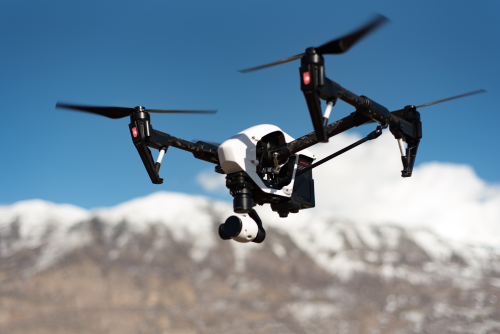
If you’re shopping for the best drones for long battery life, the biggest mistake is trusting the headline flight-time number more than the actual mission. A drone that claims 40-plus minutes in ideal conditions may only give you 20 to 30 minutes of useful work once wind, climb, framing, repositioning, and a safe landing reserve are factored in. The right buy is not the drone with the biggest battery on paper, but the one that gives you the most reliable usable time for your kind of flying.
Quick Take
Long battery life matters, but not in the way most buyers think.
Key points
- The most important number is usable flight time, not the advertised maximum.
- A drone with better wind resistance often beats a lighter drone with a bigger marketing claim.
- Battery ecosystem matters as much as the aircraft: spare battery cost, charger speed, field charging, and long-term availability all affect your real workflow.
- For most buyers, the sweet spot is a mid-size folding camera drone, not the smallest drone and not an enterprise platform.
- If you travel often, battery rules, weight class, and charging convenience matter almost as much as endurance.
- If you shoot commercially, reliability, battery health tracking, and swap speed are more valuable than squeezing out the last few minutes.
- Fixed-wing and VTOL mapping drones can outperform multirotors for area coverage, but they are specialized tools, not casual all-rounders.
Best fits to shortlist
| Buyer type | Strong examples to shortlist | Why they make sense | Main tradeoff |
|---|---|---|---|
| Travel beginners and lightweight creators | DJI Mini 4 Pro-class drones | Very portable, efficient, easier to pack, good enough endurance for most trips | Less stable in strong wind, less room for payload and sensor size |
| All-around creators, real estate shooters, and serious hobbyists | DJI Air 3-class drones | Excellent balance of battery life, portability, wind handling, and camera flexibility | Bigger bag, pricier batteries and accessories |
| Premium aerial photographers and pro video users | DJI Mavic 3 Classic / Mavic 3 Pro-class drones | Better imaging with strong efficiency and stability | Higher system cost and bigger replacement bill |
| Buyers wanting a non-DJI alternative | Autel EVO Lite+-class drones | Endurance-focused design with strong casual creator appeal | Support, repair, and battery availability can vary by region |
| Enterprise teams doing inspections or industrial operations | DJI Matrice 350 RTK-class systems | Long endurance for professional workflows, payload flexibility, operational redundancy | Size, cost, training, and compliance overhead |
| Survey and mapping teams covering large areas | Fixed-wing or VTOL platforms such as WingtraOne or eBee-class systems | Far better area coverage per battery than typical multirotors | Specialized workflow, not ideal for general photography or casual flying |
What “long battery life” really means in drone buying
Drone makers usually publish an “up to” flight time measured under highly favorable conditions. That can mean little wind, a steady speed, ideal battery temperature, no aggressive climbing, no repeated braking, and no hovering while you frame shots.
That number is not fake, but it is also not your day-to-day reality.
For buying decisions, split battery life into three different ideas:
1. Maximum airborne time
This is the best-case lab-style figure. It tells you the aircraft is efficient, but it should not be your planning number.
2. Usable mission time
This is the number that matters most. It is the time available for actual work after:
- takeoff and ascent
- flying to the subject
- repositioning
- hovering while composing
- maintaining a safety reserve for return and landing
For many camera drones, usable mission time is often far lower than the headline spec.
3. Coverage efficiency
Sometimes the “best battery life” is not the drone that stays in the air longest. It is the drone that covers the most ground, captures the most shots, or completes the job fastest before landing.
That is why a stable mid-size drone with strong wind handling can outperform a lighter drone that looks better on paper.
What actually matters before you buy
Usable flight time beats advertised flight time
A simple rule: never buy based on the top-line flight-time claim alone.
Ask instead:
- How much time will I have after reaching the subject?
- How much reserve do I want before landing?
- Will I be hovering a lot?
- Will I be fighting wind?
- Am I filming, inspecting, mapping, or cruising?
For example, a drone advertised for very long flight time may still feel short-lived if your work involves repeated climbs, stop-start movement, and lots of hovering.
If you want a practical planning shortcut, assume you may only get roughly two-thirds, and sometimes closer to half, of the marketing number as comfortable working time.
Wind resistance changes everything
Wind is one of the biggest battery killers.
A lighter drone may be wonderfully efficient in calm weather but burn through power trying to hold position on a breezy coastline, mountain overlook, or urban rooftop. That is why many buyers who choose the smallest possible drone for battery life end up disappointed.
In real use:
- small travel drones are great when conditions are calm
- mid-size drones usually give more consistent endurance across varied conditions
- larger pro drones can be more stable, but size and cost rise quickly
If you often fly near water, cliffs, open fields, or high-rise buildings, wind performance should be near the top of your checklist.
Battery ecosystem matters more than most first-time buyers expect
A drone is not just an aircraft. It is a battery system.
Before buying, check:
- How much spare batteries cost
- Whether batteries are easy to find in your region
- Whether first-party batteries are still being produced
- How many batteries fit your shooting day
- Whether the charger supports sequential or parallel charging
- Whether car charging or USB-C charging is practical for travel
A drone with slightly shorter per-flight endurance but cheaper, easier-to-find batteries may be the smarter long-term buy than a “longer-flying” drone with expensive or scarce packs.
Charger speed and field workflow affect real productivity
This is where many buyers underestimate the full picture.
Ask these practical questions:
- Can you recharge meaningfully during lunch or between locations?
- Can you top up from a power bank, vehicle, or inverter?
- Does the battery hub prioritize the fullest or emptiest pack first?
- Do you need hot-swapping for time-sensitive work?
For hobby flying, slow charging is annoying.
For commercial work, slow charging can break the day.
If you regularly shoot multiple sites, battery turnaround may matter more than squeezing a few extra minutes from each flight.
Payload, camera demands, and flying style all change endurance
Even within the same drone class, mission type changes battery life.
Battery drains faster when you:
- climb hard after takeoff
- fly at high speed often
- stop and accelerate repeatedly
- hover for long periods
- use obstacle sensing constantly in complex scenes
- carry payloads or accessories on enterprise platforms
- fly in cold conditions
This is why “I need long battery life” should really become “I need enough battery life for my specific workflow.”
Weight class and legal category can change your decision
This is especially important globally, because rules differ by country and region.
In many places, drone weight affects:
- registration requirements
- pilot competency rules
- where you can fly
- distance from people
- operational category
- insurance expectations for commercial work
This matters because some extended battery options can push a drone into a heavier class. A battery upgrade that gives you more endurance may also create more legal friction.
Always verify your local aviation authority’s rules before buying, especially if you are choosing between a sub-250-gram travel drone and a heavier folding camera drone.
Repairability and battery support matter for long-term ownership
Battery life is not just about day one. It is also about year two.
Before buying, check:
- Is the battery widely stocked?
- Is there an official service path in your country?
- Are replacement batteries still sold after the drone has been on the market a while?
- Does the app give useful battery health information?
- Are there safe storage recommendations and auto-discharge features?
A drone with a good battery management system and strong service network often ages better than a cheaper alternative with uncertain support.
The best drone for long battery life depends on your mission
There is no single winner for every buyer. There are only better fits.
Best for travel and lightweight creators: Mini-class camera drones
If you want the easiest drone to carry every day, a Mini-class drone is still the most practical option. DJI Mini 4 Pro is the obvious example in this space.
Why this class works:
- very portable
- easy to pack for vacations and creator trips
- efficient for calm to moderate conditions
- lower intimidation factor for new pilots
- often the simplest category to live with from a weight and travel perspective
What buyers get wrong:
- they assume “small” always means “best endurance”
- they ignore wind limitations
- they expect the same stability and image flexibility as larger drones
Best for:
- travel creators
- hobbyists
- casual photographers
- buyers who value carry-anywhere convenience more than raw resilience
Best all-around endurance for most buyers: Air-class folding drones
For many readers, an Air-class drone is the sweet spot. DJI Air 3-class drones stand out here because they balance endurance, stability, portability, and camera utility better than most smaller or larger alternatives.
Why this class is so compelling:
- better wind handling than Mini-class drones
- strong real-world efficiency
- more confidence for real estate, tourism, landscape, and client work
- still compact enough for easy travel
- often the best balance between “serious tool” and “easy to live with”
Best for:
- creators who fly often
- real estate and tourism content
- serious hobbyists upgrading from entry-level drones
- buyers who want one drone to do almost everything well
This is the class most people should start with if battery life is a high priority but they do not need enterprise payloads.
Best premium choice for image quality plus strong endurance: Mavic 3-class drones
If your aerial work is image-led and you want better camera performance without stepping into enterprise systems, Mavic 3 Classic and Mavic 3 Pro-class drones remain strong endurance buys.
Why people choose this class:
- stable flight in more conditions
- premium imaging capability
- strong efficiency for a drone carrying a better camera system
- better fit for paid visual work where quality matters
The downside is simple: total ownership cost.
Not just the aircraft, but also:
- batteries
- chargers
- repair costs
- accessories
- insurance in some markets
Best for:
- professional photographers
- video teams
- high-end real estate or resort work
- buyers who care more about image quality than ultra-light portability
Best alternative for buyers who do not want DJI: Autel EVO Lite+-class drones
Some buyers want a capable long-endurance camera drone outside DJI’s ecosystem. Autel EVO Lite+ is one of the more relevant names to evaluate in that conversation.
Why it can make sense:
- endurance-focused consumer/prosumer design
- good fit for buyers comparing non-DJI options
- appealing for general aerial photography and creator use
But this is where you must do extra homework.
Verify in your region:
- battery availability
- firmware support
- parts and repair turnaround
- local dealer network
- accessory ecosystem
A drone can look good on paper and still become a frustrating ownership experience if battery support is weak where you live.
Best for industrial operations: Matrice-class enterprise drones
If your definition of “best battery life” is tied to inspections, infrastructure, public safety, or utility work, then consumer drones are the wrong comparison set.
Enterprise platforms such as DJI Matrice 350 RTK-class systems are built around professional missions, not casual flying.
Why they matter:
- long endurance for their size and role
- support for payload workflows
- stronger operational redundancy
- battery systems designed for repeated commercial use
- better fit for managed fleets
These are not “better buys” for most readers. They are only better when the mission justifies:
- larger budgets
- trained crew
- maintenance process
- operating documentation
- higher compliance expectations
Best for covering the most ground: fixed-wing and VTOL mapping drones
If you are surveying large land areas, endurance should be measured in output, not hover time.
Fixed-wing and VTOL mapping platforms such as WingtraOne and eBee-class aircraft can cover dramatically more area per battery than a multirotor. That does not make them better for filmmaking or travel. It makes them better for mapping.
Best for:
- survey teams
- agriculture
- environmental monitoring
- corridor and land-scale data capture
Not ideal for:
- casual video
- close-position hovering
- simple travel shooting
- beginners wanting one all-purpose drone
How to choose the right long-battery-life drone in 5 steps
1. Define the mission first
Write down what the drone will mostly do:
- travel content
- landscape photography
- real estate
- inspections
- mapping
- industrial documentation
- recreational cruising
Battery needs for each are different.
2. Estimate your required working time, not your total flight time
Ask:
- How long do I need over the subject?
- How far will I usually fly before starting the task?
- How much reserve do I want before return?
If you need 15 minutes of actual shooting time over a subject, you may need a drone advertised far above 15 minutes.
3. Choose the smallest class that can do the job reliably
This is the anti-regret rule.
- If a Mini-class drone can handle your conditions, great.
- If you often fly in wind or for paid work, step up to an Air or Mavic-class drone.
- If you need payloads or industrial reliability, go enterprise.
- If you need area coverage, think fixed-wing.
Do not buy larger than your workflow requires, but do not buy so small that you constantly fight the aircraft.
4. Price the full battery system
Before you commit, total the real setup:
- aircraft
- 3 to 5 batteries
- charging hub
- travel charger or vehicle charging option
- carrying case
- spare props
- battery storage solution
Many buyers budget for the drone and forget the battery workflow.
5. Check your legal and travel realities before purchase
Especially verify:
- weight-based rule differences
- registration requirements
- operational categories for your country
- commercial-use obligations if applicable
- airline battery policies
- destination-country drone restrictions if you travel internationally
This step prevents expensive buyer’s remorse.
Safety, legal, and operational limits to know
Battery life discussions can push people toward risky habits. Don’t let “I paid for 40 minutes” turn into “I flew until 3 percent.”
A few non-negotiables
- Do not regularly drain batteries to the bottom.
- Keep a reserve for unexpected wind, rerouting, or return-to-home.
- Follow manufacturer storage guidance for lithium batteries.
- Stop using damaged, swollen, overheated, or physically compromised batteries.
- Be cautious in cold weather, where voltage sag and reduced performance are common.
- Verify local laws before flying near people, roads, airports, ports, parks, or sensitive sites.
Travel and airline reality
Battery rules vary by airline and country, but spare lithium batteries are commonly restricted to carry-on baggage and subject to watt-hour limits and packaging expectations. Always verify your airline’s current policy, the battery watt-hour rating, and the destination country’s drone import and flight rules before travel.
Commercial operations
If you use the drone for paid work, endurance is only one part of the risk picture. You may also need to verify:
- pilot credentials
- business permissions
- insurance
- site permissions
- operational risk assessment requirements
That depends on where you fly and what kind of work you do.
Common mistakes buyers make
Buying the spec sheet instead of the workflow
A longer advertised flight time does not automatically mean a better field experience.
Choosing the smallest drone for windy locations
Portable does not always mean practical.
Buying too few batteries
One long-flying drone with one or two batteries can still be frustrating for travel days, client shoots, or multi-location work.
Ignoring charging speed
A slow recharge can kill productivity faster than a slightly shorter flight time.
Forgetting that heavier batteries can affect legal status
An extended battery can change the category the drone falls into in some places.
Assuming FPV is the answer to endurance
Most cinematic FPV builds, cinewhoops, and racing quads are not endurance machines. Long-range FPV cruisers exist, but they are specialized, require more knowledge, and are not the easiest or safest starting point for buyers whose main goal is practical, reliable flight time.
Overlooking future battery replacement
The best battery-life drone today becomes a bad buy if replacement packs are hard to get next year.
FAQ
What is a good real-world battery life for a camera drone?
For many buyers, anything that gives around 20 to 30 minutes of comfortable real-world working time per battery is already very usable. The exact number depends heavily on wind, temperature, speed, and whether you are filming, hovering, or transiting.
Are bigger batteries always better?
No. Bigger batteries increase endurance, but they can also increase weight, cost, charging time, and legal complexity. A more efficient drone with a better airframe can outperform a heavier drone with a bigger pack.
Should I buy a drone with longer flight time or just buy more batteries?
Usually both matter, but extra batteries often improve the ownership experience more than chasing the absolute longest single-flight spec. A solid drone with a good battery ecosystem is often a better investment than a “longest-flight-time” model with poor battery availability.
Which drone type has the best endurance overall?
For raw area coverage, fixed-wing and VTOL mapping drones are often best. For general photography and creator use, mid-size folding camera drones usually offer the best balance of endurance, portability, and usability.
Is FPV a good choice if I want long battery life?
Usually not for general buyers. FPV shines for speed, immersion, and dynamic footage, but many FPV builds trade endurance for power and agility. If your priority is stable, practical, repeatable long-duration work, a camera drone is usually the better choice.
How many batteries should I buy?
For casual use, three batteries is often a sensible starting point. For travel creators or paid shoots, four to six may be more realistic depending on location count, charging access, and flight style.
Do wind and cold weather really reduce battery life that much?
Yes. Wind can force the drone to work much harder, especially on the return leg. Cold weather can reduce battery performance and make voltage drop faster. If you often fly in either condition, choose a drone with stronger real-world efficiency and keep bigger safety margins.
Can I travel internationally with drone batteries?
Often yes, but only if you follow airline and destination-country rules. Check the battery watt-hour rating, carry-on requirements, spare battery packaging guidance, and local drone import and flight restrictions before your trip.
Final buying call
If you want the best drone for long battery life, stop asking “Which drone has the biggest number?” and start asking “Which drone gives me the most reliable working time for my actual flights?” For most people, that means choosing a well-supported Air-class or Mavic-class camera drone, budgeting properly for extra batteries and charging, and verifying the legal and travel implications before checkout.
