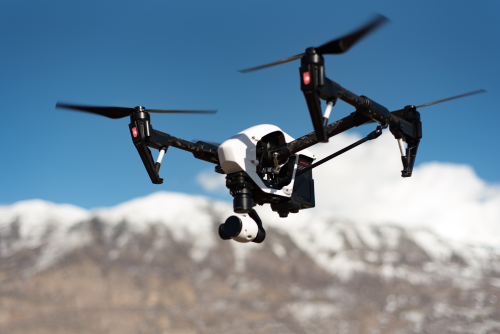
When people shop for the best drones for mapping workflows, they usually compare megapixels, flight time, and sticker price. That is rarely what determines whether the purchase pays off. The right mapping drone is the one that fits your deliverable, your site size, your accuracy process, and the software stack your team can actually run without friction.
Quick Take
If you need the short version, this is what actually matters before you buy a mapping drone:
- Buy for the output, not the aircraft. A stockpile survey, a corridor map, a 3D construction model, and a vegetation-heavy terrain job do not need the same platform.
- For many first-time professional buyers, a compact enterprise multirotor is the safest choice. It is easier to deploy, easier to repeat, and usually enough for small to medium sites.
- For high-volume photogrammetry, modular enterprise platforms with dedicated mapping payloads make more sense than trying to stretch a compact drone beyond its comfort zone.
- If your real problem is vegetation, complex terrain, or dense vertical structure, LiDAR may matter more than a better RGB camera.
- RTK and PPK improve positioning, but they do not magically remove the need for quality control. “Survey-grade” is a workflow outcome, not a feature on a box.
- Software compatibility, repair support, batteries, charging, data processing, and team training often matter more than one extra spec-sheet advantage.
- Before any commercial mapping work, verify local flight rules, airspace requirements, privacy obligations, land access, and client-specific data/security restrictions.
Start with the deliverable, not the drone
The best drones for mapping workflows depend on what you are being paid to deliver.
A few common mapping outputs:
- Orthomosaic: a stitched, map-like overhead image corrected for perspective
- 3D model: a reconstruction of buildings, terrain, or sites for measurements and visualization
- Stockpile volume: material measurement for mining, construction, or aggregates
- Corridor map: a long, narrow survey for roads, rail, pipelines, or utilities
- Surface model or terrain model: elevation data for grading, drainage, or planning
- LiDAR dataset: laser-based capture that can work better than photogrammetry in vegetation or complex topography
Here is the fastest way to narrow your shortlist:
| Your main workflow | Usually best fit | Why it works | Main tradeoff |
|---|---|---|---|
| Construction progress, stockpiles, roofs, solar, small to medium sites | Compact enterprise multirotor | Fast setup, easy repeat missions, lower total system cost | Limited coverage per flight |
| Surveying, mining, larger sites, higher-throughput photogrammetry | Modular enterprise multirotor with mapping payload | Better camera options, stronger positioning workflow, more flexible payloads | Heavier, more expensive, less portable |
| Vegetation-heavy terrain, forestry edges, complex elevation work | LiDAR-capable multirotor | Better for structure and terrain where photos struggle | Much higher system and processing cost |
| Very large acreage, agriculture blocks, long corridors | Fixed-wing or VTOL fixed-wing mapping aircraft | Covers large areas efficiently | More operational complexity, more space needed, not ideal for tight sites |
That table is more useful than most “top drone” lists because it starts from the job, not the brand.
What actually matters before you buy
Sensor and shutter type
For photogrammetry, camera design matters more than raw megapixel marketing.
What you want to check:
- Mechanical shutter: This reduces image distortion during flight and is a major advantage for mapping. It is one of the clearest separators between a serious mapping tool and a camera drone that is merely capable of mapping.
- Sensor size: A larger sensor can help with dynamic range, low light, and image quality, but it does not automatically make the map better if the workflow is weak.
- Lens consistency and calibration: Reliable, repeatable data matters more than “cinematic” output.
- Interchangeable payloads: Important if you may expand into LiDAR, thermal, multispectral, or higher-end RGB mapping later.
A useful rule: if mapping is a revenue workflow, prioritize a stable mapping camera over a more visually impressive camera.
Positioning: RTK, PPK, and control
You will see a lot of marketing around RTK (real-time kinematic) and PPK (post-processed kinematic). Both improve the quality of the image position data, which helps your mapping accuracy and speeds up workflow.
But there are two things buyers often misunderstand:
- RTK is not a substitute for quality assurance.
- Ground control points and checkpoints still matter when the client, contract, or internal standard requires them.
If your jobs involve survey teams, design firms, or legal boundary-adjacent work, ask these questions before you buy:
- Will you rely on a local correction network, your own base station, or PPK?
- Is correction coverage reliable where you work?
- Do your clients need a specific coordinate system or datum?
- Will you routinely place checkpoints to verify output quality?
The best mapping drone for your business is often the one that fits your positioning workflow cleanly, not the one with the flashiest marketing phrase.
Coverage speed versus site complexity
A drone that looks great on paper may be painfully inefficient in the field.
Think about:
- Average site size
- Shape of the site
- Wind conditions
- Number of battery changes per job
- Travel between takeoff points
- Whether you fly compact sites or long corridors
- Whether takeoff and landing space is limited
If you map small construction sites, quarries, rooftops, substations, or solar installations, a compact multirotor often wins because setup is quick and repeatability is easy.
If you map large farms, long road sections, or wide land parcels every week, fixed-wing efficiency can outweigh the learning curve.
Software and ecosystem fit
This is where many buyers make the wrong decision.
A mapping drone is not just an aircraft. It is a workflow made of:
- Mission planning
- Data capture
- Positioning corrections
- Processing
- QA/QC checks
- Export formats
- Team collaboration
- Client delivery
Before you buy, confirm that the drone works smoothly with the software your team plans to use, whether that is DJI Terra, Pix4D, Agisoft Metashape, or another photogrammetry pipeline.
Check for:
- Easy grid and corridor mission planning
- Terrain follow support if you work over uneven ground
- Good image export and metadata handling
- RTK/PPK workflow support
- Local coordinate system support if required
- Clean handoff to CAD, GIS, BIM, or engineering software
- Realistic processing time on your existing computers or cloud workflow
A cheap drone becomes expensive fast if it slows down every downstream step.
Total system cost, not just drone cost
A lot of buyers underbudget the real kit.
Your full mapping system may include:
- Extra batteries
- Fast charger or multi-battery charging hub
- RTK module or base station
- Spare props and maintenance items
- Rugged tablet or controller accessories
- Cases and field transport
- Ground control targets
- Survey equipment or coordination with survey staff
- Processing software
- Cloud storage or workstation upgrades
- Training and standard operating procedures
If you buy a drone that is “affordable” but forces extra field time, repeated flights, slow processing, or higher reshoots, the cheap option can become the costly one.
Support, repair, and downtime
For commercial mapping, downtime matters.
Ask these questions before you commit:
- How quickly can you get repairs in your region?
- Are batteries and props easy to source?
- Is there enterprise support or only retail support?
- How mature is the mission-planning ecosystem?
- How much training will a new pilot need before producing consistent data?
A mapping drone that sits in a service queue for weeks can do more damage to your business than a higher upfront purchase price.
Which type of mapping drone is actually best for you?
If you want a practical shortlist, this is where most buyers land.
Best fit for most first-time professional mapping teams: compact enterprise multirotor
For many buyers, the sweet spot is a compact enterprise multirotor such as the DJI Mavic 3 Enterprise class.
Why this category works so well:
- Portable and fast to deploy
- Easier for solo operators and small teams
- Strong fit for construction, stockpiles, roof measurement, solar, real estate development, and progress tracking
- Lower operational friction than heavier enterprise aircraft
- Usually the easiest way to standardize repeat flights over the same site
Who it fits best:
- Survey-adjacent businesses starting drone mapping
- Construction teams doing progress documentation and measurement
- Service providers handling small to medium commercial sites
- Buyers who need one practical system, not a large fleet
Who may outgrow it:
- High-volume corridor or acreage mapping teams
- Firms needing interchangeable high-end payloads
- Buyers moving into LiDAR
- Teams working in tougher wind or larger, more complex industrial environments
If your jobs are mostly within the “small to medium site, fast deployment, frequent repeat missions” category, this is usually the safest buy.
Best fit for larger survey and enterprise programs: modular RTK multirotor with mapping payload
When throughput, flexibility, and upgrade path matter more than portability, the better fit is often a platform like the DJI Matrice 350 RTK paired with a dedicated mapping camera such as the Zenmuse P1.
Why this category matters:
- Better payload flexibility
- Stronger path into professional photogrammetry workflows
- Better fit for larger sites, mining, engineering, and more demanding client work
- Easier expansion into LiDAR or specialty sensors later
Who it fits best:
- Survey firms
- Mining and aggregates operators
- Enterprise construction programs
- Utilities and infrastructure teams
- Buyers building a formal drone department, not just adding a tool
Who may regret it:
- Small teams mapping only occasionally
- Buyers who need lightweight travel and fast setup
- Anyone without budget for batteries, training, software, and support
If you know mapping will be a core revenue stream, this category usually holds up better over time than trying to force a smaller platform to do everything.
Best fit for terrain, vegetation, and premium geospatial workflows: LiDAR-capable platform
If your work involves tree cover, rugged terrain, embankments, vertical faces, or situations where image-based mapping struggles, look at LiDAR-capable systems such as a Matrice 350 RTK with a Zenmuse L2-class payload.
Why people buy LiDAR:
- Better terrain and structure capture in complex environments
- Useful where photogrammetry has gaps or weak ground visibility
- Strong fit for some forestry, utility, mining, and topographic workflows
Why many buyers should not:
- Higher hardware cost
- Heavier data processing and QA burden
- Bigger learning curve
- Often unnecessary for buyers who mainly deliver orthomosaics, stockpiles, and standard site models
LiDAR is best when it solves a real workflow problem, not when it just sounds more advanced.
Best fit for very large areas: fixed-wing or VTOL fixed-wing mapping aircraft
For very large land areas or long corridors, fixed-wing systems such as the WingtraOne GEN II class can be the right answer.
Why this category wins:
- Covers more ground efficiently
- Reduces takeoffs, landings, and battery swaps over large sites
- Strong fit for agriculture, corridor work, and broad-area mapping
Why it is not for everyone:
- More demanding operations
- More takeoff/landing planning
- Less flexible in tight urban or industrial sites
- May require a different pilot skillset and more deliberate mission planning
If your average site is huge, fixed-wing deserves serious consideration. If your work happens in tight, busy, obstacle-rich environments, a multirotor usually remains the better business tool.
Safety, legal, and operational checks before you commit
Mapping is not just a buying decision. It is a regulated flight operation and a data collection workflow.
Before you spend money, verify:
- Commercial flight rules: pilot qualification, registration, aircraft identification requirements, and operational limits vary by country
- Airspace approvals: especially near airports, cities, critical infrastructure, ports, and controlled areas
- BVLOS or extended-range restrictions: many corridor and fixed-wing workflows can run into these issues
- Site access: industrial plants, mines, rail corridors, utility assets, and private developments may have their own approval process
- Privacy and data handling: local law and client contracts may restrict what you can capture, store, or share
- Client QA expectations: if you promise accuracy, define how you will verify it
- Battery transport and travel: especially if crews fly commercially between countries or regions
- Vendor restrictions: some organizations and governments have procurement or cybersecurity limits on certain hardware or cloud workflows
If the job is regulated, sensitive, or high-liability, verify the rules with the relevant aviation authority, site owner, and client before the aircraft ever leaves the case.
Common mistakes buyers make
Buying for camera hype instead of workflow fit
A bigger number on the camera spec sheet does not guarantee a better map. Shutter type, mission consistency, positioning, and processing discipline usually matter more.
Assuming RTK eliminates the need for checkpoints
RTK improves the workflow. It does not replace validation. If accuracy matters contractually, plan for checkpoints and QA.
Overbuying LiDAR
LiDAR is powerful, but it is not the default answer. Many businesses would make more money with a simpler photogrammetry setup they can deploy every week.
Choosing fixed-wing just because the site is “large”
Large is not enough. You also need the right airspace, enough launch and recovery space, suitable terrain, and repeatable operational control.
Underbudgeting the office side
Many teams buy the aircraft and then discover their laptop, storage, software, and delivery workflow are the real bottlenecks.
Ignoring repair and support realities
A drone that is hard to service in your region can create costly downtime, especially during peak season or active contracts.
A practical 7-step buying checklist
Before you place an order, run through this in sequence:
-
List your next 10 likely jobs.
Write down site size, deliverable, terrain, and turnaround time. -
Define the accuracy workflow.
Decide whether you will use RTK, PPK, ground control, checkpoints, or a mix. -
Choose the platform class first.
Compact multirotor, modular enterprise multirotor, LiDAR-capable system, or fixed-wing. -
Lock the software path.
Confirm mission planning, processing, coordinate handling, and client export formats. -
Price the full kit.
Include batteries, charging, spares, support, software, storage, and training. -
Test on a real site if possible.
A demo or rental flight will tell you more than ten spec sheets. -
Buy for the next two years, not the next two weeks.
Pick the system that matches your likely upgrade path without forcing overspend today.
FAQ
What is the best mapping drone for most small businesses?
For many small teams, a compact enterprise multirotor is the best starting point because it is portable, repeatable, and capable enough for common commercial mapping jobs. The Mavic 3 Enterprise class is a strong example if your work is mostly construction sites, stockpiles, roofs, solar, and progress mapping.
Do I need RTK for mapping?
Not always, but it is very useful. RTK improves image positioning and can reduce field friction. If you care about repeatability, efficiency, or stronger geospatial output, it is worth serious consideration. If a job has strict accuracy requirements, you may still need checkpoints or ground control.
Is LiDAR better than photogrammetry?
Not universally. LiDAR is better for certain terrain, vegetation, and structure-heavy scenarios. Photogrammetry is often more cost-effective for standard orthomosaics, 3D site models, progress tracking, and stockpile measurement.
Can a consumer camera drone do professional mapping work?
Sometimes, but it is usually not the best long-term choice if mapping is a core service. Enterprise mapping drones typically offer better shutter behavior, positioning workflows, mission planning, and operational reliability.
Should I buy a fixed-wing mapping drone?
Buy fixed-wing when large-area efficiency is central to your business. If most of your work happens on compact, obstacle-rich, urban, or industrial sites, a multirotor is usually the better investment.
Can one drone handle both inspection and mapping?
Yes, in some cases. A compact enterprise multirotor can cover basic inspection and mapping tasks well. But if your inspection workflow requires zoom, thermal, or specialty payloads, and your mapping workflow needs higher-end photogrammetry or LiDAR, a single aircraft may become a compromise.
How much should I budget beyond the drone itself?
Enough to cover the real workflow. Batteries, chargers, spares, positioning tools, software, storage, training, and processing hardware can meaningfully change the true cost of ownership. Many buyers underestimate this part.
What should I test before the return window closes?
Test a full mission from planning to delivery. Check image quality, mission repeatability, battery endurance in your conditions, RTK workflow, processing time, coordinate handling, and whether the final output matches what your clients actually need.
The decision that usually holds up
If you are buying a mapping drone today, the strongest move is to match the aircraft to your most common paid workflow, not your most ambitious future idea. For most small and mid-sized teams, a compact enterprise multirotor is the smartest first buy. For larger survey programs, modular enterprise platforms make more sense. For vegetation and topography problems, LiDAR earns its keep. For very large areas, fixed-wing wins on efficiency.
Write down your next three real jobs, choose the platform that completes them with the fewest compromises, and buy the workflow, not just the drone.
