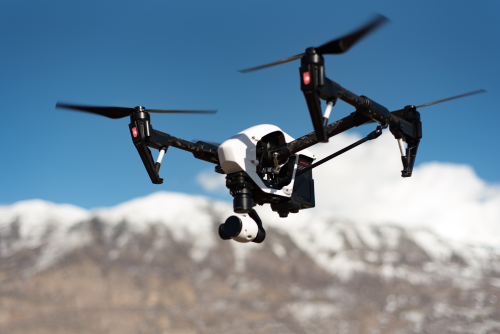
The best drone for a small business is rarely the one with the longest feature list. It is the one that matches your actual jobs, your team’s skill level, and the full cost of operating it once batteries, training, repair, software, and compliance are included. If you are choosing the best drones for small businesses today, start with what you need to deliver: marketing content, property visuals, inspection imagery, mapping data, or cinematic fly-throughs.
Quick Take
If you want the short version, this is the buying logic:
- Best low-risk starter for most solo operators: DJI Mini 4 Pro
- Best all-round small business drone for most buyers: DJI Air 3
- Best premium image quality without overbuying: DJI Mavic 3 Classic
- Best for higher-end brand and production work: DJI Mavic 3 Pro
- Best FPV-style add-on for immersive marketing shots: DJI Avata 2
- Best for mapping and site documentation: DJI Mavic 3 Enterprise
- Best for thermal inspection work: DJI Mavic 3 Thermal
Here is the fast decision table.
| If your business mainly does… | Best fit | Budget level | Skill level | Main reason to buy |
|---|---|---|---|---|
| Social content, quick marketing clips, travel-light work | DJI Mini 4 Pro | Lower | Beginner | Small, easy to carry, low friction |
| Real estate, hospitality, construction updates, general client work | DJI Air 3 | Mid | Beginner to intermediate | Best balance of camera flexibility, flight confidence, and value |
| Premium photo/video for agencies, resorts, developers, luxury listings | DJI Mavic 3 Classic | Upper mid | Intermediate | Better image quality and stronger “pro” output |
| High-end multi-lens production work | DJI Mavic 3 Pro | Higher | Intermediate to advanced | More creative flexibility for paid content |
| Indoor fly-throughs, action-heavy promos, immersive brand videos | DJI Avata 2 | Add-on budget | Intermediate | Unique motion and perspective |
| Mapping, surveying, repeatable site capture | DJI Mavic 3 Enterprise | Specialized | Intermediate to pro | Built for data collection, not just visuals |
| Roof, solar, utility, industrial thermal work | DJI Mavic 3 Thermal | Specialized | Trained pro | Thermal workflow capability |
One market reality is hard to ignore: for many small businesses, DJI still offers the cleanest mix of hardware, batteries, accessories, training content, repair ecosystem, and software compatibility. If your region, client, or procurement policy limits DJI, use the same buying logic by class: mini starter drone, mid-size all-rounder, premium camera platform, or enterprise inspection platform.
Start with the job, not the drone
Before looking at models, answer these four questions:
1. What deliverable are you selling?
A drone can be a marketing camera, an inspection tool, or a data-collection platform. Those are not the same purchase.
- Marketing and social media: prioritize ease of use, portability, vertical content options, and fast editing workflows
- Real estate and hospitality: prioritize stable video, multiple focal lengths, and reliable flight in moderate wind
- Roof, solar, and asset inspection: prioritize safety, zoom, repeatability, and sometimes thermal
- Mapping and surveying: prioritize workflow compatibility, geotagging, and enterprise features over cinematic image quality
- FPV-style brand work: prioritize controlled motion and pilot skill, not just camera specs
2. Who will fly it?
A business owner flying alone on busy days needs a different drone than a trained media team.
- Beginner: strong safety systems, simpler control logic, lower intimidation factor
- Intermediate: more room for manual camera control and lens options
- Advanced or specialist: enterprise workflows, thermal interpretation, mapping discipline, or FPV flying
3. What does downtime cost you?
A cheap drone becomes expensive if one repair stops client work for two weeks. Small businesses should value:
- local or regional repair support
- easy access to batteries and propellers
- common accessories
- known software compatibility
- low-friction replacement if something fails
4. Are you buying for today’s revenue or tomorrow’s ambition?
Many businesses overbuy for future possibilities and underbuy for current jobs. If 80 percent of your first-year work is marketing footage, do not jump straight to thermal or mapping hardware unless you already have paying demand.
The best drones for small businesses, by buyer type
DJI Mini 4 Pro
Best for
Solo operators, creators, travel businesses, local marketing teams, light real estate content, and anyone who wants the easiest entry into paid drone work.
Why it works
The Mini 4 Pro is the safest answer for small businesses that need to move fast and stay portable. It is light, easy to pack, quick to deploy, and far less intimidating than a larger aircraft when working around clients or while traveling. It also gives beginners strong flight assistance and obstacle sensing, which matters when your drone time happens between other business tasks.
This is a smart fit for:
- cafes, hotels, and tourism brands making short-form content
- solo real estate agents or small property media teams
- social media agencies adding aerial clips to packages
- founders who need one reliable drone without a big learning curve
Buy it if
- you want the lowest-friction start
- portability matters more than ultimate image quality
- you are new to flying
- you often shoot for web, social, and standard client deliverables
Skip it if
- you regularly fly in windy coastal or mountain conditions
- you need stronger low-light performance
- you need thermal, mapping, or more serious inspection work
- you want a drone that feels more “production grade” on larger client jobs
Biggest regret risk
Buying a mini drone and expecting it to feel like a full-time inspection or production platform.
DJI Air 3
Best for
Most small businesses.
Why it works
If a small business wants one drone that can cover the widest range of normal paid jobs, the Air 3 is the strongest default choice. It sits in the sweet spot between portability and professional usefulness. The dual-camera setup gives you more shot variety without jumping into the cost and size of the Mavic line, and the larger airframe usually handles everyday work more confidently than a mini drone.
This is the drone many buyers should start with if they already know they will use it regularly for paid work.
It is especially good for:
- real estate and property media
- hotels, venues, and destination marketing
- construction progress visuals
- small creative agencies
- local business promo videos
- inspection-lite work where visual capture matters more than thermal data
Buy it if
- you want one drone to cover most business use cases
- you need better wind confidence than a mini platform
- you want more framing flexibility from multiple focal lengths
- you need a platform that can grow with your skill level
Skip it if
- your work is mostly travel-light, spontaneous, or highly restricted by size
- you need top-tier stills and low-light performance for premium clients
- you need enterprise mapping or thermal workflows
Biggest regret risk
Not buying enough batteries and then discovering your “one-drone solution” only covers short on-site windows.
DJI Mavic 3 Classic
Best for
Businesses that sell better image quality, not just aerial access.
Why it works
The Mavic 3 Classic is a very strong value play for businesses that care more about premium image quality than extra lenses. For many property media companies, boutique agencies, resort marketers, and luxury listing teams, it offers a clear step up from mid-range drones without the added cost of a more complex multi-camera setup.
If your clients notice image quality, dynamic range, and higher-end finishing, this is where spending more starts to make sense.
Buy it if
- your deliverables are client-facing and image quality affects perceived value
- you shoot higher-end stills and polished promotional video
- you want a more serious production drone without overcomplicating the purchase
Skip it if
- your jobs are mostly quick-turn social content
- you need a budget-conscious all-rounder
- you need thermal, mapping, or tight indoor flying
Biggest regret risk
Paying for premium camera quality when your clients mostly consume compressed mobile video and never value the difference.
DJI Mavic 3 Pro
Best for
Production-focused businesses that actively benefit from multiple focal lengths and higher-end creative options.
Why it works
The Mavic 3 Pro is for businesses selling premium branded content, not just “drone footage.” If your team understands shot design and editing, the additional camera flexibility can help create more polished work without changing aircraft mid-shoot.
This makes sense for:
- creative agencies producing campaigns
- high-end real estate teams
- destination and automotive content production
- commercial video shops that already know how to monetize better footage
Buy it if
- you already have consistent paid production work
- you know how to use multiple focal lengths intentionally
- your clients pay for polish, not just coverage
Skip it if
- this is your first business drone
- your edits are simple and fast-turn
- your revenue does not justify the jump from an Air 3 or Mavic 3 Classic
Biggest regret risk
Buying a premium production drone before you have premium production clients.
DJI Avata 2
Best for
Immersive fly-throughs, dynamic brand videos, venue promos, event teasers, and FPV-style marketing as a second system.
Why it works
The Avata 2 can deliver shots that conventional camera drones simply cannot. Walkthrough-style motion, tight-space movement, and “inside to outside” style transitions can make content feel far more engaging for gyms, restaurants, hotels, showrooms, and event venues.
But this is not the best first drone for most businesses. It is a specialized creative tool.
Buy it if
- you already have standard aerial coverage handled
- you want a signature content style
- you are willing to practice and build specific FPV skills
- your work includes indoor or close-proximity brand storytelling
Skip it if
- you need one drone for everything
- you are still learning basic airspace judgment and flight planning
- your work is more inspection, mapping, or standard promo coverage
Biggest regret risk
Buying FPV first because the videos look exciting, then realizing your actual business jobs need stable, conventional aerial shots.
DJI Mavic 3 Enterprise
Best for
Mapping, site documentation, repeatable construction capture, and businesses moving toward geospatial deliverables.
Why it works
A lot of small businesses make a costly mistake here: they try to force a marketing drone into mapping work. If your business needs orthomosaics, site progress data, or repeatable documentation, an enterprise-oriented platform is the right starting point. The Mavic 3 Enterprise is built more for data reliability than cinematic appeal.
This is a better fit for:
- construction and engineering service firms
- survey support teams
- infrastructure documentation
- companies building repeatable site workflows
Buy it if
- your output is data, not just pretty video
- you need more disciplined site capture
- you plan to use mapping or photogrammetry software regularly
Skip it if
- you mainly need marketing visuals
- you do not have a clear software workflow yet
- you are not ready for the extra training and processing overhead
Biggest regret risk
Buying a mapping-capable drone without understanding that software, accuracy checks, and data handling are where the real work happens.
DJI Mavic 3 Thermal
Best for
Roofing, solar, utilities, industrial inspection, and businesses with real thermal use cases.
Why it works
Thermal is valuable when you know exactly why you need it. It can help identify heat signatures, anomalies, and inspection clues that a standard visual camera cannot show. For certain businesses, that is a revenue multiplier. For others, it is an expensive distraction.
Thermal makes sense when you already have customers asking for:
- roof moisture or heat-loss investigation support
- solar panel anomaly detection
- utility or facility inspection
- industrial maintenance visibility
Buy it if
- you have paid thermal demand already
- you understand that thermal interpretation requires training and context
- you work in inspection-heavy verticals
Skip it if
- you are trying to “future-proof” without actual demand
- your current work is ordinary marketing or real estate media
- you think thermal automatically makes you an inspector
Biggest regret risk
Treating thermal as a shortcut to expertise rather than a tool inside a disciplined inspection workflow.
What your real drone budget should include
Small businesses often compare aircraft prices and ignore system cost. That is how good buying decisions turn into bad business decisions.
At minimum, budget for:
- At least 3 batteries for most real workdays
- Spare propellers
- A charging hub or practical field-charging setup
- Fast, reliable memory cards
- A protective case or bag
- ND filters if you shoot a lot of video in bright conditions
- Insurance or a repair plan, where available and appropriate
- Storage and editing capacity on your laptop or workstation
- Software subscriptions for mapping, photogrammetry, or inspection workflows
- Pilot training time, which is a real cost even if you do it yourself
A useful rule: if your drone budget only covers the aircraft and one battery, your real budget is not ready yet.
Safety, legal, and compliance checks before you sell drone work
Commercial drone flying is regulated differently around the world, and many countries now use risk-based categories rather than a simple recreational-versus-commercial split. Before you market services, verify the current rules with your national aviation authority and any local land manager, venue, or client site operator.
Check these before you fly for business
-
Registration requirements
The aircraft, the operator, or both may need registration. -
Pilot qualification requirements
Some countries require an exam, certificate, training course, or operational authorization for certain flights. -
Weight-class implications
Sub-250g can reduce friction in some places, but it does not mean “no rules.” -
Airspace and location restrictions
Airports, helipads, urban centers, government sites, parks, and event venues can have extra restrictions. -
Operations near people, roads, or buildings
Many jurisdictions treat these flights more strictly. -
Night operations and advanced missions
Rules may differ significantly for night flying, inspections, or anything beyond visual line of sight. -
Privacy and consent issues
Property marketing, hospitality, and inspection work can raise privacy concerns even when flight is otherwise legal. -
Insurance and client contract requirements
A law may not require insurance, but your client might. -
Survey or engineering sign-off rules
In some places, collecting data is one thing; certifying or stamping professional outputs is another.
Obstacle sensing, return-to-home, and automated safety features help reduce risk, but they do not replace planning, site assessment, or pilot judgment.
What people get wrong when buying a business drone
They buy for specs, not for workflow
A better sensor does not help if your team cannot edit faster, deliver on time, or safely capture repeatable shots.
They assume “small” means “legally simple”
Mini drones can reduce friction, but local rules still matter.
They start with FPV because it looks more cinematic
FPV is powerful, but it is rarely the best first purchase for a business trying to build dependable services.
They forget software
Mapping, inspection, and repeatable site capture are software businesses as much as drone businesses.
They buy one expensive drone instead of a usable system
In many cases, an Air 3 with extra batteries, props, storage, and a repair plan is a better business purchase than a higher-end drone with no operational support.
They ignore local repair and supply support
If your batteries, props, or service options are hard to get in your region, that should affect your buying decision.
FAQ
What is the best first drone for most small businesses?
For most buyers, the DJI Air 3 is the best first serious business drone. It is easier to justify than jumping straight to a premium platform, but more capable and future-proof than a mini drone if you expect regular paid work.
Is a sub-250g drone enough for paid work?
Yes, often. A DJI Mini 4 Pro can absolutely handle social content, travel marketing, many real estate jobs, and light promotional work. It becomes limiting when you need stronger wind performance, a more premium image, or specialized inspection and data workflows.
Should I buy a premium drone now or upgrade later?
If you do not already have clients paying for premium output, start one level lower. Many small businesses are better off earning with an Air 3 or Mini 4 Pro, then upgrading once their client base clearly justifies it.
Do I need thermal for roof or solar inspections?
Not always. If your job is mainly visual documentation, a normal camera drone may be enough. Buy thermal only when you have a genuine inspection use case, appropriate training, and clients willing to pay for that workflow.
Can one drone handle both marketing and mapping?
Sometimes, but not well enough for serious work. Consumer camera drones are fine for visual site updates, but true mapping and surveying workflows usually justify an enterprise platform and dedicated software.
How many batteries should a business drone setup include?
For most small businesses, three batteries is the practical minimum. Four is more comfortable if you do full-day shoots, remote travel, or repeat flights for inspections and site documentation.
Are FPV drones good for small business marketing?
Yes, but mostly as a second tool. FPV can create standout venue tours, event promos, and immersive brand content. It is usually not the best first purchase if you still need standard aerial coverage, inspection shots, or easy client-safe flying.
What should I verify before flying commercially in another country?
Check aircraft and operator registration, pilot qualification rules, airspace restrictions, protected areas, privacy limits, battery transport rules, insurance expectations, and any client-site permissions. Never assume your home-country rules apply abroad.
Final decision
If you want the safest buying advice, use this filter:
- Buy the Mini 4 Pro if portability, simplicity, and low-friction marketing content matter most.
- Buy the Air 3 if you want the best all-round drone for real business use.
- Buy the Mavic 3 Classic or Pro if your clients truly pay for premium visual output.
- Buy enterprise or thermal models only when your revenue model already depends on data or inspection workflows.
The smartest small-business drone is not the fanciest one. It is the one you can fly legally, use confidently, support locally, and turn into paid work quickly.
