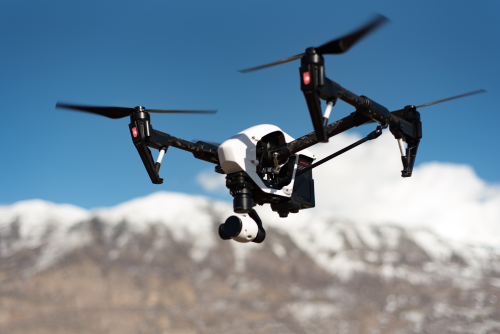
The consumer drones or commercial drones question sounds simple, but buyers often answer the wrong version of it. The smart choice is not about buying the most advanced aircraft you can afford. It is about matching the drone to the way you actually fly, the results you need, and the cost of getting that decision wrong.
A travel creator, a weekend hobbyist, a real-estate shooter, a survey crew, and an inspection company may all be “drone users,” but they should not buy the same kind of platform. If you pick based on marketing labels instead of real workflow, you usually overpay, underbuy, or create avoidable compliance and support problems later.
Quick Take
If you need the short answer, here it is:
- A consumer drone is usually the smarter path for beginners, hobbyists, travel creators, aerial photographers, many real-estate shooters, and plenty of solo paid operators.
- A commercial drone is usually worth it when you need specialized sensors, repeatable inspection or mapping outputs, tougher hardware, better team workflows, or when downtime is expensive.
- Many buyers confuse “commercial use” with “commercial drone.” In many places, a consumer drone can be used for paid work if the pilot and operation comply with local rules.
- The best buying rule is simple: buy the smallest, simplest platform that reliably delivers your real work today, then upgrade only when a clear limit starts costing you jobs, time, or safety margin.
For this article, “commercial drone” means enterprise-grade drone hardware and workflow, not just “a drone used to make money.”
First, define the choice correctly
A lot of bad drone purchases happen because people mix up three different ideas:
Consumer drones
These are built mainly for:
- recreation
- travel
- general photography and video
- creator work
- ease of use
- portability
They are usually compact, faster to deploy, easier to carry, and much cheaper to replace. Many now produce excellent image quality for general aerial content.
Commercial drones
These are built mainly for:
- inspections
- mapping
- construction documentation
- utilities and infrastructure work
- public safety
- industrial or team operations
They often add features like:
- thermal cameras that show heat differences
- stronger zoom capabilities
- higher positioning accuracy such as RTK, which improves location precision
- deeper flight automation
- tougher airframes
- expanded accessory support
- better service, fleet, and workflow options
The legal reality
This is the part buyers often miss:
A drone does not become “legal for business” just because it is sold as commercial or enterprise. And a consumer drone does not become “recreational only” just because it is small.
In many jurisdictions, the rules depend on things like:
- your drone’s weight
- where you fly
- how close you are to people, structures, airports, or sensitive sites
- whether the operation is recreational, business-related, or otherwise regulated
- whether registration, remote identification, permits, or pilot competency requirements apply
So the label on the box does not settle the compliance question. You still need to verify the rules with the relevant aviation and local authorities before you fly.
Consumer vs commercial at a glance
| Buying factor | Consumer drone | Commercial drone |
|---|---|---|
| Best fit | Hobby, travel, creator work, general aerial photo/video, many solo operators | Inspection, mapping, thermal, enterprise, public safety, repeatable industrial work |
| Up-front cost | Lower | Higher to much higher |
| Portability | Usually excellent | Often larger, heavier, and case-based |
| General content image quality | Often very strong | Can be strong, but some models prioritize utility over cinematic look |
| Specialized sensors | Limited | Much stronger |
| Mapping and measurement | Basic to moderate | Better when accuracy and repeatability matter |
| Weather and ruggedness | Usually fair-weather oriented | Often better protected, but you must verify exact ratings and limits |
| Team workflow | Simpler, more solo-friendly | Better for repeatable missions, fleet use, documentation, and accessories |
| Downtime risk management | Lower replacement cost, but fewer service advantages | Better fit when missed missions or repair delays are expensive |
The 5 questions that should decide your purchase
If you only do one thing before buying, answer these five questions honestly.
1. What are you actually delivering?
This is the biggest question.
If your output is mainly:
- photos
- cinematic video
- social content
- travel footage
- property marketing
- hotel, resort, tourism, or wedding visuals
a consumer or advanced prosumer drone is often enough.
If your output is mainly:
- roof or facade inspection
- thermal analysis
- utility or solar inspection
- stockpile measurement
- construction mapping
- repeatable progress documentation
- detailed zoom review of assets
- team-ready data capture
a commercial platform becomes much easier to justify.
A simple rule helps here:
- If you sell visuals, consumer or prosumer is often the smarter starting point.
- If you sell measurements, inspection findings, or repeatable site data, commercial matters much more.
2. What happens if the drone cannot fly that day?
This is where many business buyers should slow down.
If a missed flight means:
- you lose some creative footage
- you postpone a hobby session
- you reschedule a small content shoot
a consumer drone is often fine.
If a missed flight means:
- a crew is waiting on site
- a client visit is wasted
- an inspection window is lost
- a contractor, utility team, or public agency is delayed
- your reputation takes a measurable hit
then the higher support value of commercial gear starts to matter.
Commercial buyers are not just paying for aircraft features. They are often paying for:
- reliability
- standardized workflow
- accessory ecosystem
- service path
- reduced downtime risk
- operational confidence across repeated jobs
3. Do you need data accuracy or special sensors?
A consumer drone can make beautiful images. That does not mean it is the right tool for every job.
You should lean commercial if you need:
- a thermal sensor
- high-quality zoom for detailed asset review
- accurate repeat flights over the same site
- better positional accuracy for mapping
- interchangeable payloads
- attachments or mission-specific tools
- deeper integration with planning or enterprise software
You should lean consumer if you mostly need:
- a wide-angle camera
- smooth video
- easy flying
- quick setup
- light packing
- fast turnaround for creator or marketing content
This is also where buyers overpay the most. Many people buy commercial-grade tools for rare edge cases they almost never encounter. If only 5 percent of your work needs thermal or high-precision mapping, it may be smarter to rent, subcontract, or add that capability later.
4. How often do you travel, hike, or shoot alone?
Portability is not a nice-to-have. It changes how often you actually fly.
Consumer drones usually win when you:
- travel by air frequently
- hike or walk to launch spots
- want a small, discreet setup
- work solo
- need to launch quickly and move fast
- carry the drone alongside camera gear, laptop, and batteries
Commercial drones are easier to justify when you:
- work from a vehicle
- bring cases to site
- operate in planned, repeated field conditions
- have room for charging, batteries, accessories, and documentation
- care less about size and more about capability
A heavier drone can be more capable, but it can also become the drone you leave behind.
5. Are you building a business now, or buying for an imagined future?
“Future-proofing” is one of the most expensive ideas in drone buying.
If you are just starting out, ask:
- Do I already have paying work that needs commercial features?
- Or am I guessing that bigger clients will come later?
If you are guessing, a good consumer or prosumer drone is often the smarter first move. It lets you:
- start flying sooner
- practice workflow and compliance
- learn editing and delivery
- build a portfolio
- validate demand
- keep replacement costs manageable
If you already know you need:
- thermal inspection
- high-accuracy site mapping
- team deployment
- rugged, repeated industrial use
- client-mandated equipment standards
buying commercial up front may be the cheaper decision in the long run.
When a consumer drone is the smarter buy
For a huge part of the market, consumer drones are not the “entry-level compromise.” They are the right tool.
Consumer drones usually make more sense if you are:
- a beginner learning flight discipline and camera control
- a hobbyist who flies for enjoyment
- a travel creator or digital nomad
- an aerial photographer focused on general visuals
- a real-estate, resort, or tourism content shooter
- a wedding or event creator adding occasional aerial clips
- a solo freelancer testing local demand
- an FPV pilot whose main goal is creative footage rather than industrial inspection
Why consumer drones often win
- They are easier to carry, launch, and recover.
- They create less buyer anxiety if damaged.
- They usually have a gentler learning curve.
- They are often better for casual or frequent travel.
- For general photo and video work, image quality is often already more than good enough.
- You can often afford extra batteries, storage, and even a backup plan faster.
There is also a middle ground worth mentioning: prosumer drones. These are advanced consumer-style models that bridge the gap between hobby gear and enterprise gear. For many solo businesses, this is the sweet spot.
A solo real-estate operator, for example, rarely needs a large enterprise aircraft. What they need is fast setup, consistent image quality, safe operation, and an easy editing workflow. A compact prosumer platform usually solves that better than a heavier commercial system.
When a commercial drone is worth the extra cost
Commercial drones earn their keep when the mission is more than “get good footage.”
Commercial drones usually make more sense if you are:
- a survey or mapping team
- a construction or engineering operator documenting sites repeatedly
- a roof, solar, utility, or industrial inspection provider
- a public safety, emergency response, or municipal team
- a company with formal procurement, training, and SOP requirements
- an enterprise team where fleet support and repeatability matter more than portability
Why commercial drones justify the premium
- They support sensors consumer drones do not.
- They are better for recurring, mission-specific operations.
- They fit measured, documented workflows better.
- They often integrate better with team operations.
- They make more sense when site visits are expensive.
- They are easier to defend in procurement when the deliverable is data, not just content.
Just as important, commercial drones can help when you need operational consistency, not just raw flying performance. Repeating the same inspection path every month, collecting the same angles, or producing structured outputs for a team is a different job than shooting a nice landscape clip.
One more reality check: commercial drones are not automatically better for creative work. Some are larger, louder, less discreet, and optimized more for utility than image style. Do not buy enterprise gear for prestige if your clients only need polished aerial content.
The hybrid path many buyers should choose
A lot of experienced operators end up with a two-tier setup:
- one compact consumer or prosumer drone for travel, scouting, marketing content, and backup
- one commercial drone for specialist jobs
This hybrid approach often beats trying to make one aircraft do everything.
It also solves a common business problem: the best drone for travel is rarely the best drone for thermal inspection, and the best drone for industrial inspection is rarely the one you want to pack for every creative shoot.
If budget is tight, there is an even smarter version of this approach:
- Buy the consumer or prosumer drone first.
- Build flight hours, workflow, and clients.
- Rent, partner, or subcontract for occasional specialist jobs.
- Buy commercial only when those jobs become regular and profitable.
Look past sticker price: total cost of ownership
The drone itself is only one line item.
Before deciding, think about the full ownership picture:
- batteries and charging setup
- cases and transport
- props and spare parts
- repair turnaround
- backup aircraft planning
- software or cloud subscriptions
- mapping or inspection processing tools
- training and recurrent practice
- insurance where required
- site access and operational prep
- storage and data handling
For consumer buyers, the trap is usually underestimating accessories and backups.
For commercial buyers, the trap is assuming the aircraft is the expensive part. Often the real spend is in workflow, software, accessories, training, and keeping the platform ready when the job is on the line.
The cheapest drone can become expensive if it cannot deliver the required output. The most expensive drone can become wasteful if it spends most of its life in a case.
Safety, legal, and compliance limits to verify before you buy
If you plan to fly for work, travel internationally, inspect infrastructure, or operate in public spaces, you need to verify the rules before buying around assumptions.
Check the following with the relevant aviation, site, and local authorities where you will actually fly:
- whether your drone must be registered
- whether pilot competency, certification, or authorization applies
- whether your mission falls into a recreational, commercial, open, specific, or other regulated category in your jurisdiction
- whether remote identification, marking, or electronic visibility rules apply
- whether the drone’s weight changes where and how you can fly
- whether local permissions are needed for parks, protected areas, private venues, city centers, or controlled airspace
- whether privacy, surveillance, or data-protection rules affect your filming or inspection work
- whether certain sites such as infrastructure, government buildings, borders, or industrial facilities have extra restrictions
- whether airline battery rules or customs issues affect travel
- whether insurance is required by law, by the site owner, or by the client
- whether weather resistance claims are officially documented for that specific aircraft and mission type
Two rules are worth remembering:
- A commercial drone does not give you extra permission to fly where you want.
- A consumer drone does not reduce your responsibility to fly safely and lawfully.
Common mistakes people make
1. Confusing paid work with enterprise hardware
A lot of profitable drone work is still done with small, advanced consumer drones. If your job is visual storytelling, property marketing, or general content, enterprise gear may add cost without adding much value.
2. Buying for rare edge cases
If one future client might need thermal or high-precision mapping, that is not yet a buying case. Buy for your regular jobs, not your imagined dream jobs.
3. Ignoring portability
The best drone is the one you actually carry and launch. A heavier platform can be “better” on paper and still be worse for your daily workflow.
4. Underestimating workflow costs
Batteries, charging, software, cases, storage, and repair planning can change the real decision more than camera specs do.
5. Assuming commercial drones are always better cameras
Many commercial platforms are optimized for utility and data capture. They are not automatically the best choice for cinematic footage or lightweight creator work.
6. Buying one expensive drone with no backup plan
For many solo operators, one good consumer or prosumer drone plus a backup strategy is safer for the business than one large, costly aircraft that creates a single point of failure.
FAQ
Can I use a consumer drone for paid work?
Often yes, depending on local law and the type of operation. In many places, what matters is the pilot qualification, the mission, the airspace, the drone’s weight, and any registration or authorization requirements. Verify the rules where you fly.
Are commercial drones always safer?
Not automatically. Some commercial platforms offer features that improve operational resilience, but safety still depends on training, site assessment, weather judgment, maintenance, and disciplined flying.
Are commercial drones better for aerial photography?
Not always. For general photo and video, many consumer and prosumer drones are excellent. Commercial drones become more valuable when the job requires special sensors, repeatability, or structured data capture.
Do I need RTK as a first drone buyer?
Usually not unless your work depends on accurate mapping or repeatable measurement. If your main job is content creation, real estate, tourism, or general aerial visuals, RTK is often unnecessary.
Should I buy one commercial drone or two smaller drones?
If your work is general content, two smaller drones or one strong consumer drone plus a clear backup plan can be the smarter business move. If your work depends on thermal, zoom, mapping, or regulated industrial output, a commercial drone may still be the right primary tool.
Is renting a commercial drone first a good idea?
Yes. Renting is one of the best ways to test whether a specialist feature actually improves your business. It can save you from buying expensive capability you only need occasionally.
What is the best path for a travel creator?
Usually a compact consumer drone. Travel creators benefit most from low weight, fast deployment, easy packing, and general content quality. You still need to verify airline battery rules and local flying restrictions in each destination.
What if I mainly fly FPV?
Most FPV pilots should think in terms of mission, not marketing category. For freestyle, creative cinematic flying, and learning progression, consumer or creator-oriented gear is usually the right lane. Commercial FPV only makes sense when you have a specific inspection, broadcast, or client workflow that demands it.
The decision that usually saves the most money
Write down the three flights you are most likely to do in the next 90 days. Not someday. Not after you “land bigger clients.” The next 90 days.
If that list is mostly travel, content, learning, property marketing, or solo creator work, a consumer or prosumer drone is probably your smarter path. If it includes thermal inspection, high-accuracy mapping, repeatable industrial missions, team deployment, or expensive downtime, a commercial drone is probably worth the extra spend.
The smartest drone path is not the one that looks most impressive on a spec sheet. It is the one that fits your real missions, keeps you compliant, and still makes sense after the first rush of buying is over.
