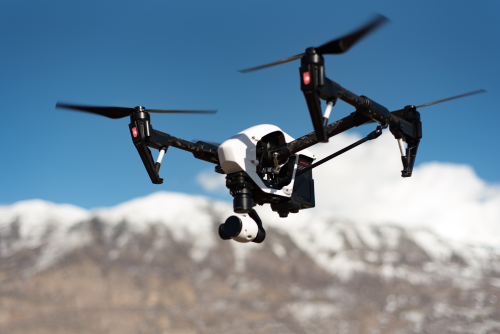
Roofing contractors usually do not need the most expensive drone on the market. They need the right tool for estimates, inspections, documentation, and sometimes marketing, without adding cost, complexity, or compliance risk that never pays back. If you want to know how to choose the best drone for roofing contractors without overspending or buying the wrong features, start with the work you actually do every week, not the spec sheet.
Quick Take
For most roofing contractors, the best value is a reliable mid-size camera drone with strong wind handling, a stabilized camera, sharp still photos, and enough batteries to cover a full day of site visits.
Key buying decisions come down to this:
- Buy a micro drone only if portability, travel convenience, or lighter regulatory treatment matters more than wind performance and inspection reach.
- Buy a mid-size all-rounder if you do residential estimates, storm documentation, and marketing content.
- Buy an enterprise zoom drone if inspection detail is a core part of your workflow and you want to stay farther from rooflines, chimneys, and obstacles.
- Buy thermal only if you already have recurring flat-roof, moisture, insulation, or building-envelope work that can justify the added cost and training.
- Buy RTK or mapping-focused gear only if you truly need repeatable measurements and a software workflow to support them.
- Spend on batteries, spare props, charging, storage, training, and repair support before chasing headline features like ultra-high video resolution.
What roofing contractors actually need a drone to do
A roofing drone is not one thing. The right aircraft for quick residential estimates is not always the right one for commercial flat-roof inspections or thermal screening.
Start by identifying your main use case.
| Roofing task | What matters most | Features often oversold |
|---|---|---|
| Residential estimates and sales visits | Fast setup, stable images, decent wind handling, easy sharing | Thermal, RTK, cinema video modes |
| Storm damage documentation | Sharp still photos, geotagged media, quick deployment, enough batteries | 8K video, advanced cinematic features |
| Detailed visual inspection | Optical zoom, stable hover, safe stand-off distance, obstacle awareness | Racing speed, FPV features |
| Commercial flat-roof screening | Thermal capability, repeatable workflow, trained interpretation | Consumer-focused video extras |
| Measurements and roof modeling | Consistent image capture, mapping workflow, processing software, sometimes RTK | Fancy color profiles, high frame rates |
| Marketing and social content | Smooth video, easy editing, portability | Enterprise payloads you will never use |
The mistake many buyers make is trying to solve every possible future job with the first purchase. That usually leads to paying for features that sit unused while the real pain points—battery life, repair turnaround, windy conditions, and easy media handoff—stay unsolved.
The simplest decision framework
Before you compare brands or models, answer these five questions:
- What percentage of your jobs are residential vs commercial?
- Do you mainly need overview shots, close inspection detail, or measurements?
- Are you flying in windy open suburbs, dense neighborhoods, or around large commercial buildings?
- Do you need billable thermal or mapping work, or are those just “nice to have” ideas?
- If the drone is grounded for a week, how much business disruption does that cause?
Your answers will usually point you into one of five drone categories.
The five drone categories that make sense for roofing work
1) Micro camera drones
These are the smallest folding camera drones, often in the under-250-gram class.
Best for
- Light residential estimates
- Travel-heavy teams
- Basic roof overview shots
- Simple marketing clips
- Buyers who want lower cost and easier portability
Why people buy them
Micro drones are appealing because they are easy to carry, quick to launch, and in some countries they may face fewer restrictions than heavier drones. They can be enough for basic roof photos in good conditions.
Where they fall short
Roofing work often happens in wind. Small drones usually give up stability, inspection confidence, and stand-off flexibility before mid-size drones do. If you work after storms, near trees, near gutters, or around multi-story properties, a micro drone can start to feel like the wrong tool fast.
Buy this class if
- Most of your drone work is short, simple, and visual
- You prioritize portability over inspection depth
- You are starting small and want a low-risk first step
Skip this class if
- Wind is a regular issue in your market
- You need detailed inspection imagery from a safer distance
- You expect the drone to become part of a daily sales or inspection workflow
2) Mid-size all-rounder camera drones
This is the sweet spot for most roofing contractors.
Best for
- Residential roofing businesses
- Estimators and sales teams
- Storm-chasing documentation workflows
- Owner-operators who need one drone that does most jobs well
Why this class usually wins
A good mid-size drone gives you a better balance of wind resistance, image quality, confidence, and day-to-day usability than a micro drone, without the cost and complexity of enterprise gear. For many roofing businesses, this is the “buy once, use constantly” category.
What it should do well
- Capture sharp stills for client reports
- Hold position steadily around rooflines
- Produce usable video for proposals and marketing
- Operate simply enough that trained staff can repeat the workflow
- Pack small enough to ride in a truck or estimator bag
Buy this class if
- You need one drone that can handle estimates, inspections, and content
- You do not need thermal or high-end mapping
- You want the best value for the broadest range of roofing jobs
Skip this class if
- You already know zoom or thermal is central to your business
- You need specialized enterprise workflow tools
3) Zoom-capable inspection drones
These are usually higher-end or enterprise-oriented drones with a camera system designed to let you inspect from farther away. Optical zoom matters here. Optical zoom means the lens itself magnifies the view without the quality loss you get from ordinary digital zoom.
Best for
- Detailed shingle, flashing, ridge, chimney, and gutter checks
- Multi-story properties
- Safer visual inspections where getting physically close adds risk
- Businesses selling premium inspection or documentation services
Why zoom matters more than extreme resolution
For roofing, a useful zoom lens often creates more value than headline video resolution. You can stay farther from obstacles, reduce collision risk, and still capture meaningful detail. That is often more practical than buying a drone simply because it shoots bigger video files.
Buy this class if
- Detailed visual inspection is a recurring, billable service
- You want cleaner evidence without pushing the drone too close to the roof
- You operate around more complex structures or tighter access
Skip this class if
- Most of your work is basic overview imaging
- You rarely need close inspection detail
- The extra cost will not translate into better speed, safety, or revenue
4) Thermal drones
Thermal cameras show heat differences rather than normal visible-light detail. In roofing, they can help with certain flat-roof, insulation, moisture, or building-envelope workflows. They can also be badly misunderstood.
Best for
- Commercial flat roofs
- Building-envelope specialists
- Contractors who already sell inspection services beyond basic photos
- Businesses working with trained thermography or specialist interpretation
What thermal can and cannot do
Thermal can be useful, but it is not magic. It does not automatically “see leaks,” and it should not be treated as a stand-alone diagnosis tool. Results depend on roof material, weather, time of day, moisture conditions, insulation behavior, and the operator’s training.
Buy this class if
- Commercial roof inspection is already part of your revenue model
- You know how thermal output will be used and interpreted
- You can justify the hardware, training, and reporting process
Skip this class if
- You mainly do residential visual estimates
- Thermal would be an occasional experiment rather than a repeatable service
- You are hoping it will replace roof knowledge or inspection judgment
5) RTK and mapping-focused platforms
RTK stands for real-time kinematic positioning, a method used to improve positioning accuracy for certain mapping workflows.
Best for
- Larger commercial roof measurement workflows
- Teams creating repeatable orthomosaics or models
- Businesses integrating drone capture with specialist software and measurement processes
Why most roofers should wait on RTK
If your drone’s main job is visual documentation, RTK is usually unnecessary. It adds cost and complexity, and the real value only appears when the rest of the workflow—flight planning, image overlap, processing, data handling, and client output—actually needs it.
Buy this class if
- Measurement-grade consistency is a real business requirement
- You already know what software and deliverables you need
- You can support the training and processing workload
Skip this class if
- You mostly need pictures and videos
- You are not ready to manage mapping software or accuracy expectations
The feature checklist that matters most
Once you know your drone category, evaluate the following features in this order.
1) Wind confidence
Roofing jobs rarely happen in ideal calm conditions. Open subdivisions, taller homes, commercial buildings, and post-storm environments can all create gusts and turbulence.
Prioritize:
- Stable hover
- Predictable control response
- Good image stability in wind
- Enough mass and power for real job-site conditions
If your site conditions are routinely windy, a tiny drone may save money up front and cost you more in missed flights and weak imagery later.
2) Camera quality for still photos, not just video marketing
Most roofing deliverables are based on photos, not cinematic video. Sharp still images, reliable exposure, and useful detail matter more than fancy creator modes.
Prioritize:
- Clean still-photo output
- Good dynamic range for bright roofs and darker surroundings
- Accurate color and contrast
- A stabilized gimbal, which is the motorized mount that keeps the camera level and smooth
3) Optical zoom for inspection work
If you regularly need to inspect flashing, penetrations, or damage details, zoom is one of the most valuable upgrades available. It improves both safety and usefulness.
Prioritize zoom if:
- You inspect taller buildings
- You work around power lines, trees, antennas, or tight setbacks
- You need evidence shots without edging dangerously close
4) Simple, repeatable operation
A great roofing drone should be easy to launch, easy to recover, and easy to hand off between trained team members. If the interface is confusing, the workflow will break under time pressure.
Look for:
- Fast setup
- Reliable return-to-home behavior
- Clear flight status information
- Easy media management
- A controller that is usable in bright outdoor conditions
5) Battery ecosystem and charging
Many buyers obsess over the aircraft and ignore the real bottleneck: batteries.
For roofing work, the better question is not “How long does one battery last?” It is “How many site visits can I complete before I need to stop and recharge?”
A practical roofing kit usually needs:
- Multiple batteries
- A charger that supports quick turnaround
- A simple routine for labeling and rotating packs
- Spare propellers and field essentials
6) Repairability and support
If the drone becomes part of your sales, inspection, or documentation workflow, downtime matters. Before buying, verify:
- Local or regional repair options
- Parts availability
- Battery availability
- Warranty or service plan terms
- Whether your market has solid dealer support
A slightly more expensive platform with better support can be cheaper over a year than a bargain drone that is hard to service.
7) Software and reporting fit
If you need measurements, orthomosaics, organized inspection reports, or team sharing, think beyond the aircraft.
Ask:
- How will photos be organized by address or project?
- Do you need geotagged files?
- Will the drone’s output work with your estimating or inspection software?
- If you want measurements, what capture method and processing software will you use?
Do not buy mapping features without a realistic plan for processing and delivering the results.
What most roofing contractors should buy first
If you are a typical roofing business doing residential estimates, storm documentation, before-and-after proof, and occasional marketing, the safest first purchase is usually:
- A mid-size all-rounder drone
- Three or more batteries
- Spare propellers
- A bright, easy-to-read controller or sun-readable setup
- Fast storage cards
- A protective case
- Basic staff training and a simple operating checklist
That setup usually beats a cheaper drone with weak wind performance or a more expensive enterprise drone whose advanced sensors never become billable.
When it makes sense to upgrade
Upgrade from a basic or mid-size drone when one of these becomes true:
- You are losing inspection detail because you need better zoom
- A meaningful share of your revenue depends on flat-roof thermal workflows
- You need repeatable measurements for larger commercial jobs
- The drone is used so often that a backup aircraft now makes financial sense
- Client expectations have moved beyond simple photos
A good rule: upgrade when the limitation is costing you revenue, safety margin, or repeatability—not when a spec sheet looks exciting.
Spend on the full kit, not just the aircraft
The wrong buying mindset is “What drone can I afford?”
The better mindset is “What complete roofing workflow can I support?”
Your real purchase should include:
- Aircraft
- Batteries
- Charger
- Spare props
- Case
- Storage cards
- Training time
- Data storage and organization
- Maintenance or service plan
- Any software you genuinely need
This is how roofing businesses avoid buying the wrong features while still ending up with a tool that gets used.
Safety, legal, and compliance checks before using a drone for roofing work
Roofing drone operations are commercial in nature, and the rules vary by country. Before flying for work, verify the current requirements with your civil aviation authority and any local property or site rules that apply.
At a minimum, check:
- Whether the drone or operator must be registered
- Whether the pilot needs a certificate, competency proof, or operational approval
- Airspace restrictions near airports, heliports, emergency scenes, utilities, or sensitive sites
- Limits on flying over uninvolved people, roads, or occupied areas
- Privacy and data-handling obligations for homes and neighboring properties
- Whether site owners, insurers, or contractors require additional permission or documentation
Operationally, roofing teams should also:
- Conduct a preflight risk assessment
- Keep a clear takeoff and landing area away from crews and vehicles
- Avoid flying close to power lines and metallic structures
- Use visual line of sight unless specifically authorized otherwise
- Treat post-storm conditions with extra caution because gusts and debris can change rapidly
- Coordinate with ground crews so nobody walks into the operating area unexpectedly
A drone can reduce ladder time and improve documentation, but it does not remove your responsibility to operate safely and legally.
Common mistakes roofing buyers make
Buying for rare jobs instead of regular jobs
If 90 percent of your work is residential estimates, do not build your first purchase around the 10 percent of jobs that might someday need thermal or RTK.
Confusing digital zoom with true inspection capability
Digital zoom can be useful, but it is not the same as optical zoom. If close detail matters, know what type of zoom you are actually buying.
Assuming thermal automatically finds leaks
Thermal images require proper conditions and trained interpretation. It is easy to overestimate what thermal can prove on its own.
Choosing the lightest drone for a windy market
Portability matters, but roofing work often happens in less-than-perfect air. A micro drone can become frustrating if it struggles to hold steady when you need it most.
Forgetting the battery budget
One battery rarely supports a real roofing day. The aircraft is only part of the buying decision.
Paying for cinematic features that do not improve inspections
High-end video modes, creator-focused color tools, and flashy features are great for media teams, but they may add little value to routine roofing documentation.
Treating drone images as measurement-grade without the right workflow
If you need dimensions or models, you need more than a good camera. You need a proper capture process, processing software, and realistic accuracy expectations.
Buying a drone before deciding who will fly it
A roofing drone is not “set and forget.” Someone must own the checklist, batteries, updates, media handling, and compliance process.
FAQ
Is an under-250g drone good enough for roofing contractors?
Sometimes. It can be enough for basic residential overviews, light inspections, and travel-friendly use. But if you regularly fly in wind or need inspection detail, many contractors will outgrow that class quickly.
Do roofing contractors really need thermal?
Only some do. Thermal makes the most sense for recurring commercial flat-roof or building-envelope work where the output becomes a real service line. For many residential roofing businesses, it is an expensive extra.
What matters more for roofing: camera resolution or zoom?
Usually zoom, once basic image quality is already good enough. For inspection work, being able to capture detail from a safer distance is often more valuable than chasing larger video numbers.
Can a drone replace climbing onto a roof?
Not always. A drone can reduce unnecessary climbs, improve documentation, and help with safer initial assessments, but it does not replace every close physical inspection or every local safety requirement.
How many batteries should a roofing drone kit have?
Enough to complete several site visits without stress. For many contractors, that means at least three batteries, and often more if the drone is used heavily throughout the day.
Do I need RTK for roof measurements?
Usually not for basic documentation. RTK only becomes worthwhile when you have a real mapping and measurement workflow that needs higher positional consistency.
Should I buy a consumer drone or an enterprise drone?
A consumer or prosumer all-rounder is enough for many roofing businesses. Enterprise platforms make sense when zoom, thermal, fleet management, or specialized workflows create clear business value.
What should I verify before flying for paid roofing work?
Check operator and drone registration, pilot qualification requirements, airspace limits, privacy rules, and any site-specific permissions or company insurance conditions that apply in your market.
The smartest next step
Before you buy, list your next 20 drone jobs and mark each one as overview, detailed inspection, thermal, mapping, or marketing. If most of them are standard roofing estimates and documentation, buy a dependable mid-size all-rounder kit and invest in batteries, training, and repeatable workflow. If zoom, thermal, or measurements show up often enough to be billable, then step up to enterprise features with a clear reason—not because the box says “pro.”
