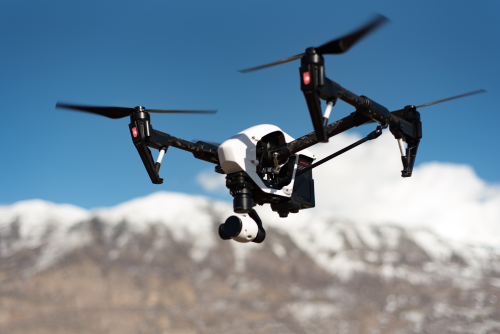
Choosing the best drone for construction progress is less about buying the biggest aircraft and more about matching the drone to the output you actually need. A weekly visual update for a homebuilder, a lender-facing progress report, and a measurable earthworks map are different jobs. For most buyers, the right answer comes down to budget, repeatability, software fit, and who will actually fly the drone.
Quick Take
If you want the short answer to “what is the best drone for construction progress?”, here it is:
- Best overall for most professional construction progress work: DJI Mavic 3 Enterprise
- Best budget pick for simple visual updates: DJI Mini 4 Pro
- Best step-up for small businesses and recurring site updates: DJI Air 3 family
- Best for large civil sites and survey-heavy programs: DJI Matrice 350 RTK with the right mapping payload
The key split is simple:
- If you only need photos and video, a compact consumer or prosumer drone may be enough.
- If you need orthomosaics, stockpile volumes, or repeatable measurable outputs, move to an enterprise mapping drone.
- If your site is large, windy, complex, or survey-driven, a heavier enterprise platform makes more sense than a nicer camera drone.
Best Construction Progress Drones at a Glance
Prices vary by country, taxes, bundles, and accessories, so treat these as broad budget bands rather than fixed live pricing.
| Budget band | Best fit | Example drone | Best for | Main tradeoff |
|---|---|---|---|---|
| Under roughly $1,500 | Entry-level visual progress | DJI Mini 4 Pro | Small sites, marketing updates, beginners, residential work | Less confidence in wind, limited fit for measurement-heavy jobs |
| Roughly $1,500 to $3,000 | Prosumer all-rounder | DJI Air 3 family | Recurring site updates, better zoom/detail shots, small commercial teams | Still not the ideal choice for professional mapping claims |
| Roughly $4,000 to $8,000+ | Professional progress and mapping | DJI Mavic 3 Enterprise | Orthomosaics, stockpiles, repeatable missions, paid progress reporting | Higher total cost once batteries, RTK, and software are included |
| $10,000+ program budget | Full enterprise workflow | DJI Matrice 350 RTK with photogrammetry or LiDAR payloads | Large civil sites, survey departments, multi-site programs | More training, more setup, more transport and compliance overhead |
Start With the Deliverable, Not the Drone
Before you compare models, answer these five questions.
1. Are you delivering visuals or measurements?
This is the most important decision.
- Visual progress means repeatable overview photos, short update videos, and stakeholder reporting.
- Measurable progress means stitched site maps, also called orthomosaics, plus volume calculations or progress comparisons over time.
- Survey-integrated work means your drone data must line up with control points, design files, or formal QA/QC checks.
If you only need visuals, you can save a lot of money. If you need measurements, buy for workflow accuracy first and camera glamour second.
2. How big is the site?
A compact drone can work very well on:
- residential builds
- low-rise commercial projects
- renovation sites
- small industrial facilities
A larger or more capable enterprise platform becomes more useful on:
- civil infrastructure projects
- mines and quarries
- large logistics developments
- multi-building campuses
- sites with long flight distances or strong wind exposure
3. Who will fly it?
A brilliant drone is the wrong drone if the actual operator is:
- a site manager with limited flight time
- a marketing team member
- a junior in-house operator
- a survey department with strict data requirements
- an outside service provider charging for deliverables
Skill level changes what counts as “best.”
4. Do you need repeatable missions?
Construction progress is about consistency. You want the same orbit, same elevation, same framing, and same map overlap every time. That is why mission planning matters so much.
A drone that produces slightly less impressive video but supports repeatable missions often beats a prettier camera drone for real construction progress work.
5. What software does your team use?
The drone is only part of the system. If your reporting or mapping stack uses software such as DroneDeploy, Pix4D, or DJI Terra, make sure your chosen aircraft is actually supported and fits the workflow you plan to use.
A common buying mistake is choosing a drone first and discovering later that the data pipeline is awkward, unsupported, or too manual.
Best Drone for Construction Progress by Budget
Under roughly $1,500: Best for visual progress on a tight budget
Best pick: DJI Mini 4 Pro
If your construction progress work is mainly visual, the Mini 4 Pro is the lowest-regret entry point for many buyers. It is compact, easy to transport, and practical for quick weekly site captures. For homebuilders, remodelers, real estate-adjacent teams, and small contractors, that may be all you need.
Why it works:
- light and easy to carry
- quick deployment for regular updates
- strong image quality for progress photos and short videos
- approachable for newer pilots
- lighter weight may simplify operations in some regions, though rules still apply
Where it fits best:
- residential construction
- small commercial builds
- internal stakeholder updates
- social and marketing content
- simple before-and-after documentation
Where it falls short:
- wind handling is not as confidence-inspiring as larger drones
- not the best choice for high-accuracy mapping work
- small, active, metal-heavy job sites can be harder for less experienced pilots
- if you expect to grow into stockpile or mapping deliverables, you may outgrow it quickly
Bottom line: buy this if you need a simple, portable visual progress drone, not a measurement platform.
Roughly $1,500 to $3,000: Best for small businesses that need better site coverage
Best pick: DJI Air 3 family
The Air 3 line is often the sweet spot for small operators who need better endurance, more confidence in wind, and more flexibility in framing. Its biggest practical advantage for construction is the dual-camera approach, especially the tele lens, which lets you capture detail from farther away without pushing the drone too close to cranes, façades, or active work zones.
Why it works:
- stronger all-round site performance than ultra-light models
- useful mix of wide overview and tighter detail shots
- better fit for recurring progress programs than a purely entry-level drone
- still portable enough for solo operators and travel
Where it fits best:
- weekly or monthly progress updates
- agency work for builders or developers
- marketing plus documentation in one aircraft
- medium-size sites where zoomed detail is helpful
Where it falls short:
- still not the ideal tool for professional mapping claims
- no matter how good the video looks, that does not make it a survey drone
- if your clients expect orthomosaics, stockpile measurements, or highly repeatable mapping missions, you may need to step up
Bottom line: if you want a better-than-basic drone for recurring progress work, the Air 3 family is a strong fit. It is especially good when visual reporting matters more than mapping accuracy.
Roughly $4,000 to $8,000+: Best overall for professional construction progress
Best pick: DJI Mavic 3 Enterprise
For most paid construction progress programs, the Mavic 3 Enterprise is the most balanced answer. It is portable enough for field work, but purpose-built enough to support repeatable mapping and reporting.
This is where “construction progress” shifts from nice aerial updates to a proper operational workflow.
Why it stands out:
- supports enterprise mission planning
- compatible with serious mapping and reporting workflows
- mechanical shutter helps reduce image distortion during mapping flights
- optional RTK support can improve positioning consistency
- still compact compared with larger enterprise platforms
A quick explanation of those terms:
- A mechanical shutter captures images in a way that reduces motion-related distortion. That matters for cleaner map data.
- RTK, or real-time kinematic positioning, uses correction data to improve location accuracy. It is useful for mapping, but it does not automatically make every output survey-grade.
Where it fits best:
- general contractors producing recurring site maps
- drone service providers selling progress reports
- stockpile tracking
- measurable earthworks updates
- stakeholders who want both visual reports and usable spatial data
Where it falls short:
- higher kit cost once you add batteries, RTK accessories, cases, and software
- more training and process discipline required than with a simple camera drone
- may be excessive if you only want photos for presentations
Bottom line: if your progress workflow includes maps, measurements, recurring paid deliverables, or multi-stakeholder reporting, this is the best place for most buyers to start.
$10,000+: Best for large sites, survey departments, and full enterprise programs
Best pick: DJI Matrice 350 RTK with the right payload
A Matrice-class platform is not the best first drone for most construction buyers, but it can be the right choice for large civil sites, infrastructure corridors, mines, or teams running a formal drone program across multiple projects.
Why teams choose it:
- heavier-duty enterprise design
- payload flexibility
- better fit for photogrammetry or LiDAR workflows
- suited to larger, more complex operational programs
- can support broader inspection and survey roles beyond routine progress
Where it fits best:
- major civil engineering sites
- large earthworks operations
- in-house survey teams
- enterprise drone fleets
- organizations that need payload flexibility and standardized workflows
Why it is not for everyone:
- more training burden
- more transport and setup time
- higher compliance and operational overhead
- too much aircraft for simple weekly progress photography
Bottom line: only go this route if your organization already knows why it needs a Matrice-class system. If you are still asking whether you need one, you probably do not yet.
Best Choice by Feature Priority
If your top priority is easy operation
Choose a drone in the Mini 4 Pro or Air 3 family class.
These are easier for newer pilots to deploy, easier to travel with, and more realistic for in-house teams that need quick site updates without turning drone ops into a full department.
Best for:
- smaller builders
- in-house marketing teams
- project managers needing regular visuals
- buyers who value speed and simplicity over measurement
If your top priority is safer detail shots
Choose a drone with a tele lens, like the Air 3 family, or an enterprise platform that offers zoom capability.
A tele lens matters on construction sites because it lets you capture:
- façade progress
- roof details
- material staging
- punch-list context
- elevated or hazardous zones
You get closer-looking shots without actually flying as close to obstacles or people.
If your top priority is mapping and measurable progress
Choose the Mavic 3 Enterprise.
This is the strongest fit for buyers who need:
- orthomosaics
- stockpile volume estimates
- recurring site maps
- standardized progress datasets
- better mission repeatability
If your reporting workflow depends on measurement, do not let a consumer drone’s camera quality distract you from the real issue: repeatable mapping and clean data capture.
If your top priority is enterprise scale
Choose a Matrice-class platform with the right payload and software stack.
This is appropriate when:
- sites are large enough to justify a formal UAS program
- survey-grade discipline is already part of the workflow
- multiple departments need the same aircraft
- you need more than simple progress photography
Best Drone for Construction Progress by Skill Level
Beginner or occasional in-house operator
Best fit:
- DJI Mini 4 Pro
- DJI Air 3 family
Why:
- easier learning curve
- lower cost of mistakes
- fast setup
- enough quality for visual progress reports
Avoid if:
- you plan to promise measurable mapping deliverables
- your sites are consistently large, windy, or operationally complex
Intermediate pilot or growing drone service business
Best fit:
- DJI Air 3 family for visual-heavy work
- DJI Mavic 3 Enterprise for progress plus mapping
Why:
- gives room to grow
- supports more professional client output
- better balance of portability and repeatability
Avoid:
- buying only for video specs if your business plan depends on measurable site reporting
Advanced pilot, survey team, or enterprise drone manager
Best fit:
- DJI Mavic 3 Enterprise
- Matrice 350 RTK with appropriate payloads
Why:
- supports structured operations
- better fit for SOPs, data QA, and multi-project programs
- more aligned with enterprise reporting and mapping expectations
Avoid:
- overspending on a heavy platform if most work is still simple weekly photo updates
What to Budget Beyond the Drone
The aircraft price is only part of the buying decision. Construction progress work becomes frustrating fast if you underbuy the rest of the kit.
Plan for:
- at least 3 batteries, often more
- a reliable charger or charging hub
- spare propellers
- bright controller screen or compatible field tablet
- fast memory cards and a clean file-ingest process
- rugged case and landing pad
- mapping or reporting software
- training time and operating checklists
- maintenance, repair turnaround, and local support
- insurance or internal risk approval where required
If a crash or repair would stop weekly reporting, local service support matters almost as much as the drone itself.
Safety, Legal, and Operational Risks to Check Before You Fly
Construction progress is commercial drone work in many jurisdictions. Rules differ globally, so verify requirements with the relevant aviation authority and the site owner or project lead before operating.
At minimum, check these areas:
Flight legality and permissions
Confirm whether you need:
- drone registration
- pilot competency or certification
- airspace authorization
- site permission from the principal contractor or owner
- additional approval for operations near people, roads, or sensitive infrastructure
Site safety coordination
Construction sites change daily. Before flight, coordinate with:
- the site superintendent
- safety officer
- crane or lifting teams
- security team
- anyone controlling work at height or major plant movement
Do not assume yesterday’s safe takeoff point is safe today.
Worker and privacy considerations
Be careful with:
- flying over workers
- filming neighboring properties
- capturing faces, vehicle plates, or sensitive materials unnecessarily
- storing site imagery without a clear process
Operational hazards unique to construction
Watch for:
- cranes and suspended loads
- power lines and temporary site wiring
- dust and debris
- steel-heavy structures that can affect compass or positioning confidence
- poor takeoff zones on rebar, metal decks, or vehicles
- tight spaces that make automatic return to home settings risky
Return to home is the drone’s automatic fail-safe return feature. If the default altitude is wrong for the site, it can create problems rather than solve them.
Accuracy claims
If your deliverables affect payment, progress valuation, or survey decisions, do not overclaim accuracy.
Even with RTK, critical work may still require:
- ground control points
- checkpoints
- QA/QC review
- signoff from a survey professional, depending on local rules and project standards
Common Mistakes Buyers Make
1. Buying for camera hype instead of repeatability
A construction progress drone should produce the same useful output every week. A beautiful cinematic camera is not the same as a reliable progress tool.
2. Assuming any drone can “do mapping”
Many drones can create maps of some kind. That does not mean they are the right tool for measurable, client-facing mapping deliverables.
3. Ignoring wind and site exposure
A smaller drone can be great on paper and frustrating in the field. Open sites, coastal jobs, towers, and cut-and-fill projects often reward stepping up in aircraft class.
4. Forgetting the software decision
If the drone does not fit your mapping, reporting, or asset-management workflow, you have bought half a solution.
5. Flying too close when a zoom camera would do the job
A tele lens often improves both safety and workflow. It is one of the most underrated features for construction use.
6. Letting untrained staff “just grab some shots”
Construction progress needs consistency, safe procedures, file discipline, and clear site coordination. Informal flying usually leads to missed angles, risky habits, and inconsistent reports.
7. Thinking RTK replaces survey process
RTK is helpful, but it does not replace good mission planning, ground control where needed, or proper validation.
FAQ
What is the best all-around drone for construction progress?
For most professional buyers, the DJI Mavic 3 Enterprise is the best all-around option because it balances portability, repeatable missions, and mapping capability. If you only need visual updates, the Air 3 family or Mini 4 Pro may be better value.
Do I need RTK for construction progress?
Not always. If you mainly capture photos and video, probably not. If you need more consistent maps, measurements, or stockpile tracking, RTK becomes much more useful. Even then, verify what level of accuracy your project actually requires.
Is a sub-250g drone enough for a construction site?
Sometimes, yes. A lightweight drone can be excellent for small residential or marketing-focused progress updates. It is usually less ideal for large, windy, or measurement-heavy sites.
Can one drone handle both progress photos and mapping?
Yes, but some drones do it better than others. The Mavic 3 Enterprise is a much safer buy for combined visual and mapping workflows than a purely consumer model.
Should I buy a thermal drone for progress monitoring?
Usually no. Thermal is useful for specific inspections, such as building envelope issues, electrical checks, or certain asset problems. It is not a must-have for routine progress reporting.
How many batteries should I buy?
For most construction use, start with at least three batteries. Larger sites, multiple missions, or mapping days may justify more.
Can in-house staff fly the drone instead of hiring a drone company?
Yes, if they are trained, authorized where required, and supported by a real workflow. If the project needs high consistency, measurements, or regulated deliverables, outsourcing to an experienced operator may be the better choice.
What if my organization cannot buy the most common drone brands?
Use the same selection logic: prioritize repeatable missions, mapping compatibility, zoom capability, repair support, and operator training. Procurement policy and local support can matter more than brand popularity.
The smart buying move
If you are buying one drone specifically for construction progress, the safest recommendation for most serious users is the DJI Mavic 3 Enterprise. If your needs are simpler and mostly visual, the DJI Air 3 family is often the best value step-up, while the Mini 4 Pro remains a smart budget choice for lighter-duty work.
The real decision is not “Which drone is best?” but “What output do I need every week, and what aircraft can deliver it reliably with my team, my budget, and my software?” Answer that honestly, and the right drone usually becomes obvious.
