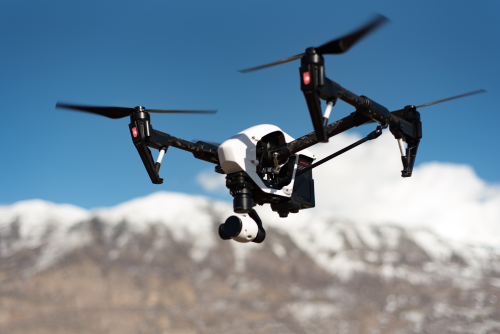
Choosing signal range accessories for your drone without wasting money starts with one uncomfortable truth: most weak-signal problems are not solved by buying a “booster.” In real use, link issues usually come from terrain, interference, bad antenna orientation, or accessories that do not match your radio system. The smartest buy is the one that fixes your actual bottleneck, stays within local rules, and does not make your setup heavier, riskier, or harder to trust.
Quick Take
If you only remember a few things from this guide, make them these:
- Buy for link stability first, not headline distance.
- Diagnose whether the problem is control signal, video downlink, or just app/device performance.
- For most consumer camera drones, no accessory beats good antenna positioning, a cleaner launch spot, and realistic flight planning.
- Passive accessories such as reflectors or supported directional antennas are usually safer bets than powered amplifiers.
- If your controller or aircraft was not designed for antenna swaps, invasive upgrades are often the fastest way to waste money or create reliability problems.
- FPV pilots usually get more value from properly matched antennas and receiver setup than from chasing raw transmitter power.
- Enterprise teams should favor manufacturer-supported accessories, documented testing, and compliance checks over marketplace “range hacks.”
- A better recovery tool, such as a tracker or lost-model buzzer, may be a smarter purchase than a range extender if your real fear is losing the aircraft.
Start with the real problem, not the product page
“Range” is often used too loosely.
A drone link usually includes three separate things:
- Control link: the commands going from your controller to the aircraft
- Video downlink: the live camera feed coming back to you
- Telemetry: battery, altitude, GPS, warnings, and other status data
You can have a weak video feed while control remains solid. You can also have app lag or an overheating phone that looks like a signal problem when it is not.
Before you compare accessories, ask:
-
What is actually failing first? – Choppy video? – Signal warnings? – Delayed control response? – Frozen app screen?
-
Where does it happen? – Dense city – Forested area – Coastal cliff or ridge – Open rural field – Around metal structures or power infrastructure
-
How repeatable is it? – Every flight – Only in one location – Only when the drone is low behind obstacles – Only when you point the controller a certain way
This matters because the right accessory for an analog FPV pilot in an open mountain environment is very different from the right accessory for a travel creator flying a compact camera drone in a crowded city.
What actually changes drone signal performance
Before spending on gear, understand the variables that usually matter more than the accessory itself.
Line of sight matters more than most buyers expect
Radio links hate obstacles. Hills, buildings, trees, vehicles, concrete, and even your own body can weaken the connection.
A “better range” accessory often improves link margin, meaning extra signal strength above the minimum needed for a stable connection. That can help in open areas. It does not mean your drone can reliably punch through buildings or terrain.
Interference can be a bigger problem than weak power
Urban areas are full of competing radio noise from Wi-Fi, telecom equipment, and other electronics. In those environments, a cleaner takeoff point or a different flight path may help more than a hardware upgrade.
Antenna orientation is a free performance upgrade
Many pilots point the tips of their controller antennas directly at the drone. That is often wrong. Most antennas radiate strongest from the sides, not the tip. Exact best practice depends on your controller design, so follow your manufacturer guidance, but poor orientation is one of the most common reasons people think they need a range accessory.
Your system type defines what is worth buying
There is no universal “best” signal accessory.
Broadly, pilots fall into a few groups:
- Integrated camera drone users: consumer and prosumer drones with a matched controller and aircraft link
- Analog FPV pilots: separate video transmitters, receivers, and often user-changeable antennas
- Digital FPV pilots: integrated digital video systems with specific compatible antennas
- Enterprise operators: manufacturer-approved accessories, relay systems, or ground-station setups
The more integrated the system, the less likely a random aftermarket upgrade will be a smart buy.
Cheap cables and extra connectors can hurt performance
Every extra connector, splitter, or low-quality coaxial cable can add loss. That means some “upgrades” actually reduce performance once installed.
If an accessory relies on lots of adapters, long cable runs, or questionable connectors, be skeptical.
How to choose the right signal range accessory
Use this sequence before you spend.
1. Eliminate the free fixes first
Do these before buying anything:
- Update firmware and controller/app software if you use supported versions.
- Test in a wide-open area with low interference.
- Check antenna orientation.
- Launch from a clearer, higher, less obstructed spot.
- Keep the drone above local obstacles when safe and lawful.
- Make sure your phone or tablet is not overheating or throttling.
- Use good controller and device cables.
- Check that nothing on your setup is physically blocking antennas.
If your problem disappears after this, you did not need a signal accessory.
2. Know which type of accessory you are evaluating
Not all “range accessories” do the same job.
| Accessory type | Best for | What it may improve | Main drawbacks | Smart buy? |
|---|---|---|---|---|
| Passive reflector or parabolic deflector | Some consumer controllers with exposed antenna geometry | Slight forward gain in open areas | Very dependent on aiming, limited benefit, often overhyped | Sometimes |
| Directional patch or helical antenna | FPV, some enterprise setups, some supported controllers | Stronger signal in one direction, better long straight-out work | Narrow coverage, worse if the aircraft moves off-axis | Often, if your workflow fits |
| Omnidirectional antenna upgrade | FPV and some modular systems | More even surrounding coverage, simple flying patterns | Smaller gain than directional options | Often, for general FPV use |
| Diversity receiver or better goggle antenna setup | Analog and digital FPV | More stable video by combining antenna types or positions | Added cost and setup complexity | Often one of the best FPV upgrades |
| Antenna relocation or extension kit | Specialized rigs and some ground setups | Better antenna placement away from frame or body shadowing | Cable loss, fragility, weather exposure | Only if done properly |
| Active RF amplifier or powered booster | Specialized, carefully tested setups only | Higher transmit or receive strength | Legal risk, compatibility risk, heat, power draw, warranty risk | Rarely for average pilots |
| Controller tripod, mast, or elevated ground station mount | Enterprise teams, survey crews, some FPV ground stations | Cleaner antenna placement and more consistent aiming | Added bulk, slower setup | Often underrated |
| Tracker or recovery beacon | Any pilot worried about loss | Does not extend range, but reduces loss consequences | No direct signal benefit | Often smarter than a range accessory |
The key lesson: the accessory with the biggest marketing promise is not usually the best buy.
3. Match the accessory to your actual flying pattern
Ask yourself which of these sounds like your use case:
You mostly fly straight out in open areas
A directional solution may help more than an omnidirectional one. This is common in surveying, inspections along corridors, or carefully planned flights in open sites.
But directional gear only works if you can keep it aimed correctly. If your drone moves unpredictably or circles around you, you can make performance worse.
You fly around yourself, orbit subjects, or move frequently
An omnidirectional setup or no accessory at all may be better. Directional accessories are a poor fit for casual flying where the aircraft is constantly changing angle relative to the controller.
You fly FPV and care about video reliability
Spend first on a properly matched antenna set, receiver quality, and clean installation. For many FPV pilots, that gives more real benefit than chasing raw output power.
You fly an integrated camera drone for travel or content
Be very conservative. Many consumer systems already have highly engineered links. Unsupported modifications can reduce reliability, add travel bulk, and create warranty headaches for marginal gains.
4. Check compatibility like a skeptic
Before buying, confirm:
- Your exact drone model
- Your exact controller or goggles model
- Supported frequency bands in your region
- Whether the accessory changes antenna type or connector type
- Whether installation requires opening the controller or aircraft
- Whether the accessory blocks folding, transport, or case fit
- Whether it adds another battery or power bank to manage
- Whether it is weather-resistant enough for your environment
If a seller talks only about “works with most drones,” that is a warning sign.
5. Favor reversible upgrades over invasive ones
A good buying rule:
- Best: no-cost setup fix
- Next best: reversible, external, low-risk accessory
- Use caution: semi-permanent upgrades on modular systems
- Highest risk: powered amplifiers and internal hardware modifications
If the upgrade means drilling, soldering, or opening sealed hardware, you should have a very strong reason for doing it.
6. Buy for your workflow, not your ego
A bigger-looking antenna is not automatically a better tool.
The best signal accessory is the one that improves your real mission with acceptable tradeoffs in:
- Setup time
- Portability
- Charging and power management
- Weather exposure
- Durability in transport
- Repairability
- Compliance risk
- Repeatable results
If a bulky ground station makes your travel kit miserable, or a fragile antenna swap turns every job into troubleshooting, it is not a cost-effective upgrade.
What is usually worth it for each type of pilot
Beginner or casual camera-drone buyer
Usually worth considering:
- Better preflight habits
- Cleaner launch locations
- Controller positioning discipline
- A recovery tracker if local conditions justify it
Usually not worth considering first:
- Powered boosters
- Internal controller mods
- Complex antenna swaps
Travel creator or aerial photographer
Your biggest constraints are often portability, setup speed, and reliability.
Best value usually comes from:
- A compact, well-organized kit
- A controller setup you can deploy fast
- Accessories that do not complicate airport or border packing
- Recovery tools for remote locations
A marginal range gain is rarely worth added bulk if your flights are short, legal, visual, and location-sensitive.
FPV pilot
Signal accessories matter more here, but only when the whole system is balanced.
Best-value spend is often:
- Quality antennas matched to your video system
- Correct polarization and placement
- Receiver diversity where appropriate
- Clean power and cable management
- A sensible failsafe and recovery plan
Enterprise team or service provider
Treat link accessories as part of an operational system, not a shopping impulse.
Prioritize:
- Manufacturer-supported components
- Documented bench and field testing
- Consistent crew setup procedures
- Weather and transport durability
- Internal approval from safety or operations leads where relevant
For business use, predictable performance is usually more valuable than maximum theoretical range.
Safety, legal, and compliance limits to know
This topic touches both aviation rules and radio equipment rules.
A few non-negotiables:
- A stronger link does not automatically make a farther flight legal.
- In many places, pilots must stay within visual line of sight unless they have specific approval or a permitted operating framework.
- Aftermarket antennas, amplifiers, or modified controllers may affect local radio compliance, certification status, or manufacturer support.
- For commercial teams, modifications may also affect internal SOPs, maintenance records, or insurer expectations.
Before using any accessory that alters transmission behavior, verify:
- Local aviation authority rules for your operation
- Local telecom or radio equipment rules
- Manufacturer guidance for your aircraft and controller
- Venue, site, or client-specific restrictions where applicable
Operationally, never “test range” by flying deeper into terrain, behind buildings, or near sensitive areas just to see what happens. Set a sensible loss-of-signal action, test in safe open areas, and treat signal strength as a safety buffer, not permission to push farther.
Common mistakes that waste money
Buying an amplifier to solve an interference problem
If the environment is noisy, more power is not always the answer. Better site selection or flight path planning often helps more.
Confusing video breakup with control-link failure
A choppy screen can come from the app, phone, tablet, cable, or recording settings. Do not assume it is an RF problem.
Ignoring antenna directionality
Directional accessories can work well, but only when aimed correctly. Many buyers install them, then fly like nothing changed.
Adding too many connectors
Every adapter and extension point is another possible failure or source of loss.
Modifying integrated consumer hardware
If a modern controller was not designed for user-swappable antennas, “upgrade kits” can become expensive experiments.
Chasing distance instead of mission reliability
For most real-world pilots, fewer disconnect warnings and a cleaner video feed matter more than squeezing out extra theoretical distance.
Forgetting transport and durability
Large antennas, exposed connectors, and extra power packs may be fine on a bench, but miserable in a backpack, vehicle, or field workflow.
FAQ
Do parabolic reflectors actually work?
Sometimes, but expectations should stay modest. Passive reflectors can help focus signal forward on some controllers, especially in open areas, but the gain is usually limited and highly dependent on proper aiming and compatibility. They are not magic distance multipliers.
Are powered signal boosters worth it for most drone pilots?
Usually no. Powered RF boosters add legal uncertainty, heat, extra batteries, more failure points, and compatibility risk. They are rarely the best first upgrade for consumer camera-drone users and should only be considered when you fully understand the technical and regulatory implications.
Which is better: directional or omnidirectional antennas?
It depends on how you fly. Directional antennas are better when the aircraft stays mostly in one direction from the controller. Omnidirectional antennas are better when the aircraft moves around you or your flying style is less predictable.
Can I improve signal range without buying any accessory?
Often yes. Better launch position, better antenna orientation, a lower-interference location, updated firmware, and keeping the aircraft clear of obstacles can improve real-world performance more than cheap accessories.
What should travel creators buy first?
Usually not a range extender. A reliable, compact kit, good packing discipline, safe site selection, and a recovery option are better first purchases. Travel workflows reward simplicity and reliability more than range-chasing.
Should I upgrade the controller antenna or the drone antenna?
On modular FPV systems, either may be part of the answer depending on the bottleneck. On integrated consumer drones, unsupported aircraft or controller modifications are often not worth the risk. If the system was not designed for user antenna upgrades, be very cautious.
Why does my signal seem worse in cities than in open countryside?
Because the issue may be interference rather than raw transmitter strength. Dense urban environments have more competing radio activity and more physical obstructions, both of which can degrade a drone link.
What should enterprise teams document before deploying signal accessories?
At minimum: compatibility, installation method, field-test results, crew setup steps, maintenance checks, and any local rule or manufacturer verification relevant to the modification. If an accessory affects how the system transmits or is configured, it should not live only in one technician’s memory.
The best buying decision is often a smaller one
If you want to choose signal range accessories for your drone without wasting money, stop shopping for maximum distance and start diagnosing minimum reliability. Buy the least invasive accessory that solves a proven problem, fits your exact transmission system, and still makes sense for your packing, power, and compliance reality. When in doubt, invest in signal discipline, site selection, and recovery planning before you invest in “more range.”
