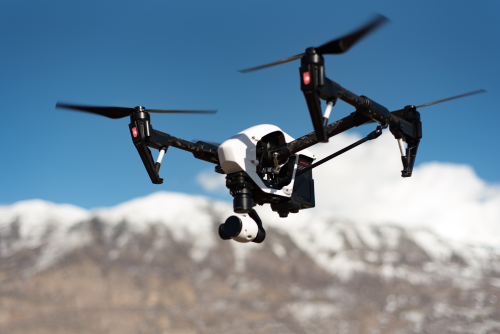
If you’re asking what is the best drone for public safety training, the honest answer is usually not the biggest or most expensive aircraft. The best training drone is the one that lets pilots repeat core skills safely, fits the real budget, and matches the team’s operational workflow closely enough to build good habits instead of expensive mistakes. For most public safety teams, the smartest path is a staged one: simulator first, affordable trainer second, mission-specific enterprise aircraft third.
Quick Take
For most agencies, departments, or training leads, the best drone for public safety training is not a single model but a buying strategy:
- Best overall approach: use a simulator, then a lower-cost GPS camera drone for basic flight skills, then train on the same enterprise platform used for real missions.
- Best value for new programs: a mid-size camera drone with stable hover, good return-to-home, multiple batteries, and a reliable controller ecosystem.
- Best budget option: a lightweight GPS camera drone for basic stick time, checklists, and daylight scenario practice.
- Best for mission-specific training: an enterprise drone with thermal or mapping capability, but only if those skills are part of actual deployment.
- Best advanced option: a multi-sensor enterprise platform only for mature teams that already know they need zoom, thermal, harsher-weather capability, or complex incident workflows.
- What not to do: buy a costly thermal aircraft as your first trainer, then use it for beginner crashes and basic hovering drills.
The short version: buy the cheapest aircraft that can safely teach the next real skill.
A Simple Answer by Budget
Exact prices vary by country, taxes, batteries, software, and procurement channels, so think in budget bands, not exact shelf prices.
| Budget band | Best type of drone | Good fit | Typical examples | Main tradeoff |
|---|---|---|---|---|
| Under $1,000 | Lightweight GPS camera drone | Basic flight training, checklists, daylight drills | DJI Mini 4 Pro-class, similar lightweight camera drones | Less wind tolerance, no thermal, limited mission realism |
| $1,000 to $3,000 | Mid-size camera drone | Best value for most new programs | DJI Air 3-class, similar mid-size training drones | Still not a true enterprise payload platform |
| $3,000 to $10,000 | Enterprise mission trainer | Teams training for mapping, thermal, inspections, SAR support | DJI Mavic 3 Enterprise, DJI Mavic 3 Thermal, similar enterprise systems | Higher crash cost and more admin overhead |
| $10,000+ | Advanced multi-sensor platform | Mature units with defined operational need | DJI Matrice 30T, Skydio X10, Autel EVO Max 4T-class | Expensive, heavier, more complex, overkill for beginners |
Best Drone for Public Safety Training by Budget
Under $1,000: best for basic flight habits
If your main goal is to teach:
- takeoff and landing discipline
- hover control
- orientation
- emergency procedures
- preflight and postflight checklists
- safe visual line of sight flying
then a lightweight GPS camera drone is usually the best place to start.
A model in the DJI Mini 4 Pro class is a good example of what this band does well: stable hover, easy transport, useful camera feedback, and lower replacement pain if a beginner makes a mistake. It is not “public safety grade” in the marketing sense, but it can be excellent for foundational pilot training.
This budget works best for:
- new pilots getting their first outdoor hours
- volunteer search teams building discipline before mission work
- departments testing whether a drone program will actually be used
- instructors who want a cheaper aircraft for repetition
What it does not do well:
- thermal familiarization
- night-specific sensor training where lawful
- heavy wind practice
- realistic zoom workflows
- advanced mapping or measurement training
If you only have one small budget, this is the safest place to begin. Just be honest that it is a trainer, not a full mission aircraft.
$1,000 to $3,000: the sweet spot for most new public safety programs
For most teams starting serious public safety training, this is the most sensible zone.
A mid-size camera drone gives you better wind handling, longer training sessions, better visual awareness, and usually a more capable camera system than the cheapest lightweight models. A drone in the DJI Air 3 class is a strong example of this middle ground.
Why this band is often the best overall value:
- better stability outdoors
- more realistic mission pacing
- enough endurance for scenario drills
- useful camera framing for scene overwatch practice
- still affordable enough that instructors can let trainees actually learn
This is the band I would point most new teams toward if they ask for one simple answer.
It suits:
- police, fire, and emergency management teams building an initial program
- instructors who need an outdoor trainer that feels more serious than a lightweight mini drone
- organizations that want one aircraft for both training and limited noncritical visual tasks
It is still not the right choice if your training requires:
- thermal image interpretation
- accurate mapping workflows
- advanced zoom observation
- specialized accessories or enterprise software integration
Think of this band as the best mix of realism, affordability, and low regret.
$3,000 to $10,000: best when training must match real mission work
Once your training moves beyond basic flight skills, the best drone is often the one that matches the real operational platform.
This is where aircraft like the DJI Mavic 3 Enterprise or DJI Mavic 3 Thermal make sense, along with equivalent enterprise-approved options in your procurement ecosystem.
This band is appropriate when training includes:
- thermal search familiarization
- scene documentation
- structured roof or fireground assessment
- search pattern rehearsals
- mapping or measurement workflows
- standard operating procedure practice using the same menus, controller, and accessories used on deployment
The biggest advantage is not raw performance. It is workflow transfer. Pilots learn the same controller logic, battery handling, payload behavior, and operational setup they will use later.
The biggest downside is cost. Beginners tend to fly too timidly on expensive aircraft, and instructors may waste a lot of valuable budget using an enterprise aircraft for lessons that could have been taught on something cheaper.
This is why many strong programs separate training into two layers:
- low-cost drone for basic flight repetition
- enterprise drone for mission rehearsal
That split saves money and usually produces better pilots.
$10,000 and up: only buy this for a defined operational need
Advanced platforms such as the DJI Matrice 30T, Skydio X10, or Autel EVO Max 4T are powerful tools, but they are not automatically the best public safety training drones.
They make sense when your team already knows it needs:
- thermal and zoom on the same platform
- all-weather or harsher-weather capability
- more complex incident overwatch
- stronger enterprise integration
- higher-stakes training for established pilots
They do not make sense as a first purchase just because they look more “professional.”
These aircraft bring:
- higher crash cost
- bigger batteries and charging needs
- more complex maintenance and storage
- more policy, evidence, and data-handling questions
- more pressure on trainees
If you are a mature unit with defined missions, they can be the right choice. If you are still teaching safe takeoffs and rectangular traffic patterns, they are usually the wrong one.
Which Features Actually Matter Most
When buyers compare public safety drones, they often focus on the wrong things. Here are the features that matter most in training.
1. Stable hover and predictable flight behavior
A training drone should hold position well using satellite positioning and onboard sensors. New pilots need an aircraft that behaves predictably, especially during:
- hover drills
- orientation exercises
- takeoff and landing repetition
- emergency stop practice
A twitchy or purely manual aircraft can be useful later, but it is not the best starting point for disciplined public safety training.
2. Reliable return-to-home
Return-to-home is the automatic feature that brings the drone back to a preset point after signal loss or on command. It is one of the most useful training safety nets.
But it is still just a safety net. Trainees must learn:
- when it helps
- when it can create risk
- how altitude settings affect obstacles
- why it does not replace airspace awareness
Choose a drone with dependable automated recovery features, then teach pilots not to rely on them blindly.
3. Obstacle sensing, with realistic expectations
Obstacle sensing is valuable for training, but it is not magic. It may struggle with:
- thin branches
- wires
- glass
- smoke
- low light
- complex urban clutter
For beginners, it can reduce the chance of an early crash. For instructors, it helps create safer learning conditions. But if a team starts trusting sensors more than disciplined scanning, training has failed.
4. A controller and app that support debriefs
A public safety trainee is not just learning to fly. They are learning to communicate, record, report, and work inside procedure.
Look for a system that makes it easy to review:
- flight path
- battery use
- camera positioning
- lost-link behavior
- checklist performance
Good debriefing matters more than extra camera sharpness.
5. Enough batteries for real repetition
One battery is not a training program. Two is still light. For most teams, three batteries is the minimum practical starting point, and four to six is often better if you want meaningful scenario work.
Budget for:
- extra batteries
- a field charger or charging hub
- spare props
- carrying case
- memory cards
- prop guards if your program uses them
- replacement downtime
A cheap drone with enough batteries is often a better trainer than an expensive drone with one battery.
6. Repairability and local support
Training means repetition. Repetition means wear, occasional hard landings, and lost props.
Ask before you buy:
- Are spare parts easy to get in your region?
- How fast is repair turnaround?
- Can your team afford downtime?
- Does the vendor have strong enterprise support where you operate?
This matters more than a flashy spec sheet.
7. Thermal only if thermal is part of the mission
Thermal cameras are useful in many public safety roles, but they are frequently overbought.
Thermal should be a priority if your team really trains for:
- search and rescue
- hotspot detection
- night scene awareness where lawful
- roof heat assessment after fire
- other sensor-led tasks
If your real need is basic flight skill, crew coordination, and scene overview, thermal is usually a costly distraction at the start.
8. Mapping accuracy only if you need measurements
Some teams need mapping, orthomosaics, or accurate scene documentation. If that is your mission, enterprise mapping features and high-accuracy positioning can matter.
If it is not your mission, skip it at first.
A lot of buyers overspend on mapping capability that never becomes part of day-to-day training.
9. Data handling and procurement fit
Public safety buyers also need to think about:
- cloud sync settings
- where images and logs are stored
- evidence sensitivity
- procurement restrictions
- vendor approval lists
- cybersecurity review
In some organizations, the “best” drone on paper is unusable because it does not fit policy. Always check the policy environment before locking in a platform.
Best Choice by Skill Level
Budget matters, but skill level matters just as much.
| Skill level | Best training setup | Why it works | What to avoid |
|---|---|---|---|
| Beginner | Simulator plus lightweight GPS trainer | Builds safe habits at low cost | Starting on an expensive thermal aircraft |
| Developing pilot | Mid-size camera drone with multiple batteries | Better outdoor realism and longer drills | Buying advanced payloads too early |
| Mission-qualified pilot | Same enterprise platform used in operations | Direct transfer to real workflows | Practicing mission procedures on unrelated aircraft |
| Instructor or unit lead | Two-aircraft setup: cheap trainer plus mission aircraft | Best mix of repetition and realism | Trying to make one expensive drone do everything |
Beginners
For a brand-new pilot, the best path is:
- simulator
- basic outdoor trainer
- structured scenario work
- transition to the operational aircraft
The main goal is not impressive footage. It is consistency, checklist discipline, orientation, and decision-making under low pressure.
Intermediate or developing pilots
At this stage, the drone should support:
- longer scenarios
- emergency drills
- controlled camera work
- search pattern practice
- communication between pilot and observer
This is where a mid-size camera drone really shines.
Advanced or mission-qualified pilots
Advanced pilots should train on the aircraft they are likely to deploy. If the mission includes thermal, zoom, scene documentation, or enterprise accessories, the training aircraft should reflect that.
That is where enterprise platforms earn their keep.
Safety, Legal, and Operational Limits to Verify
Public safety training flights are still real flights. Training status does not automatically remove legal or operational responsibilities.
Before flying, verify the rules that apply in your location, including:
- aircraft registration or operator requirements
- pilot competency or certification rules
- airspace restrictions
- local permissions for government or emergency service use
- night operation rules
- privacy and surveillance limits
- insurance requirements
- training flights near roads, people, or controlled areas
Also keep these practical limits in mind:
- Do not use a live incident as a beginner training environment.
- Coordinate with incident command before any operational-area flying.
- Never interfere with manned aircraft, especially helicopters.
- Keep training areas controlled and predictable.
- Use observers when the scenario or terrain justifies it.
- Have clear lost-link, low-battery, and emergency landing procedures.
If your team operates across borders or regions, do not assume the same permissions apply everywhere. Verify with the relevant aviation and local authorities before each new operating area.
Common Mistakes Buyers Make
Buying the mission drone first and the training system never
The drone is only part of the purchase. You also need:
- batteries
- charging
- spares
- carry solution
- debrief workflow
- simulator time
- instructor structure
A “public safety package” without a training system is incomplete.
Training beginners on the most expensive aircraft
This sounds serious, but it often slows learning. New pilots become hesitant, instructors become overly protective, and every minor error feels costly.
Use cheaper aircraft for repetition. Save the enterprise platform for mission-specific progression.
Assuming thermal makes a team operational
Thermal imagery still requires interpretation. It does not automatically find missing people, reveal every hazard, or replace good search planning.
Thermal is valuable, but it is a specialized skill, not a shortcut.
Ignoring repair and replacement reality
A drone that is hard to repair becomes hard to train with. Public safety buyers should think beyond purchase day.
Choosing by camera hype instead of training need
The best trainer is not the one with the most marketing language. It is the one that best teaches:
- safe control
- procedure
- teamwork
- sensor use
- mission judgment
Forgetting procurement and policy constraints
Some agencies can buy a consumer drone easily. Others cannot. Some can use cloud-connected systems. Others require stricter controls.
Always buy inside the policy environment you actually operate in.
A 5-Step Buying Checklist
If you need to decide fast, use this process.
1. Define the first skills you need to teach
Pick the next real outcomes, such as:
- safe launch and recovery
- scene overwatch
- thermal familiarization
- search pattern discipline
- documentation workflow
2. Separate basic training from mission rehearsal
Do not assume one aircraft should do both. In many programs, two layers work better: – lower-cost trainer – real mission aircraft
3. Build the full budget, not just the drone budget
Include: – batteries – charger – props – case – memory – simulator – repair reserve – instructor time
4. Check policy and procurement fit
Make sure the platform works with your organization’s: – vendor approval – data rules – evidence handling – local compliance requirements
5. Buy for repetition
If a cheaper drone gives you more safe practice hours, it may be the better training investment.
FAQ
What is the best single drone for most public safety training programs?
For many teams starting from scratch, a mid-size GPS camera drone is the best single-drone compromise. It offers more realism and stability than an ultra-light trainer without forcing beginners onto a high-cost enterprise airframe.
Should public safety trainees start on a thermal drone?
Usually no. Start thermal only when the team has already learned the basics of safe flight, crew coordination, and structured procedures. Thermal adds value when it matches a real mission need.
Is a lightweight mini drone serious enough for public safety training?
Yes, for basic skills. A lightweight drone can be excellent for orientation, hovering, checklists, emergency procedures, and daylight scenario drills. It is less suitable for wind, thermal work, or advanced mission realism.
How many batteries should a training drone have?
Three is a practical minimum. Four to six is better for meaningful field training, especially when multiple trainees are rotating through drills.
Should we train on the exact same drone we use operationally?
For advanced mission rehearsal, yes. For basic stick time, not always. Many strong programs use a cheaper trainer for repetition and the operational aircraft for scenario-specific training.
Can one drone cover police, fire, and search and rescue training?
For basic flight skills, yes. For specialized tasks, maybe not. Fire, police, and search teams may eventually need different sensor sets, workflows, or aircraft classes.
Do training flights still need the same permissions as other flights?
In many places, yes. Training is not a free pass. Always verify the rules, authorizations, and airspace restrictions that apply where you fly.
Is obstacle avoidance enough to keep beginners safe?
No. It helps, but it does not reliably solve wires, thin branches, poor light, glass, smoke, or rushed decision-making. Good instruction matters more than automation.
Final Decision
If you want the simplest answer, here it is:
- Starting a new program on a tight budget: buy a lightweight GPS trainer.
- Want the best overall value for most public safety training: buy a mid-size camera drone and enough batteries to train properly.
- Need training that matches real public safety missions: buy the same enterprise platform you plan to deploy.
- Running an advanced unit: only step into high-end multi-sensor aircraft if your mission profile already proves the need.
The smartest public safety buyers do not ask, “What is the most impressive drone?” They ask, “What aircraft will teach the next skill safely, repeatedly, and without wasting budget?” Start there, and the right choice gets much clearer.
