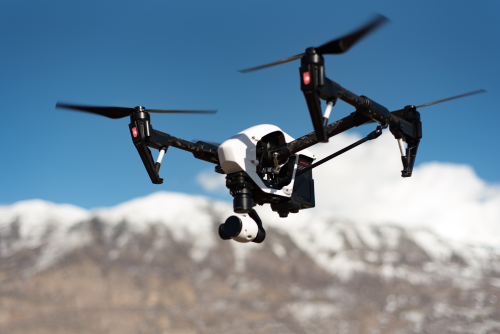
A drone landing pad looks optional until the day sand gets blasted into the gimbal, wet grass snags a prop on takeoff, or a quick battery swap turns into a muddy mess. The best landing pads for drone pilots who want fewer problems in the field are not the most heavily branded ones. They are the pads that match your drone size, your terrain, and how you actually work.
Quick Take
If you only want the short version, this is it:
- For most hobbyists, travel creators, and compact camera drone pilots, a 55 to 65 cm (22 to 26 in) pop-open landing pad is the safest all-around choice.
- If you often fly on sand, gravel, dry dirt, beaches, or windy fields, move up to a 75 to 90 cm (30 to 35 in) pad with stakes or weighted corners.
- If you work on repeat commercial sites, a heavier-duty washable mat usually outperforms ultralight pads because it stays flatter and lasts longer.
- If you hike or pack very light, an ultralight fabric pad can work, but only if you accept that it is easier to move, wrinkle, or lift in prop wash and wind.
- For snow, mud, tall grass, or rough terrain, a semi-rigid or elevated launch surface can make more sense than a standard thin pad.
Here is the fastest way to narrow it down:
| Use case | Best pad type | Why it works | Main downside |
|---|---|---|---|
| Most compact drones and everyday flying | Medium pop-open pad | Good balance of size, speed, and portability | Can still move in strong wind if not secured |
| Beaches, deserts, gravel, and windy fields | Large stake-ready or weighted pad | More landing margin and better stability | Bulkier to carry |
| Commercial site work and frequent deployments | Heavy-duty washable mat | Durable, flat, and easier to standardize across crews | Heavier and slower to pack |
| Hiking and minimal travel kits | Ultralight foldable fabric pad | Lowest weight and easiest to stash | Least stable and least durable |
| Snow, mud, or tall grass | Semi-rigid or elevated platform | Keeps props and sensors farther from debris or moisture | Less travel-friendly and requires careful setup |
Why a landing pad solves more problems than people expect
A landing pad is one of those accessories that seems minor until you start flying in less-than-perfect places.
It helps with:
- Dust and sand control: Prop wash throws debris upward during takeoff and landing. A pad reduces how much loose material gets kicked toward the camera, gimbal, and motors.
- Grass and twig clearance: Even short grass can interfere with small props during spool-up.
- Mud and moisture: A dry surface is better than placing your drone straight onto damp soil, slush, or shallow puddles.
- Workflow: A visible launch spot makes battery changes, retrieval, and crew awareness easier.
- Client perception: On commercial jobs, a defined takeoff and landing zone looks more controlled and professional.
- Repeatability: If you launch and recover in the same known area, you reduce random field mistakes.
A landing pad does not make a bad site good. It just removes several avoidable problems at once.
If you only buy one landing pad, buy this type
For most readers, the best single landing pad to buy is a:
Medium pop-open, double-sided, water-resistant pad with anchoring points
Look for these traits:
- Size: 55 to 65 cm (22 to 26 in)
- Material: Pop-open spring steel frame with water-resistant fabric
- Surface: Matte, not shiny
- Anchoring: Stakes, loops, or some way to secure it
- Visibility: High-contrast color that stands out on both dark and light ground
- Storage: Flat carry case that actually fits in your bag
Why this type wins:
- Big enough for most compact folding drones
- Fast to deploy
- Light enough to travel with
- Cheap enough to justify carrying regularly
- Better than ultrathin fabric in real-world wind and uneven terrain
Who should size up:
- Pilots flying larger camera drones
- FPV (first-person view) pilots using bigger rigs
- Service providers working in wind, dust, or rough sites
- Operators who hate hand recovery and want a wider landing margin
Who can size down:
- Very small drones
- Ultralight travel kits
- Pilots who fly mostly from clean pavement, decks, or short grass in calm conditions
The best landing pads by pilot type and field conditions
Best for most hobbyists and travel creators
Medium pop-open pad
This is the best balance for most people because it solves the main field problems without becoming one more bulky thing to carry.
It suits:
- Beginner pilots
- Sub-250 g flyers
- Travel content creators
- Aerial photographers using compact drones
- Casual weekend flyers
What matters here is not luxury. It is whether the pad is easy enough to bring every time.
A mediocre pad that is always in your bag is more useful than a heavy-duty solution you leave at home.
Best for beaches, dry fields, gravel, and windy locations
Large pad with stakes or weighted edges
If you fly near sand, loose soil, quarry edges, gravel lots, or windy coastlines, size matters more than people think.
A larger pad gives you:
- More room if the aircraft drifts slightly during touchdown
- Better protection from rotor wash pulling debris inward
- More stability if the pad is secured properly
- Easier visual reference from a few meters away
This type is especially helpful for:
- Coastal creators
- Travel vloggers
- Survey and inspection teams
- Pilots launching from unimproved ground
The tradeoff is packability. A large pad is worth it only if you will actually carry and secure it.
Best for commercial teams and repeat site work
Heavy-duty washable mat
If you fly regularly for construction, inspections, real estate, utilities, agriculture, or public safety support, the best landing pad is often the one that survives repeated abuse and fits a standard operating routine.
A heavier-duty mat usually offers:
- Better durability
- Less edge curl
- Easier cleaning between jobs
- A flatter surface for repeated use
- More professional setup on managed sites
This kind of pad makes sense when:
- The drone is part of a repeatable service workflow
- Multiple crew members may use the same kit
- You want fewer consumables and fewer replacements
- You operate from job sites with grit, mud, or vehicle traffic nearby
For teams, consistency matters. If every pilot uses a different pad size and setup method, field routines get messy fast.
Best for hikers and minimal travel kits
Ultralight fabric pad
There is a place for the super-light option. It just is not the right answer for everyone.
This type is best when:
- Every gram matters
- You are hiking, trekking, or packing inside a small day bag
- Your drone is compact
- You usually fly in calmer conditions
- You accept that setup takes more care
The problem is that very light pads often create their own issues:
- They wrinkle easily
- They lift in wind
- They can slide on smooth ground
- They wear out faster
- They are often too small
If you buy one of these, treat it as a compromise tool, not a universal solution.
Best for snow, mud, tall grass, and rough terrain
Semi-rigid pad or elevated launch surface
Sometimes the right answer is not a flat fabric pad at all.
If your typical locations include:
- Snow
- Wet mud
- Marshy edges
- Tall grass
- Rocky or uneven ground
then a semi-rigid or slightly elevated launch platform can help keep the aircraft farther from moisture and debris.
This can be very useful for:
- Winter pilots
- Wildlife and field researchers
- Search-and-rescue support teams
- Rural operators
But there is a catch: the surface must be stable, level, and large enough for your aircraft. A shaky stool, crate, or improvised platform is not a professional substitute for a proper launch surface.
Best for FPV and larger drones
Oversized, secure pad with extra margin
FPV pilots often focus on goggles, batteries, and video systems first, but the landing surface matters too, especially with dirt-heavy sites or larger rigs.
A bigger, more secure pad helps when:
- Props sit close to rough ground
- You launch from dirt, weeds, or gravel
- You swap batteries frequently at one spot
- You need a defined recovery zone
This is also useful for larger camera drones and some enterprise aircraft where recovery space is more important than portability.
If your landing pattern is not always perfectly vertical, give yourself more pad than you think you need.
How to choose the right landing pad
1. Start with size, not branding
The most common buying mistake is choosing a pad that is too small.
A good rule is simple:
- Your drone should have clear margin around it after landing, not just barely fit inside the printed circle.
- The rougher the terrain and the windier the site, the more margin you want.
- If you are between sizes, the larger pad is usually the better field tool.
Practical starting points:
- 40 to 50 cm (16 to 20 in): very small drones and ultralight kits
- 55 to 65 cm (22 to 26 in): most compact camera drones
- 75 to 90 cm (30 to 35 in): larger drones, windy sites, rough terrain, commercial operations
2. Choose the right material for your workflow
Pop-open spring-steel pads
Best for most pilots.
Pros: – Quick to deploy – Packs flat – Good balance of rigidity and weight
Cons: – Can spring open suddenly – Some cheap versions twist or warp over time – Can be annoying to refold if poorly made
Ultralight fabric pads
Best for minimal pack weight.
Pros: – Very light – Easy to stash in a small bag
Cons: – Moves easily – Wrinkles – Lower durability
Heavy-duty mats
Best for repeat work.
Pros: – Flat and stable – Durable – Easy to clean
Cons: – Heavier – Bulkier
Semi-rigid or elevated platforms
Best for harsh terrain.
Pros: – Better clearance from mud, grass, or snow – Can provide the cleanest launch surface
Cons: – Less portable – Needs careful leveling and site judgment
3. Do not ignore anchoring
A landing pad that cannot be secured is a partial solution.
In the field, the pad itself can become a problem if it:
- Slides during rotor wash
- Flaps upward
- Folds at the edge
- Blows into your operating area
Useful features include:
- Stake holes or corner loops
- Weighted edges
- Grippy underside
- Enough structure to stay flat
If you routinely fly where stakes are impossible, such as rock or pavement, favor a heavier or grippier design.
4. Look for matte, visible surfaces
You want the pad to be easy to see without becoming shiny or distracting.
Good pad surface traits:
- High contrast against the ground
- Low glare in bright sun
- Easy to wipe clean
- Clearly visible to crew or spotters
Double-sided color schemes are useful because one side may stand out better on sand, snow, grass, or dark soil than the other.
5. Packability matters more than specs on paper
A pad that takes too long to fold, is awkward to strap externally, or never fits back into its case gets left behind.
Ask yourself:
- Will this fit in my normal bag without pain?
- Can I deploy it quickly when light is changing?
- Will I still carry it on travel days or long walks?
The best landing pad is often the one that matches your actual field habits, not the one with the longest feature list.
Features worth paying for
Some landing pad upgrades are genuinely useful.
Worth paying for
- Reinforced stitching or edge binding
- Proper carry case
- Anchoring points
- Water-resistant fabric
- Easy-clean surface
- Double-sided colors
- Enough stiffness to stay flat
- Size appropriate to your drone, not just minimum fit
Less important than marketing suggests
- Oversized logos
- Decorative printed markings
- Very bright glossy coatings
- Extra-thin pads marketed only on weight
- Tiny pads sold as “universal”
- Features that add bulk without improving stability
A landing pad is not a fashion item. It is a field control tool.
Safety, legal, and operational limits
A landing pad improves launch discipline, but it does not change the legal or operational basics.
Verify local launch and landing rules
In many places, the rules for where you can take off and land matter just as much as the airspace above. Parks, beaches, private venues, heritage sites, protected nature areas, resorts, rooftops, and event spaces may restrict ground operations even if the location looks physically suitable.
Before flying, verify as needed with:
- The relevant aviation authority
- Park or land managers
- Property owners
- Venue operators
- Worksite safety managers
Do not assume that a landing pad makes an area authorized.
Keep the zone clear
A good pad helps define your launch area, but you still need to keep that area free of:
- People
- Loose bags and clothing
- Tripods and light stands
- Dry brush and debris
- Vehicles moving through the site
If you are working commercially, treat the pad as part of a controlled operating zone, not a decorative accessory.
Watch the ground under the pad
A nice pad on top of a bad surface is still a bad setup.
Be cautious with:
- Slopes
- Loose gravel
- Sharp rocks
- Hidden holes
- Soft mud
- Metal grates, covers, or structures if your aircraft guidance warns about interference
Also remember that some drones may behave differently over very reflective, shiny, or low-texture surfaces. Never rely on the pad alone for landing performance.
Common mistakes pilots make with landing pads
Buying too small
This is the biggest one. A tiny pad may look compact online, but in the field it gives you almost no margin when wind, dust, or a rushed landing shows up.
Choosing the lightest pad instead of the most usable one
Ultralight sounds smart until the pad starts sliding, folding, or flapping around.
Not securing it
If your landing pad moves during takeoff or landing, it has failed the main job.
Ignoring the area around the pad
The pad may be clean, but the grass, grit, or branches one meter away can still get pulled into the aircraft by prop wash.
Treating it as a cure-all
A landing pad reduces debris and improves setup. It does not fix poor site selection, weak landing skills, or bad weather decisions.
Never cleaning it
A dirty pad just transfers dust, moisture, and grit from one site to the next. If you fly at beaches, farms, or muddy worksites, clean it regularly.
Using unsafe improvised alternatives
A cardboard sheet, car roof, plastic bin lid, or unstable stool may seem fine once. That does not make it a good operating habit.
A simple field routine that makes any landing pad more useful
You do not need a complicated process. You need a consistent one.
- Choose the site first. Find a flat, clear area with enough room around it.
- Clear loose debris. Remove twigs, litter, or stones that can get lifted by prop wash.
- Deploy the pad fully. Make sure it lies flat and is not twisted.
- Secure it. Use stakes, weights, or a stable orientation so it cannot move.
- Check the ground under it. Avoid soft mud, hidden metal covers, or unstable edges.
- Brief anyone nearby. Make the launch and recovery zone obvious.
- Recheck between batteries. Wind, people, and gear drift can change the setup faster than you think.
That routine prevents more field headaches than buying a more expensive pad alone.
FAQ
Do sub-250 g drones really need a landing pad?
Not always, but they benefit from one more than many pilots expect. Small drones are especially vulnerable to grass, grit, sand, and uneven ground because they operate closer to the surface and often use lighter props and smaller landing clearance.
What size landing pad should I buy for a compact camera drone?
For most compact folding drones, 55 to 65 cm (22 to 26 in) is the sweet spot. If you often fly in wind or on dirty surfaces, go larger rather than smaller.
Are round or square landing pads better?
Round pads pack well and work fine for many pilots. Square pads can give you more usable edge space and often make anchoring simpler. In practice, size, stability, and material matter more than shape.
Can a landing pad improve landing accuracy?
It can improve your visual reference and give you a cleaner target, but it is not a substitute for good control or obstacle judgment. Downward sensors and landing behavior vary by drone and by lighting conditions.
Are drone landing pads allowed everywhere?
No. A landing pad does not override local rules. You may still need permission from property owners, parks, venues, or site managers, and you should verify aviation and local operating rules before launching.
Is a landing pad worth it for beach flying?
Yes, probably more than for almost any other casual use case. Sand and salt-heavy environments are hard on drones, and rotor wash can kick up fine particles quickly. A larger, well-secured pad is the better choice for beaches.
Do FPV pilots need a landing pad?
Many do, especially on dirt, gravel, grass, or public spots where a defined launch and recovery area helps. If you fly larger or heavier FPV setups, give yourself more surface area and more stability than a tiny travel pad.
Can I skip a landing pad if I usually launch by hand?
Some experienced operators use alternative launch and recovery methods in specific situations, but that should never be your default shortcut. A stable, secured landing pad is easier to standardize, easier to explain to crews or clients, and usually the lower-friction choice for most pilots.
The smart buy for fewer field problems
If you want one simple answer, buy a medium-size, stake-ready, water-resistant pop-open pad and actually keep it with your kit. If you fly in wind, sand, snow, or commercial site conditions, size up or move to a heavier-duty surface. The best landing pad is not the flashiest one on a product page; it is the one that stays flat, stays put, and makes your field routine cleaner every time you fly.
