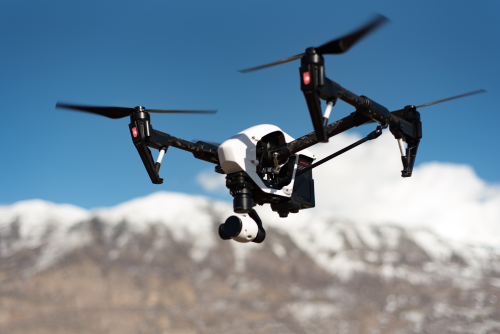
A drone memory card feels like a small purchase until it stops a recording at sunrise, throws a slow-card warning on a client job, or turns a full travel day into missing footage. The best memory cards for drone pilots who want fewer problems in the field are usually not the cards with the loudest marketing. They are the cards that match your drone, your recording settings, your backup habits, and your tolerance for risk.
Quick Take
If you want the short answer, this is it:
- For most current consumer drones, the safest default is a reputable microSDXC card rated UHS-I, U3, and V30.
- 128GB or 256GB is the sweet spot for most pilots. It gives useful capacity without making one card your entire trip or job.
- Buy two or three matching cards instead of one giant card. That reduces single-point failure and makes backups easier.
- Only pay extra for V60, V90, or UHS-II if your drone manual explicitly benefits from it or your offload workflow justifies it.
- Buy from authorized or trusted retailers, format the card in the drone, and retire any card that gives even one serious write or corruption error.
What actually makes a memory card “best” for drone use?
For drones, “best” is less about peak speed and more about reliability under real field conditions.
A drone camera writes data continuously while flying in heat, vibration, bright sun, and sometimes windblown dust or fast turnaround between batteries. That makes drone use harsher than people expect. A card can look fast on the package and still be the wrong choice.
The best card for fewer field problems usually delivers five things:
- Stable write speed for your actual video mode
- Compatibility with your aircraft and its firmware
- Predictable behavior when the card gets warm or nearly full
- Easy backup and management during travel or client work
- Low counterfeit risk because it came from a trustworthy source
That is why a boring, widely used, properly rated card often beats a supposedly “faster” bargain card.
The safe default for most drone pilots
If you fly a mainstream camera drone for photos and compressed 4K video, the safest starting point is usually:
- microSDXC
- UHS-I
- U3
- V30
- 128GB or 256GB
- From a major brand with a good reputation and broad availability
For a lot of hobbyists, travel creators, and even many commercial operators, this is the sweet spot.
Why it works:
- V30 is the video speed class many popular drones handle well for normal high-quality recording modes.
- UHS-I is still the bus standard used by many drone card slots, so paying for more does not always improve in-drone performance.
- 128GB to 256GB balances capacity and risk. You are less likely to run out during a day, but you are also not putting your whole week on one card.
If your drone manual lists approved cards or specific recording-mode requirements, follow that first. Some aircraft accept many cards but only validate certain ones for higher bitrate modes or larger capacities.
How to read memory card labels without getting tricked by marketing
Memory card packaging is full of labels that sound important. Some are. Some matter much less for drones.
U3 and V30 are the labels most pilots should care about first
Two of the most useful labels are:
- U3
- V30
Both point you toward a card that is designed for stronger sustained video recording. In plain English, that means the card is more likely to keep up when the drone is continuously writing video data.
For many drone pilots, these are the baseline ratings worth looking for.
If your drone or camera mode truly needs more, you may see:
- V60
- V90
Those higher ratings are not automatically better for everyone. They are better only if your aircraft, codec, or workflow can actually use them.
UHS-I vs UHS-II
This is one of the biggest overbuying traps.
- UHS-I is enough for a large share of drone pilots.
- UHS-II can be useful, but often for computer transfer speed, not recording speed inside the drone.
A UHS-II card has extra contact pins and can be much faster with the right reader. But if your drone’s card slot only works at UHS-I speeds, the drone will not magically record faster just because the card is more expensive.
So the practical rule is:
- Buy UHS-I if you want the best value and broad compatibility.
- Consider UHS-II if your drone explicitly supports it or if you are a heavy shooter who cares about much faster offloading to a laptop with a UHS-II reader.
Capacity matters more than most people admit
Capacity is not just about “how much footage fits.” It changes how much risk you carry.
A simple way to think about it:
- 64GB: fine for short flights, training, or mostly-photo use
- 128GB: best default for many pilots
- 256GB: great for longer 4K days, travel, and commercial work
- 512GB and above: only if your drone supports it and your backup habits are strong
Very large cards sound convenient, but they increase the pain of a bad day. One corruption event, one lost card, or one rushed format mistake can wipe out too much work at once.
A1 and A2 usually matter less for drones
You may see A1 or A2 on a card. These are application-performance ratings, mainly relevant to devices running apps from storage.
For drone recording, these labels are usually not the main thing to optimize around. Prioritize:
- compatibility
- U3/V30 or whatever your drone requires
- reliable brand and seller
- real-world stability
Endurance cards are a special case
High-endurance cards are designed for lots of repeated write cycles, such as dashcams or security cameras. They can be useful in some drone-related roles, especially for:
- goggles DVR recording
- crash-prone FPV setups
- repetitive training use
- secondary recording devices
But high-endurance does not automatically mean “best main camera card” for every drone. Some endurance lines prioritize longevity over maximum performance. Always match the card to the job.
Which card profile fits your flying style?
| Pilot type | Best-fit card profile | Sensible capacity | Why it works | Watch-outs |
|---|---|---|---|---|
| Beginner or hobby pilot | UHS-I, U3, V30 | 128GB | Easy, reliable starting point for photos and common video modes | Don’t buy bargain no-name cards |
| Travel creator | UHS-I, U3, V30 | 2 x 128GB or 2 x 256GB | Redundancy and easier backup on the road | One huge card creates more risk |
| FPV pilot | UHS-I, U3, V30, sometimes endurance for DVR | 64GB to 128GB | Good for lots of short clips and rough handling | Main HD recording may need a validated faster card |
| Aerial photographer | UHS-I, U3, V30 | 128GB | Good balance for RAW photos and normal video use | Card management matters more than raw speed |
| Commercial operator | Matching tested cards, usually UHS-I U3/V30 unless the drone needs more | Several 128GB or 256GB cards | Standardization lowers crew errors | Test the exact card in the actual flight mode |
| High-volume production team | Drone-approved card profile, sometimes UHS-II for faster ingest | 256GB | Faster media handling after flights | UHS-II may not improve in-aircraft recording |
Dependable card families worth considering
The exact best choice changes with availability, counterfeit risk, and your drone’s approved list. But several card families have strong reputations because they are commonly used, easy to source, and generally fit drone workflows well.
Strong mainstream choices for most pilots
These are the kinds of cards many drone pilots end up happiest with:
- SanDisk Extreme
- SanDisk Extreme PRO
- Samsung PRO Plus
- Samsung PRO Ultimate
- Kingston Canvas Go! Plus
Why these are popular: – usually available in useful capacities – easy to find in U3/V30 variants – broad compatibility across popular creator gear – good balance between price, performance, and familiarity
The main caution with popular lines is simple: they are also some of the most commonly counterfeited. Seller quality matters.
Good options for heavier pro workflows
If you shoot a lot, dump media constantly, or want stronger media-handling options, these families are worth a look:
- Lexar Professional microSD lines
- Delkin Devices POWER
- ProGrade Digital microSD lines
These can make sense for: – higher-volume commercial teams – creators who care about faster offloading – pilots standardizing gear across crews – buyers willing to pay more for workflow confidence
Again, the key question is not “Is this card faster on paper?” It is “Does my drone benefit, and does my editing workflow benefit?”
Special-purpose endurance choices
For repetitive recording, secondary devices, or rougher FPV environments, some pilots prefer:
- Samsung PRO Endurance
- SanDisk High Endurance
Use these when endurance is the main goal, not because you assume they are universally better for every main camera workflow.
A simple 5-step way to choose the right card
If you want fewer problems in the field, use this buying process.
1. Start with the drone manual, not the store page
Before you buy anything, check:
- supported card type
- supported capacities
- approved or recommended card list, if available
- any warnings for higher-bitrate recording modes
This saves more frustration than any spec-sheet comparison.
2. Match the card to your heaviest recording mode
Ask yourself:
- Am I mostly shooting photos?
- Standard compressed 4K video?
- Higher bitrate modes?
- Long continuous takes in hot weather?
Buy for your most demanding normal use, not your easiest use.
3. Pick capacity based on risk, not just convenience
For many pilots, the best move is:
- two or three 128GB cards
- or two 256GB cards
That setup usually beats one giant card because it gives you: – backup flexibility – better trip segmentation – less damage if one card fails – easier client or project separation
4. Decide whether transfer speed actually matters to you
If you dump footage to a laptop in the field after every few batteries, better read speed and a better card reader matter.
If you mostly fly for fun and back up later at home, you may get little benefit from paying extra for premium transfer performance.
5. Test every card before trusting it
A new card should never go straight into an important mission without a test.
Do this first: 1. Format it in the drone. 2. Record a full flight or long test clip in your normal quality settings. 3. Transfer the files. 4. Review the footage fully. 5. Keep that card only if the workflow is clean and repeatable.
For paid work, repeat this process with every new batch of cards.
Field habits that prevent more problems than expensive cards do
The memory card itself matters, but your habits matter almost as much.
Use a simple card management system
A good field routine is:
- Label cards clearly.
- Keep blank cards on one side of the case and used cards on the other.
- Format only after footage is backed up and confirmed.
- Never guess whether a card is empty.
This sounds basic, but it prevents a surprising number of mistakes.
Format in the drone, not as a random afterthought on a computer
When possible, format the card in the aircraft or recording device you will actually use. That reduces file-system weirdness and compatibility issues.
Stop recording before power-down
Do not rush shutdown the second you land. Give the drone a moment to properly close the file. Abrupt power loss can corrupt the last clip.
Carry a proper card case
Loose microSD cards in a backpack pocket are asking for trouble. Use a small protective case that keeps out dust, moisture, and accidental bending.
Retire cards early if they behave strangely
If a card gives you: – slow-card warnings – failed recordings – corrupted clips – repeated formatting errors – random mount failures on a computer
do not “give it one more chance” on a serious flight. Demote it to testing or discard it responsibly.
Common mistakes drone pilots make with memory cards
Buying based on read speed instead of write stability
The huge speed number on the front of the package is often the read speed, which mostly affects transferring files off the card. Recording reliability depends more on sustained write performance and compatibility.
Assuming bigger is always better
A larger card can reduce swaps, but it can also increase the size of a bad mistake. Bigger is only better if your backup discipline is equally good.
Mixing random cards across jobs
One old card, one cheap backup card, one fast-looking card from a marketplace seller, one forgotten card from an action cam kit: this is how inconsistency enters your workflow.
Standardize where possible.
Buying from risky sellers
Counterfeit cards are still a real problem. They may show fake capacity, fail under load, or perform far below the label.
Ignoring the drone’s approved list
Even if a card works for photos or short clips, it may not be trustworthy in the aircraft’s highest-quality recording mode.
Operational, travel, and compliance limits to know
Memory cards seem like a simple accessory, but they can create real operational risk on travel and commercial jobs.
Keep these points in mind:
- If you fly commercially, treat media handling as part of your professional process. Clear labeling, backup timing, and original-file retention can matter.
- If footage relates to inspections, incidents, mapping, or client evidence, do not reuse that card until the original files are safely archived according to your company or client policy.
- When traveling, remember that aviation rules, local photography restrictions, privacy expectations, and sensitive-site rules vary by location. Verify what is legal to capture, store, and transfer before flying.
- Keep backups separate from the original card when practical. Losing both at once is more common than most crews expect.
The card is not just storage. In many workflows, it is the first link in your data chain.
FAQ
What memory card rating should most drone pilots buy?
For most mainstream camera drones, a reputable microSDXC UHS-I U3 V30 card is the safest default. Always verify your drone’s manual before buying.
Do I need V60 or V90 for my drone?
Usually not, unless your aircraft or a specific recording mode explicitly benefits from it. Many drone pilots pay for higher classes they never actually use.
Is a 512GB or 1TB card a good idea?
Only if your drone supports it and your backup routine is disciplined. Very large cards are convenient, but they also increase the impact of one failure or one accidental format.
Should I buy UHS-II even if my drone uses UHS-I?
Only if you care about faster offloading to a compatible card reader and computer. In many drones, UHS-II will not improve recording speed inside the aircraft.
Are endurance cards good for drones?
They can be a smart choice for DVR, goggles, repetitive training, or secondary recording. They are not automatically the best main camera card for every drone.
Why does my drone say “slow card” even when the card is new?
Possible reasons include: – the card is below the needed sustained write speed – the card is counterfeit – the card was not formatted properly – the recording mode is more demanding than expected – the card is overheating or failing
Test with a known-good approved card before assuming the drone is at fault.
How often should I replace a drone memory card?
There is no universal schedule, but frequent professional use justifies earlier replacement than casual weekend flying. Replace cards sooner if they are heavily used, exposed to rough conditions, or show even minor warning signs.
What is the safest way to buy memory cards?
Buy from established retailers or authorized channels, inspect packaging, test the card early, and avoid deals that look far below normal market pricing. The cheapest card is often the most expensive one after a failed shoot.
Final takeaway
If your goal is fewer problems in the field, do not chase the flashiest speed numbers. Buy a drone-approved, reputable UHS-I U3 V30 microSDXC card, stick to 128GB or 256GB for most work, use multiple matching cards, and treat card handling like part of your flight workflow. The best memory card is the one you barely have to think about when the aircraft is in the air.
