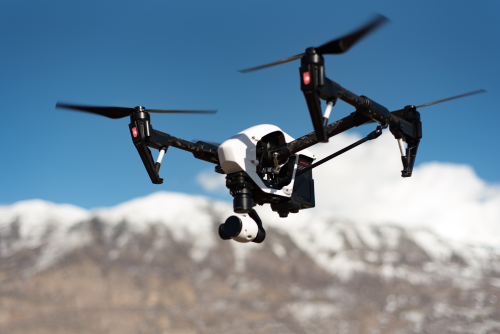
When pilots shop for range gear, they often chase distance and end up buying the wrong thing. The best signal range accessories for drone pilots who want fewer problems in the field are the ones that improve link stability, antenna positioning, visibility, and setup discipline, not just the ones that promise the biggest number on the box. In real flights, fewer dropouts usually come from better signal management, not brute-force “range boosting.”
Quick Take
If you want fewer signal headaches, focus on accessories that improve consistency before you buy anything marketed as a long-range miracle.
- For most pilots, the best first buys are a good screen hood, a reliable short data cable, and a controller lanyard or brace that keeps antenna positioning consistent.
- If your drone system supports it, a well-made directional patch or panel antenna is the most meaningful true signal accessory for open, forward-facing flights.
- Passive parabolic reflectors are a cheap experiment, but expectations should stay modest.
- An elevated controller stand or small tripod can help more than people expect when terrain, parked cars, or your own body are blocking the signal path.
- Enterprise teams and repeat commercial operators may benefit from an RF site scanner or spectrum analyzer, but it is overkill for most hobbyists.
- Most pilots should avoid random “amplifiers,” internal antenna mods, or poorly documented booster kits unless they have confirmed legality, compatibility, thermal behavior, and insurance implications.
Which signal accessories are actually worth considering?
| Accessory type | Best for | Main benefit | Main downside | Best fit |
|---|---|---|---|---|
| Directional patch or panel antenna | Open-area flights where the aircraft stays mostly in front of you | Stronger, more focused link in one direction | Must be aimed; bulkier; not compatible with every controller | Surveyors, FPV ground stations, rural operators |
| Passive parabolic reflector | Low-cost experiment on compatible controllers | Small improvement in focused signal without electronics | Limited real-world gain; fragile; often overhyped | Hobbyists testing in open areas |
| Upgraded omnidirectional antennas | Systems with replaceable antennas that move through wider angles | Better all-around consistency than directional-only setups | Less dramatic than directional gain; compatibility matters | FPV pilots, some enterprise rigs |
| Elevated controller stand or tripod | Static launches in cluttered areas | Improves line of sight and keeps antennas clear of your body | Extra setup and carry weight | Mapping, inspections, repeat site work |
| Screen hood / sunshade | Bright daylight operations | Reduces glare so you can manage orientation and signal cues better | No direct RF gain | Nearly everyone |
| Short, reliable controller-to-device cable | Phone/tablet-based controllers | Reduces disconnects mistaken for “signal loss” | No effect on aircraft radio link | Beginners, travel pilots, creators |
| Lanyard, brace, or controller support | Longer flights or tablet-heavy setups | Keeps antenna angle and pilot posture consistent | Another item to pack | Photographers, survey crews, enterprise teams |
| Handheld RF scanner / spectrum analyzer | Recurring work in noisy RF environments | Helps identify interference sources before takeoff | Expensive and more technical | Professional teams |
First, identify what kind of “signal problem” you actually have
A lot of pilots buy the wrong accessory because they do not first identify which link is failing.
Your drone setup usually involves several different things that can go wrong:
- The control link between controller and aircraft
- The live video/downlink feed from aircraft to controller
- The controller-to-phone or controller-to-tablet connection
- GPS reception and navigation quality
- General interference from buildings, power infrastructure, Wi-Fi, or event venues
Those are not the same problem, and one accessory will not solve all of them.
Match the symptom to the likely fix
If your video feed freezes but the aircraft still responds, the issue may be the video downlink or the mobile device connection, not total signal loss.
If the app disconnects but the aircraft remains controllable, start with the cable and mobile device before you blame antenna performance.
If the link drops only when the drone is low, behind trees, or near ridgelines, line of sight is your main enemy. A better launch position or a small stand may help more than any antenna.
If the link is weak only when the aircraft moves to your side or behind you, a directional antenna may actually make things worse unless you keep the drone in the antenna’s focus area.
If you work around warehouses, dense neighborhoods, stadiums, ports, or industrial sites, interference can overwhelm “range boosting” claims. In that case, site selection and RF awareness matter more than accessories.
The signal range accessories most worth buying
1. Directional patch or panel antennas
For pilots who genuinely need a better link in open environments, directional antennas are usually the most serious upgrade category.
A directional antenna concentrates the signal in a narrower forward-facing pattern instead of spreading it evenly around you. That can improve signal strength and video stability when:
- The aircraft stays mostly in front of the pilot
- You are flying in open terrain
- The controller supports external or replaceable antennas
- You can consistently aim the antenna correctly
Who should consider one
- Rural photographers shooting forward from a fixed overlook
- Corridor mapping teams
- Inspection crews working predictable routes
- FPV pilots using compatible ground stations in open spaces
Who should probably skip it
- Travel creators who change launch spots constantly
- Beginners still learning antenna orientation
- Urban pilots working around buildings and reflections
- Owners of integrated consumer controllers that do not support antenna replacement
The tradeoff
The gain is real only when the aircraft stays in the antenna’s useful coverage area. If you pan around, fly overhead, or orbit yourself, a directional antenna can create dead spots faster than an ordinary setup.
This is why directional gear helps disciplined, repeatable workflows more than casual flying.
2. Passive parabolic reflectors
These are the clip-on curved reflectors that sit behind compatible controller antennas. They are lightweight, cheap, and popular because they look like an easy upgrade.
They can help a little by focusing the signal forward, but they are not magic.
Why people like them
- Low cost
- No power source required
- Easy to pack
- No controller disassembly on compatible designs
Their real limitation
The improvement is usually modest and highly dependent on open-air conditions, correct orientation, and reflector quality. Cheap versions can feel flimsy, shift during flight, or crack in a backpack.
For many pilots, a reflector is a low-risk test, not a final solution.
Best use case
If you have a compatible controller and want the simplest possible experiment before buying more serious gear, a passive reflector is reasonable. Just do not expect it to overcome urban interference, trees, hills, or poor antenna technique.
3. Upgraded omnidirectional antennas
Omnidirectional antennas radiate more evenly around the operator. They usually do not deliver the same forward-focused punch as a panel antenna, but they are easier to live with when the aircraft moves unpredictably.
This category matters most on systems that already use replaceable antennas, including some FPV ground setups and certain professional rigs.
Why they can be the smarter buy
If your flying style includes:
- Tracking moving subjects
- Repositioning often
- Side passes
- Frequent angle changes
- Several launch points in one session
then an improved omnidirectional setup can be more practical than a directional one.
Watch for these issues
- Cheap antenna clones with poor tuning
- Mismatched connectors or adapters
- Added cable loss that erases the claimed gain
- Durability problems at the antenna base during travel
If you need an all-day field solution, build quality matters more than marketing claims.
4. Elevated controller stands, mini tripods, and ground-station masts
This is one of the most underrated categories in signal management.
Radio performance depends heavily on line of sight, which means a clear path between controller and aircraft. A drone flying low over grass, vehicles, stone walls, or small rises can lose link quality surprisingly fast, even when the pilot thinks the sky is “open.”
Lifting your controller or receiver setup a bit higher can help by:
- Clearing brush, fences, and parked vehicles
- Reducing body-blocking from the pilot
- Keeping antennas at a repeatable angle
- Improving operator posture during long flights
Best for
- Mapping teams
- Inspection crews
- Static launch sites
- Operators who work from the same property repeatedly
Not ideal for
- Lightweight travel kits
- Hike-heavy shoots
- Fast-moving creator workflows
A simple, sturdy support can be more useful than a more powerful-looking accessory, especially when the real issue is ground clutter and body shielding.
5. Screen hoods and sunshades
A sun hood does not increase transmitter power, but it absolutely reduces field problems.
Why? Because many “signal problems” are really pilot-visibility problems.
When glare makes the screen unreadable, pilots are more likely to:
- Misread signal bars or warnings
- Hold the controller at poor angles
- Lose awareness of aircraft orientation
- Trigger rushed return-to-home decisions
- Fly lower or closer to obstructions while trying to see the display
Who should buy one
Almost everyone who flies in bright daylight with a phone or tablet-based display.
What to look for
- Stiff enough to keep shape in wind
- Fast to install and remove
- Packs flat or folds cleanly
- Does not block cooling vents or buttons
- Works with your tablet mount or controller case
This is one of the best low-cost accessories for reducing avoidable field stress.
6. Short, reliable controller-to-device cables
Many pilots misdiagnose mobile-device connection problems as drone range problems.
If your phone or tablet disconnects from the controller, freezes, or intermittently loses data, it can look like a radio issue even when the aircraft link is still fine.
A good cable should be:
- Short enough to avoid snagging
- Firm at both ends
- Easy to seat securely
- Durable in repeated packing
- Kept as a dedicated flight cable, not a random daily charging lead
Why it matters
A poor cable can create:
- App disconnects
- Screen blackouts
- Telemetry interruptions
- Mid-flight frustration that feels like signal instability
For beginners and travel creators, this is one of the smartest “boring” purchases you can make.
7. Lanyards, controller braces, and chest supports
Another indirect upgrade that solves real-world problems.
When pilots get tired, they naturally let the controller tilt, rotate, or sit against the body. That changes antenna orientation and can reduce link quality.
A lanyard or support system helps by:
- Holding the controller in a stable position
- Keeping the antennas off your torso
- Making long flights less fatiguing
- Improving repeatability when using a tablet mount
Best fit
- Aerial photographers shooting longer compositions
- Survey pilots running repeated flights
- Enterprise crews with checklists and standardized setups
This is not flashy gear, but it often produces better results than bargain-bin “boosters.”
8. RF scanners and handheld spectrum analyzers
This is the advanced option.
If you routinely work around RF-heavy environments, an RF scanner or spectrum analyzer can help you understand whether the site itself is the problem. For example, industrial campuses, event grounds, ports, and dense urban rooftops can create interference that no small accessory will fully overcome.
Best for
- Enterprise drone programs
- Inspection companies
- Broadcast-adjacent work
- Recurring operations on complex sites
Not for most pilots
These tools cost more, take skill to interpret, and are not necessary for weekend flying. But for professional teams, they can prevent wasted setup time and help standardize launch-site choices.
A simple buying framework
Before you buy any signal range accessory, ask these five questions.
1. Is your controller actually compatible?
Many modern consumer drones use integrated controllers and antenna systems that are not designed for end-user modification. If a solution requires opening the controller, adding adapters, or replacing internal parts, that is no longer a simple accessory purchase. It becomes a modification with warranty, support, and compliance implications.
2. Do you need better consistency or more distance?
Those are different goals.
- If you need consistent signal around changing angles, look at posture, cable quality, and possibly omnidirectional upgrades on compatible systems.
- If you need a stronger forward link on open routes, directional antennas are the better candidate.
3. Are you flying in clutter or in RF noise?
If the problem is terrain, low altitude, or your own body blocking the controller, stands and better launch placement help.
If the problem is heavy interference, a new antenna may not save you. Better site selection matters more.
4. How portable does your kit need to be?
Travel creators usually regret bulky directional kits that add setup time and don’t fit their cases well.
Commercial teams often accept more weight if it improves repeatability.
5. How much field complexity are you willing to manage?
Each added accessory creates more to pack, inspect, mount, and troubleshoot. A small gain is not always worth a messier workflow.
What people get wrong about range accessories
Advertised range is not the same as usable field reliability
Marketing figures are usually based on ideal conditions. Your real mission may include glare, interference, low flight altitude, trees, walls, moving subjects, and legal operating limits.
More gain is not always better
Higher-gain directional antennas can narrow your coverage so much that normal maneuvering becomes harder. That is helpful for straight-ahead work, but frustrating for general flying.
Cheap adapters can ruin a good antenna
Every extra connection in the chain can introduce loss, loosen over time, or fail in transport. If the accessory depends on cables, connectors, or pigtail adapters, quality matters.
Many “range issues” are really launch-position issues
Standing next to a vehicle, concrete wall, fence, or metal structure can hurt performance. Sometimes taking five extra steps to a cleaner spot helps more than new gear.
Pilots often confuse app instability with RF instability
If your mobile device is overheating, underpowered, or connected with a weak cable, you may blame the aircraft link for a different problem.
Safety, legal, and compliance limits to know
Signal accessories can cross from “gear” into “radio modification” quickly, especially when amplifiers, antenna swaps, internal controller changes, or third-party booster kits are involved.
Before using any true range-enhancing hardware, verify these points for your country and operating environment:
- Whether the controller and radio system are approved only in their stock configuration
- Whether external amplifiers or modified antennas are allowed under local telecom or radio rules
- Whether a modification affects aviation compliance for commercial operations
- Whether your insurer or client requires manufacturer-approved equipment
- Whether the accessory changes heat, battery draw, or controller reliability
Also remember:
- Better signal gear does not remove the need to maintain visual line of sight where that is required.
- It does not make flying behind terrain, buildings, or dense tree cover safe.
- It does not guarantee reliable operation in congested urban RF environments.
- It does not override local park rules, event restrictions, or site-specific operating limits.
If you travel internationally, verify both aviation rules and local radio-equipment restrictions before carrying or using modified transmission gear.
Which accessory fits which pilot?
Beginner hobbyist
Buy: – Screen hood – Spare short cable – Lanyard if you use a tablet
Maybe: – Passive reflector on a compatible controller
Skip for now: – Amplifiers – Complex antenna mods – RF scanners
Travel creator
Buy: – Screen hood – Reliable cable – Compact lanyard or support
Maybe: – Nothing else unless you repeatedly shoot in open landscapes from fixed positions
Skip: – Bulky panel kits that slow down your pack-and-go workflow
FPV pilot
Buy based on system: – Quality omnidirectional or directional receiver antennas on compatible ground equipment – Solid support gear that keeps your ground station consistent
Be careful with: – Poorly matched antenna combinations – Cheap connectors – Aggressive power-mod claims
Commercial mapping or inspection operator
Buy: – Elevated stand or mast – Controller support system – Directional antenna if the route is predictable and the platform supports it
Consider: – RF scanning tools for repeat sites
Enterprise team
Buy for standardization: – Repeatable launch setup – Durable mounts and supports – Site-assessment process – Approved accessories only
Avoid: – Ad hoc field mods that complicate maintenance, insurance, and training
FAQ
Do drone signal boosters really work?
Some do, but the useful question is how much, in what conditions, and at what cost in complexity. A good directional antenna on a compatible system can improve link quality in open areas. Many cheap “boosters” are overstated, and some require modifications that create legal, warranty, or reliability problems.
Are passive reflectors worth buying?
They can be worth trying if your controller design supports them and your expectations are modest. They are inexpensive and simple, but the gains are usually small. They are best seen as a low-cost experiment, not a guaranteed fix.
What helps more in the field: a better antenna or a better launch position?
Usually the launch position. Cleaner line of sight, less nearby metal, less body-blocking, and a higher controller position often improve performance more than a random accessory purchase.
Can I legally use an amplifier or modified antenna on my drone controller?
Maybe, maybe not. That depends on your local radio-equipment rules, aviation requirements, and whether the controller is approved only in stock form. Verify with the relevant telecom and aviation authorities, your equipment documentation, and your insurer before using modified transmission hardware.
Why does my app disconnect if the aircraft still has control link?
That often points to a problem between the controller and your phone or tablet, not the aircraft radio link. A better cable, cleaner port connection, cooler device, or more reliable mobile device may help.
Do screen hoods really matter for signal performance?
Indirectly, yes. They help you read warnings, maintain better situational awareness, and avoid poor controller posture caused by fighting glare. They do not improve RF output, but they absolutely help reduce field mistakes that get mistaken for signal issues.
Are these accessories useful for city flying?
Some are, but expectations should stay realistic. Urban environments often include interference, reflections, obstructions, and site restrictions that accessories cannot fully overcome. In cities, launch location, altitude discipline, and route planning matter more than chasing raw range.
Should travel pilots carry a directional antenna kit?
Usually only if they have a repeatable use case for it. Travel flying tends to reward compact, low-friction gear. Most travel pilots get more value from a hood, dependable cable, and good operating habits than from bulky signal hardware.
The practical next step
If you want fewer field problems, do not start with the most aggressive range extender you can find. Start by fixing the weak points that cause the most real-world failures: glare, poor cable quality, unstable controller posture, blocked line of sight, and bad launch placement. Then, only if your platform and workflow justify it, add a directional antenna or other true signal accessory that matches how you actually fly.
