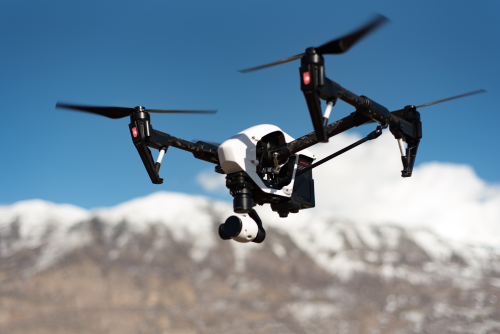
If you want to know how to build a drone jobs page that actually produces revenue, treat it like a sales tool, not a portfolio scrapbook. The page should help a buyer quickly answer three questions: what work you do, whether you can do it safely and legally, and how to hire you. For most pilots, the difference between “nice shots” and real income is not flying skill alone. It is clarity, positioning, and a page built around client decisions.
Quick Take
A strong drone jobs page is not just a list of services. It is a conversion page that turns search traffic, referrals, and social clicks into qualified inquiries.
Here is the simplest version of what works:
- Pick 2 to 4 drone services you can deliver reliably.
- Write for client outcomes, not pilot ego.
- Show deliverables, turnaround time, service area, and process.
- Add proof that reduces buyer risk: sample work, past clients, industries served, insurance or authorization status where appropriate.
- Use an inquiry form that filters bad-fit leads before they waste your time.
- Be careful with pricing. “Starting from” or package ranges often work better than a flat rate.
- Never promise work that depends on airspace access, permits, site permissions, or specialized outputs unless you can actually secure and deliver them.
If your current page is basically “I’m a drone pilot, contact me,” you do not have a jobs page yet.
What a drone jobs page actually is
For solo pilots and small drone businesses, a drone jobs page is the page where a buyer lands to understand what work you take on and how to book you.
That sounds obvious, but many pilots build the wrong page. They publish a gallery, list their drone models, add a contact form, and hope leads appear. Buyers do not hire drones. They hire outcomes.
A property marketer wants listing photos and a smooth orbit clip that helps sell faster.
A construction manager wants consistent progress visuals from the same angles each month.
A roof inspector wants safe visual data without sending a person onto a risky surface.
A tourism brand wants short-form video assets that match campaign deadlines.
Your page needs to speak that language.
Start with the jobs you can actually deliver
Before you write a word, decide which services deserve to be on the page. A common mistake is listing every drone use case you have ever heard of. That creates weak positioning and attracts mismatched inquiries.
Start with services that meet all four tests:
- You can deliver them consistently.
- There is enough buyer demand in your market or niche.
- The workflow produces profit after travel, editing, admin, insurance, and rework.
- You understand the compliance and site-access requirements well enough to quote responsibly.
Pick a focused service mix
A practical starting point is 2 to 4 service lines. That is usually enough to sound capable without sounding random.
| Service line | Typical buyer | Core deliverables | Good fit when | Margin caution |
|---|---|---|---|---|
| Real estate and hospitality media | Agents, developers, hotels, venues | Photos, short videos, edited highlights | You can work fast and produce polished visuals | Travel and editing time can eat small jobs |
| Construction progress | Contractors, developers, project managers | Repeat-angle photos, monthly updates, progress video | You can operate consistently and document clearly | Weather delays and site inductions affect schedules |
| Roof, solar, and facade visuals | Inspectors, property managers, facility teams | High-resolution imagery, issue-marking visuals, basic reporting support | You understand safe site coordination | Avoid overselling engineering conclusions |
| Events and tourism content | Brands, destinations, event producers | Teasers, recap edits, short-form social clips | You can move quickly around crowded timelines | Permissions and privacy sensitivities matter |
| FPV walkthroughs and dynamic tours | Real estate, gyms, warehouses, venues | One-take style tours, energetic promos | You are genuinely competent with FPV and risk planning | Do not offer this casually in people-heavy spaces |
| Mapping and survey support | Land teams, mining, construction, agriculture | Orthomosaics, terrain outputs, data exports | You have the software workflow and QA process | Accuracy expectations are high; do not bluff |
If you are new, avoid listing technical services just because they sound lucrative. Mapping, surveying support, infrastructure inspection, and agricultural analysis can be valuable, but the client expects more than “I own a drone.” They expect data quality, repeatability, and workflow discipline.
Build the page around buyer decisions, not your gear bag
The easiest way to build a drone jobs page is to follow the buyer’s thought process.
A good page answers these questions in order:
- Is this the kind of work you do?
- Do you operate in my area or travel?
- What exactly will I receive?
- Are you credible and safe to hire?
- How much will it roughly cost?
- What happens next if I inquire?
If any of those answers are missing, conversion drops.
The core structure of a high-converting drone jobs page
1. Open with a clear headline and service area
Your first screen should tell the reader:
- what you do
- who it is for
- where you work
- what action to take
Weak example:
- “Professional Drone Pilot”
Better example:
- “Drone photo and video services for real estate, construction, and commercial property teams”
- “Serving clients across [city/region] and travel projects by request”
If you operate globally or travel widely, say that carefully. Buyers still want to know your base and whether travel is realistic.
2. List services by outcome
Organize service blocks around client use cases, not around your aircraft.
For each service, include:
- who it is for
- when they typically need it
- what you deliver
- common add-ons
- expected turnaround
- any important scope limits
For example:
Real estate and development marketing
- Aerial listing photos
- Short promo videos
- Site overview shots
- Day-to-dusk edits if offered
- Fast turnaround for listing deadlines
Construction progress documentation
- Repeat-angle monthly captures
- Stakeholder update visuals
- Milestone footage
- Organized file delivery by date or phase
- Optional edited recap video
Roof and facade visual inspections
- Close visual imagery from safe stand-off positions
- Annotated photos for issue review
- Before-and-after maintenance documentation
- Coordination with onsite contact before flight
Notice what is missing: long technical bragging about flight time, obstacle sensing, or camera codecs. Those details matter sometimes, but they are secondary until the buyer understands the business value.
3. State deliverables clearly
Clients hate ambiguity. If the page says “drone services available,” they still do not know what they are buying.
Spell out deliverables:
- number of edited photos
- length of final video
- raw footage availability or not
- file formats
- delivery method
- turnaround window
- revision policy
This helps in two ways. It reduces weak inquiries, and it protects your margin later when a client assumes raw files, multiple edits, social crops, and next-day delivery were all included.
A simple formula works well:
- Standard deliverables
- What is included
- What costs extra
- Typical turnaround
4. Show proof that lowers buyer risk
Most buyers are not experienced in hiring drone operators. They are trying to avoid embarrassment, delays, or compliance issues.
Good proof includes:
- short case studies
- before-and-after examples
- industry-specific sample work
- recognizable client types
- testimonials that mention business outcomes
- a concise statement about insurance, authorization, or operational professionalism where relevant and accurate
If you are new and do not yet have paid clients, use proof you can honestly provide:
- self-initiated sample shoots with permission
- spec work for a local property or venue
- clean editing examples
- workflow screenshots for file delivery and reporting
- a brief explanation of how you plan shoots and manage safety
Do not fake client logos or imply formal approval from brands you have never worked with.
5. Explain your process
A short “how it works” section removes friction. Buyers want to know that hiring you will be simple.
A practical process section might look like this:
- Send project details through the form.
- Receive a scope check and quote.
- Confirm site access, timing, and requirements.
- Flight is completed if conditions and permissions allow.
- Files are delivered within the agreed timeframe.
That seems basic, but it signals professionalism. It also sets up your right to reschedule if weather, site conditions, or flight restrictions interfere.
6. Add trust signals without overclaiming
This is where many pilots overdo it. Trust signals are useful, but they must be real and relevant.
Use trust signals like:
- industries served
- years in business
- number of projects completed
- insured status if true and appropriate to mention
- certified or authorized commercial operation status as applicable in your jurisdiction
- data handling or privacy-conscious workflow if clients care about confidentiality
Avoid trust signals like:
- “best pilot in the region”
- “fully legal everywhere”
- “can fly any site”
- “enterprise-grade” when you are a one-person shop with no enterprise process
7. End with a strong call to action and a qualifying form
Do not end the page with a vague “get in touch.” Give the buyer a reason to act now and tell them what to send.
A better call to action is:
- “Request a quote for your site, property, or campaign”
- “Tell us your location, deadline, and required deliverables”
- “Need recurring progress flights? Ask about monthly scheduling”
What your inquiry form should collect
A contact form should not be a passive inbox. It should help you qualify the job before you spend time on it.
Include fields like:
- name and company
- project location
- type of site or property
- service needed
- intended use of the content or data
- deadline
- access constraints
- whether people will be on site
- whether the client controls the property or has permission to arrange filming
- preferred deliverables
- budget range if you want to filter aggressively
These fields help expose problems early. For example:
- The location may be near restricted or sensitive airspace.
- The client may not have permission from the property owner.
- The timeline may be unrealistic for weather, access, and post-production.
- The requested output may be closer to survey-grade work than marketing content.
That is exactly why the form exists.
Should you show pricing on the page?
Usually, yes, but not always as a hard fee.
A drone jobs page is a commercial page. Buyers want some signal about whether you are affordable. Hiding all pricing can increase low-quality inquiries, but publishing a flat number can also destroy margin.
Here are the most common approaches:
| Pricing model | Best for | Advantage | Risk |
|---|---|---|---|
| No pricing shown | Large custom projects, enterprise work, technical jobs | Maximum flexibility | More unqualified leads |
| “Starting from” price | Simple local services | Sets expectations without locking you in | Buyers may anchor to the lowest number |
| Package ranges | Real estate, hospitality, events | Easy for buyers to compare | Can break down when scope varies by access or travel |
| Quote by scope | Construction, inspections, mapping, multi-site work | Protects margin and complexity | Requires more sales effort |
For many pilots, the sweet spot is this:
- show a “starting from” price for standardized creative jobs
- use custom quoting for technical, repeat, or multi-location work
Examples of things that should affect price:
- travel time
- site complexity
- editing time
- urgency
- number of deliverables
- crew needs
- repeat visits
- indoor versus outdoor operation
- permissions or access coordination
- data processing and reporting burden
If you charge too little just to win the job, your page may generate revenue but not profit. Those are not the same thing.
Write copy that sounds like a business partner, not a forum thread
A lot of drone pages sound like they were written for other pilots. That is a mistake.
Buyers care about:
- speed
- reliability
- clarity
- reduced risk
- visual quality
- easy file delivery
- business outcomes
They do not usually care about:
- your favorite flight mode
- sensor arguments
- how many batteries you own
- every drone model in your collection
That does not mean gear never matters. It means gear should support the promise, not become the promise.
Use this translation rule:
- Feature: “I shoot in 5.1K.”
-
Outcome: “Your footage stays flexible for crop, social edits, and high-quality exports.”
-
Feature: “I own multiple aircraft.”
-
Outcome: “If one platform is not suitable for the site, I can adapt the workflow.”
-
Feature: “I fly FPV.”
- Outcome: “I can produce immersive walkthrough-style motion for venues and commercial interiors where conditions allow.”
The second version sells better because it speaks to the buyer’s problem.
Compliance, safety, and operational limits you should state clearly
Any page selling drone work needs a basic compliance and operational reality check.
Because rules vary by country, region, and site, do not publish sweeping claims like “licensed everywhere” or “approved for any airspace.” Instead, state principles you can stand behind.
A sensible section can say that all projects are subject to:
- local aviation rules
- airspace and location restrictions
- property owner or site manager permission
- weather and visibility conditions
- safety assessment on the day of operation
- privacy, crowd, and public-risk considerations
- insurance or contractual requirements depending on the client and jurisdiction
You do not need a giant legal disclaimer, but you do need to signal that flights are conditional on safe and lawful operation.
This matters commercially too. The clients worth keeping usually respect this. The clients who get annoyed by it are often the ones who would have created problems later.
Common mistakes that make a drone jobs page underperform
Listing every service under the sun
If you claim weddings, mining, surveying, inspections, tourism, agriculture, cinema, thermal analysis, and emergency response all on one page, you will look less credible, not more.
Leading with gear instead of outcomes
Your homepage is not a drone inventory list. Put buyer problems first.
No service area or travel policy
If a prospect cannot tell where you work, they may never inquire.
Vague deliverables
“Photo and video packages available” is too fuzzy. Buyers want specifics.
Bad proof
A random cinematic montage is not strong evidence for a construction manager or facility team.
No qualification form
If every inquiry comes in as “How much for drone footage?” your page is not doing enough work.
Flat pricing for variable jobs
A cheap base rate can trap you in low-margin travel, heavy editing, or awkward sites.
Overpromising compliance
Never promise access to locations, permits, restricted areas, or sensitive sites before verifying what is actually allowed.
Offering technical services without a technical workflow
Mapping, inspection, and survey-adjacent work can create legal, contractual, and accuracy issues if you sell beyond your competence.
Weak follow-up systems
Even a great page fails if you reply two days later. Speed matters. A solid jobs page should be paired with a fast quoting process.
When one jobs page is enough, and when to split into multiple pages
A single page is enough when:
- you are still testing which services sell
- most of your work falls into related categories
- your service area is small
- you need one strong sales page quickly
Split into separate pages when:
- one service generates most inquiries
- the buyers are very different
- the deliverables and language vary a lot
- the pricing logic is different
- the proof you need is industry-specific
For example, a real estate media page and a roof inspection page should usually not live as equal paragraphs forever. They solve different problems for different buyers.
Start broad enough to launch, then narrow based on demand.
A simple blueprint you can publish this week
If you want a practical first version, use this order:
- Headline with service and location
- Short intro explaining who you help
- Service blocks for 2 to 4 job types
- Deliverables and turnaround
- Sample work or mini case studies
- Trust and compliance section
- Pricing approach
- “How it works”
- Inquiry form with qualification fields
That is enough to get a working page live.
Do not wait until it feels perfect. A decent page with clear services and a fast response process will beat a beautiful unfinished site every time.
FAQ
What should a drone jobs page include at minimum?
At minimum, include your service types, location or travel area, deliverables, proof of work, a clear inquiry form, and a short note that projects are subject to safety and legal checks. If a buyer cannot understand what you do in under 30 seconds, the page needs work.
Should I list the drones I use?
Only if it helps the buyer make a better decision. In most cases, mention capabilities rather than a long gear list. Specific aircraft details are more useful in technical or procurement-driven projects than in general marketing copy.
Is it better to show prices or ask people to request a quote?
For standardized creative services, showing a starting price or package range often improves lead quality. For variable jobs like inspections, mapping, multi-site work, or recurring contracts, quote by scope to protect your margin.
Can I advertise mapping or inspection services if I am still learning?
Only if you can deliver the output responsibly and understand the workflow, accuracy limits, and reporting expectations. If you are still learning, it is safer to position yourself as offering visual documentation rather than technical analysis.
What if a client wants a job in restricted airspace or a sensitive area?
Do not promise the job on the page or in your first reply. Tell the client the project is subject to location review, site permissions, and applicable aviation rules. Then verify the requirements with the relevant authority or site controller before confirming.
How fast should I respond to leads from the page?
Ideally within a few hours during business days. Even if you cannot provide a full quote immediately, send a quick acknowledgment and ask for any missing scope details. Fast response times often win work before price does.
Do I need separate pages for every service?
Not at first. Start with one strong page if your services are closely related. Split into separate pages once you see clear demand, different buyer types, or the need for more specialized proof and language.
What kind of proof matters most if I do not have many clients yet?
Use relevant sample work, clean editing, realistic examples, and a clear explanation of your process. A focused sample for the exact type of client you want is often more persuasive than a flashy reel with no business context.
The bottom line
A drone jobs page should do one thing well: help the right buyer understand your offer and contact you with a project that is actually worth quoting. Keep it focused, buyer-friendly, and honest about scope, deliverables, and operational limits. If you only change one thing this week, replace your generic “contact me” page with a service page built around real jobs, real outcomes, and a form that filters for profitable work.
