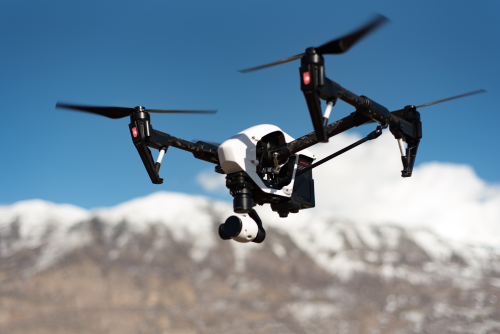
The fastest way for a drone business to look interchangeable is to say yes to everything. The fastest way to kill margin is to niche too loosely, then compete on flight time and price instead of results. How to choose the right niche without looking generic or undercutting your value comes down to defining a buyer, a problem, and a repeatable deliverable clearly enough that clients see expertise, not just access to a drone.
Quick Take
- A strong drone niche is not just an industry. It is a specific buyer, problem, deliverable, and outcome.
- “We do aerial photography, video, inspections, mapping, and events” sounds flexible, but to buyers it often sounds replaceable.
- The best niches usually have repeat demand, measurable business value, and a compliance burden you can realistically manage.
- Start with one core niche and one adjacent service, not ten disconnected offers.
- Test a niche with real buyer conversations and small paid projects before rebuilding your whole brand around it.
- Price around workflow, risk, processing, and decision value, not just minutes in the air.
Why most drone businesses look generic
Most drone operators describe what they fly, not what they solve.
That creates a problem immediately. Buyers are rarely shopping for “drone services” in the abstract. They are shopping for:
- faster property marketing
- clearer construction updates
- safer first-look inspections
- regular site documentation
- campaign-ready content
- better visibility on hard-to-access assets
If your positioning says the same thing as everyone else, buyers default to comparing you on only three variables:
- price
- speed
- portfolio style
That is where undercutting starts.
Generic positioning usually shows up in a few familiar ways:
- a long menu of unrelated services
- broad phrases like “aerial solutions” or “premium drone content”
- no clear buyer type
- no mention of what the client actually receives
- no sign that you understand the client’s workflow, deadlines, or risk
A hotel marketer, a real estate broker, a construction project manager, and an infrastructure asset owner may all need drone work. But they are not buying the same service. If you market to all of them with the same promise, your offer becomes blurry.
What a strong drone niche actually looks like
A real niche is the intersection of four things:
- Buyer
- Problem
- Deliverable
- Outcome
A fifth layer often matters too: operating context.
That means your niche is stronger when it answers questions like these:
- Who buys this?
- What are they trying to decide, prove, or improve?
- What exactly do they need delivered?
- Why does it matter commercially?
- What kind of site, asset, or operating environment is involved?
Here is a simple formula:
We provide [deliverable] for [buyer] who need [outcome] on [asset or site type].
Examples:
- Monthly aerial progress reports for general contractors managing large build sites
- Marketing-ready aerial photo and video packages for commercial property teams leasing industrial sites
- Condition-capture flights for facilities teams planning roof and facade maintenance
- Recurring aerial content for resorts and destination brands launching seasonal campaigns
Notice what these do not say. They do not lead with drone model, camera specs, or generic creativity claims.
They tell the buyer, “This service was built for your workflow.”
Choose the kind of business you want before you choose the niche
Some niches look attractive on social media but create weak businesses. Others look less glamorous but produce steadier revenue.
In practice, most drone service niches fall into one of these lanes:
Creative content niches
Examples include real estate, hospitality, tourism, brand campaigns, and creator content.
Good fit if you want:
- quicker portfolio building
- shorter sales cycles
- visually driven work
- lighter reporting requirements
Tradeoff:
- often more crowded
- easier for buyers to compare visually
- more price pressure if you do not specialize further
Documentation and reporting niches
Examples include construction progress, site updates, asset documentation, and recurring property overviews.
Good fit if you want:
- repeat work
- retainer potential
- more operational consistency
- less reliance on trend-driven creative style
Tradeoff:
- you need dependable process
- buyers care about reliability more than flashy footage
- site access, scheduling, and reporting matter a lot
Technical data and inspection niches
Examples include mapping, stockpile measurement, thermal capture, and asset-condition workflows.
Good fit if you want:
- stronger differentiation
- more workflow depth
- higher perceived business value
Tradeoff:
- more software, processing, and quality control
- more responsibility around accuracy and interpretation
- some outputs may require licensed specialists or local sign-off
If you choose a niche that does not match how you want to work every week, you will drift back into generic selling.
A simple scorecard for evaluating a niche
Before you commit to a niche, score it honestly.
| Filter | What to ask | Strong signal | Warning sign |
|---|---|---|---|
| Demand | Are buyers already spending money on this problem? | Existing budgets, clear need, active competitors | Buyers say it is “nice to have” |
| Repeatability | Can the same client buy again? | Monthly, quarterly, seasonal, or multi-site work | Mostly one-off jobs |
| Decision value | Does the output help a real business decision? | Affects sales, planning, maintenance, reporting, or safety | Mostly aesthetic with no clear business impact |
| Access to buyers | Can you actually reach decision-makers? | Clear local market, referrals, industry contacts | Long procurement maze with no entry point |
| Operational fit | Can you deliver well with your current skills and workflow? | You can start credibly now | Requires major capability you do not yet have |
| Compliance load | Can you manage the legal and site requirements? | Manageable permissions, insurance, and safety process | Frequent high-restriction sites or specialist obligations |
| Differentiation | Can you explain why you are a better fit than a generic pilot? | Relevant background, process, speed, reporting, or niche portfolio | Your only claim is “high quality footage” |
Give each niche a score from 1 to 5.
As a rule, be cautious if a niche scores low on repeatability, decision value, and differentiation. Those are the niches that often force operators into constant selling and price discounting.
A practical process to choose the right niche without boxing yourself in
1. Start with your unfair advantages
Do not start with “What niches exist?” Start with “What can I credibly do better than a random pilot with similar gear?”
Your advantage might be:
- an editing background
- experience in construction, engineering, surveying, or marketing
- local relationships with brokers, resorts, or builders
- strong reporting and client communication
- fast turnaround
- multilingual ability in a regional market
- comfort on industrial sites
- FPV capability for specific indoor or cinematic workflows
The best niche often sits where your skills and the market’s problem overlap.
2. Build a shortlist of three niche options
Pick three realistic candidates, not ten fantasy ones.
For each, write down:
- buyer type
- problem solved
- deliverable
- frequency of need
- how buyers currently solve it
- what makes your offer better or easier to buy
Example shortlist:
- Commercial property marketing for brokers and developers
- Monthly construction progress reporting for contractors
- Resort and hospitality campaign content for seasonal marketing teams
This keeps your evaluation grounded.
3. Talk to buyers before you rename your business
A niche should be validated in conversations, not imagined from competitor websites.
Ask prospects or contacts questions like:
- What are you using aerial capture for today?
- How often does this need come up?
- What format do you actually need: photos, short video, maps, reports, measurements?
- What slows you down with current vendors?
- What makes this hard to approve internally?
- What would make this easy to buy again?
You are looking for patterns.
If every conversation becomes a custom request with no repeatable scope, the niche may be too loose. If multiple buyers describe the same recurring problem, you are getting closer.
4. Test with paid pilot projects
Avoid rebuilding your whole website around a niche after one exciting inquiry.
Instead, run small paid tests.
A good pilot offer is:
- clearly scoped
- limited in deliverables
- profitable enough to respect your time
- designed to reveal workflow friction
For example:
- one construction update package with photos, short clip, and summary layout
- one commercial property marketing package for a broker’s listing launch
- one asset-condition capture visit for a facilities team’s maintenance review
Paid pilots tell you more than compliments ever will. They show whether the niche supports scheduling, margins, repeat work, and referrals.
5. Choose a core niche and one adjacent niche
This is where many operators get stuck. They think choosing a niche means rejecting all future work.
It does not.
A better structure is:
- Core niche: the service you want to be known for
- Adjacent niche: a closely related offer that uses similar workflow, buyers, or deliverables
Examples:
-
Core: monthly construction progress reporting
Adjacent: completed-project marketing capture -
Core: commercial property aerial marketing
Adjacent: developer site progress and pre-launch visuals -
Core: facilities condition-capture flights
Adjacent: recurring asset documentation across multiple locations
This lets you stay focused without becoming fragile.
6. Rewrite your positioning so it sounds specific, not small
Once you have real evidence, tighten your message.
Your homepage, proposal, and outreach should answer:
- who you serve
- what you deliver
- why it matters
- what kind of work you are best suited for
A strong position sounds like this:
- We help contractors document project progress with repeatable aerial reporting packages
- We create campaign-ready aerial content for hospitality brands and destination properties
- We support commercial property teams with fast-turn aerial visuals for listings, launches, and site overviews
That is narrower than “drone services,” but it is still commercially useful.
Generic vs specific positioning examples
| Generic | Better | Why it protects value |
|---|---|---|
| We do drone photography for real estate | Aerial photo and video packages for commercial brokers marketing industrial, retail, and mixed-use sites | Names the buyer and asset type |
| We offer drone inspections | First-look roof and facade condition capture for facilities teams planning maintenance and contractor scope | Focuses on workflow, not buzzwords |
| We do mapping services | Recurring site maps and stockpile measurement support for quarry, earthworks, and development teams | Connects deliverable to repeat use |
| We make tourism videos | Seasonal aerial content for resorts, tour operators, and destination marketers launching campaigns | Ties service to marketing calendar |
| We do FPV filming | Indoor and property walkthrough FPV capture for venues, showrooms, and developers promoting completed spaces | Makes FPV a business use case, not a style label |
How to price your niche without undercutting your value
The biggest pricing mistake in drone services is acting as if the flight is the product.
It is not.
The product is the finished outcome: the approved shots, the edited asset set, the stitched site map, the recurring progress package, the report-ready visuals, the usable data.
Your quote should usually account for more than airtime:
- pre-job planning
- site review and coordination
- travel and mobilization
- flight operations
- post-processing or editing
- reporting, file organization, and delivery
- revisions
- archive or data-handling needs
- compliance and administrative overhead
If you only price “per flight” or “per hour,” you hide most of your work and invite clients to compare you against the cheapest available pilot.
Better ways to protect margin
-
Set a minimum deployment fee
Even simple jobs create planning, travel, setup, and admin time. -
Package by outcome
Sell a listing launch package, a monthly progress package, or an asset review package instead of loose hourly flying. -
Create tiers around complexity
Basic, standard, and premium works better when the differences are clear: turnaround time, number of deliverables, reporting depth, or recurring frequency. -
Discount for efficiency, not desperation
If repeat clients reduce your acquisition and setup cost, reward that through retainers or recurring packages. Do not slash rates just to “win the job.” -
Charge separately for extra complexity
Rush delivery, remote travel, additional crew, multiple sites, difficult access, special processing, or expanded usage rights should not be absorbed silently.
A useful rule: if a client would face real cost, delay, or confusion without your output, do not price like you are just renting them drone minutes.
Safety, legal, and compliance realities that should shape your niche
Commercial drone niches are not just marketing choices. They have operational consequences.
Before committing to a niche, verify what applies in the places you plan to work:
- commercial registration or pilot credential requirements
- local airspace restrictions and authorization needs
- site-specific permissions from landowners, venues, or facility operators
- privacy and data-handling expectations
- insurance requirements
- industry-specific safety procedures, inductions, or client paperwork
A few important cautions:
- A client hiring you does not automatically mean the flight is legally allowed.
- Urban centers, infrastructure sites, ports, industrial plants, event venues, and areas near airports can add restrictions or approval delays.
- Mapping, measurement, thermal, or condition-related outputs may carry expectations about accuracy, calibration, or professional interpretation. In some markets, boundary, survey, engineering, or insurance-related deliverables may require licensed professionals or additional sign-off.
- Cross-border work adds extra friction around travel, batteries, equipment, customs, and data policies. Verify before promising destination work.
If a niche depends on sites you cannot reliably or legally operate in, it may be a poor core niche even if the rates look attractive.
Common mistakes when choosing a drone niche
1. Choosing the niche by drone model
Clients rarely care that much about your aircraft. They care whether you can solve their problem reliably.
2. Confusing an industry with a niche
“Construction” is not precise enough. Construction marketing, progress reporting, and measurement support are different businesses.
3. Niching too early on no evidence
One interesting job is not a niche. Repeated demand is.
4. Offering bargain pricing to build a portfolio
A few strategic tests are fine. Living in discount mode trains the market to treat you as cheap labor.
5. Ignoring the non-flight work
Editing, reporting, file delivery, permissions, scheduling, and client communication are often where value is created.
6. Chasing only exciting work
The most profitable niche is not always the most cinematic. Boring recurring jobs often fund the creative ones.
7. Trying to look broad so you do not miss opportunities
This usually backfires. Clear positioning attracts better-fit inquiries, and you can still accept selective adjacent work.
FAQ
Should I choose one niche if I am just starting out?
Choose one core niche and one closely related adjacent offer. That keeps your message clear while giving you room to learn what the market actually buys.
Is residential real estate a bad niche?
Not necessarily, but it is often crowded and price-sensitive. It usually becomes stronger when you specialize further, such as luxury homes, developers, commercial property, or fast-turn packages for specific agent types.
Should I niche by industry or by deliverable?
Usually by both. Industry alone is too broad, and deliverable alone can sound generic. The sweet spot is buyer plus problem plus deliverable.
Can I choose a niche without expensive gear?
Often yes. In many service niches, reliability, process, editing, reporting, and communication matter more than owning the newest aircraft. Some technical niches do require stronger workflow capability, but not every buyer is shopping for flagship hardware.
How narrow is too narrow?
It is too narrow when there are too few buyers, too little repeat demand, or too much geographic spread to make sales efficient. If you can only name a handful of potential clients and they buy once a year, widen one layer.
What if my local market is small?
Pick a niche that can travel regionally, be sold remotely, or be supported through partnerships. Another option is to niche by buyer type while serving a broader area instead of trying to dominate one tiny local segment.
How do I raise prices after choosing a niche?
Tighten the offer first. Show clearer deliverables, process, turnaround, and business value. Raising rates without improving how you position and package the service usually leads to resistance.
When should I fully rebrand around a niche?
When you have proof: similar clients, repeatable scope, solid margins, and enough portfolio examples to support a clear promise. Until then, test and refine quietly.
The next move
Pick the niche where the buyer’s problem is expensive, your deliverable is repeatable, and your workflow can be trusted. Then describe that service so clearly that clients understand why hiring you is different from hiring a generic pilot. If your offer can be explained in one sentence, sold without racing to the bottom, and delivered consistently at a healthy margin, you have found the right niche.
