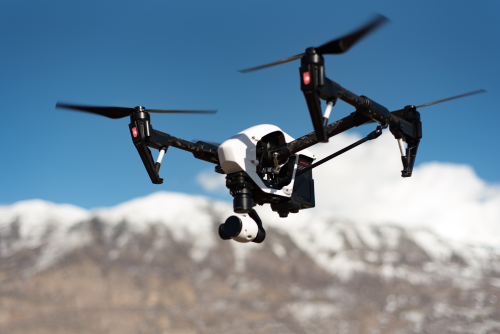
Local SEO for drone services should not turn your business into another “affordable aerial photography” listing with copied city pages and vague promises. The operators who win better local clients show clear use cases, proof from nearby work, and enough operational credibility that buyers trust the quote before they compare rates. If you want to learn how to do local SEO for drone services without looking generic or undercutting your value, build your visibility around outcomes, geography, and proof, not commodity language.
Quick Take
If you only remember a few things, make them these:
- Pick 2 to 4 profitable drone service lines before you do keyword research.
- Build strong service pages first, then create location pages only where you have real proof and real demand.
- Use local SEO to show trust, not to scream “cheapest.”
- Optimize your business listing, collect detailed reviews, and publish service-specific case studies.
- Write copy around buyer outcomes such as inspection clarity, approval support, marketing impact, or reporting speed.
- Qualify leads with forms and calls so your SEO brings better jobs, not just more inquiries.
- Never promise flights, turnaround times, or site access you may not legally or safely deliver.
| Area | Generic approach | Better for a higher-value drone service |
|---|---|---|
| Headline | “Affordable drone services in [city]” | “Aerial inspections and media for property, construction, and tourism teams in [region]” |
| Location pages | 20 thin pages with swapped city names | A few real location pages with local proof, examples, and operational context |
| Portfolio | One cinematic showreel | Service-specific examples: roof defects, progress reports, hotel visuals, map outputs |
| Reviews | “Great service” | Reviews that mention project type, area served, turnaround, and result |
| Pricing | Compete on lowest hourly rate | Package around outcome, planning, compliance, mobilization, processing, and delivery |
| Call to action | “Get the best price” | “Request a scope, flight plan, and delivery quote” |
Why most local SEO for drone services feels cheap
A lot of local SEO advice comes from industries where the buyer mainly wants proximity and convenience. Drone work is different.
Most serious buyers are not just asking:
- Are you nearby?
- Are you cheap?
- Can you fly tomorrow?
They are also asking:
- Have you done this kind of project before?
- Can you work safely at this site?
- Do you understand the deliverable we actually need?
- Can you coordinate with our team, timeline, and approval process?
- Will the footage, images, map, or report be usable for the job?
That is why local SEO for drone services should be treated as a trust-and-fit system, not just a map ranking exercise.
If your website says you do weddings, roof inspections, agriculture mapping, tourism video, construction progress, and search support across 40 cities, you may look broad, but you also look interchangeable. Generic visibility usually creates generic leads. Generic leads usually push harder on price.
The goal is not to look big. The goal is to look relevant.
1. Choose a market position before you chase keywords
Before you touch titles, pages, or listings, answer three questions:
- Which services actually make good money?
- Which buyers do you want more of?
- Which local area can you serve reliably and profitably?
For most operators, the best local SEO starts with a narrow position such as:
- Real estate and hospitality content in a metro area
- Roof, façade, or solar inspection for contractors and asset teams
- Construction progress reporting for developers and site managers
- Mapping support for civil, mining, or land teams
- Tourism and destination media for resorts, venues, or tourism boards
You do not need to pick one forever. But you should pick a primary commercial focus now.
A simple positioning filter
Prioritize service lines that score well on these points:
- Repeatable demand
- Strong average project value
- Clear deliverables
- Low revision chaos
- Reasonable travel burden
- Good compliance fit for your operation
- Portfolio proof you can show publicly
A lot of drone businesses make the mistake of optimizing for what sounds exciting instead of what sells well. “Drone photography” is broad. “Progress reporting for mid-rise construction sites” is much clearer. “Drone inspection” is broad. “Roof and façade imaging for insurers and contractors” is much clearer.
Clarity helps both SEO and pricing.
Think like the buyer, not the pilot
Buyers often do not search for the drone itself. They search for the job.
Examples:
- “Roof inspection company near me”
- “Construction progress photography”
- “Hotel promo video drone”
- “Solar inspection aerial imaging”
- “Site survey drone support”
That matters. If your site is built around pilot language, gear language, or cinematic language only, you can miss the commercial buyer entirely.
2. Build pages around buying intent, not cities alone
The strongest local SEO structure for a drone business usually looks like this:
Your core page stack
-
Homepage – Your main region – Your main service categories – The industries you serve – A clear next step
-
Core service pages – One page for each main revenue service – Example: drone roof inspections, construction progress, real estate aerial media, mapping support
-
Industry pages – Useful when buyer language differs by sector – Example: drone services for hotels, drone services for solar assets, drone services for developers
-
Case studies or project examples – Short, specific, local, and outcome-focused
-
Selective location pages – Only for real markets you actively serve and can prove
Build service pages before location pages
This is where many operators get it backward.
A page called “Drone Services in Barcelona” is usually weaker than a page called “Drone roof inspections in Barcelona” or “Construction progress drone reporting in Barcelona.” Why? Because the buyer intent is clearer.
Create location pages only when at least one of these is true:
- You already get recurring work there
- The area has enough search demand to justify its own page
- The operational conditions are meaningfully different
- You have examples, testimonials, or case studies tied to that area
- You have dedicated sales or service coverage there
If not, a strong regional service page can do more than ten weak city pages.
What a high-value location page should include
A real location page should do more than swap a place name into a template. It should include:
- The exact service offered in that area
- Common local site types
- Relevant operational realities such as dense urban areas, coastal wind, industrial corridors, or rural travel distance
- Nearby proof, examples, or anonymized case studies
- Expected deliverables
- Turnaround guidance
- A clear contact path for local buyers
For a global audience, “local” may mean city, metro area, district, county, province, island, or service corridor. Use the geography your buyers actually use.
Do not create fake branches
If you work from one base and travel, say so clearly. In many markets, service-area businesses can still rank well without pretending to have staffed offices everywhere. Follow the listing platform’s rules for addresses and service areas, and do not create branch profiles for virtual offices that do not genuinely qualify.
3. Write local pages that support premium pricing
The best local SEO pages do not just rank. They pre-sell your value.
Lead with the business result
Weak copy:
- “Professional drone pilot in [city]”
- “Affordable aerial photography”
- “High-quality drone services for all occasions”
Stronger copy:
- “Aerial roof and façade inspections for contractors and asset teams in [region]”
- “Monthly construction progress reporting with site-ready image delivery”
- “Drone photo and video packages for hotels, resorts, and destination brands”
Notice the difference. The stronger version tells the buyer:
- what you do
- who it is for
- where you work
- why it matters
Show deliverables, not just talent
Many drone websites lean too hard on visuals and not enough on business outputs.
Depending on your service, your page should explain things like:
- number and type of images or clips
- edited vs raw delivery
- reporting format
- map or model output
- annotation or defect-marking options
- turnaround expectations
- revision limits
- site coordination requirements
That protects value because you stop sounding like a person with a drone and start sounding like a service provider with a process.
Add local proof that feels real
Useful proof includes:
- case studies from nearby jobs
- sector-specific testimonials
- before-and-after examples
- site types you have handled
- weather or logistics experience relevant to your area
- named neighborhoods or regions if confidentiality allows
If client confidentiality matters, anonymize intelligently. “Industrial roof inspection for a logistics facility in the western port district” is still stronger than a generic claim.
Use trust signals carefully
Trust signals can help conversion, but only if they are current and accurate. Depending on your market, these might include:
- required aviation approvals or registrations
- current insurance cover
- safety procedures
- risk assessment process
- experience with specific site environments
- post-processing workflow
- secure delivery process for sensitive data
Only state what you can verify today. If laws or requirements vary by country, region, or project type, say that site permissions and approvals are checked case by case.
Qualify with your call to action
Your contact form should do some filtering for you.
Ask for:
- project type
- site location
- deliverable needed
- deadline
- recurring or one-off
- any known site restrictions
- whether the client controls the site or needs access coordination
That single step improves lead quality and reduces price-shopping.
4. Strengthen map visibility with profiles, reviews, and local authority
For many markets, your business listing is the front door of local SEO. On Google, that means Google Business Profile. In other markets, there may be additional map or business platforms that matter too.
Optimize your business profile around your real offer
Keep it simple and accurate:
- Choose the primary category that best matches your main revenue service
- Add secondary categories only when they are genuinely relevant
- Write a short description that matches your core positioning
- Set your service area honestly
- Upload recent work examples by service line
- Keep phone, email, hours, and contact method current
Do not fill your profile with random skyline shots if you mainly sell inspection or mapping work. The images should support the kind of project you want more of.
Ask for better reviews, not just more reviews
A review that says “great job” helps a little. A review that says “delivered annotated roof images for our insurance assessment within 24 hours” helps much more.
You should never script fake reviews. But you can guide clients toward useful detail by asking them to mention:
- the project type
- the location or area served
- what you delivered
- how the process felt
- the result or business impact
This helps both rankings and conversion.
Respond like a business, not a hobby page
Reply to reviews and inquiries professionally. Serious local buyers notice response quality.
A good response shows:
- professionalism
- clarity
- appreciation
- service relevance
It also signals that your business is active.
Build local authority from real relationships
For drone services, strong local authority often comes from practical partnerships, not random SEO tricks.
Useful sources include:
- local builders and developers
- roofers and solar installers
- real estate agencies
- tourism and hospitality partners
- event venues
- surveyors and engineering firms
- local business directories that are actually used
- chambers, trade groups, and professional associations
- regional media or business publications
If someone regularly refers work to you, there should often be a digital trace of that relationship somewhere.
Low-quality directory spam is not the answer. One trusted local industry mention can be worth more than dozens of weak listings.
5. Use lead qualification and measurement so SEO improves margin
Ranking is not the goal. Profitable work is the goal.
A local SEO program is working when it improves these business metrics:
- close rate
- average project value
- repeat work
- travel efficiency
- gross margin
- speed from inquiry to booking
- percentage of leads that match your preferred service lines
How to avoid attracting bargain-only leads
If every page pushes “cheap,” “lowest cost,” or “best price,” do not be surprised when every inquiry starts with a rate negotiation.
Instead, position around:
- defined deliverables
- fast but realistic turnaround
- safe site planning
- clear communication
- repeatable reporting
- industry familiarity
- reliable post-production and handoff
Should you put prices on the site?
Sometimes. But do it carefully.
Good uses of pricing:
- a minimum engagement fee
- “starting from” pricing for standardized creative packages
- clear add-ons for editing, travel, or rush delivery
- package-based pricing for repeatable work
Risky uses of pricing:
- a generic hourly rate with no scope context
- broad public pricing for complex regulated work
- prices that ignore travel, weather delays, permissions, processing, or revisions
If your projects vary widely, a “request a scope and quote” flow is usually better than a simplistic rate card.
Track by service page, not just by website total
You want to know which pages attract good work.
At minimum, track:
- inquiries by service page
- inquiries by location page
- phone calls or form submissions from your business profile
- booked jobs by source
- average value by service type
That is how you learn whether “real estate aerial video” is flooding you with low-margin rush jobs while “roof inspection drone services” is quietly bringing better clients.
Compliance, safety, and operational limits to state clearly
Local SEO should never promise what safe or legal operations may not allow.
For drone service businesses, your marketing copy should respect real-world limits:
- Airspace access may require checks, approvals, or restrictions depending on location
- Some sites need landowner consent, venue permission, inductions, or safety coordination
- Flights near people, roads, events, infrastructure, or sensitive locations may have extra limits
- Weather, visibility, and site conditions can affect scheduling and deliverables
- Privacy and data-handling obligations can vary by country, sector, and client
- Mapping, inspection, and survey-related outputs may depend on methodology, control, and sensor choice
A few practical rules:
- Do not advertise risky or restricted flights as if they are routine
- Do not promise exact turnaround for every job regardless of conditions
- Do not claim certifications, approvals, waivers, or insurance cover unless current
- Do not publish sensitive project imagery without permission
- Tell clients that site-specific permissions and aviation requirements are verified before flight
That protects your business and builds credibility with serious buyers.
Common mistakes that make drone businesses look generic
1. Creating thin city pages at scale
If every page says the same thing with a different city name, the pages are weak and the brand looks cheap.
2. Targeting broad keywords instead of profitable intent
“Drone photography” may be too vague. “Hotel drone content” or “roof inspection drone service” often qualifies better.
3. Showing only cinematic footage
A beautiful reel can help creative buyers. It does very little for inspection, mapping, or progress reporting unless it is supported by real examples.
4. Mixing unrelated services on one page
Real estate, industrial inspection, weddings, agriculture, and search support on one page confuses buyers and weakens relevance.
5. Competing on price before explaining scope
If you sound like a commodity, buyers will shop you like one.
6. Ignoring multilingual search behavior
In many regions, buyers search in more than one language. If that applies to your market, use properly written local-language pages, not awkward direct translations.
7. Chasing vanity metrics
More impressions are meaningless if the wrong people are calling.
8. Forgetting response speed
Local SEO does not stop at ranking. If you take two days to reply, a well-ranked page can still lose to a faster competitor.
FAQ
Do I need a separate page for every city I serve?
No. Start with strong service pages and create location pages only for places where you have real demand, proof, and operational relevance. One solid regional page is often better than many weak city pages.
What matters more for local SEO: my website or my business profile?
Both matter. Your business profile often drives map visibility and first contact, while your website does the heavier work of proving expertise, explaining deliverables, and qualifying leads. If your profile gets the click and your site feels generic, you still lose.
Should I publish prices for drone services?
Only if the work is standardized enough to price responsibly. “Starting from” pricing or minimum engagement fees can help pre-qualify leads. Avoid simplistic pricing for complex jobs that depend on permissions, travel, processing, crew, or site risk.
Can one drone company rank for both creative work and technical inspection work?
Yes, but not on one vague page. Build separate service pages, separate proof, and separate reviews where possible. Creative buyers and inspection buyers look for different signals.
What kind of review helps the most?
The best review mentions the service type, the area served, the deliverable, and the result. A review that says you were easy to work with, delivered on time, and solved a real client problem is much stronger than a generic compliment.
How long does local SEO usually take for a new drone business?
It depends on competition, your market, the quality of your website, and how much proof you already have. In most cases, think in months of steady improvement, not days. A better profile, stronger pages, and a handful of high-quality reviews can move things meaningfully, but local SEO is not instant.
Should I build separate websites for every region or country?
Usually no. One strong domain with clear service and location structure is easier to manage. Separate sites make more sense when brands, legal entities, languages, or markets are truly distinct.
What is the best first page to build if I only offer one main service?
Build one excellent service page for your main offer in your main market. Make it specific, local, and proof-heavy. That will usually outperform a broad homepage trying to say everything.
Final step
If you want better local SEO for drone services without looking generic or undercutting your value, stop marketing “a drone pilot” and start marketing a reliable business outcome in a defined area. Pick the services worth protecting, build pages around real buyer intent, add local proof, and qualify inquiries before price becomes the whole conversation.
