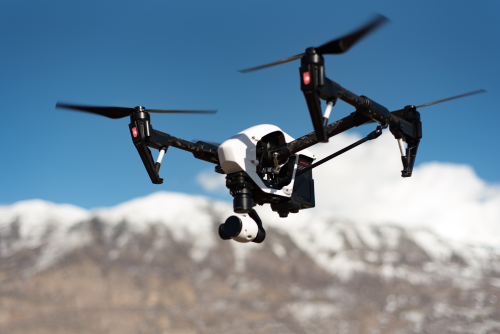
If you want to learn how to do local SEO for drone services, start with one rule: rank for the jobs buyers already need, not for vague “drone pilot” traffic. The local SEO work that produces real revenue is usually simple: clear service pages, an accurate map profile, specific reviews, and proof that you can deliver safely and professionally. For most operators, the goal is not more clicks. It is more qualified quote requests from nearby clients who are ready to hire.
Quick Take
Local SEO for drone services works best when you treat it like a sales system, not a content hobby.
- Pick 2 to 4 services that people actually search for in your area.
- Build one strong page for each service before you write blog posts.
- Set up your business profile on the main map and search platforms used in your market.
- Ask happy clients for reviews that mention the service and the result.
- Add location pages only for places you truly serve and can write about in a useful way.
- Track calls, quote requests, booked jobs, and margin by service.
- Avoid fake addresses, copied city pages, and broad claims like “we fly anywhere.”
If you do those basics well, you will usually beat bigger competitors with messy websites and weak follow-up.
What local SEO means for drone services
Local SEO is how you show up when a buyer searches for a nearby solution. For a drone business, that can mean map results, local organic search results, and branded searches after someone hears about you elsewhere.
Typical high-intent searches look like this:
- drone roof inspection near me
- real estate drone photographer in my city
- construction drone progress reporting
- solar farm drone inspection
- venue aerial video service
This matters because drone services are often bought locally, on a deadline, and with some risk. The client is not just buying flight time. They are buying a deliverable, a result, and confidence that you can operate responsibly.
Search engines and maps platforms generally reward some mix of:
- relevance: how well your page or profile matches the query
- proximity: how close you are to the service area
- reputation: reviews, mentions, and authority signals
- website quality: whether your site clearly explains the service and makes it easy to contact you
Not every drone niche relies on local SEO equally. Some jobs come mostly from procurement, referrals, or direct outreach. Others win heavily from search.
Which drone services usually benefit most from local SEO
| Drone service | Local SEO potential | Best angle |
|---|---|---|
| Real estate listing media | High | Fast turnaround, local market knowledge, portfolio by property type |
| Roof, facade, solar, or asset inspection | High | Problem-solving pages focused on safety, reporting, and decision support |
| Construction progress monitoring | Medium to high | Regional pages plus recurring reporting workflow and stakeholder outputs |
| Hospitality, tourism, and venue media | Medium | Strong visuals, local familiarity, and clear deliverables for marketing teams |
| Events and weddings | Medium | Portfolio, venue familiarity, and realistic expectations around permissions and timing |
| Agriculture and land mapping | Medium | Regional use-case pages, data outputs, and operational range expectations |
| Enterprise surveying or public-sector work | Low to medium from local SEO alone | Credibility pages, case studies, certifications where required, and relationship-driven sales |
If your business is mostly enterprise, public safety, or long sales-cycle infrastructure work, local SEO should support credibility, but it probably will not replace direct business development.
Step 1: Choose the services worth ranking for
Most drone websites fail because they try to rank for everything at once. That creates weak pages and attracts low-quality leads.
Before you touch keywords, answer these five questions:
- Which service has a clear buyer?
- Which service has strong margin after travel, editing, insurance, permits, and admin?
- Which service can you scope and quote quickly?
- Which service can produce repeat work?
- Which service can you legally and safely deliver in your market?
For many solo operators, the best local SEO mix is usually 2 to 4 core services, such as:
- real estate media
- roof or solar inspections
- construction progress updates
- hospitality or venue content
That does not mean you can never take other jobs. It means your website should lead with the services that are easiest to explain, sell, and fulfill profitably.
A useful test is this: if someone lands on your site, can they tell in 10 seconds what outcomes you sell?
“Drone services” is too vague.
“Roof inspection drone imaging for contractors and property managers” is much better.
Step 2: Build a simple keyword and page map
Once you know your services, match each one to a page.
A simple local drone service site usually needs:
- a home page
- 2 to 4 service pages
- a contact or quote page
- a portfolio or case study section
- an about page with trust signals
- a few location pages if you truly serve multiple markets
A practical page structure
If you are a solo pilot serving one metro area:
- Home
- Real Estate Drone Photography
- Roof Inspection Drone Service
- Construction Progress Drone Reporting
- Portfolio
- About
- Request a Quote
If you serve a wider region:
- Keep the core service pages
- Add 3 to 5 location pages for your strongest nearby cities or districts
- Add case studies from those areas
If you travel nationally or internationally for work:
- Do not create dozens of thin city pages
- Focus on service pages, vertical pages, and proof
- Use local SEO mainly for your home market
- Use partnerships and direct outreach for destination work
How to think about keywords
You do not need a giant spreadsheet to begin. Start with combinations of:
- service
- buyer type
- location
- problem or outcome
Examples:
- real estate drone photography for agents in [city]
- roof inspection drone service in [city]
- monthly construction drone progress reports in [region]
- hotel aerial video production in [city]
The page should match the query. If the search is about roof inspections, send the visitor to a roof inspection page, not your home page.
Step 3: Set up your business profile on map and search platforms
For many local service businesses, the business profile is your fastest path to leads. In some markets, that will be Google Business Profile. In others, you may also need Apple, Bing, or regional map and directory platforms your buyers actually use.
Your profile should include:
- your real business name
- the most accurate primary category available
- a truthful service area
- phone and email that are monitored
- a short description of what you do and who you serve
- current hours
- recent project photos
- services listed clearly
- a link to the most relevant page on your website
Important rule: use real location data
Do not use fake offices, mailbox addresses, or borrowed locations just to look local. That creates trust problems and can damage your visibility if platforms suspend or flag the listing.
If you operate from home, use the platform’s service-area option where allowed, rather than pretending you have a public office.
Keep your basic business data consistent
Make sure your name, address, and phone number, often called NAP, are consistent across your website, directories, and profiles. Small inconsistencies are common, but avoid creating multiple versions of your brand.
Step 4: Create service pages that convert buyers, not just search engines
Your service pages are where local SEO becomes revenue.
A strong drone service page usually includes:
- a clear headline
- who the service is for
- the problem it solves
- what the client receives
- turnaround expectations
- what affects pricing
- proof of past work
- a simple call to action
What to include on every service page
Explain the output, not just the flight
Most buyers do not care about your propellers, batteries, or camera specs. They care about what lands in their inbox.
Instead of writing only about the flight, explain deliverables such as:
- edited stills for listings
- short marketing videos
- labeled inspection imagery
- recurring progress updates
- map outputs and visual reports
- stakeholder-ready summaries
Explain what changes the quote
You do not always need public pricing, but you should explain what drives the quote. For example:
- site size
- travel distance
- turnaround speed
- editing level
- special access needs
- crew requirements
- operational restrictions
- reporting complexity
That alone can reduce bad leads.
Add trust signals that matter
For commercial drone buyers, trust signals often include:
- proof of past work
- industry familiarity
- operational planning
- insurance or risk management approach where applicable
- authorizations, registration, or certification where required by law
- clear communication about scheduling and weather
Write in buyer language
Do not make every page sound like it was written for other pilots.
Bad example: – We capture cinematic 4K aerials with advanced gimbal stabilization.
Better example: – Get same-week aerial photos and short video clips for residential listings, developments, and commercial property marketing.
The second version tells the buyer what they get and why it matters.
Step 5: Add location pages only when they add real value
Location pages can work well for drone services, but only if they are genuinely useful.
A location page makes sense when:
- you regularly serve that area
- you have past work or examples from there
- local buyers have distinct needs
- the location is important enough to justify its own page
What a good location page includes
A strong location page might cover:
- the area you serve
- the types of clients you work with there
- the services most commonly requested there
- travel and scheduling expectations
- local project examples
- operational realities such as weather, density, access, or venue coordination
- the next step to request a quote
What to avoid
Do not create doorway pages, meaning thin pages made only to rank in many cities with nearly identical copy.
If the page is mostly the same text with a place name swapped in, it is probably not helping.
A simple rule: if you cannot write a useful, specific page for a city, do not publish it.
Step 6: Build reviews, case studies, and visible proof
Reviews are a major trust driver in local search. They also help you close leads after someone clicks through.
How to ask for reviews
The best time to ask is right after you deliver a job the client is happy with.
Keep the request simple:
- thank them for the project
- ask for a short review
- suggest they mention the service and result if they are comfortable
You do not need to give them a keyword script. In fact, overly scripted reviews look unnatural.
Good review themes include:
- fast turnaround
- clear communication
- safe and professional process
- useful outputs
- reliable scheduling
- good fit for a specific industry
Do not offer incentives or use filtering tactics that violate review platform rules.
Turn projects into case studies
Case studies are underrated for drone SEO because they help both ranking and conversion.
A useful case study includes:
- client type
- problem
- site conditions
- service delivered
- turnaround
- output
- result
Example: A construction company needed weekly aerial updates for stakeholders across a six-month build. You created repeat flight plans, delivered labeled stills and short summary clips, and built a predictable reporting cadence.
That story is much stronger than a random image gallery.
Step 7: Build local authority through partnerships and citations
Local SEO is not only on your website. Search platforms also look at the web’s overall picture of your business.
That means it helps to have mentions, listings, and relationships in the places your buyers already trust.
Good authority sources for drone operators
Depending on your niche, these may include:
- local business directories
- property industry associations
- builder and contractor networks
- hospitality and venue directories
- tourism or event vendor lists
- regional chambers of commerce
- creative partner sites
- local media features
For a drone business, some of the best link and referral opportunities come from real partnerships:
- real estate agencies
- roofers and solar installers
- architects
- surveyors
- production companies
- event planners
- venue managers
- inspection firms
If you can become the preferred aerial partner for businesses that already have customer flow, local SEO becomes much easier.
Avoid cheap link schemes
Buying low-quality links or submitting your business to hundreds of irrelevant directories rarely helps long-term. Focus on reputable, local, niche-relevant mentions.
Step 8: Turn traffic into booked work
Traffic is not the win. Booked jobs are.
Many drone websites leak revenue because the site does not make inquiry easy, or because the operator responds too slowly.
Your contact flow should be friction-light
Every main page should have one clear next step:
- request a quote
- book a call
- check availability
Your quote form should ask only what helps you qualify the lead, such as:
- name and company
- location of the job
- service needed
- project deadline
- property or site type
- expected deliverable
- any known access or permission issues
Do not make the form so long that people abandon it.
Speed matters
When a client needs local drone work, they often contact multiple providers. Fast, professional follow-up can beat a higher-ranked competitor.
Set a basic internal target such as:
- same-day response during working hours
- a clear quote window
- a short explanation of next steps
- weather and rescheduling expectations
If you get too many weak leads
Add qualification signals on the page:
- minimum project size
- service area limits
- expected turnaround
- deliverable tiers
- industries served
That helps protect margin.
Step 9: Measure revenue, not vanity metrics
If you only track rankings, you can fool yourself for months.
Track these instead:
- calls from business profiles
- form submissions by page
- booked jobs by service
- booked jobs by location
- close rate by source
- average margin by service type
- repeat clients
- reasons leads did not close
This tells you which pages deserve more attention.
A real estate page might bring more leads, while a construction progress page brings better margin. That changes where you invest.
A practical 90-day rollout
If you want a straightforward plan, use this:
Days 1 to 30
- clean up your business profile
- update home page messaging
- build 2 to 4 service pages
- simplify the contact flow
Days 31 to 60
- ask recent clients for reviews
- publish 2 to 3 case studies
- fix basic directory consistency
- add better photos and project proof
Days 61 to 90
- create your top location pages
- improve underperforming service pages
- track leads by service and area
- start outreach for local partnerships
That is enough to create momentum without turning SEO into a full-time job.
Compliance and operational risk: do not market work you cannot legally or safely deliver
Drone services sit close to regulation, permissions, privacy, and site risk. Your SEO should reflect that reality.
Do not promise:
- unrestricted flying in all locations
- guaranteed flights at any venue or site
- operations that may require extra approvals without saying so
- results that depend on access you do not control
Requirements vary widely by country, region, airspace, land use rules, privacy law, and client site policy. Before accepting work, verify what applies with the relevant aviation authority, landowner, venue manager, park authority, or local regulator.
Operational points worth addressing on your website
A short trust section can help both conversion and risk control. Cover points like:
- authorized, registered, or certified where required
- insurance or risk coverage where appropriate
- preflight planning and site assessment
- weather and rescheduling policy
- privacy and data handling approach
- process for checking restricted or sensitive locations
This does not need to be dramatic. It just needs to show that you operate professionally.
Should you do local SEO yourself or hire help?
For many drone operators, the first phase can be done in-house.
DIY makes sense if:
- you serve one main market
- you have 2 to 4 clear services
- you can write clear buyer-focused copy
- you will consistently ask for reviews
- you can spend a few hours each week improving pages and tracking leads
Hire a freelancer or consultant if:
- your site structure is confusing
- you need help with keyword mapping and page strategy
- your business profile has issues
- you want analytics and conversion tracking set up properly
- you have strong service delivery but weak lead flow
Consider an agency if:
- you run multiple crews or locations
- you need ongoing content, reporting, and technical SEO help
- you have enough margin to support a monthly retainer
- your growth depends on multiple regional markets
Red flags when choosing SEO help
Avoid providers who:
- guarantee a number-one ranking
- push fake locations
- suggest buying reviews
- create dozens of copy-paste city pages
- talk only about traffic and never about close rate or revenue
- do not ask how your sales process works
A good SEO partner should care about booked work, not just impressions.
Common mistakes drone businesses make with local SEO
1. Targeting “drone services” instead of real buying intent
Broad terms sound attractive but often convert poorly. Buyers search for outcomes.
2. Putting every service on one page
This confuses both search engines and buyers. Separate your core services.
3. Creating too many location pages too early
Five strong pages beat fifty weak ones.
4. Using a fake address
This can hurt trust and cause profile issues.
5. Publishing portfolio-only pages with almost no text
Beautiful media helps, but buyers also need scope, deliverables, timing, and trust signals.
6. Ignoring reviews
Many operators wait too long to ask, then wonder why competitors look more credible.
7. Failing to qualify leads
More traffic is not useful if it produces low-budget inquiries outside your service area.
8. Measuring clicks instead of booked revenue
If you do not know which page and service produce profitable jobs, you cannot improve intelligently.
FAQ
How long does local SEO take for a drone business?
Usually several months, not several days. Business profile improvements and reviews can help sooner, while service pages and location pages tend to take longer. Timing depends on your market, competition, website quality, and existing reputation.
Do I need a physical office to rank locally?
Not always. Many drone businesses operate as service-area businesses. The key is to use truthful location information and follow the platform rules in your market. Do not create fake offices.
Should I make a separate page for every city I serve?
Only if you can serve that city consistently and create a genuinely useful page for it. It is better to have a handful of strong location pages than many copied ones.
Which drone services usually respond fastest to local SEO?
Services with obvious local demand and clear outcomes tend to respond best, such as real estate media, roof or solar inspections, construction progress reporting, and venue or hospitality content.
Should I publish prices on my site?
If your pricing is highly variable, explain the factors that affect the quote instead of forcing a fixed price. If your jobs are standardized, even a starting price or package range can improve lead quality.
Can social media replace local SEO?
No. Social media helps with proof and brand awareness, but local SEO captures people who are actively searching for a provider. They work well together, but they do different jobs.
When should I hire SEO help?
Usually when your average project value is high enough to justify it, when you serve multiple areas, or when you cannot clearly see which pages and leads are producing revenue.
The next move
Pick your top three revenue services, build one serious page for each, clean up your map profile, and ask every happy client for a review. That is the core of local SEO for drone services. Do those basics well before you spend money on complicated SEO packages, because real revenue usually comes from clarity, proof, and fast follow-up, not from tricks.
