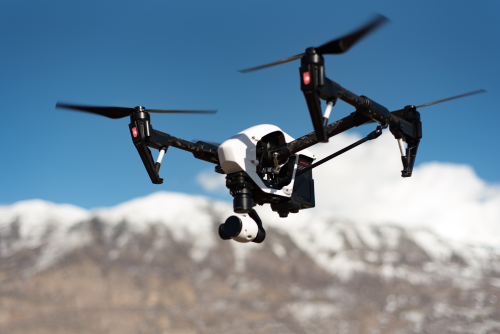
Landing your first paid drone job is usually less about flying talent and more about making a buyer feel safe saying yes. If you want to know how to land your first commercial contract, focus on a simple service, clear deliverables, lawful operations, and a buying process that feels easy for the client. Real revenue comes from repeatable work with margin, not from showing off your drone.
Quick Take
- Your first commercial contract should be simple, low-friction, and easy for a client to understand.
- The best early offers are usually visual services with obvious business value, such as property marketing, hospitality content, construction progress updates, or local business social media assets.
- Clients are not really buying “drone flying.” They are buying speed, clarity, safe execution, and usable deliverables.
- Quote based on the full job: planning, travel, flight time, editing, revisions, licensing, admin, and risk.
- Do not accept paid work until you have verified the local rules, the site permissions, your insurance fit, and the safety conditions.
- The goal of the first contract is not to win the biggest project. It is to build profitable proof, a process you can repeat, and a client who will refer or rebook you.
What a good first commercial contract looks like
A strong first contract has five traits:
- The buyer immediately understands why they need it.
- The scope is easy to define.
- The deliverables are easy to measure.
- The operational risk is manageable.
- The work can lead to repeat business.
That usually means avoiding highly technical, highly regulated, or high-liability jobs at the start. Just because a drone can do a task does not mean that task is a smart first sale.
Here is a practical way to think about beginner-friendly commercial work:
| Service type | Why it works as a first contract | What the client really wants | Main caution |
|---|---|---|---|
| Residential real estate marketing | Fast turnaround, clear visual value, easy to package | Listing photos, short promo clips, neighborhood context | Verify property access, privacy issues, and local flight rules |
| Short-term rental or hotel content | Strong visual impact, useful for websites and social media | Hero shots, amenities overview, short vertical edits | Many clients also expect ground footage, so define scope carefully |
| Construction progress documentation | Repeat visits create stable revenue | Consistent angles, dated visual records, clear updates | Site safety rules, access procedures, insurance, and crew coordination matter |
| Local business promo content | Many prospects, especially restaurants, venues, gyms, tourism brands | Short social-ready clips that help them market faster | Clients may assume full video production unless you set limits |
| Land or development marketing | Buyers need context that ground photos cannot show | Property overview, access points, surroundings | Do not imply survey-grade accuracy unless you are qualified for that work |
For most pilots, these are better first contracts than powerline inspections, thermal audits, engineering-grade mapping, or crowded event coverage.
What clients actually buy
Many new operators make the same mistake: they sell the aircraft.
Buyers do not care much about your prop size, transmission system, or the fact that you shoot in a certain codec unless it directly helps their outcome. What they care about is this:
- Can you safely and legally complete the job?
- Will the files be useful for their business?
- Will you show up prepared?
- Will the work be delivered on time?
- Do they understand exactly what they are paying for?
- Can they reuse the content without confusion?
- Will hiring you save them time, help them sell, or help them document something important?
That is why the best first offer is usually outcome-based.
Bad offer: – “I provide professional drone flying and cinematic footage.”
Better offer: – “I create 24 to 48 hour aerial photo and vertical video packages for property listings and short-term rentals.”
The second one is easier to buy because it speaks to a problem and a result.
A straightforward path to your first commercial contract
1. Pick one offer, not every possible service
Your first mistake can be trying to sell everything.
If your website, portfolio, or message says you do real estate, weddings, inspections, mapping, travel promos, FPV tours, agriculture, roof reports, and survey work, buyers will not know what to hire you for. You will also sound less credible.
Start with one offer that meets three tests:
- You can perform it confidently and safely now.
- The buyer can see the value quickly.
- The job can be scoped without endless custom work.
Good first-offer examples:
- Aerial photo and short-form video package for residential listings
- Monthly progress photo capture for small construction sites
- Social media content package for hotels, resorts, cafés, or local attractions
- Property overview content for land sales or vacation rentals
If you are an FPV pilot, be especially careful. FPV can be commercially valuable, but it is not always the easiest first contract because it often adds risk, planning complexity, and client expectations around complex indoor or close-proximity shots. For most operators, conventional stabilized aerial work is the easier first revenue path.
2. Build a minimum viable portfolio
You do not need a huge client roster to start. You do need proof that matches the service you are selling.
A useful starter portfolio can be as small as three relevant sample projects. The important part is relevance.
If you want real estate work, your portfolio should show:
- clean wide establishing shots
- property context
- stable movement
- good lighting choices
- delivered photo or video formats similar to what an agent would use
If you want hospitality work, show:
- approach shots
- exterior atmosphere
- amenity reveal shots
- clips that feel usable for website banners or short reels
If you do not have client work yet, build samples ethically:
- use your own property if suitable
- ask a friend, host, or local business owner for permission
- produce a sample project and clearly treat it as spec work
- never present unpaid test work as if it were a paid client commission
A strong minimum portfolio usually includes:
- 6 to 12 polished stills or 1 to 3 short edited videos
- one-line context for each project
- clear deliverables
- clean file naming and presentation
- work that looks like something a business could use tomorrow
You do not need a dramatic cinematic reel to land practical commercial work. In many sectors, buyers prefer boring but reliable proof over flashy editing.
3. Put your business basics in place before you pitch
The first contract often goes to the pilot who feels easiest to trust.
Before outreach, get your basic operating foundation ready:
- a business name or professional trading identity
- a simple invoicing method
- a proposal or quote template
- a contract or statement of work template
- a system for collecting deposits and final payment
- insurance that matches the type of work you want to do, where required or prudent
- a repeatable delivery method for final files
- a backup routine for footage and photos
- a clear communication process for scheduling, weather, and approvals
You do not need a giant brand system. You do need to look organized.
If you are still operating like a hobbyist who sends files through ad hoc messages and discusses payment casually, buyers will feel the risk.
4. Make your offer easy to buy
Most new operators create too much friction. They ask the buyer to imagine everything.
A better move is to package the work.
Your first offer should answer these questions in one page or one short message:
- Who is this for?
- What do they receive?
- How fast do they receive it?
- What is included?
- What is not included?
- What are the common add-ons?
- What happens if weather or access changes?
A simple packaged offer might look like this:
Example package structure
- For: real estate agents and short-term rental hosts
- Includes: aerial stills, short vertical edit, one revision round
- Turnaround: next business day or within an agreed window
- Limits: one property, standard daylight conditions, standard edit length
- Add-ons: extra location, rush delivery, extra edits, recurring monthly content
- Excludes unless agreed: ground filming, talent, voiceover, advanced retouching, paid ad cutdowns
This makes you easier to hire because the client can immediately picture the transaction.
5. Prospect in the right order
You do not need paid ads to land your first contract. You need focused outreach.
Start in this order:
- Warm network
- Adjacent professionals
- Local direct outreach
- Selective partnerships
Warm network
Tell people what specific problem you solve now. Not “I have a drone business.” Instead say something like:
- “I create aerial photo and short video packages for listings and rentals.”
- “I help builders document project progress with repeatable monthly drone visits.”
That is clearer and more referable.
Adjacent professionals
Some of the best first contracts come through people who already serve your target client, such as:
- real estate photographers
- marketing agencies
- social media managers
- web designers
- builders and project managers
- tourism marketers
- video production teams that need aerial subcontracting
These partners often care less about your social following and more about whether you are dependable.
Local direct outreach
The best outreach is specific. Generic messages are ignored.
Bad: – “Hi, I offer drone services for any business.”
Better: – “I noticed your property listings use strong interior shots but no aerial context. I produce next-day aerial photo and short-form video packages for agents and rental hosts. If helpful, I can send a one-page sample of what that would look like for one of your current listings.”
That works because it is relevant, low-pressure, and easy to reply to.
Partnerships
A local photographer, agency, or creator may already have clients but not offer drone work. Becoming the reliable aerial specialist for them can be faster than chasing every end client yourself.
6. Run a discovery call like a service business, not a pilot
The discovery call is where beginners either sound like professionals or hobbyists.
Your job is not to list drone features. Your job is to understand the business need and reduce risk.
Ask questions like:
- What is the footage or photography for?
- Where will it be used?
- Who needs to approve it?
- What is the deadline?
- What are the must-have shots?
- Is the site private property, public land, a construction site, or a venue with extra rules?
- Will people, vehicles, or active operations be present?
- Are there any access restrictions or safety inductions?
- Do you need stills, edited video, raw files, or all three?
- Will the assets be used once, seasonally, or across ongoing campaigns?
You are also qualifying the client.
If the job is vague, rushed, legally questionable, or clearly outside your skill level, saying no is often the best business move.
How to quote without undercutting yourself
The easiest way to lose money is to price only the flight.
A commercial drone job includes more than airtime. Even small projects usually involve:
- planning and admin
- site review
- travel
- setup and safety checks
- capture time
- data management
- editing
- exports
- communication
- revisions
- invoicing and follow-up
That is why “hourly drone flying” is often a weak pricing method on its own.
Pricing models that work for first contracts
| Pricing model | Best for | Why it works | Watch out for |
|---|---|---|---|
| Package pricing | Real estate, hospitality, local promo content | Easy for clients to understand and compare | Can squeeze margin if scope is too loose |
| Half-day or day rate | Custom shoots, agencies, uncertain scope | Protects your time when deliverables are flexible | Clients may still expect heavy editing unless stated |
| Monthly retainer | Construction progress, recurring social content, tourism refreshes | Builds predictable revenue and lowers sales effort | Requires strong consistency and scheduling discipline |
| Per-site or per-visit pricing | Multi-location clients, documentation work | Easy to scale operationally | Travel and editing can be underestimated |
What to include in a quote
A clear quote should spell out:
- deliverables
- number of locations
- expected shoot duration
- turnaround time
- revision limits
- travel terms
- weather rescheduling policy
- licensing or usage rights
- payment schedule
- expiration of quote
If the client wants a fast turnaround, multiple outputs, or broad usage, that should affect the price.
The simplest mindset is this: charge for the outcome, but build the price from the effort, responsibility, and risk behind that outcome.
Should you discount the first job?
You can offer an introductory rate if it is strategic, but avoid desperate underpricing.
A smart first-job discount is:
- limited in scope
- tied to a defined package
- still profitable
- used to gain a testimonial, case study, or recurring relationship
A bad discount is doing a custom job at a loss just to say you were hired.
“Real revenue” means the job teaches you something and leaves you with margin, not just footage.
Before you say yes: compliance, safety, and insurance checks
Commercial drone work is regulated differently around the world. Some countries still distinguish recreational and professional use. Others regulate based on risk category, aircraft type, airspace, or operational conditions.
Before accepting paid work, verify the rules that apply in the country and location where you will fly. At minimum, check:
- whether your planned operation requires pilot competency, certification, or authorization
- whether the operator or aircraft must be registered or marked
- whether remote identification or similar requirements apply
- whether the site is in controlled, restricted, sensitive, or prohibited airspace
- whether you have landowner or venue permission to take off and land
- whether special rules apply to parks, beaches, heritage sites, urban centers, or infrastructure
- whether your insurance covers the type of job, aircraft, and location
- whether privacy or data-protection rules affect how imagery is captured, stored, or shared
- whether additional local site rules apply, especially on construction sites, resorts, stadiums, or government property
Also think operationally, not just legally:
- Are there uninvolved people nearby?
- Is traffic, machinery, or water creating extra risk?
- Do you have a safe takeoff and landing area?
- Is weather acceptable for both safety and image quality?
- Do you have a backup aircraft or at least a backup plan if equipment fails?
If a client says, “Just fly it quickly, nobody will care,” that is a red flag. A rushed illegal or unsafe flight can cost far more than the invoice is worth.
Deliver the job in a way that gets you hired again
Winning the first contract matters. Turning it into repeat revenue matters more.
On shoot day
Arrive with a process:
- confirm access and contact person
- review the shot list
- reassess weather and conditions
- check site hazards
- confirm any no-fly or no-go areas
- run your equipment checks
- communicate timing clearly with the client
Calm professionalism is a selling point.
On delivery
Your delivery should feel organized and commercial-ready.
That means:
- files in clearly named folders
- clean export formats
- no unnecessary clutter
- simple delivery notes
- revision process stated once
- on-time handoff
After delivery
This is where many pilots leave money behind.
Ask three questions:
- Did the deliverables meet the intended use?
- What would make the next shoot even more useful?
- Do you have other locations, listings, or recurring content needs?
Then ask for one asset you can reuse:
- a testimonial
- permission to include the work in your portfolio
- a referral to another team member or business owner
- approval to propose a recurring package
The second sale is often easier than the first if you ask at the right moment.
Common mistakes that keep good pilots from earning real revenue
Selling the drone instead of the result
Clients hire outcomes. Your aircraft matters less than the business value created.
Underpricing because you want the job badly
Cheap pricing attracts difficult clients and trains buyers to expect too much for too little. It also hides whether the business is actually viable.
Saying yes to work that is too advanced
High-consequence inspections, engineering claims, thermal analysis, crowded live events, and complex indoor FPV shoots are not ideal starter jobs for most pilots.
Using a flashy reel instead of relevant proof
A beautiful travel montage does not necessarily convince a property manager, builder, or hotel marketer that you can solve their problem.
Skipping written scope
If it is not written down, it will expand. Clarify deliverables, revisions, timing, usage, and weather terms.
Ignoring editing time
The flight may be 20 minutes. The job may still be half a day or more once planning, travel, culling, editing, and delivery are included.
Failing to follow up
Many first contracts are won on the second or third touch, not the first message.
Forgetting that repeatability matters
A job that looks exciting but cannot be repeated is often less valuable than a smaller contract that becomes monthly work.
FAQ
Do I need an expensive drone to land my first commercial contract?
No. For many entry-level commercial jobs, reliability, image quality, and workflow matter more than owning the most expensive aircraft. A capable camera drone, solid battery health, and a professional delivery process can be enough. The key is matching your equipment to the service you sell.
How much should I charge for my first commercial drone job?
There is no universal number because local markets, regulations, travel time, editing burden, and client type vary widely. Build your quote from the full scope, not just flight time. If your price does not cover planning, travel, editing, revisions, and admin, it is probably too low.
Is it smart to do the first job for free?
Sometimes spec work or a tightly limited trial project can make sense, especially if it gives you a strong case study or access to a valuable buyer. But free work should be strategic, clearly defined, and rare. If you keep giving away services, you are training the market to treat you like a hobbyist.
What should be in my contract or statement of work?
At minimum: deliverables, location, date window, weather policy, payment terms, revision limits, usage rights, rescheduling terms, cancellation terms, and any client responsibilities such as site access or permissions. If you are unsure what contract language is appropriate in your country, have a local legal professional review your template.
How do I get clients if I do not have a paid portfolio yet?
Create relevant sample work with permission, target one niche, and do focused outreach. Buyers care more about whether you can solve their exact problem than whether you already have a long client list. Three strong, niche-relevant samples can outperform a large but unfocused reel.
Should I market myself as a drone pilot or as a business solution?
Lead with the solution. “Drone pilot” describes the tool. “Construction progress documentation,” “property marketing content,” or “hospitality social media visuals” describes the business value. Buyers respond faster to value than to equipment labels.
What if a client asks for a flight that seems legally or operationally questionable?
Pause and verify before agreeing. Check aviation rules, site permissions, insurance fit, and risk conditions. If the job cannot be done legally and safely, decline or propose an alternative. Protecting your business is more important than winning one rushed invoice.
When should I try to move from one-off jobs to retainers?
As soon as you notice repeatable needs. Construction, hospitality, tourism, multi-location retail, and property marketing often lend themselves to monthly or seasonal packages. Retainers work best when your process is consistent and the client sees ongoing value, not just one-time novelty.
The move that matters most
If you want your first commercial contract to turn into real revenue, stop trying to look like a giant drone company and start acting like a dependable specialist. Choose one easy-to-buy offer, show relevant proof, quote with margin, verify compliance before every job, and build every delivery to earn the second booking. Your first paid contract is not the finish line; it is the first system you can repeat.
