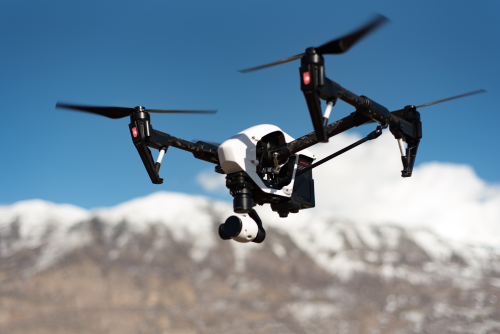
Most drone service offers sound the same: licensed pilot, great footage, fast turnaround. That makes drone-as-a-service easy for buyers to compare on price and hard for providers to defend on value. If you want to offer drone-as-a-service without looking generic or undercutting your value, the fix is not a nicer logo or a lower day rate. It is a sharper offer, clearer deliverables, and a pricing model tied to business outcomes instead of drone time.
Quick Take
If you want to sell drone-as-a-service without becoming the cheapest option in a crowded market, focus on these moves first:
- Sell a result, not a drone flight.
- Specialize around a buyer problem, industry, asset type, or workflow.
- Package deliverables in a way the client can use immediately.
- Price for planning, permissions, travel, risk, post-processing, and reporting, not just time in the air.
- Make your proposal look like a managed service, not a casual freelance gig.
- Use proof that shows business relevance: reports, before-and-after outcomes, repeatable process, and turnaround reliability.
- Never promise a flight before checking local airspace, permissions, privacy constraints, site rules, weather, and insurance fit.
A drone is the capture tool. The service is the value.
Why so many drone service offers feel interchangeable
Most providers market themselves with some version of the same message:
- Certified or licensed pilot
- Insured
- High-resolution photo and video
- Fast delivery
- Competitive pricing
Those points matter, but they rarely make you memorable. They are baseline trust signals, not a value proposition.
From the buyer’s perspective, generic offers create three problems:
- They do not explain what business problem you solve.
- They do not show why your process is safer, faster, or more useful.
- They push the buyer toward the easiest comparison left: price.
That is where undercutting starts.
If your website, quote, and sales call all sound like “we provide aerial content for any project,” buyers will assume your service is replaceable. And if they assume you are replaceable, they will negotiate like it.
Position your service around a business outcome
The fastest way to stop looking generic is to stop describing your service by aircraft capability and start describing it by operational value.
Most clients are not buying a drone. They are buying one of these:
- A repeatable site record
- A marketing asset library
- A defect or condition assessment
- A progress update for stakeholders
- A map or model for planning
- Visual proof for compliance, maintenance, or insurance workflows
- Content that saves a team time downstream
That shift changes your messaging immediately.
A simple positioning formula
Use this structure:
Specific buyer + recurring problem + standardized capture method + decision-ready deliverable + reliable turnaround
For example:
- Construction managers who need standardized weekly site progress updates with consistent flight paths, annotated visuals, and delivery before coordination meetings
- Property marketers who need listing-ready aerial content in multiple formats with fast editing and usage clarity
- Asset owners who need condition imagery organized by location, issue type, and inspection priority
This is much harder to compare to a generic “aerial photography services” offer.
What stronger positioning looks like
| Generic offer | Stronger DaaS angle | Why it commands more value |
|---|---|---|
| Drone photography for construction | Standardized progress capture with repeat flight paths, annotated updates, and delivery aligned to reporting cycles | You are part of the reporting workflow, not just a pilot |
| Roof inspection photos | Condition documentation service with tagged defects, organized image sets, and maintenance-ready summaries | You reduce admin work and help decisions happen faster |
| Real estate drone video | Listing media package with vertical and horizontal cuts, stills, and platform-specific exports | You solve distribution needs, not just filming |
| Resort or destination footage | Seasonal content library service with repeat shoots, campaign-ready edits, and usage planning | You become a content partner, not a one-off operator |
A niche does not have to be tiny. It just has to be clear.
You can specialize by:
- Industry: construction, property, tourism, events, utilities, agriculture, public sector support
- Asset type: roofs, facades, solar sites, large properties, resorts, industrial yards
- Output: orthomosaics, cinematic promos, inspection documentation, progress reports
- Buyer role: marketing manager, project manager, asset owner, insurer, engineer
- Geography: difficult terrain, coastal resorts, dense urban sites, remote facilities
- Urgency model: scheduled retainer work, emergency response support, rapid post-event assessment where permitted
The more precisely you define the problem, the less likely clients are to compare you with every pilot in town.
Package deliverables, not airtime
Charging only for flight time makes your service feel like equipment rental with a human attached.
Clients do not experience value in minutes flown. They experience value in usable outputs.
A better offer usually includes some combination of:
- Pre-mission planning
- Site coordination
- Capture execution
- Post-processing
- Quality review
- Delivery formatting
- Reporting or annotation
- Archiving or repeatability for future missions
That is why a fixed “30-minute flight” often undervalues the real work.
Better ways to package your offer
Instead of this:
- 1 hour drone flight
- Edited video
- 25 photos
Use something closer to this:
- Pre-site planning and flight feasibility check
- On-site capture to an agreed shot list or inspection plan
- 20 edited stills in web and print resolution
- 3 short-form video edits for social placement
- File naming and delivery structure aligned to the client’s team
- One revision round
- Delivery within two business days, weather and access permitting
Or for inspection and operational work:
- Site planning and access coordination
- Capture of specified elevations, zones, or asset categories
- Sorted imagery by asset area
- Annotated issue highlights
- Summary sheet for maintenance review
- Secure archive for repeat comparison over time
Now the buyer is evaluating a process and a business tool, not a drone pilot with a camera.
Standardization is what turns a service into drone-as-a-service
The “service” part matters because it implies repeatability.
If you want stronger margins, create service packages with clear boundaries:
- What gets captured
- What gets delivered
- How files are organized
- How quickly delivery happens
- How many revisions are included
- What assumptions must be true on the day
- What changes trigger extra cost
That makes your offer easier to sell and easier to operate profitably.
Price for complexity, risk, and decision value
One reason providers undercut themselves is that they price from the aircraft outward instead of the job inward.
They ask, “What do others charge for drone work?”
A stronger question is, “What does this mission require, what value does it create, and what margin do I need to deliver it consistently?”
Your quote should account for more than airtime
At minimum, consider:
- Mission planning time
- Travel and transit time
- Site induction or safety briefing time
- Airspace or site access complexity
- Crew requirements, if any
- Weather risk and rescheduling burden
- Capture duration
- Post-processing or editing time
- Data handling, annotation, or reporting
- Usage rights or licensing scope for commercial media
- Turnaround speed
- Equipment wear, backup gear, and battery cycles
- Insurance and administrative overhead
- Desired profit margin
If you skip these, your low quote is not “competitive.” It is incomplete.
Pricing models compared
| Pricing model | Best for | Why it protects value | Watch-outs |
|---|---|---|---|
| Fixed fee per mission or package | Repeatable deliverables with clear scope | Easy for buyers to compare and approve | Dangerous if your scope is vague |
| Day rate or half-day rate | Complex shoots, uncertain on-site conditions, multi-location capture | Covers time and flexibility | Can still feel generic if outputs are undefined |
| Retainer or subscription | Construction progress, hospitality content, recurring inspections | Smooths revenue and rewards consistency | Needs strict service levels and scheduling rules |
| Add-on menu | Editing, rush delivery, travel, extra deliverables, extended licensing | Prevents silent scope creep | Too many options can confuse simple buyers |
In many markets, the strongest DaaS model is:
A packaged base scope + clearly priced add-ons + a recurring option for repeat clients
That structure gives you flexibility without surrendering control.
A practical way to protect margin
Build your pricing in this order:
- Know your minimum profitable rate – Include labor, software, gear depreciation, travel, insurance, admin, and tax obligations relevant to your business.
- Estimate total job effort, not just flight time – A 20-minute flight can consume half a day once planning and delivery are included.
- Price the base outcome – What is the core deliverable the client actually needs?
- Separate extras – Rush turnaround, extra edits, additional locations, advanced reports, extended licensing, travel beyond your included zone
- Add a complexity premium when risk or constraints increase – Tight site windows, difficult access, multiple stakeholders, special PPE, remote travel, high documentation burden
- Leave room for professional service – If your margin only works when nothing goes wrong, your price is too low
A healthy quote is not the one that wins every time. It is the one that lets you deliver well, stay compliant, and still want the next job.
Make your proposal look like a service business, not a pilot-for-hire
A premium offer is not just about rate. It is about how clearly you reduce uncertainty for the client.
A good drone-as-a-service proposal should answer these questions before the buyer has to ask:
What exactly is included?
Be specific about:
- Capture objectives
- Deliverable formats
- Number of edited assets or report outputs
- Delivery timeline
- Revision limits
- Whether on-site waiting time is included
- Whether travel is included
What assumptions does the quote rely on?
This is where many operators lose money.
State assumptions such as:
- Site access is arranged by the client
- Required permissions are obtainable
- Flying conditions are suitable on the agreed date
- A designated contact is available on site
- No hidden restrictions apply at the venue, park, estate, or facility
If those assumptions fail, your price and timeline may change.
What happens if conditions change?
Your proposal should explain:
- Weather postponement terms
- Rescheduling windows
- Additional charges for out-of-scope requests
- Cancellation policy
- What happens if flight restrictions or site rules prevent launch
This protects both sides and makes you look more professional, not less flexible.
Who owns and can use the outputs?
For marketing work especially, clarify:
- What the client can use the footage or images for
- Whether paid advertising use is included
- Whether third-party distribution is allowed
- Whether raw files are included
- Whether your business can use the work in its portfolio, subject to confidentiality
For inspections and enterprise work, also define:
- Data retention period
- Delivery method
- Confidentiality expectations
- Who inside the client team will receive the files
Show proof in the buyer’s language
If you want to avoid generic positioning, your proof needs to look different too.
A flashy reel helps attract attention. It rarely closes serious service buyers on its own.
What buyers trust more:
- A sample inspection output
- A progress reporting format
- A short case study showing turnaround and business impact
- A before-and-after example of file organization
- A process overview showing planning, capture, QA, and delivery
- Testimonials that mention reliability, clarity, and operational ease
Translate quality into business terms
Do not just say:
- cinematic
- high quality
- professional
- stunning
- premium visuals
Say what that quality means:
- consistent framing across repeat site visits
- defect visibility suitable for follow-up review
- exports formatted for listing platforms or campaign teams
- delivery structured for easy internal circulation
- reliable turnaround before stakeholder meetings
- clear labeling that reduces admin time
That language moves you out of the hobbyist-freelancer bucket and into the managed-service bucket.
Operational systems are part of your value
Clients pay more when they believe your service is predictable.
That confidence comes from operations, not just flying skill.
Strong DaaS providers usually have repeatable systems for:
- Preflight planning and site checks
- Shot lists or capture templates
- Risk assessments
- Battery and equipment redundancy
- File naming and folder structure
- Quality control before delivery
- Secure backup and archive
- Client communication before and after the mission
- Invoice and quote templates
- Repeat scheduling for ongoing work
These systems matter because they remove friction.
A client who gets the right files, on time, every time, has less reason to question your price.
Safety, legal, compliance, and operational limits you cannot gloss over
Any commercial drone service touches regulated activity, site risk, and privacy expectations. This is one area where trying to sound “easy” can actually make you look less credible.
Your job is not to overwhelm clients with regulation. It is to show that you operate responsibly and verify what matters.
Before accepting or quoting a mission, verify:
- Whether commercial drone operations are allowed in that jurisdiction
- Whether your pilot credentials or approvals are valid for that country or region
- Whether the location has airspace, airport, heliport, event, park, security, or local authority restrictions
- Whether the property owner or venue has separate rules even if aviation rules allow flight
- Whether privacy, data protection, or surveillance laws affect capture and storage
- Whether your insurance actually covers that use case and location
- Whether the mission requires a second crew member, observer, or additional site controls
- Whether weather, terrain, crowd presence, or surrounding structures change the risk level
Be especially careful with:
- Flights near people, traffic, or sensitive infrastructure
- Urban shoots with multiple uninvolved people in frame
- Cross-border work
- Public events
- Industrial facilities
- Government sites
- Protected natural areas
- Emergency or post-incident requests
Do not promise a flight just because the client wants one quickly. Promise a review, then confirm feasibility after checking the relevant aviation authority, site owner, and local rules.
That one habit protects your reputation and reduces the chance of costly last-minute failure.
Common mistakes that make a DaaS offer look cheap or generic
Leading with the drone model
Clients rarely care whether you flew a certain aircraft model unless it directly affects the result. Lead with the business use, then explain the capture method if relevant.
Charging by battery or flight minute
That tells the client your value is the machine being airborne. It ignores planning, risk, editing, and deliverable structure.
Saying yes to every job type
The wider your offer, the blurrier your positioning. You do not need to reject all non-core work, but your public offer should make your strongest use case obvious.
Hiding costs inside vague “custom quotes”
Custom quoting is fine. Vague quoting is not. If the client cannot see what they are paying for, they will push your total down.
Including unlimited revisions
This is a margin leak. Set revision boundaries and define what counts as a revision versus a new request.
Ignoring file organization and delivery experience
Messy folders, unclear filenames, random exports, and inconsistent turnaround make premium pricing harder next time.
Competing against hobbyists on hobbyist terms
A hobbyist may win on raw price. You should win on process, reliability, legal discipline, reporting, and fit for commercial use.
Forgetting repeat revenue
One-off jobs are useful, but recurring services are where DaaS becomes a real business. If your offer has no cadence option, you are probably leaving value on the table.
A 7-step framework to build a non-generic drone-as-a-service offer
If your current service page sounds too broad, use this sequence.
1. Pick one buyer and one recurring problem
Start narrow.
Examples:
- property marketer needing listing-ready content
- project manager needing monthly progress reporting
- facility manager needing visual condition documentation
Do not begin with “anyone who needs aerial media.”
2. Define the exact deliverable the buyer can use
Ask: what does the client open, watch, review, or forward after the mission?
That might be:
- edited stills and short-form clips
- an annotated image set
- a repeat-comparison progress pack
- a map or model with defined output specs
Make the deliverable concrete.
3. Standardize your capture method
Create a repeatable process:
- shot list
- route pattern
- altitude consistency where lawful and appropriate
- file structure
- QA checklist
- delivery deadline
This is how you become a service provider instead of a custom chaos machine.
4. Set your floor price and add-on rules
Know:
- your minimum profitable base
- what is included
- what triggers extra cost
- what turnaround is standard
- what turnaround is rush
If you do not define these, clients will define them for you.
5. Write a proposal template for that service
Your template should include:
- objective
- scope
- deliverables
- assumptions
- exclusions
- timeline
- revisions
- weather and access terms
- usage or data terms
Once this exists, selling becomes easier and quoting becomes faster.
6. Create one proof asset that matches the service
Not a generic showreel.
Create one of these:
- sample progress report
- sample inspection folder structure
- sample deliverable sheet
- one-page case summary with problem, process, output, result
That proof will often sell better than another montage.
7. Offer a recurring version
Turn a job into a service by asking:
- Does this need to happen monthly, quarterly, seasonally, or after specific milestones?
- Can I save the client time by keeping the same capture standard each time?
- Can I bundle planning and reporting into a repeat cadence?
Retainers and recurring packages are often where value becomes clearest because consistency itself is useful.
FAQ
What is drone-as-a-service, exactly?
Drone-as-a-service means the client is buying a managed aerial service, not the drone itself. That can include planning, compliant operations, capture, editing, mapping, reporting, and repeat delivery. The value is the outcome and workflow, not just the flight.
Should I price by the hour, the flight, or the deliverable?
For most commercial work, deliverable-based pricing or packaged mission pricing protects value better than hourly-only pricing. Hourly rates can still work for open-ended shoots or uncertain site conditions, but they should be paired with clear output expectations and scope limits.
How do I stop clients from comparing me only on price?
Be more specific than your competitors. Define the buyer, the workflow, the output, and the turnaround. Show sample deliverables, not just pretty footage. The less generic your offer, the harder it is to compare you as a commodity.
Is it okay to offer broad services at first?
Yes, but your outward messaging should still highlight one or two strongest use cases. Broad capability is fine. Broad positioning usually is not. Buyers remember specialists more easily than generalists.
How do retainers or subscriptions work for drone services?
They work best when the client has a repeat need, such as progress updates, seasonal marketing content, or scheduled inspections. You agree on cadence, scope, turnaround, and terms for changes. The benefit to the client is consistency; the benefit to you is steadier revenue and better planning.
What should I verify before accepting work in another country or region?
Check whether your pilot credentials are recognized, whether commercial flights are allowed for your use case, whether local permissions or site approvals are needed, whether your insurance extends to that territory, and whether airline, customs, and battery transport rules affect the trip. If any of that is unclear, verify with the relevant authority before committing.
Should I include editing, reporting, or raw files by default?
Only if your package is designed that way. Many providers lose margin by quietly bundling time-heavy post-production. Define what is included, what is optional, how many revisions apply, and whether raw files are part of the agreement.
Can I charge more if I am not the cheapest in my area?
Yes, if your offer is easier to trust and easier to use. Buyers often pay more for reliability, clarity, better reporting, cleaner delivery, stronger compliance habits, and a service that fits their workflow. Higher pricing fails when the offer is vague, not when it is well defined.
Your next move
Pick one service you already do reasonably well and rewrite it as a managed outcome: one buyer, one problem, one standardized deliverable, one pricing structure, and one clear set of boundaries. If a prospect can instantly see what problem you solve, how you deliver it, and why your process reduces their risk, you will stop looking generic long before you lower your rate.
