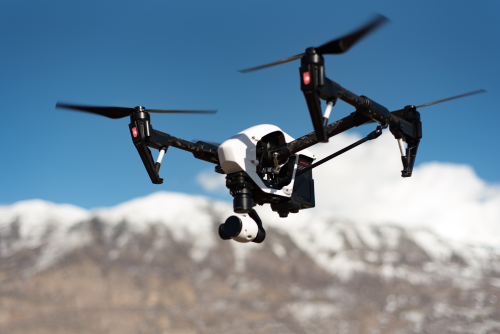
Affordable camera drones or flagship camera drones? The smarter choice is rarely about specs alone. It comes down to how often your real flying pushes against the limits of a smaller, cheaper drone: low light, windy conditions, client expectations, travel friction, and how much editing flexibility you actually use. For a lot of pilots, the affordable drone is the better buy because it gets carried, flown, and enjoyed more often; for others, the flagship saves missed shots, client complaints, and fast-upgrade regret.
Quick Take
If you want the short answer, use this:
- Choose an affordable camera drone if you mostly fly for fun, travel often, publish to social or standard web formats, shoot mainly in good light, and want something you will actually carry every time.
- Choose a flagship camera drone if you shoot for clients, regularly film at sunrise, sunset, or in high-contrast scenes, need stronger low-light performance, want more room for color grading, or need more confidence in wind and complex environments.
- Do not judge the decision by the drone body alone. Batteries, chargers, memory cards, ND filters, cases, repair coverage, and controller choice can widen the real cost gap quickly.
- A smaller drone often wins in the real world because it is easier to pack, less stressful to fly in casual settings, and sometimes faces fewer regulatory hurdles depending on local rules.
- A flagship often wins in paid work because it gives more consistent files, more usable footage in tough conditions, and fewer compromises when the light or location is not ideal.
- If you are on the fence, the smartest path is often staged: buy affordable now, rent flagship for specific jobs, and upgrade only when you can clearly name the limits you keep hitting.
First, define the two paths correctly
This article is not really about “cheap versus expensive.” It is about entry-to-midrange camera drones versus top-tier consumer or prosumer camera drones.
In practical terms:
- Affordable camera drones usually mean compact foldable drones built for hobbyists, travelers, new creators, and general aerial photography.
- Flagship camera drones usually mean larger, more capable folding drones with better image quality, stronger flight performance, and more advanced camera options.
The exact models change over time. The decision logic does not.
What matters is what each tier usually brings.
What affordable camera drones do really well
Affordable camera drones are often underestimated because people compare them to flagships in perfect test conditions instead of real life.
Their biggest strengths are simple:
They get flown more
A drone that is easy to pack, quick to launch, and not emotionally painful to carry everywhere will capture more real moments.
That matters more than many buyers admit.
A lighter, smaller drone is more likely to be with you on:
- a weekend trip
- a sunrise walk
- a family outing
- a hiking route
- a quick content stop between other tasks
The best camera drone on paper is useless if it stays in the closet.
They are better for building pilot skill
If you are still learning smooth stick control, shot planning, and safe decision-making, you may not be limited by sensor size yet. You are more likely limited by:
- composition
- timing
- flight path smoothness
- camera settings
- editing choices
- location planning
An affordable drone lets you build those habits without making every flight feel expensive.
They are usually “good enough” in good light
In bright daylight, many affordable drones can produce excellent-looking footage for:
- social media
- YouTube
- tourism content
- casual travel films
- real estate exteriors in simple conditions
- general hobby photography
For many viewers, the gap between a good affordable drone shot and a flagship shot becomes obvious only when conditions get hard.
They reduce ownership stress
Lower replacement cost changes behavior. Pilots tend to practice more, experiment more, and hesitate less.
That can lead to faster improvement and better results than a more expensive drone that gets babied.
What flagship camera drones actually buy you
A flagship drone is not just “the same thing, but nicer.” In the right use cases, it changes what is possible.
Better image quality when conditions are difficult
This is the biggest real-world difference.
Flagships usually offer better:
- dynamic range, which means holding detail in bright skies and dark foregrounds at the same time
- low-light performance, especially around sunrise, sunset, blue hour, and overcast conditions
- color depth and grading room, meaning the footage can handle heavier editing without falling apart as quickly
If you shoot in ideal daylight and barely edit, that matters less. If you deliver polished work, it matters a lot.
More flexibility in the air
Many flagship drones offer multiple cameras or focal lengths.
That can help when you need:
- wide establishing shots
- tighter compression on landscapes
- safer subject framing from farther away
- more variety without repositioning as much
For creators and client work, this often matters more than buyers expect.
More confidence in wind and demanding locations
Larger, more powerful drones often feel calmer and more reliable when conditions are not perfect.
That can mean:
- better stability in wind
- fewer abandoned flights
- smoother tracking
- more confidence on coastal cliffs, open fields, or elevated terrain
This is not permission to fly in unsafe weather. It just means the flagship usually reaches its comfort ceiling later.
More consistent deliverables
Paid work is less forgiving than hobby flying.
A flagship can reduce the odds of coming home with footage that is:
- too noisy
- too compressed-looking
- lacking highlight detail
- hard to match with other cameras
- too limited for client revisions
If one lost shoot costs more than the price gap, the flagship starts looking economical.
Side-by-side: where the real differences show up
| Factor | Affordable camera drones | Flagship camera drones |
|---|---|---|
| Portability | Usually excellent | Good, but often more noticeable to carry |
| Learning curve stress | Lower | Higher because mistakes feel costlier |
| Daylight image quality | Often very good | Better, but not always dramatically so |
| Low-light performance | Usually the first major compromise | Clearly stronger in many cases |
| Wind handling | Varies, often more limited | Usually more confidence-inspiring |
| Lens flexibility | Often limited | Usually better, especially on multi-camera systems |
| Editing headroom | Enough for light-to-moderate work | Better for heavier grading and client revisions |
| Travel convenience | Often the better choice | More gear, more bulk, sometimes more rule friction |
| Accessory cost | Lower overall | Higher across batteries and support gear |
| Repair regret | Easier to swallow | More painful |
| Best for | learning, travel, casual creation, social-first work | client delivery, advanced creators, harder conditions, premium output |
The smarter decision framework: 7 questions to ask before you buy
If you answer these honestly, your choice usually becomes obvious.
1. Where will your footage actually end up?
If most of your work goes to phone screens, social platforms, standard YouTube delivery, or small business web use, an affordable drone often goes much farther than people think.
If your footage needs to stand up to:
- brand campaigns
- premium client edits
- heavy cropping
- professional color grading
- mixing with larger camera systems
then a flagship starts making much more sense.
A lot of buyers pay flagship money for footage that will never be shown in a way that reveals the difference.
2. How often do you fly in bad light, not just nice light?
This is one of the best filters.
Ask yourself:
- Do you love sunrise and sunset shooting?
- Do you often film cities at dusk?
- Do you shoot cloudy, contrast-heavy landscapes?
- Do you need usable files when the light is not ideal?
If yes, flagship.
If most of your flying happens in bright daytime, travel conditions, and fair weather, affordable is usually smarter.
Many people buy a flagship for “just in case” low-light performance, then spend 90 percent of their flight time in simple daylight.
3. Will you carry it every time?
The drone you leave behind has zero image quality.
If you are a:
- traveler
- backpacker
- hiker
- cyclist
- casual weekend flyer
- creator who already carries a lot of gear
portability should have enormous weight in the decision.
This is where affordable drones can become the smarter long-term choice even for experienced pilots. They remove friction.
A flagship may be objectively better, but a smaller drone that comes everywhere can produce a much stronger year of footage.
4. Are you learning, or are you already billing for the result?
This question matters more than experience level alone.
If you are still learning aerial movement, framing, and safe flight habits, buying affordable usually makes sense.
If you already have:
- paying clients
- deadlines
- repeatable deliverable standards
- brand expectations
- revision requests
then your purchase should be based on reliability and output consistency, not beginner friendliness.
For professionals, the drone is part of a workflow, not just a gadget.
5. Do you need editing headroom or just good-looking footage straight out of camera?
Many buyers love the idea of “cinematic” flexibility but rarely use it.
Be honest:
- Do you color grade seriously?
- Do you match drone footage with mirrorless or cinema cameras?
- Do you need flatter recording profiles that preserve more adjustment room?
- Do you deliver to clients who may ask for alternate looks?
If no, affordable may be plenty.
If yes, a flagship often saves time and produces more forgiving files.
This is a big split between hobby creators and production-minded users.
6. How much downtime can you tolerate?
A hobby pilot can shrug off a missed weekend.
A working operator may lose money, reputation, or a client relationship.
That changes the decision.
If you cannot afford downtime, think beyond image quality:
- repair turnaround
- spare battery availability
- local service options
- replacement cost
- whether you should own a backup aircraft
This is where the “one flagship or two affordable drones?” question becomes real.
Sometimes two affordable drones are the smarter business choice than one flagship. But if your clients are paying for premium output in difficult conditions, two cheaper drones do not replace one capable flagship.
7. Do local rules, travel plans, or job sites favor smaller drones?
Globally, lighter drones may face fewer restrictions in some places, but that is not universal.
Before buying, verify the rules that apply where you actually plan to fly:
- registration thresholds
- pilot competency requirements
- remote identification requirements where applicable
- distance-from-people rules
- local park and heritage site restrictions
- city takeoff and landing restrictions
- commercial permission requirements
- airline battery policies
If your flying is heavily travel-based, a smaller system can reduce friction. Just do not assume “small” means unrestricted.
Buyer profiles: which path fits which pilot?
Beginners and hobbyists
Usually the affordable path.
Why:
- lower stress while learning
- easier to carry
- lower crash regret
- enough quality for most early needs
Upgrade later only if you can identify a real limit, not just spec envy.
Travel creators
Usually affordable, sometimes midrange.
Why:
- portability matters more than theoretical top-end quality
- you are more likely to bring it every day
- smaller kits are easier to manage across transport, lodging, and changing locations
Go flagship only if travel video is central to your income and you regularly shoot in demanding light.
Social-first creators and YouTubers
Often affordable.
If your workflow is fast-turn content and most views happen on phones, the return on a flagship may be weaker than you think.
Spend the difference on travel, batteries, audio gear, or editing tools.
Real estate and small business shooters
This can go either way.
Affordable can work well for:
- basic daylight exteriors
- simpler market deliverables
- getting started in low-risk jobs
Flagship is usually better for:
- premium listings
- complex lighting
- coastal or windy locations
- higher-end client expectations
- consistent repeat work
Aerial photographers who care about image quality
Often flagship.
If you care deeply about highlight rolloff, shadow detail, cleaner files, and stronger grading flexibility, this is where the premium tier often earns its price.
FPV pilots who want a stable camera drone alongside action rigs
Usually affordable.
If the folding drone is mainly for scenic B-roll, location scouting, and easy establishing shots, a compact camera drone is often the smarter companion.
Enterprise teams and decision-makers
Do not buy on prestige.
Ask what matters more:
- maximum image quality
- operator training speed
- fleet redundancy
- travel simplicity
- downtime risk
- insurance and compliance burden
For some teams, a mixed fleet is best: one flagship for premium capture and one or more affordable drones for everyday flights, scouting, training, and backup.
The hidden cost gap: total system cost matters more than body price
Many buyers compare only the aircraft. That is a mistake.
Your real cost includes:
- extra batteries
- charger or charging hub
- memory cards
- carrying case
- spare propellers
- ND filters for controlling shutter speed in bright light
- replacement plan or insurance
- possible second controller or screened controller
- landing pad, storage, and travel accessories
The more premium the drone, the more those add-ons tend to cost.
That means the “affordable versus flagship” decision is often bigger than it looks.
A useful rule: if stretching to the flagship means buying too few batteries, delaying spare props, or skipping protection and training, you may be buying the wrong tier.
When the affordable path is actually smarter
Choose affordable with confidence if most of these are true:
- you fly mainly for yourself or for early-stage content work
- you value portability more than maximum sensor performance
- you shoot mostly in daylight
- you are still refining your skills
- you want the lowest-friction drone you can actually take everywhere
- you would rather fly more than own the absolute best files
- local or travel conditions may favor smaller aircraft
This path is especially smart if your likely next improvement will come from better flying and better shot planning, not from a bigger sensor.
When the flagship path is smarter
Choose flagship if most of these are true:
- you already earn money from drone footage
- you often shoot in difficult light or wind
- you regularly edit, grade, or match footage with other cameras
- you want multiple focal lengths or more premium imaging options
- you need greater consistency from job to job
- you know exactly what your current drone cannot do
- the price gap is smaller than the cost of a failed shoot or a quick upgrade
In other words: buy flagship when you need it, not when you merely admire it.
Safety, legal, and operational limits to verify before you buy
Camera quality should never be your only buying filter.
Before choosing any drone, verify the rules and operating realities that apply in your area and on your typical trips.
Key things to check
- Weight-based rules: some countries or regions treat lighter drones differently, but thresholds and privileges vary.
- Registration and pilot requirements: some locations require registration, competency tests, or other approvals even for recreational flying.
- Commercial operations: getting paid does not automatically make a flight legal or illegal; the real issue is how the local aviation authority classifies the operation.
- Airspace restrictions: airports, cities, heliports, emergency areas, and sensitive infrastructure often require extra checks or approvals.
- Parks, heritage sites, and venues: even where national aviation rules allow flight, local land managers or venues may ban takeoff, landing, or filming.
- Privacy and data use: filming people, homes, or private spaces can trigger privacy, data protection, or local nuisance issues.
- Air travel with batteries: airline rules for lithium batteries can differ by carrier and route. Check battery quantity limits, terminal protection rules, and cabin baggage requirements before travel.
- Insurance and client contracts: some clients, venues, or countries may require liability coverage or specific documentation.
Also remember: better obstacle sensing does not make risky flying safe. It is a backup feature, not permission to fly carelessly, close to people, or in unsuitable weather.
Common mistakes buyers make
1. Buying for specs instead of output
If your footage lives on Instagram, Reels, YouTube, and client web pages, top-end specs may matter far less than you think.
2. Underestimating portability
A slightly worse drone that is always in your bag often beats a better drone you leave at home.
3. Forgetting total system cost
The real budget is never just the drone.
4. Assuming bigger automatically means “professional”
A pro result comes from planning, timing, safe operation, editing, and shot selection. Gear helps, but it does not replace craft.
5. Ignoring repair and support
A good buying decision includes spare parts access, battery availability, service turnaround, and local support options.
6. Believing obstacle sensing solves everything
It does not work perfectly in every lighting condition, background, or flight path, and it does not override legal or safe separation from people and property.
7. Buying flagship before you know your limits
If you cannot clearly say, “I need better low light,” “I need stronger files for grading,” or “I keep losing flights to wind,” you may be upgrading too early.
FAQ
Is an affordable camera drone enough for travel and social media content?
Usually yes. For daylight travel footage, social clips, and standard web delivery, a good affordable drone is often more than enough. Portability and ease of use may matter more than flagship image gains.
When is a flagship camera drone worth the extra money?
It becomes worth it when you regularly shoot in hard light, low light, or wind, when you deliver paid work, or when you need more editing flexibility and more consistent professional results.
Can a beginner start with a flagship drone?
Yes, but it is often not the smartest value. Beginners usually benefit more from flying often, learning safely, and making mistakes on a less expensive platform. A flagship makes more sense if you already have a clear business need.
Is one flagship better than two affordable drones?
Not always. Two affordable drones can be smarter if redundancy matters, multiple pilots need access, or downtime is costly. One flagship is better when premium image quality and tougher-condition performance are essential to the work.
Do clients care what drone you use?
Most clients care about the result, safety, legality, and reliability. They notice clean footage, stable shots, and professional process more than brand or model names. Higher-end clients may care more about consistency and image quality than the aircraft itself.
Are smaller drones always easier to travel with internationally?
Often, but not always. Smaller drones are easier to pack and may face lighter rules in some jurisdictions, but every country and airline can differ. Always verify aviation rules, customs expectations, park restrictions, and lithium battery policies before travel.
Should I rent a flagship drone before buying one?
If you are undecided, yes. Renting is one of the best ways to test whether the real-world difference shows up in your workflow, locations, and editing. If the advantage is obvious after a few shoots, the upgrade is easier to justify.
What if my work is inspection, mapping, or industrial operations?
Then this affordable-versus-flagship camera drone question may be the wrong one. Specialized workflows can require enterprise aircraft, thermal payloads, zoom systems, RTK positioning, or software integration that consumer camera drones do not provide.
The smartest drone path is the one that matches your actual flying
If you mostly fly in daylight, travel light, create for the web, and want a drone you will always carry, the affordable path is often the smarter path.
If you shoot for clients, work in difficult conditions, grade your footage seriously, and already know the limits of smaller drones, buy the flagship and treat it like a tool, not a trophy.
If you still are not sure, do this: buy the affordable drone if you need to start now, or rent a flagship for a real shoot before committing. The right choice is the one that improves your output, your workflow, and your willingness to fly safely and often.