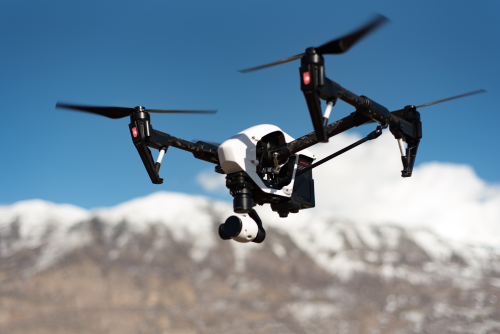
All-day field work is where spec-sheet buying usually falls apart. The best drones for all-day field work are not the ones with the biggest advertised flight-time number, but the ones that keep producing usable images, maps, inspections, or progress data across a full shift without slowing your team down. Before you buy, think less about one perfect flight and more about the entire field system: batteries, charging, controller usability, workflow, repair support, and compliance.
Quick Take
If you want the best drone for all-day field work, use this rule: buy for the mission cycle, not the marketing headline.
Key points
- For all-day work, the real product is the drone system, not just the aircraft.
- Most buyers fit into one of three buckets:
- Compact foldable camera drone for documentation, creator work, property, tourism, and light site progress
- Enterprise foldable for mapping, inspection, thermal, and repeatable commercial jobs
- Modular enterprise platform for heavier payloads, larger teams, tougher environments, and high-value operations
- The biggest buyer mistakes are:
- buying based on maximum flight time alone
- underestimating charging and battery rotation
- ignoring software and file workflow
- skipping repair and parts availability
- buying too much drone for a simple job
- If your work depends on accurate repeatability, survey outputs, or thermal inspection, consumer-style camera drones often become the wrong tool quickly.
- If you travel, work across borders, or fly for clients, verify local aviation rules, registration, permissions, privacy limits, and battery transport requirements before you commit to a platform.
What “all-day field work” actually means
For most buyers, all-day field work does not mean flying one drone continuously from sunrise to sunset. It means running repeated missions over a full workday with minimal downtime.
That can include:
- construction progress capture
- roof and facade inspection
- utilities and solar checks
- stockpile and earthworks mapping
- tourism and destination shooting
- agriculture scouting
- real estate and site marketing
- public safety support
- environmental monitoring
In practice, your day is a loop:
- travel to site
- unload and set up
- check airspace, weather, people, and obstacles
- fly a mission
- review data
- swap batteries
- move to the next location or flight block
- charge, label, and manage files
- repeat without losing quality or making mistakes
That is why the “best drone” is the one that holds together operationally across the whole loop.
Start with the job, not the aircraft
Before comparing brands or models, decide what kind of field day you actually have.
| Primary work | Best-fit drone class | Why it works all day | Main watchout |
|---|---|---|---|
| Site progress, social content, tourism, property visuals, general documentation | Compact foldable camera drone | Fast to deploy, easy to carry, low fatigue, good image quality | Limited precision, fewer enterprise workflow features |
| Mapping, survey support, stockpiles, repeatable site capture | Enterprise foldable with RTK | Better positioning, repeatability, mission planning, data consistency | Costs more once you add batteries, chargers, and software |
| Thermal inspection, utilities, solar, roof work, mixed visible + thermal jobs | Enterprise foldable thermal/zoom platform | More useful payloads, safer stand-off inspection, better commercial fit | Requires stronger workflow discipline and compliance awareness |
| Industrial inspection, corridor work, larger sites, high-frequency commercial teams | Modular enterprise platform | Payload flexibility, stronger redundancy, better team scaling | Bulkier, pricier, harder to justify for occasional work |
| Indoor or confined-space inspection | Specialized collision-tolerant platform | Built for tight, risky environments | Poor fit as a general-purpose outdoor field drone |
The mistake is trying to force one drone into every job. One platform can cover a lot, but not everything well.
The features that actually matter before you buy
System endurance beats advertised flight time
This is the biggest buying lesson.
Advertised flight time is usually measured under controlled conditions. Real field time drops because of:
- wind
- climb and descent
- hovering for inspection
- repeated repositioning
- payload weight
- heat or cold
- conservative battery reserve
- time lost between flights
A drone that looks amazing on paper can still be frustrating in the field if the battery ecosystem is weak.
What matters more:
- how many batteries you can rotate realistically
- how fast you can charge them
- whether you can charge in a vehicle or from portable power
- whether the charger supports parallel or efficient turnaround
- how easy it is to track battery health over time
If you need a full-day workflow, budget for the power plan on day one. For many operators, batteries and charging are what determine whether a drone feels professional or annoying.
Sensor fit matters more than “best camera”
A beautiful camera is not the same thing as the right field sensor.
Ask what you are delivering:
- cinematic video
- inspection imagery
- thermal analysis
- orthomosaic maps
- volumetric stockpile results
- marketing photos
- zoom documentation from a safe distance
A creator-focused drone may produce excellent footage but still be a poor mapping tool. A thermal inspection drone may be the right choice for utilities but unnecessary for a site progress team. A mapping workflow may need more than just resolution; it may depend on repeatability, consistent overlap, and positioning.
A few terms worth understanding:
- RTK: Real-Time Kinematic positioning. This improves positional accuracy and is valuable for mapping, survey-adjacent work, and repeatable data capture.
- Mechanical shutter: Helps reduce motion distortion in mapping workflows compared with a purely electronic readout.
- Thermal payload: Useful for heat-based inspection tasks such as solar, roofing, utilities, and search applications, but only when the operator understands the limits of thermal interpretation.
If you do not need thermal, zoom, or high-accuracy mapping, do not pay for them just because they sound advanced.
Portability is a productivity feature
A heavier, more capable drone is not always better if it slows down every deployment.
For all-day field work, portability affects:
- how much gear you carry
- how quickly you move between sites
- how willing you are to launch for short opportunities
- whether one person can work efficiently
- whether the system fits airline and vehicle realities
A compact foldable drone often wins for solo operators because it reduces friction. If your workday involves multiple stops, walking, climbing, or travel, lower bulk can outperform a technically stronger platform.
On the other hand, if your jobs depend on specialized sensors or larger-area productivity, the bigger platform may still be worth it.
Controller quality is not a small detail
A great drone with a bad field interface becomes tiring fast.
Pay attention to:
- screen brightness in full sun
- controller battery life
- glove usability
- map readability
- mission planning interface
- how easy it is to review data on site
- signal reliability in your operating environment
For full-day work, controller ergonomics matter more than many buyers expect. If the screen is hard to read outdoors, or the mission app feels clumsy, you lose time on every flight.
Software and workflow can make or break the purchase
A drone is only useful if the output fits your workflow.
Before you buy, ask:
- Does it support the mission-planning features I need?
- Will it fit the mapping, inspection, or asset-management software my team uses?
- How easy is file offload in the field?
- Can I label, organize, and hand over outputs without extra pain?
- Does the platform support repeatable waypoint work?
- If I grow, can the workflow scale to more pilots or more sites?
This matters especially for:
- construction progress programs
- survey teams
- utilities
- asset inspection providers
- enterprise teams with reporting requirements
A drone with slightly weaker headline specs can still be the better choice if the software workflow is cleaner and the outputs are easier to deliver.
Precision and repeatability matter for commercial work
For paid field work, consistency often matters more than raw image quality.
If the same site is flown every week or every month, you want:
- repeatable flight paths
- stable mission planning
- dependable obstacle awareness where appropriate
- reliable geotagging
- accurate orientation and hover behavior
- predictable output across changing days
This is where enterprise-grade features become worth the extra cost. If your client expects maps, comparisons, inspections, or progress history, repeatability is a real business feature.
Repair support and parts availability are buying criteria
Downtime is expensive.
Before choosing a platform, check:
- local or regional repair options
- battery availability
- spare prop availability
- controller replacement timing
- turnaround speed for service
- whether your market actually supports the brand well
A cheaper drone with weak support can become more expensive after one crash, one swollen battery, or one broken controller.
For commercial operators, this is a major buyer-regret issue. If the drone earns money, support matters almost as much as performance.
Weather tolerance and real operating environment
Field work rarely happens in ideal conditions.
Think about:
- heat
- cold
- wind
- dust
- light moisture
- takeoff surfaces
- glare
- terrain
- magnetic interference around structures
Do not assume a drone is weatherproof unless the manufacturer clearly specifies an appropriate rating. Even then, your legal authority, operating procedure, and risk assessment still matter.
A platform that performs well only in calm, clean, mild conditions may not be the best “all-day” tool if your sites are rough.
Total cost of ownership matters more than entry price
The actual purchase is usually:
- aircraft
- controller
- 4 to 10 batteries depending on mission type
- charger or charging hub
- vehicle charging or portable power
- spare props
- case or bag
- memory cards or storage
- software subscriptions
- care plan or service coverage
- landing pad, sun hood, or field accessories
This is why low headline price can be misleading. A drone that looks affordable can become a poor deal if you need lots of extras to make it field-ready.
Best-fit drone categories for all-day field work
There is no single winner for every buyer. The best choice depends on how you work.
1. Compact foldable camera drones
Examples often shortlisted: DJI Air 3S class, DJI Mavic 3 Pro class.
Best for
- solo operators
- travel creators
- tourism and destination work
- property media
- light site documentation
- teams that need strong visuals without full enterprise overhead
Why they work well all day
- easy to carry
- fast setup
- low operator fatigue
- strong image quality for size
- good for multiple short stops in one day
Who may outgrow them quickly
- mapping-heavy teams
- formal inspection programs
- operators needing thermal
- buyers needing RTK-grade repeatability or enterprise reporting
These are often the smartest buy for people who earn from visuals, not high-precision data.
2. Enterprise foldables
Examples often shortlisted: DJI Mavic 3 Enterprise, DJI Mavic 3 Thermal, Autel EVO Max series.
Best for
- construction progress
- survey-adjacent workflows
- stockpile and site mapping
- utility and solar inspection
- roof and facade work
- organizations needing more than a creator drone
Why they work well all day
- better mission planning
- better payload options
- stronger commercial workflow fit
- more useful for repeatable jobs
- still portable enough for solo teams
Who will regret them
- casual buyers who only need occasional marketing shots
- operators with no need for mapping, thermal, or repeatable inspection
- very budget-sensitive users who will not invest in the full kit
For many commercial buyers, this is the sweet spot between portability and serious field utility.
3. Modular enterprise platforms
Examples often shortlisted: DJI Matrice 350 RTK class, Skydio X10 for certain inspection-heavy environments.
Best for
- larger teams
- critical infrastructure work
- recurring enterprise programs
- specialized payload needs
- higher-risk or higher-value inspection environments
Why they work well all day
- better scaling across bigger jobs
- payload flexibility
- stronger enterprise integration
- more room for redundancy and operational discipline
- better fit when multiple crews or more complex missions are involved
Who should avoid them
- solo buyers doing light documentation
- teams without a real payload need
- anyone buying “future capability” they will not monetize
These platforms can be excellent, but they are easy to overbuy.
4. Specialized inspection drones
Examples: confined-space or collision-tolerant platforms.
Best for
- tanks
- tunnels
- indoor industrial assets
- dangerous enclosed environments
The reality
These are specialist tools, not everyday field drones. Buy one only when your work clearly requires it.
A simple buying framework
If you are still deciding, use this filter.
Choose a compact foldable if:
- you are mostly creating visuals
- you need a low-friction, portable setup
- you work alone often
- you travel a lot
- you do not need thermal or RTK
- your deliverable is mostly photo/video, not technical data
Choose an enterprise foldable if:
- you run repeatable commercial jobs
- you need mapping or inspection tools
- you want better client-ready workflow
- you need thermal or zoom options
- precision and reporting matter
- you want one drone that covers a wide range of paid field work
Choose a modular enterprise platform if:
- your jobs justify payload flexibility
- you operate at scale
- downtime is expensive
- you have more formal SOPs, crews, and safety process
- the contract value supports the higher total cost
Compliance, safety, and operational checks before you buy
If the drone will be used for field work, especially paid work, the purchase decision should include compliance.
Verify with the relevant civil aviation authority and local site authority before operating:
- registration requirements
- pilot certification or competency rules
- remote identification or equivalent requirements where applicable
- airspace access and authorization
- visual line of sight limits
- night operation rules
- flight near people, roads, utilities, or critical infrastructure
- local privacy and data protection limits
- insurance expectations for client work
- permissions from landowners, sites, parks, municipalities, or facility managers
If you travel internationally, also verify:
- temporary import or customs requirements
- local drone registration lead times
- battery airline transport rules
- restrictions on thermal or higher-end imaging near sensitive areas
The safest buying move is choosing a platform you can legally and realistically operate where your work actually happens.
Common mistakes buyers make
1. Buying for flight time instead of mission output
A 45-minute claim does not mean 45 minutes of useful commercial work. Real productivity depends on the whole battery and charging loop.
2. Overbuying the aircraft and underbuying the kit
Many buyers spend too much on the drone and too little on:
- batteries
- charging
- storage
- spare props
- protective transport
- field power
That creates more downtime than the aircraft choice itself.
3. Using a creator drone for technical work it was not built for
A great video drone is not automatically a great mapping or inspection tool.
4. Ignoring software lock-in or workflow friction
If your team, client, or reporting process depends on certain outputs, software compatibility matters early.
5. Skipping repair reality
Ask how quickly you can get back in the air after a failure. If the answer is unclear, treat that as a warning sign.
6. Assuming one drone can do every job equally well
It is better to buy the right core platform for your main revenue task than to chase a do-everything setup that is mediocre at the work you actually sell.
FAQ
How many batteries do I really need for all-day field work?
More than most first-time buyers expect. The right number depends on flight length, travel between sites, temperature, and charging speed. For repeated field work, think in terms of a battery rotation system, not a minimum starter pack.
Is advertised maximum flight time useful at all?
Yes, but only as a rough comparison. It is not the number you should use for scheduling commercial work. Wind, hovering, reserve margin, and field conditions reduce real usable time.
Should I buy RTK from the start?
Buy RTK if your work depends on mapping accuracy, repeatable survey-style outputs, or consistent site comparison. If your deliverables are mainly marketing photos and video, you may not need it.
Are consumer drones good enough for paid field work?
Sometimes, yes. They can be excellent for property media, travel content, tourism visuals, and light progress documentation. They are less ideal when the job requires thermal, formal inspection workflow, or accurate mapping.
Can one drone handle both creative work and technical inspection?
Sometimes, but usually with compromises. A platform that is great for cinematic content may not be the best for thermal, mapping, or structured inspection. If most of your income comes from technical work, buy for that first.
What matters more: camera quality or workflow?
For hobby flying and content creation, camera quality may lead. For all-day field work, workflow often matters more. A slightly less exciting camera with better repeatability, file handling, charging, and repair support can be the better business tool.
Do I need a vehicle charger or portable power station?
If you regularly work long days away from mains power, yes, it is often worth it. Field charging can turn a good drone kit into a practical all-day system.
What should I verify before flying in another country?
Check local registration, pilot requirements, airspace rules, import rules, battery travel rules, site-specific permissions, privacy expectations, and any restrictions around parks, urban areas, or sensitive infrastructure.
The decision that usually pays off
If you want the best drone for all-day field work, stop asking which model flies the longest and start asking which system keeps your work moving with the least friction.
For most solo buyers, a compact foldable or enterprise foldable is the smart choice. For teams running repeatable inspection, mapping, or infrastructure work, enterprise workflow and support usually matter more than flashy camera specs. Make your shortlist based on mission type, battery plan, workflow fit, and service support, and you will avoid most expensive drone-buying regrets.