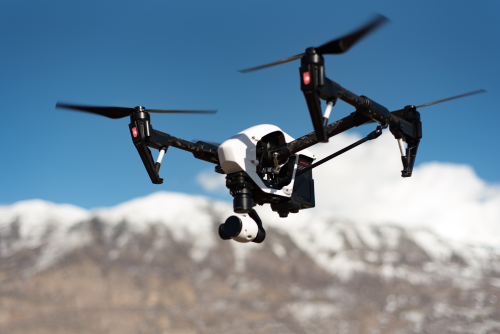
If you’re shopping for the best drones for beginner safety features, the smart question is not “Which drone has the most tech?” It’s “Which drone gives me the biggest margin for error in the way I’ll actually fly?” For most first-time buyers, stable hovering, reliable return-to-home, and sensible beginner modes matter more than flashy camera claims or marketing buzz around AI flight.
Quick Take
If safety is your top buying filter, focus on these priorities in this order:
- Stable GPS hovering and reliable positioning
- A trustworthy return-to-home system
- Obstacle sensing that matches real beginner mistakes
- Low-speed beginner modes and distance/altitude limits
- Propeller protection or low-risk design
- Strong app warnings, spare parts, and repair support
For many buyers, the safest beginner choice is not the cheapest drone. It is the one that helps you avoid panic, recover from simple errors, and stay within your skill level.
As a quick rule of thumb:
- Want the safest all-round beginner camera drone? Look at a model like the DJI Mini 4 Pro.
- Want the lowest-risk way to capture simple selfies and short clips near yourself? A fully enclosed self-flying option like the HoverAir X1 can make more sense than a traditional drone.
- Want a budget first drone? A GPS-stabilized entry drone like the DJI Mini 2 SE or Mini 4K class can work well, but you must accept that your judgment matters more because obstacle sensing is limited or absent.
- Want FPV as your first path? A guarded cinewhoop-style option like the DJI Avata or Avata 2 is far safer than starting with an open-prop race quad, but it still requires simulator practice and discipline.
What actually makes a beginner drone safer
A beginner-safe drone is not one that promises perfect automation. It is one that reduces the consequences of common beginner errors.
Here’s what matters most before you buy.
The safety features that matter most
| Safety factor | Why it matters | What buyers often miss |
|---|---|---|
| Stable hover and GPS positioning | Prevents drifting and helps the drone stop where you expect | GPS can be weak near buildings, cliffs, dense trees, or indoors |
| Return-to-home | Helps recover the drone after signal loss, disorientation, or low battery | It is only as good as the home point, signal, and obstacle path |
| Obstacle sensing | Can prevent slow-speed collisions in common directions of travel | It may not reliably detect wires, small branches, or poor-light hazards |
| Beginner flight modes | Slower movement gives you more time to think and react | Many new pilots switch out of these modes too early |
| Prop guards or enclosed props | Reduces damage and injury risk in close-range practice | Guards do not make it safe to fly carelessly around people |
| Battery and app warnings | Low-battery alerts, compass warnings, and signal alerts reduce panic | Beginners ignore warnings until they become emergencies |
| Spare parts and repair support | A minor crash becomes a learning event instead of a total loss | Cheap drones often have weak parts availability and poor support |
Stable hover matters more than most first-time buyers realize
The safest beginner drones tend to feel boring in the best way. They lift off, hold position predictably, and respond gently. That stability does three important things:
- It lowers your workload
- It buys you thinking time
- It makes your mistakes smaller
A beginner who flies a stable GPS camera drone in an open area is usually much safer than a beginner flying an agile manual craft with more exciting performance.
That is why entry-level camera drones from established brands often beat “feature-packed” off-brand alternatives. Good stabilization is a safety feature, even if it is not marketed that way.
Return-to-home is a real safety feature, but not a magic one
Return-to-home, often called RTH, is one of the best beginner safety features because it helps when you lose orientation, the link becomes unreliable, or the battery gets low.
But buyers often misunderstand what it can and cannot do.
A good return-to-home system is helpful when:
- You momentarily lose track of the drone’s direction
- The drone warns that the battery is getting low
- Signal quality drops
- You need a predictable recovery path
It is less helpful when:
- The home point was recorded incorrectly
- You took off under trees or near overhead obstacles
- The drone climbs into branches, wires, or structures on the return path
- GPS quality is poor
So yes, RTH matters a lot. But it works best when paired with good takeoff habits and a clear sky above the launch area.
Obstacle sensing is valuable, but only if you understand its limits
Obstacle avoidance is one of the most misunderstood beginner drone features.
It can absolutely help. In fact, it is one of the strongest reasons to spend more on a first drone if safety is your priority. But the marketing can create false confidence.
What it does well:
- Helps prevent simple forward-flight collisions
- Reduces the chance of backing into a wall or tree if rear sensing exists
- Gives nervous beginners a larger error margin
- Makes slow, deliberate cinematic flying safer
What it does not do well:
- Reliably see thin wires, bare branches, twigs, fishing lines, or transparent objects
- Work perfectly in low light or low-texture environments
- Save reckless high-speed flying
- Replace visual line of sight, planning, or pilot judgment
This is why the phrase “obstacle avoidance” should never be translated as “crash-proof.”
Propeller protection matters more in some use cases than others
If you are flying in open fields, a small folding camera drone with careful habits may be enough. If you are flying close to yourself, learning indoors, practicing around furniture, or buying for a younger or more nervous user, prop guards move much higher up the list.
Prop protection is especially useful for:
- Indoor training
- Backyard practice with lots of obstacles
- Close-range social content
- Selfie and follow-style shots
- FPV beginners
There are two broad ways to get this:
- A drone with add-on prop guards
- A drone designed with enclosed or ducted propellers
Fully enclosed designs are often less intimidating and more forgiving around minor contact. The tradeoff is usually less wind performance, less image quality, or more limited manual flying.
Beginner modes are underrated
A true beginner-safe drone should let you learn gradually.
Helpful training features include:
- Slower speed modes
- Lower control sensitivity
- Altitude limits
- Distance limits
- Assisted takeoff and landing
- Hover pause or braking behavior
These sound simple, but they directly reduce the chance of overcorrecting, drifting too far away, or panicking during the first few batteries.
A drone that encourages calm learning is safer than one that simply promises advanced autonomy.
Repair support is part of safety, even if it feels boring
The safest beginner drone is often the one you can keep flying after a minor mistake.
Look for:
- Easy access to spare propellers
- Battery availability
- Official repair channels or trusted local service
- Good app support and firmware maturity
- A large user base with known troubleshooting patterns
A dirt-cheap drone with weak support can be a false economy. If a small bump means total replacement, you are not really buying safety—you are buying disposable frustration.
Best beginner drones when safety is the top filter
These are not “best” for every buyer. They are the strongest fits when you care most about avoiding beginner regret and reducing avoidable incidents.
Best all-round beginner camera drone for safety: DJI Mini 4 Pro
If your goal is to buy one small drone and learn safely without outgrowing it too quickly, the DJI Mini 4 Pro is one of the strongest beginner-friendly choices.
Why safety-minded buyers like it:
- Very approachable handling
- Strong position holding
- Mature return-to-home behavior
- Omnidirectional obstacle sensing
- Useful beginner automation without forcing full auto flying
- Travel-friendly size
Why it works so well for beginners is not just the sensors. It is the combination of stabilization, warnings, braking behavior, and predictable flight feel.
Who it suits best:
- First-time camera drone buyers
- Travel creators
- Hobbyists who want room to grow
- Buyers who want strong safety tech without stepping into a bigger aircraft
Who should skip it:
- Buyers with a very tight budget
- People planning to learn aggressive FPV
- Anyone who expects obstacle sensing to make backyard tree flying foolproof
The main caution: even strong sensing systems can struggle with wires, small branches, and low-light environments. You still need open-space practice.
Best low-risk self-capture option: HoverAir X1
For some beginners, the safest drone is not a traditional controller-based drone at all. If your main goal is short personal clips, simple travel moments, and low-stress operation, the HoverAir X1 is worth serious attention.
Why it stands out:
- Enclosed propellers
- Very simple setup
- Lower intimidation factor
- Strong fit for close-range self-capture
- Useful for people who want footage without becoming dedicated pilots
This type of drone makes sense for:
- Travelers who want fast social clips
- Casual users who do not want to learn full stick control first
- Buyers worried about exposed propellers
But there are important limits:
- It is not a substitute for a true camera drone
- Wind can be a bigger issue
- Manual creative control is more limited
- It is not the best choice for scenic, longer-range, or higher-quality aerial work
If your definition of safety includes “I want the least stressful way to get simple shots,” this style of drone can be smarter than buying a feature-rich drone you will barely use.
Best budget first drone if you will practice properly: DJI Mini 2 SE or Mini 4K class
Not every beginner needs obstacle sensing on day one. If you are willing to learn in open space and keep your first flights conservative, an entry GPS drone like the DJI Mini 2 SE or Mini 4K class can still be a very sensible first purchase.
Why this category works:
- Stable GPS hover
- Good beginner learning platform
- Reliable basic safety systems
- Lower price than obstacle-sensing models
- Portable and simple
But here is the key tradeoff: these drones rely much more on your decision-making because they typically do not offer the same level of obstacle sensing as higher-tier models.
That means they are best for buyers who will:
- Practice in large open fields
- Avoid trees, poles, wires, and buildings early on
- Fly in good light and light wind
- Resist the temptation to test automation in tight spaces
This is a great budget choice for disciplined beginners. It is a poor choice for someone who already knows they will fly near obstacles from the first week.
Best safety-minded entry to FPV: DJI Avata or Avata 2
If you are determined to start with FPV, do not start with a powerful open-prop race quad unless you fully understand the learning curve.
A more sensible first step is a guarded cinewhoop-style platform such as the DJI Avata or Avata 2.
Why it is safer than a typical DIY FPV race build:
- Ducted or guarded prop design
- Better protection in minor contact
- Beginner-friendlier modes
- Less exposed than a 5-inch freestyle quad
- Smoother entry for cinematic FPV curiosity
That said, FPV adds risk quickly because:
- Speed temptation comes early
- Situational awareness is harder
- Crash energy climbs fast
- Manual habits take time to build
The safe path into FPV is:
- Start in a simulator
- Fly conservative modes first
- Practice in large open areas
- Use a spotter where required or sensible
- Accept that FPV is not the easiest first discipline
If your priority is pure beginner safety, a standard camera drone is still the easier first purchase.
What buyers overvalue when they shop for “safe” beginner drones
A lot of buyer regret comes from focusing on the wrong features.
Features that sound bigger than they really are
Camera resolution
Beginners often chase 4K, 5.4K, or high megapixel numbers before they learn to launch, hover, and land confidently. A safer drone with calmer handling beats a sharper camera on your first month.
Follow modes as a shortcut
Tracking features are convenient, but they should not be your main safety filter. Automated following near trees, cliffs, roads, or people is exactly where beginners overtrust technology.
“Sub-250g” as a free pass
A lighter drone may help with portability and, in some countries, may reduce certain regulatory burdens. But it is not automatically safe, legal everywhere, or wind-capable enough for every beginner. You still need to verify local rules.
Big bundle value
Extra batteries are useful. But a cheap bundle does not outweigh weak flight stability, poor support, or missing spares.
How to choose the right beginner-safe drone in 5 steps
1. Decide where you will really fly
Be honest.
- Open parks or fields: basic GPS stability may be enough
- Backyards with trees and fences: obstacle sensing matters more
- Indoors or very close-range: prop protection matters most
- Travel and sightseeing: portability and simple setup matter
- FPV practice: guard design and simulator training matter
2. Decide what kind of mistake you are most likely to make
Most beginners fall into one of these groups:
- Orientation mistakes: prioritize return-to-home and stable hover
- Obstacle mistakes: prioritize better sensing or enclosed props
- Control overreaction: prioritize beginner modes and gentle handling
- Poor site choice: prioritize your training plan, not extra tech
3. Buy for your real use case, not your imagined future self
A common mistake is buying a more advanced drone because you think you will “grow into it.” That can work, but only if the drone is still forgiving on day one.
If you mainly want travel clips, do not buy an FPV drone because cinematic reels looked exciting online.
If you mainly want scenic footage, do not buy a selfie drone and expect it to replace a real camera platform.
4. Budget for the full safe setup
Do not spend everything on the aircraft.
Leave room for:
- Spare propellers
- At least one extra battery
- A safe charger or charging habits
- A storage solution for travel
- Optional prop guards if supported
- A care plan or repair budget if available in your market
5. Choose the brand ecosystem, not just the aircraft
Support matters. Firmware quality matters. Battery availability matters. Local repair options matter.
For a first drone, a slightly less exciting model from a mature ecosystem is often the safer buy.
Common mistakes beginners make when safety features are on the spec sheet
Mistake 1: Trusting obstacle avoidance too much
Sensors help. They do not see everything. Wires, branches, and edge cases still catch new pilots all the time.
Mistake 2: Taking the first flight in a cramped backyard
The safest first flight is usually in a large open area with minimal people, obstacles, and wind. Not next to a fence, a house wall, or a line of trees.
Mistake 3: Ignoring wind because the drone is “smart”
Light drones can get pushed around more than expected. Smart stabilization is not the same thing as strong wind handling.
Mistake 4: Buying the cheapest drone and calling it safer because it is smaller
Very cheap drones often drift more, respond worse, and give weaker warnings. That can increase crash risk even if the drone itself looks harmless.
Mistake 5: Starting with FPV because it looks more fun
FPV can be rewarding, but it is rarely the lowest-risk first step unless you commit to simulation and slow progression.
Mistake 6: Thinking safety features replace compliance
A drone with great automation can still be flown illegally or irresponsibly if you ignore local airspace, privacy expectations, or takeoff restrictions.
Safety, legal, and compliance checks to make before your first flight
Even the best beginner safety features do not override aviation or local operating rules.
Before you buy and definitely before you fly, verify:
- Whether your drone or operator must be registered in your country
- Whether you need a basic pilot test, competency certificate, or operator ID
- Whether Remote ID or electronic identification rules apply
- Whether the location is in restricted, controlled, or sensitive airspace
- Whether local parks, beaches, landmarks, or venues ban takeoff and landing
- Whether flights near people, roads, wildlife, or private property are restricted
- Whether commercial use triggers extra rules, insurance, or permissions
- Whether your airline and destination have specific battery transport requirements if you travel
This matters globally because drone rules vary widely. A beginner-safe drone is still only safe when flown in the right place, under the right local rules, with good judgment.
FAQ
Do beginners really need obstacle avoidance?
Not always, but it is one of the best upgrades if your budget allows. If you will fly near trees, buildings, or other obstacles, it can meaningfully reduce simple mistakes. If you will practice only in large open areas, stable GPS and good return-to-home can be enough.
Is a sub-250g drone always the best choice for safety?
No. Small drones are easier to carry and can reduce some regulatory friction in some regions, but they are not automatically safer in wind or near obstacles. The safest choice depends on where you fly and how much pilot help you need.
Are prop guards worth it for a first drone?
Usually yes for indoor learning, backyard practice, self-capture, and FPV. In wide-open outdoor flying, they matter less. Just remember that guards can reduce efficiency and do not make careless flying acceptable.
Is return-to-home enough to save me if I panic?
It helps a lot, but it is not foolproof. You still need a good home point, a sensible return altitude, and a clear path. Beginners should practice using return-to-home in safe open conditions before relying on it under stress.
Should I buy a used drone for my first purchase?
Used can be smart if you buy from a reputable seller and check battery health, gimbal condition, arm integrity, controller function, and activation status. But if safety is your main concern, buying new from a supported ecosystem can reduce unpleasant surprises.
What is the safest place to do a first flight?
A large, open, low-wind area away from people, power lines, trees, and traffic. Avoid cramped backyards, beaches with crowds, or urban spaces for your first batteries.
Can I start with FPV as a complete beginner?
Yes, but it is usually not the easiest or safest first path. If you do, start with a simulator, use a guarded platform, and practice conservative flight habits. Do not begin with a powerful open-prop freestyle or race build unless you are ready for a steeper learning curve.
Does a beginner-safe drone also work for light commercial practice?
Often yes. A stable camera drone with reliable return-to-home, predictable hover, and good support can be a solid training platform for real estate, basic site content, or internal team learning. Just verify local rules, pilot requirements, and insurance before doing any paid work.
The buying decision that saves the most regret
If you want the simplest answer, buy the drone that gives you the biggest safety margin for your real environment, not the one with the most exciting marketing.
For most beginners, that means a stable GPS drone from a strong support ecosystem, with reliable return-to-home and, if your budget allows, meaningful obstacle sensing. If your flying will be close-range and casual, an enclosed self-flying drone may be the smarter buy. If you want FPV, choose a guarded entry path and train slowly.
The safest first drone is the one that helps you learn good habits before it asks you to be heroic.