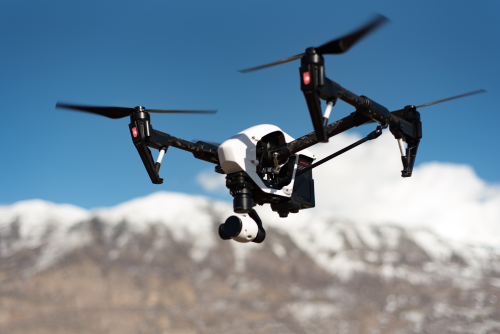
If you are shopping for the best drones for easy repairs, the biggest mistake is focusing only on price or camera quality. A repair-friendly drone is one you can keep flying without long downtime, rare parts, or a repair process that turns one bad landing into a full service ticket. Before you buy, what actually matters is not the marketing claim of durability, but the real-world mix of parts availability, service access, calibration needs, and how the drone tends to fail.
Quick Take
Here is the short version for buyers who want a repair-friendly drone:
- For most everyday buyers, “easy repairs” does not mean fully DIY. It means common spare parts, lots of repair knowledge in the market, and a realistic path back into the air.
- If you want a compact camera drone with the least ownership friction, a popular Mini-series model such as the DJI Mini 4 Pro is usually the safest bet because the ecosystem is broad in many countries.
- If you want better wind handling and a more serious camera platform, a model in the DJI Air class, such as the Air 3, can be a better long-term fit, but deeper repairs usually cost more than on a Mini.
- If actual self-repair is your top priority, a custom FPV drone built from standard parts is in a different league from most consumer camera drones.
- If you are learning and expect crashes, tinywhoop or micro FPV drones are often the cheapest and easiest way to build repair skills.
- If you run commercial work, the most repair-friendly drone is usually the one with the strongest local dealer and service network, not the one with the longest spec sheet.
- Red flags before buying: proprietary parts with weak regional support, batteries that are hard to source, models with little teardown history, and any drone where even basic damage usually requires factory service.
What “easy repairs” really means
Most buyers use the phrase loosely. In practice, repairability has two very different meanings.
Ownership repairability
This is what matters to most buyers.
It means: – How fast you can get parts – How many shops know the platform – Whether simple crash damage is cheap to fix – Whether the drone needs software pairing or sensor calibration after a part swap – How long you are grounded
A drone can be hard to open but still have good ownership repairability if the brand has strong service coverage and common spares.
DIY repairability
This matters more to FPV pilots, advanced hobbyists, and technical teams.
It means: – Can you replace individual parts yourself? – Are the parts standard or proprietary? – Do you need only basic tools, or soldering and diagnostics? – Can one broken arm, motor, or camera be replaced without rebuilding the whole aircraft?
This is where custom FPV drones usually win.
The key truth before you buy
Modern camera drones are highly integrated. That is great for flying, stabilization, obstacle sensing, and compact design. It is not great for workshop-style repairs.
So the best drone for easy repairs depends on what you really want:
- Easy flying and easy service access
- Or easy wrenching and modular parts
Those are not the same thing.
Which drone types are easiest to repair?
Support quality varies by country, but this table is a good starting point.
| Drone type | DIY repairability | Ownership repairability | Typical damage pattern | Best for |
|---|---|---|---|---|
| Mini-class camera drone | Low to moderate | High | Props, arms, gimbal, shell | Travel creators, casual buyers |
| Air/Mavic-class camera drone | Low to moderate | Moderate to high | Props, gimbal, arms, sensors | Serious hobbyists, photographers |
| Tinywhoop or micro FPV | High | High | Frame, props, motors, ducts | Learners, indoor FPV, low-cost practice |
| Custom 5-inch FPV | Very high | Moderate | Arms, motors, ESC, camera, antenna | FPV pilots who want true modular repairs |
| Enterprise drone with dealer support | Low DIY, high managed serviceability | High if local support is strong | Props, landing gear, payload components, service events | Commercial teams that need uptime |
The best repair-friendly choices by buyer type
There is no single winner for everyone. These are the most sensible options depending on how you fly and how much repair responsibility you want.
Best for most buyers: a popular Mini-series camera drone
A model in the DJI Mini line, including newer options such as the Mini 4 Pro, is often the strongest choice for buyers who want the least painful ownership experience.
Why it works
- Huge installed base in many markets
- Common accessories, props, and third-party knowledge
- Lightweight enough that some crashes are less destructive than on heavier drones
- Easy to pack, travel with, and use casually
- Often the easiest path to finding local help, tutorials, and spare consumables
What makes it repair-friendly in practice
Not because it is easy to fully rebuild. It usually is not.
It is repair-friendly because: – Props are easy to replace – There are many people familiar with the platform – The overall ecosystem is large – You are less likely to end up with an “orphan” drone that nobody services
What to watch
- Gimbals are delicate
- Foldable arm assemblies are not truly beginner-DIY friendly
- Sensor or alignment issues after impact can require professional service
- Small drones are portable, but they also get flown in places where branches, wires, and gusty wind create crash risk
Best for
- Beginners
- Travel creators
- Families and casual hobbyists
- Buyers who want a mainstream platform and do not want to learn drone repair as a hobby
Who may regret it
- Buyers who fly aggressively
- Pilots working around obstacles every week
- Anyone who thinks “small” automatically means “rugged”
Best balance for hobbyists and creators: an Air-class folding camera drone
If you want better wind performance and a more capable all-around camera drone, a model in the DJI Air class, such as the Air 3, is often a smarter buy than a tiny drone.
Why it works
- Popular enough that service knowledge is widespread in many regions
- More stable for outdoor shooting than ultra-light drones
- A good middle ground between portability and capability
- Better suited to regular use than the smallest consumer drones
What makes it repair-friendly
Again, not because it is easy to tear down at home.
It is repair-friendly because: – It sits in a mainstream ecosystem – Parts, batteries, props, and knowledge are easier to find than on niche models – Many repair shops already know the architecture of mainstream folding camera drones
Tradeoffs
- Heavier drone, heavier crash consequences
- More expensive batteries and components
- Gimbal and sensor repair costs can rise fast
- Still a proprietary, software-heavy platform
Best for
- Hobbyist photographers
- Real estate and content creators
- Buyers who fly often enough to justify a stronger platform but do not want to build FPV gear
Who may regret it
- Buyers who only fly occasionally and do not need the extra capability
- People choosing it mainly because “bigger must be tougher”
Best if self-repair is the priority: a custom 5-inch FPV drone
If your definition of easy repairs is “I can replace the broken part tonight and fly tomorrow,” a custom 5-inch FPV drone is hard to beat.
Why FPV is different
FPV stands for first-person view. Unlike most camera drones, a custom FPV build is made from separate components: – Frame – Motors – Flight controller – ESC, or electronic speed controller – Camera – Video transmitter – Antenna – Receiver
If one part breaks, you often replace that one part instead of shipping away the whole aircraft.
What makes it repair-friendly
- Standardized components are widely available
- Arms, motors, props, antennas, and cameras are often individually replaceable
- The drone is designed with maintenance in mind
- Repair knowledge in the FPV community is deep
The catch
- You need tools and patience
- Soldering is often part of the game
- Troubleshooting can be technical
- Flight setup and tuning are part of ownership
- It is not the easiest path for stable cinematic hovering or beginner safety features
Best for
- FPV pilots
- Builders
- Action flyers
- Buyers who care more about long-term repairability than automation
Who may regret it
- Beginners who just want an easy aerial camera
- Travel buyers who want convenience over tinkering
Best low-cost crash trainer: a tinywhoop or micro FPV drone
If you are new and know you will crash, this is one of the smartest ways to learn without turning every mistake into an expensive event.
Why it works
- Frames, props, and motors are usually cheap
- Many impacts are minor
- The skills you learn transfer to larger FPV systems
- You build real maintenance habits early
What makes it especially useful
A tinywhoop teaches: – Basic parts replacement – Battery handling – Prop orientation – Motor diagnosis – How to do post-crash inspection
Limits to know
- Not a substitute for a stabilized camera drone
- Shorter flight times
- Less suitable for polished aerial photography
- Ecosystem choice matters, especially video and radio systems
Best for
- New FPV pilots
- Budget-conscious learners
- Buyers who want a practice platform before moving to larger drones
Best for businesses: choose local service strength over aircraft glamour
For commercial teams, “easy repairs” means uptime.
That changes the buying decision.
A dealer-supported platform such as the DJI Mavic 3 Enterprise line or Matrice series can be the right answer if, and only if, you have real local support.
What business buyers should prioritize
- Official local service access
- Spare batteries and props in stock
- Clear turnaround times
- Loaner or backup options
- Maintenance documentation
- Payload and accessory availability
Why this matters more than DIY
A solo creator might tolerate a week or two of downtime.
A survey team, inspection firm, or internal enterprise department often cannot.
For business buyers, the most repair-friendly drone is the one that: – Fits the workflow – Has a support path in your region – Can be documented for clients, risk teams, or insurers – Does not leave the team grounded waiting on a single proprietary part
Best for
- Mapping and inspection teams
- Internal enterprise operations
- Public safety or industrial programs
- Service providers who bill around uptime
The pre-buy repairability checklist
Before you buy any drone, run through this process.
1. Search how the exact model fails, not how it is marketed
Look up real owner complaints and repair discussions for: – Arm damage – Gimbal damage – Battery availability – Prop mounting issues – Crash survivability
If all you can find is promotional content, that is not a good sign.
2. Check whether service exists in your country or shipping zone
A drone can be popular globally and still be a bad repair choice where you live.
Verify: – Official service coverage – Independent repair shops – Parts sellers – Typical shipping friction for batteries and electronics
3. Find out what you can replace yourself
At minimum, learn whether you can easily replace: – Props – Prop screws – Prop guards if used – Landing gear or feet – Battery door or latch components – Simple FPV frame parts
Then ask what usually requires a technician: – Gimbal modules – Obstacle sensors – Arm assemblies – Internal ribbon cables – Mainboard-level repairs
4. Ask what needs calibration after repair
This is a big one and often ignored.
Some repairs may require: – Gimbal calibration – Compass or IMU calibration – Vision sensor alignment – Firmware checks – Component pairing
If your workflow cannot tolerate that hassle, choose a more serviceable ecosystem.
5. Buy into a common battery ecosystem
A repair-friendly drone is not helpful if you cannot get batteries six months later.
Batteries are wear items. They age, they get damaged in crashes, and shipping them internationally can be slower or more restricted than ordinary parts.
6. Match the drone to your likely crash profile
This matters more than buyers think.
Examples: – Travel creator in tight urban spaces: small and common is usually smarter than powerful and expensive – Mountain or coastal flyer in wind: a tiny drone may suffer more incidents, even if each individual crash is smaller – FPV freestyle pilot: modular repairability matters more than automation – Enterprise inspection team: stable service contracts matter more than DIY
7. Decide whether a service plan is worth it
For some buyers, an extended replacement or care plan can be more important than raw repairability.
This can make sense if: – You are not technical – Downtime matters – The drone is highly integrated – The plan is available and well supported in your region
Always verify the local terms, eligibility rules, and turnaround expectations before relying on it.
8. Buy your first spares on day one
At a minimum, consider starting with: – Extra propellers – Prop screws – One extra battery – A storage-safe battery case – A landing pad if you operate from dusty ground – For FPV: spare props, frame parts, antennas, and at least one common failure component
The cheapest repair is the one that does not require waiting for a shipment.
What people get wrong about repair-friendly drones
“Cheaper drone means cheaper repairs”
Not always.
A cheaper drone with scarce parts can be more painful than a mainstream model with better support.
“Smaller means tougher”
Not exactly.
Smaller drones carry less mass, which can reduce impact energy. But they also get flown in tighter spaces and can be more affected by wind, which increases accident risk.
“Obstacle sensing means I will not crash”
It helps. It does not remove pilot responsibility.
Branches, wires, reflective surfaces, low light, and sideward motion can still create problems.
“A rugged-looking drone is easy to fix”
Durability and repairability are not the same thing.
A drone may survive minor impacts but still be difficult to open, diagnose, or calibrate after damage.
“FPV is only for experts”
True for some advanced builds, but not entirely.
If your top priority is learning how to repair your own aircraft, starting with a small FPV platform can actually be more educational and financially forgiving than repeatedly crashing an integrated camera drone.
Safety, battery, and compliance limits after a repair
Any time you repair or modify a drone, safety comes first.
Do not treat a power-on test as an airworthiness check
A drone that turns on is not automatically ready to fly.
Before the next flight, check: – Prop condition and correct orientation – Motor smoothness and shaft play – Arm alignment and hinge integrity – Battery seating and latch security – Antennas and cable routing – Gimbal freedom of movement – Error messages in the app or goggles – Required calibrations per the manufacturer’s guidance
Do a cautious test flight
After a meaningful repair: 1. Fly in a legal, open area away from people and property. 2. Start with a short hover. 3. Check control response, GPS behavior, video feed, battery warnings, and return-to-home behavior if relevant. 4. Keep the first post-repair flight conservative.
Treat crash-damaged batteries seriously
Whether you use smart batteries or FPV LiPos, crash damage can create fire risk.
Do not keep flying a battery that is: – Swollen – Cracked – Leaking – Overheating – Physically deformed after impact
Store suspect batteries safely and dispose of them through an approved battery recycling channel.
Commercial operators should verify record-keeping requirements
In some jurisdictions, insurers, clients, or aviation authorities may expect maintenance records, defect logs, or documented repair procedures for commercial work.
Rules vary globally, so verify what applies to your operation before returning a repaired aircraft to paid service.
Modifications can affect compliance
Changes to weight, identification hardware, payload setup, or radio equipment may affect how the drone is treated under local rules.
Before flying after a major repair or modification, verify current requirements with the relevant aviation authority and any land manager or site operator involved.
FAQ
Are FPV drones easier to repair than camera drones?
Usually yes, especially custom FPV builds. They are more modular, and individual components are easier to replace. But they are also more technical to own, so “easier to repair” does not mean “easier to operate.”
Is DJI a good choice if I care about repairs?
For many buyers, yes, mainly because the ecosystem is large and service knowledge is widespread. That does not make DJI drones highly DIY-friendly, but it often makes them easier to keep in service than niche consumer brands. You still need to verify local support in your country.
Are sub-250 g drones cheaper to repair?
Often, but not always. Prop and shell damage may be less severe, but small camera drones still have delicate gimbals, foldable arms, and proprietary parts. Lower weight reduces some crash energy, but it does not make a drone immune to expensive damage.
Should I buy a service plan or spare parts?
If you are a non-technical buyer using an integrated camera drone, a service plan can be more valuable than trying to self-insure every accident. If you fly FPV or already do your own repairs, spare parts may be the better investment. The right answer depends on downtime tolerance and your repair skill.
What spare parts should I buy immediately?
For camera drones: props, screws, at least one extra battery, and any model-specific consumables that are easy to lose or damage. For FPV: multiple sets of props, spare antennas, frame parts, and one or two likely failure components such as a motor or camera.
Can third-party repairs cause problems?
They can. Quality varies, and some repairs may affect warranty, calibration, waterproofing claims, or future service eligibility. If you use a third-party shop, make sure they know your exact platform and can explain what was replaced and what was tested.
How do I know a repaired drone is safe to fly again?
Use a proper post-repair process: visual inspection, battery check, app or firmware check, any required calibration, and a cautious test flight in a legal open area. If anything feels abnormal, stop and inspect again before returning to normal operations.
Final decision: buy for recovery speed, not just crash survival
If repairability is a serious buying priority, do not ask only, “Which drone is hardest to break?” Ask, “How fast can I recover when it does break?”
For most buyers, the best drone for easy repairs is a popular mainstream camera drone with strong regional support, not a niche bargain. For pilots who want true self-repair, custom FPV wins by a wide margin. And for businesses, the right purchase is the platform with the strongest service pipeline and the least downtime risk in your region.
Before you click buy, spend ten minutes researching parts, batteries, calibration requirements, and local service options for your exact model. That ten-minute check will save more money than almost any spec upgrade.