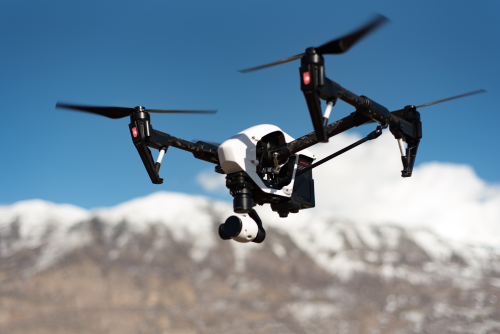
Buying the best drones for farmers is less about finding one “top” model and more about matching the aircraft to the actual farm job. A grower who wants quick crop scouting, a farm manager who needs measurable maps, and a team planning spray missions should not buy the same drone. This guide breaks down the best drones for farmers based on budget, skill level, and real use cases, so you can buy for results instead of marketing.
Quick Take
If you want the short version, here is the practical buying logic:
- For simple visual scouting and farm inspections: start with a reliable camera drone, not a specialist ag platform.
- For beginners on tighter budgets: a lightweight drone like the DJI Mini 4 Pro is often enough for crop checks, irrigation scans, roof and fence inspections, and basic livestock awareness.
- For the best all-round farm drone: the DJI Air 3 is a strong step up if you fly often, deal with more wind, or want better reach and image quality.
- For repeatable mapping and field measurement: look at the DJI Mavic 3 Enterprise, not a consumer drone.
- For crop-health analytics and vegetation maps: buy the DJI Mavic 3 Multispectral only if you already know how those outputs will affect decisions in the field.
- For very large acreage: fixed-wing platforms like WingtraOne GEN II or senseFly eBee X make more sense than standard multirotors, but they require a more advanced workflow.
- For spraying or spreading: buy through a strong local dealer network and compare the DJI Agras line and regional alternatives such as XAG. Training, service, parts, batteries, and compliance matter more than brochure specs.
Key Points Before You Buy
- A cheap drone can deliver real value on a farm if your goal is visual awareness, not agronomy-grade analysis.
- The jump from “nice aerial photos” to “actionable farm data” usually means extra spending on software, batteries, training, and workflow, not just a better drone.
- Multispectral only pays off when someone will actually interpret the data and act on it.
- RTK (real-time kinematic positioning for higher-accuracy location data) matters for mapping, but it does not turn bad flight planning into good results.
- A spray drone is not a simple upgrade from a camera drone. It is a different operation with different risks, regulations, and support needs.
- The safest buying path for most farms is: scouting first, mapping second, specialist ag platform third.
Start With the Job, Not the Drone
Farm buyers often make the same mistake: they shop by brand, payload, or camera headline instead of asking what decision the drone needs to improve.
Here are the four most common farm drone jobs.
1. Visual scouting and spot checks
This is the most common and the easiest place to start.
Typical uses: – Checking crop emergence or obvious stress – Spotting irrigation issues – Inspecting fences, sheds, roofs, bins, pivots, and drains – Monitoring access roads after rain – Checking livestock locations on large properties
What you need: – Fast setup – Good image quality – Stable flight – Enough battery life for short missions – A drone you will actually use regularly
What you do not necessarily need: – RTK – Multispectral sensors – Expensive enterprise software
2. Repeatable field mapping
This is different from flying around and looking at video.
Typical uses: – Creating orthomosaics, which are stitched aerial maps – Measuring field area – Tracking drainage and erosion – Documenting storm damage – Counting rows or identifying missing stands in some crops – Building repeatable records for insurance, agronomy, or farm planning
What you need: – Mission planning – Consistent overlap – Good workflow support – Often RTK or another accuracy method – Software that fits your team
3. Crop-health analysis
This is where many buyers overspend too early.
Typical uses: – Vegetation maps – Stress detection – Comparing field zones – Feeding agronomy workflows or variable-rate decisions
What you need: – A clear use case for multispectral output – Someone who knows how to interpret the data – Repeatable flights and data handling – Integration into decision-making
If no one on your farm or advisor team will actually use vegetation indices, skip this category for now.
4. Spraying or spreading
This is a full agricultural application workflow, not a camera upgrade.
Typical uses: – Spot spraying – Small or hard-to-access plots – Orchard or specialty crop work – Steep terrain or wet ground – Targeted application where ground equipment is inefficient
What you need: – Local compliance checks – Pilot training – Chemical handling discipline – Battery and charging infrastructure – Calibration, maintenance, and support – Dealer service nearby
Best Drones for Farmers by Budget, Skill Level, and Use Case
The table below gives the fastest decision path.
| Buyer profile | Best fit | Skill level | Rough all-in spend | Best for | Main risk |
|---|---|---|---|---|---|
| Small farm, beginner, first drone | DJI Mini 4 Pro | Beginner | Low | Visual scouting, structures, irrigation, quick checks | Too light for regular high-wind or large-acreage work |
| Regular flying, mixed farm, wants better all-round performance | DJI Air 3 | Beginner to intermediate | Low to mid | Crop scouting, livestock overview, infrastructure, frequent use | Still not a true mapping or ag-analysis platform |
| Farm manager or service provider who needs accurate maps | DJI Mavic 3 Enterprise | Intermediate | Mid to high | Mapping, field records, measurements, repeatable survey work | Costs rise fast with software, RTK, and training |
| Agronomy-led farm or advisor using vegetation analytics | DJI Mavic 3 Multispectral | Intermediate to advanced | High | Crop-health workflows and zone analysis | Overkill if nobody will act on the data |
| Very large acreage or heavy mapping volume | WingtraOne GEN II or senseFly eBee X | Advanced team | High | Covering big areas efficiently | More complex launch, recovery, planning, and workflow |
| Agricultural application team | DJI Agras T25/T50 or strong local equivalent | Advanced/team operation | Very high | Spraying and spreading | Support, batteries, compliance, and maintenance are major factors |
A quick note on budgets: treat these as all-in categories, not just airframe cost. Extra batteries, controllers, chargers, software, service plans, and training can change the real number dramatically.
The Best Options in Plain English
DJI Mini 4 Pro: Best entry drone for farmers who need eyes in the sky
For many farms, the first drone should be a simple, reliable scouting tool. The Mini 4 Pro fits that role well.
Best for: – Small to medium properties – Quick crop checks – Irrigation and drainage inspection – Buildings, bins, roofs, and fencing – Beginners who want low friction
Why it works: – Easy to carry – Fast to launch – Less intimidating for new pilots – Good enough image quality for most visual farm tasks
Who should buy it: – Farmers who have never owned a drone – Mixed-use owners who want one drone for farm and personal use – Buyers testing whether drone workflows will stick
Who should skip it: – Operators dealing with strong wind often – Large-acreage growers who need to cover more ground regularly – Buyers who already know they need mapping or agronomy outputs
Bottom line: if your farm use case is “show me what’s happening over there right now,” this is often the smartest low-risk buy.
DJI Air 3: Best all-rounder for farms that will actually use a drone every week
If the Mini class feels too limited, the Air 3 is where farm buyers often find the best balance.
Best for: – Regular crop scouting – Larger farms than a mini-class drone comfortably serves – Livestock overview – Repeated structure inspections – Buyers who want more confidence in wind and range than entry drones provide
Why it works: – Better all-round flight performance than ultra-light drones – More capable for routine farm use – Strong option for buyers who want one drone that can handle many jobs well
Who should buy it: – Farmers who already know the drone will become part of weekly operations – Owners with moderate acreage – Buyers who want a serious camera drone without jumping into enterprise costs
Who should skip it: – Teams that need mapping-grade workflows – Buyers expecting multispectral outputs – Anyone trying to justify it as a spray or specialist ag platform
If you want a practical “one drone for farm operations” purchase and your use cases are mostly visual, this is one of the safest buys.
Autel EVO Lite+: Best alternative if you need a non-DJI scouting option
DJI dominates this category, but not every buyer wants or can easily source DJI equipment. In some markets, the Autel EVO Lite+ can fill the same general role as a mid-range visual scouting drone.
Best for: – Visual scouting – General farm photography and inspection – Buyers where local Autel support is stronger – Buyers comparing alternatives to DJI in consumer/prosumer class
Tradeoff to understand: – The broader agriculture and mapping software ecosystem around DJI is usually deeper, especially once you move beyond simple visual use.
This is not the default recommendation for most farm buyers, but it is a valid one if local support, availability, or procurement preferences point you that way.
DJI Mavic 3 Enterprise: Best mapping drone for farms that need repeatable field data
This is where the buying logic changes. You are no longer just buying a camera drone. You are buying into a field-data workflow.
Best for: – Orthomosaics – Area measurement – Drainage analysis – Insurance documentation – Repeatable field monitoring – Farm managers, consultants, and service providers
Why it works: – Built around enterprise workflows – Better fit for mission planning and mapping than consumer drones – Suitable for buyers who need repeatable outputs, not just flight footage
Who should buy it: – Larger farms with a clear mapping need – Contractors serving multiple farms – Teams who already use farm management, GIS, or mapping tools
Who should skip it: – First-time drone buyers just wanting to inspect crops visually – Farms without time to process and use mapped outputs – Anyone expecting it to replace a spray drone or full agronomy program by itself
Important reality: this class of drone makes sense only if you also budget for software, data processing, and operator discipline.
DJI Mavic 3 Multispectral: Best for crop-health workflows with real agronomy follow-through
Multispectral drones sound exciting because they promise crop insights beyond the visible camera. Sometimes that promise is real. Sometimes it becomes an expensive dashboard nobody uses.
Best for: – Farms already working with agronomists or crop consultants – Repeated crop-health monitoring – Zone identification – Vegetation mapping for management decisions
Why it works: – Combines visible and multispectral capture in one platform – Built for agriculture and analysis use cases, not just photography – More practical for farms that already know what they want to measure
Who should buy it: – Advanced farm teams – Agronomy-focused operations – Service providers selling crop-health mapping
Who should skip it: – Beginners – Buyers who cannot explain how they will act on the data – Farms expecting a simple “green means good, red means bad” answer from every flight
The key question is not “Can this drone collect multispectral data?” The key question is “Who will convert that data into a better field decision?”
WingtraOne GEN II or senseFly eBee X: Best for very large farms and high-throughput mapping
For very large acreage, fixed-wing drones can cover more area efficiently than multirotors. But they are not casual tools.
Best for: – Large broadacre operations – Survey-heavy service providers – Teams mapping big areas repeatedly – Buyers with established planning and processing workflows
Why they work: – Better area coverage per mission than typical multirotors – Efficient for large survey jobs – Strong fit for dedicated mapping teams
Who should buy them: – Advanced operators – Enterprises or contractors – Teams that treat drone mapping as a serious operational function
Who should skip them: – Small farms – Irregular small fields with many obstacles – Buyers who want quick scouting more than structured mapping
If your farm is large enough that multirotor mapping feels slow and repetitive, fixed-wing becomes worth considering. If not, it usually adds complexity you do not need.
DJI Agras T25 or T50: Best spraying drones when backed by real local support
For spraying or spreading, model choice matters less than dealer support, spare parts, training, battery logistics, and local legal fit.
Best for: – Agricultural application teams – Farms with clear spray drone economics – Specialty crops, difficult terrain, wet fields, or targeted treatment work – Buyers who can support daily operating discipline
Why the Agras line stands out: – Widely recognized agriculture platform family – Built for application work rather than imaging – Supported in many regions through specialist ag dealers
What matters more than the aircraft: – Local technician availability – Battery and charging workflow – Chemical handling process – Calibration support – Operator training – Compliance guidance from your region’s approved sources
Also compare: – XAG platforms in regions where dealer support is strong
For spray drones, never buy by spec sheet alone. Buy the system that can keep flying in your region during a busy season.
What to Buy Based on Real Farm Use Cases
If you run a small mixed farm
Buy: – DJI Mini 4 Pro if budget matters most – DJI Air 3 if you want a more capable long-term tool
Why: – Most value comes from visual checks, not advanced analytics – You need something quick, portable, and easy to use
If you manage row crops and want better decisions, not just better photos
Buy: – DJI Air 3 for visual scouting – DJI Mavic 3 Enterprise if you need repeatable mapping – DJI Mavic 3 Multispectral only if data will feed agronomy actions
Why: – Row-crop buyers often outgrow basic camera drones faster – Mapping and crop-health tools make sense when they tie into existing decision processes
If you run orchards, vineyards, or specialty crops
Buy: – DJI Air 3 for regular scouting – Mavic 3 Enterprise or Multispectral if you need repeatable block-level analysis – Agras-class spray drone if application economics and regulations support it
Why: – Specialty crop workflows often reward more frequent low-altitude inspections – Spray drones may offer stronger value in terrain or canopy conditions that limit ground rigs
If you are a consultant or farm service provider
Buy: – Mavic 3 Enterprise as a core mapping platform – Mavic 3 Multispectral if clients need agronomy outputs – WingtraOne GEN II or eBee X if scale justifies fixed-wing – Separate spray platform only if you are entering that business deliberately
Why: – Client work punishes unreliable workflows – Repeatability, serviceability, and software integration matter more than consumer convenience
What to Budget Beyond the Drone
This is where many farm buyers get surprised.
For almost any farm drone
Budget for: – Extra batteries – Spare propellers – Better charging setup – Storage case – Landing pad – Memory cards – Basic maintenance items
For mapping drones
Add: – Mapping software – Processing workflow – Higher-accuracy positioning tools if needed – Staff time for planning and data handling
For multispectral drones
Add: – Analysis software or compatible agronomy platform – Training on interpretation – Repeatable flight scheduling – Internal process for acting on results
For spraying drones
Add: – Many more batteries – Charging or generator infrastructure – Mix/load workflow tools – Nozzles and consumables – PPE and chemical handling support – Transport setup – Maintenance plan – Dealer support package
For serious agricultural application, the aircraft can be only one part of the real program cost.
Safety, Legal, and Compliance Checks Before You Fly
Because this is a global guide, the exact rules vary. Before buying or flying, verify current requirements with your local aviation authority and, for spray work, the relevant agriculture or chemical regulator.
Check these issues before purchase
- Drone registration and pilot requirements: many countries require registration, operator IDs, or pilot qualifications for commercial or heavier drones.
- Where you can fly: altitude limits, line-of-sight rules, and restrictions near roads, workers, neighboring property, or controlled airspace may apply.
- Commercial farm operations: even if the flight is on your own land, commercial use rules may still apply in your country.
- Privacy and worker awareness: avoid capturing more than you need, and set clear internal policy for flights around staff, contractors, and neighboring land.
- Insurance: farm liability coverage does not automatically mean drone operations are covered.
- Spraying and spreading: chemical application rules, approved products, buffer zones, drift management, record-keeping, and operator licensing may all be regulated separately from aviation law.
A good rule: if the drone is producing decisions, documentation, or chemical application for a business, treat compliance as part of the buying process, not an afterthought.
Common Mistakes Farmers Make When Buying Drones
Buying multispectral too early
If your team does not already understand how vegetation maps will change action in the field, start with a visual drone and grow from there.
Underestimating wind and endurance needs
A mini-class drone can be excellent, but not every farm is a calm, compact environment.
Forgetting software costs
The drone may be a one-time purchase. The useful workflow often is not.
Expecting one drone to do everything
Scouting, mapping, thermal inspection, and spraying are different jobs. Some overlap exists, but no single platform is perfect at all of them.
Buying a spray drone without local support
During peak season, downtime is expensive. Parts, batteries, and dealer response matter more than small spec differences.
Assuming a map equals an agronomy answer
A beautiful orthomosaic is not the same as a prescription, diagnosis, or treatment plan.
Choosing fixed-wing for small, awkward fields
Fixed-wing shines at scale. In fragmented plots with trees, power lines, and awkward launch/recovery space, it can be the wrong tool.
A Practical Buying Checklist
Use this before you spend money.
-
List your top three drone jobs.
Write them in plain language, such as “check irrigation leaks,” “map storm damage,” or “spot spray inaccessible rows.” -
Decide what output you actually need.
Visual video, stitched maps, vegetation indices, or spray application are not the same purchase. -
Set an all-in budget.
Include batteries, software, training, repairs, and support. -
Match the drone to the least experienced regular pilot.
A complex platform that nobody enjoys using becomes shelf equipment. -
Check local compliance before buying specialist hardware.
This matters most for enterprise mapping and spray systems. -
Prioritize support over novelty.
On farms, dependable service usually beats exciting features. -
Buy for the next two seasons, not the next two weeks.
Pick the platform you can keep using after the first burst of enthusiasm fades.
FAQ
What is the best first drone for a farmer?
For most first-time buyers, a compact camera drone is the best start. The DJI Mini 4 Pro is a strong entry option if your main need is visual scouting. If you expect regular farm use and tougher conditions, the DJI Air 3 is often the better long-term purchase.
Do farmers really need multispectral drones?
Some do, many do not. Multispectral makes sense when you already have a workflow for analyzing crop-health data and turning it into real management decisions. If you only want to see obvious issues from the air, a standard camera drone is usually enough.
Is a mapping drone worth it for a single farm?
It can be, but only if the maps solve repeat problems. If you need field measurements, drainage records, storm documentation, or repeatable survey outputs, an enterprise mapping drone may pay off. If you mostly want quick visual checks, it probably will not.
Which is better for farming: fixed-wing or multirotor?
For most farms, multirotor is easier and more versatile. Fixed-wing becomes attractive when you need to map very large areas efficiently and have the team skills to manage the workflow. For small or irregular fields, multirotor is usually the smarter choice.
Can I legally use a spray drone on my farm?
Possibly, but you must verify local aviation and agricultural chemical rules before buying or operating one. In many places, spray drones involve separate operator, application, chemical, or record-keeping requirements beyond normal drone rules.
How many batteries should a farm drone buyer plan for?
More than most first-time buyers think. A casual scouting drone may be fine with a small rotation, but mapping and especially spraying operations depend heavily on battery workflow. If you cannot keep the aircraft working during your actual field window, the drone is not fully funded.
Should I buy a consumer drone or an enterprise drone?
Buy a consumer drone if your main value is visual awareness and light inspection. Buy an enterprise drone if your workflow depends on repeatable maps, higher accuracy, organized field data, or team operations.
Final decision
If you are new to farm drones, buy a scouting drone first and prove the habit. If your farm already needs repeatable maps, move to the Mavic 3 Enterprise. If you have a real agronomy workflow for vegetation data, consider the Mavic 3 Multispectral. And if you want to spray, choose the platform with the best local support, training, and compliance path rather than the flashiest spec sheet.