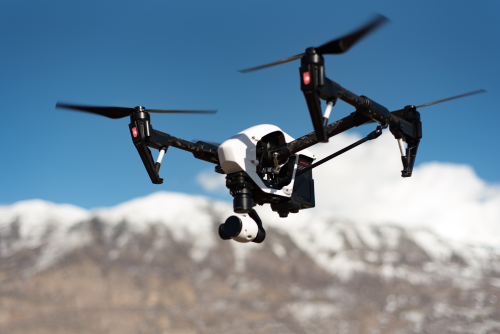
There is no single “best” inspection drone for everyone. The right buy depends on what you inspect, how often you fly, whether your deliverable is simple visual documentation or thermal analysis, and how much operational friction you can handle. This guide breaks down the best drones for inspectors based on budget, skill level, and real use cases so you can choose a platform that earns its keep instead of becoming an expensive compromise.
Quick Take
If you need the short version, start here.
| Drone | Best for | Skill level | Rough budget tier | Why it stands out | Main limit |
|---|---|---|---|---|---|
| DJI Mini 4 Pro | Basic exterior documentation, occasional roof and property overviews, secondary scout drone | Beginner | Entry | Small, easy to carry, low-friction starter in many markets | Limited wind performance and no true inspection-grade tele workflow |
| DJI Air 3 | Best-value visual inspections for roofs, façades, towers, and small commercial work | Beginner to intermediate | Lower mid-range | Dual-camera setup with a useful medium tele view, strong flight safety features | Not an enterprise mapping or thermal platform |
| DJI Mavic 3 Enterprise | The best all-around commercial inspection drone for many solo operators and small teams | Intermediate | Mid-range commercial | Tele camera, enterprise workflow, optional RTK, compact form factor | No thermal |
| DJI Mavic 3 Thermal | Compact thermal inspections for solar, electrical, HVAC, and building envelope work | Intermediate | Mid-to-high commercial | Visual and thermal in one portable package | Thermal only pays off if you know how to use and report it properly |
| DJI Matrice 30T | Utilities, industrial plants, public-safety-style inspections, rougher sites | Advanced | High enterprise | Rugged, weather-resistant, stronger zoom/thermal workflow, better site readiness | Higher cost, more kit to carry, more operational complexity |
| Flyability Elios 3 | Indoor confined-space inspections such as tanks, boilers, tunnels, and mines | Specialist | Specialist budget | Collision-tolerant indoor inspection where a normal drone is the wrong tool | Not a general exterior inspection drone |
If inspections are a core revenue line, most buyers should start by deciding between the DJI Mavic 3 Enterprise and the DJI Mavic 3 Thermal. If your work is mostly visual, the Mavic 3 Enterprise is the safer long-term buy. If thermal findings are part of the job you actually sell, go straight to the Mavic 3 Thermal.
What actually matters in an inspection drone
A lot of buyers get distracted by headline camera specs. Inspectors should care more about safe data capture, repeatability, and workflow fit.
1. Telephoto matters more than “cinematic” image quality
For inspections, being able to stand off from the asset and still capture clear detail is often more valuable than having the biggest sensor. A tele or medium-tele camera helps you:
- stay farther from roofs, towers, façades, and energized equipment
- reduce collision risk
- inspect from better angles
- capture details without pushing into awkward, unsafe positions
That is why an Air 3 or Mavic 3 Enterprise can make more sense for inspectors than a camera-first drone designed mainly for photography.
2. Stable hovering and obstacle sensing matter every day
Inspections happen close to structures, often in turbulence, around edges, and in visually busy environments. Good obstacle sensing does not make a drone “safe by itself,” but it does help. Stable hover behavior, predictable braking, and clean controller UX matter more than buyers admit.
3. Thermal is powerful, but only when it is billable
Thermal imaging is useful for:
- solar hot spot detection
- electrical inspections
- HVAC and mechanical diagnostics
- building envelope issues
- moisture and heat-loss investigations in the right conditions
But thermal is not magic. Poor capture timing, reflective surfaces, wrong settings, or bad interpretation can produce misleading results. If you do not have a real thermal workflow, paying for a thermal drone too early can be a mistake.
4. Mapping and RTK only matter if your output needs them
RTK stands for real-time kinematic positioning. In plain English, it improves positional accuracy for mapping and repeatable datasets. It matters if you deliver:
- orthomosaics
- 2D site maps
- 3D models
- volumetric measurements
- repeat inspections tied to accurate location data
If you mainly deliver annotated photos and short inspection videos, RTK may not be essential on day one.
5. Weather, batteries, and repair support can make or break the purchase
A great aircraft with poor local support is risky for commercial inspection work. Before buying, think about:
- local dealer and repair turnaround
- battery availability
- spare propellers and charging workflow
- care plan or service coverage
- how long the drone can be down before jobs start slipping
Commercial buyers often regret underestimating support logistics.
6. The drone is only part of the inspection system
You are not buying an aircraft. You are buying a workflow. That includes:
- controller and screen usability in bright light
- file management
- reporting
- thermal analysis software if needed
- mapping software if needed
- battery charging on the road
- client-ready outputs
A cheaper drone with a smooth workflow can be more profitable than a fancier platform with awkward reporting.
Best drones for inspectors by budget, skill level, and real use cases
DJI Mini 4 Pro
Best for:
- occasional roof and property documentation
- entry-level inspectors testing demand
- a backup or scout drone
- buyers who value low weight and portability
Why buy it
The DJI Mini 4 Pro is the lightest serious option on this list and the easiest way to start collecting visual inspection data without carrying a full enterprise kit. It is especially useful for:
- simple exterior overviews
- residential roofing photos
- gutter, chimney, and upper-façade checks
- preliminary site walkthroughs before bringing a larger platform
It is also a practical second drone for teams that already own a heavier enterprise aircraft.
Where it falls short
The Mini 4 Pro is not an ideal primary inspection tool for demanding commercial work. The main limits are:
- less confidence in stronger wind
- no true tele workflow for safe stand-off detail capture
- less enterprise-style mission and data management
- easier to outgrow once jobs become more technical
Who should buy it
Buy the Mini 4 Pro if you are a beginner, your jobs are light, and your main goal is visual documentation rather than detailed technical inspection. It is also a good choice when portability matters more than depth.
Skip it if inspections are already weekly paid work or if you often need close detail on towers, façades, or industrial assets.
DJI Air 3
Best for:
- roof inspectors
- façade and building envelope visuals
- tower and mast documentation
- small commercial contractors
- solo operators who want the best value in visual inspection work
Why buy it
For many buyers, the DJI Air 3 is the best-value inspection drone on the market because it hits the sweet spot between ease of use, safety features, portability, and useful stand-off capture. Its dual-camera setup is the big reason. The medium-tele view is genuinely helpful for inspectors who need more detail than a single wide camera can deliver.
That makes it a strong fit for:
- residential and light commercial roofs
- upper-story building documentation
- condition photos for insurance or contractors
- solar array visuals where thermal is not required
- cell-site and tower photos from safer distances
Where it falls short
The Air 3 is still a prosumer aircraft, not a full enterprise platform. That means:
- no thermal
- less enterprise-focused mapping and inspection workflow than the Mavic 3 Enterprise
- not the best choice if your clients expect advanced geo-referenced deliverables
- less suitable for harsher industrial environments
Who should buy it
If you are new to paid inspection work and need one drone that can handle a wide range of visual jobs, the Air 3 is arguably the smartest first serious buy.
It is the drone most people should choose when they are tempted to “save money” with a Mini but already know inspections will become regular work.
DJI Mavic 3 Enterprise
Best for:
- repeatable commercial inspection work
- roofing and façade contractors scaling up
- construction progress plus inspection
- mapping and inspection in one compact platform
- solo operators who need a proper business tool
Why buy it
The DJI Mavic 3 Enterprise is the best all-around commercial inspection drone for a large share of the market. It is small enough to travel with easily but enterprise-focused enough to support real operational workflows.
Its strengths are especially relevant for inspectors:
- tele camera for detail capture
- enterprise app and mission workflow
- optional RTK for accurate mapping
- compact setup compared with larger industrial airframes
- better fit for repeatable commercial documentation than consumer models
If you inspect properties, sites, structures, or assets every week, this is the point where the purchase stops feeling like a gadget and starts feeling like a professional tool.
Where it falls short
Its biggest limitation is simple: no thermal. If your revenue depends on heat signatures, hot spots, electrical faults, or thermal reporting, the Mavic 3 Enterprise is the wrong branch of the platform.
Who should buy it
Choose the Mavic 3 Enterprise if:
- you need a real commercial inspection drone
- your deliverables are mostly visual
- you want a serious upgrade from an Air-class aircraft
- you may also do mapping or site documentation
- you want the smallest platform that still feels enterprise-ready
For many inspectors, this is the safest “buy once, use for years” answer.
DJI Mavic 3 Thermal
Best for:
- solar inspection
- electrical and utility components
- HVAC and mechanical systems
- building envelope and heat-loss work
- inspectors who need both visual and thermal in one compact kit
Why buy it
The DJI Mavic 3 Thermal is usually the right answer when thermal is not a nice-to-have but a billable service. It combines a compact field footprint with visible and thermal payloads in one aircraft, which is exactly what many solo operators and small teams need.
It makes the most sense when you regularly inspect:
- rooftop or ground solar systems
- switchgear and electrical assets
- building roofs and façades for heat anomalies
- mechanical systems where thermal findings support diagnosis
The value is not just “having thermal.” The value is getting thermal and visual evidence in a portable workflow you can actually deploy often.
Where it falls short
Thermal drones cost more, but the bigger risk is buying one before your workflow is ready. Common problems include:
- poor understanding of emissivity, reflection, and environmental effects
- weak reporting process
- trying to use thermal at the wrong time of day
- selling “thermal inspections” without enough training
Who should buy it
Buy the Mavic 3 Thermal if thermal findings are a real part of the work you do or plan to sell immediately. If you only think thermal sounds impressive, wait.
DJI Matrice 30T
Best for:
- utilities
- industrial sites
- infrastructure teams
- public-safety-adjacent inspection workflows
- operators who work in rougher conditions and need a more site-ready aircraft
Why buy it
The DJI Matrice 30T is the step up from compact enterprise into more rugged operational work. It is a better fit when the site itself is more demanding than the drone buyer first realizes.
Why teams choose it:
- more robust enterprise form factor
- weather-resistant design for tougher environments
- stronger zoom and thermal workflow than smaller compact drones
- better suited to utility, industrial, and infrastructure programs
- more comfortable for teams that operate frequently and systematically
If you inspect substations, industrial plants, critical infrastructure, larger utility assets, or complex sites, the Matrice 30T starts making sense.
Where it falls short
The main tradeoffs are cost, complexity, and logistics. You will carry more kit, spend more, and usually need more disciplined operational procedures. For many solo inspectors, it is simply more platform than they need.
Who should buy it
Choose the Matrice 30T if your environment is tougher, your sites are larger, or your clients expect a more industrial-grade workflow.
If you are in a procurement environment that cannot use DJI, one of the first alternatives to evaluate is the Autel EVO Max 4T. Just make sure local support, repair coverage, software workflow, and dealer expertise are strong in your market before committing.
Flyability Elios 3
Best for:
- tanks
- boilers
- silos
- tunnels
- mines
- other indoor or confined-space inspections where contact risk is high
Why buy it
The Flyability Elios 3 is not a general inspection drone. It is a specialist tool for a specialist problem: internal inspection of spaces where a normal GPS camera drone is the wrong answer.
Its value is simple. In the right environment, it can reduce the need for rope access, shutdowns, scaffolding, or human entry into hazardous spaces. That changes the ROI completely.
Where it falls short
If your work is mostly roofs, façades, solar arrays, and towers, this is absolutely not the drone to start with. It is a niche platform with a niche budget and a niche workflow.
Who should buy it
Buy the Elios 3 only if confined-space inspection is the job, not a hypothetical future service. If that is your actual business, it can be one of the most valuable inspection drones available. If not, it is overkill.
Which drone fits which inspection job?
Here is the practical matching framework.
Residential roofing and exterior property inspections
Best fit: – DJI Air 3 – DJI Mini 4 Pro if budget is tight and work is simple
Why: – portability – quick deployment – enough image quality for documentation – medium tele advantage with the Air 3
Commercial roofs, façades, and building condition surveys
Best fit: – DJI Mavic 3 Enterprise – DJI Air 3 for lighter-duty visual work
Why: – better stand-off detail capture – more repeatable workflow – better fit for frequent commercial jobs
Solar inspections
Best fit: – DJI Mavic 3 Thermal for small-to-mid deployments – DJI Matrice 30T for larger or tougher sites
Why: – thermal is often part of the actual deliverable – visible plus thermal in one mission is valuable
Construction progress plus inspection
Best fit: – DJI Mavic 3 Enterprise
Why: – mapping capability – repeatability – visual documentation and site data in one platform
Towers, masts, and telecom sites
Best fit: – DJI Air 3 for occasional visual documentation – DJI Mavic 3 Enterprise for routine professional work – DJI Matrice 30T for more complex or industrial programs
Why: – tele capture matters – wind and stand-off confidence matter – repeat visits often justify enterprise tools
Utility and industrial infrastructure
Best fit: – DJI Matrice 30T – in larger programs, an even bigger interchangeable-payload platform may be justified
Why: – tougher sites – thermal often matters – ruggedness and zoom matter more than portability
Indoor confined spaces
Best fit: – Flyability Elios 3
Why: – this is exactly what it is built for – a normal exterior drone is the wrong tool here
What to budget besides the aircraft
A lot of buyers compare only aircraft price and then get blindsided. Your real field kit usually includes:
- at least 3 batteries, often more
- multi-battery charger
- spare propellers
- case or travel-ready backpack
- landing pad if your sites are dusty
- sun hood or bright-screen controller solution
- memory cards and storage workflow
- care plan or service coverage
- mapping or thermal software if required
- training time
- insurance where needed for your market or client base
For inspectors, the full kit matters more than squeezing the last bit of value out of the airframe alone.
Safety, legal, compliance, and operational limits to know
Inspection work often happens near buildings, roads, utility assets, private property, industrial sites, and controlled airspace. That creates more compliance risk than casual recreational flying.
Before you buy or deploy, verify the following in the country and region where you operate:
Aviation and airspace requirements
Check with the relevant aviation authority for: – registration requirements – pilot competency or certification rules – operational limits by aircraft weight and risk category – airspace authorization near airports or restricted zones – night operations rules – whether close-proximity infrastructure work needs added permissions
Site and client permissions
Many inspection jobs also require: – property owner approval – site induction or EHS clearance – utility or industrial facility permission – privacy and data handling controls – traffic or public-exposure planning where applicable
Critical reminder
A drone does not automatically authorize you to inspect sensitive infrastructure. Some countries and facilities impose extra restrictions around power plants, utilities, telecom sites, government buildings, ports, and other critical assets. Always verify site-specific rules before the job.
Drones do not replace every inspection method
A drone can reduce risk and speed up documentation, but some findings still require hands-on verification, testing, or qualified human access. Sell the drone as part of the inspection workflow, not as a magic replacement for every access method.
Common mistakes inspectors make when choosing a drone
Buying a camera drone instead of an inspection drone
A beautiful wide camera is not the same as a useful inspection platform. Inspectors often need tele reach, enterprise workflow, repeatability, and practical field speed more than cinematic output.
Overbuying thermal
Thermal only makes sense if: – clients will pay for it – you know how to capture it correctly – you can report it clearly – your target assets actually benefit from it
Underbuying for wind and stand-off work
If you inspect roofs, towers, or upper façades regularly, a small lightweight drone can become frustrating very quickly.
Ignoring software and reporting
A drone that captures great images but slows down reporting can hurt margins.
Forgetting repair downtime
Commercial operators should think about what happens when the aircraft needs service. Local support can matter more than marginal differences in features.
Assuming “small drone” means “no rules”
In many places, even sub-250 g drones still come with registration, operational, privacy, or site-permission obligations. Always verify locally.
FAQ
What is the best first drone for a new inspector?
For most beginners who plan to do regular visual inspection work, the DJI Air 3 is the best first serious buy. It is easier to grow into than a Mini-class drone and much cheaper to start with than an enterprise thermal platform.
Is a sub-250 g drone enough for professional inspections?
Sometimes, yes, for simple exterior documentation. But many inspectors outgrow it quickly once they need better wind performance, safer stand-off detail capture, or more professional workflow features.
Do I really need thermal for inspections?
Only if thermal findings are part of the work you actually sell. For many roof, façade, and condition-documentation jobs, a visual drone is enough. For solar, electrical, HVAC, and some building diagnostics, thermal can be a real business advantage.
What matters more for inspections: zoom or a bigger sensor?
Usually zoom, or at least a useful tele view. A larger sensor is nice, but safe stand-off detail capture is often more important for inspection work than pure image aesthetics.
Is the DJI Mavic 3 Enterprise worth the extra cost over the Air 3?
Yes, if inspections are a real business line and you need more repeatable commercial workflow, better mapping options, optional RTK, and a more professional platform. If your jobs are lighter and mostly visual, the Air 3 may still be enough.
Can I inspect indoors with a normal camera drone?
Only in limited situations, and often badly. Normal GPS-first exterior drones are not the right tools for complex confined spaces. If indoor inspection is a core service, a specialist platform like the Flyability Elios 3 is the correct category to evaluate.
How many batteries should an inspector own?
Three is a practical minimum for light work. Five or more is often smarter for full commercial days, repeat site visits, or travel between jobs where charging opportunities are limited.
Final decision: what should you actually buy?
If you only need a simple entry point, buy the DJI Air 3.
If inspection work is already a real business and your deliverables are mostly visual, buy the DJI Mavic 3 Enterprise.
If thermal is part of your service offering from day one, buy the DJI Mavic 3 Thermal.
If you work around utilities, industrial plants, or rougher environments, step up to the DJI Matrice 30T.
And if your inspections happen inside assets, skip the normal exterior-drone ladder and go straight to the Flyability Elios 3 category.
The smartest buying move is not choosing the most drone. It is choosing the smallest, safest, supportable platform that can reliably produce the evidence your clients will pay for.