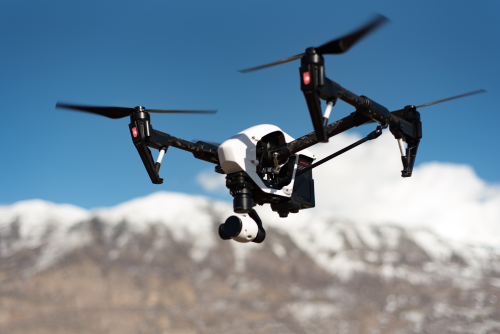
If you’re shopping for the best drones for quiet flight, the biggest mistake is chasing a “silent” model. No consumer drone is silent. What matters far more is the drone’s sound profile, how close you need to fly to get the shot, and whether the aircraft helps you finish quickly without drawing attention.
For most buyers, the right quiet-flight drone is not the most expensive one or the one with the biggest spec sheet. It is the one that gives you acceptable image quality, good stability, and enough camera reach to stay farther away from people, homes, trails, or wildlife.
Quick Take
- There is no truly silent drone, only less intrusive ones.
- For most beginners, hobbyists, and travel creators, a modern mini-class folding camera drone is the smartest quiet-flight buy.
- A model like the DJI Mini 4 Pro is often the best overall fit because it is light, compact, and less socially disruptive than larger drones.
- If you need better image quality or more stand-off distance, the DJI Air 3 or Air 3S class can be quieter in practice because a medium tele camera lets you shoot from farther away.
- Premium drones in the Mavic 3 class are not acoustically quiet up close, but they can still be the right choice for professional work where tele reach reduces how close you need to operate.
- FPV drones, cinewhoops, and ducted “selfie” drones are usually poor choices if low noise is a top priority.
- Don’t buy based on “low-noise propeller” marketing alone. Flight style, distance, wind, and camera reach usually matter more.
What actually makes a drone seem quiet
Most buyers think quiet flight is just about decibels. In real-world use, that is only part of the story.
Sound character matters more than people expect
A high-pitched whine usually attracts more attention than a lower, softer hum, even when the measured loudness is similar. This is why some small drones can feel surprisingly noticeable nearby. They may not be the loudest on paper, but their pitch stands out.
That matters in places like:
- neighborhoods
- parks
- resorts and hotels
- hiking trails
- beaches
- weddings and private events
- tourism-heavy city centers
A drone that sounds “less sharp” can feel more acceptable than one with a thin, mosquito-like tone.
Distance is often the biggest noise advantage
This is the quiet-flight rule many buyers miss: a drone that lets you fly farther away can be less intrusive than a smaller drone that forces you to get close.
That is why camera reach matters so much. A medium tele camera, or simply a tighter field of view, can let you:
- stay farther from people
- avoid hovering over roads, paths, or roofs
- capture architecture without standing directly above it
- get closer-looking shots without physically moving the drone closer
In practice, that can do more for “quiet flight” than shaving a small amount of rotor noise.
Hover efficiency matters
Drones sound loudest when they are working hard. Extra thrust means more rotor speed, more prop noise, and more noticeable pitch changes.
A quieter-feeling drone usually has:
- efficient props
- stable hover behavior
- enough power reserve that it is not straining in normal flight
- good flight control tuning, so it does not constantly over-correct
A drone that hunts around in wind or keeps making aggressive corrections will sound busier and more annoying than one that sits still cleanly.
Prop guards and ducts usually make things worse for noise
Many new buyers assume prop guards will make a drone quieter because the props are covered. In most cases, that is wrong.
Ducted designs and prop guards often increase noise because they change airflow and can create more turbulent sound. They may be useful for safety in certain controlled scenarios, but they are rarely the best choice if your main goal is low acoustic impact.
Wind changes everything
A drone that seems acceptable on a calm morning can sound much harsher in a headwind or near buildings, cliffs, or narrow courtyards. Wind forces the aircraft to work harder. Echoes and reflections can also make even a small drone sound more intrusive.
If you regularly fly in windy coastal areas, mountain destinations, or urban canyons, quiet-flight expectations should be conservative.
The best quiet-flight drone classes, not just the best marketing
There is no universal lab standard that makes brand-to-brand quietness claims easy to trust. So instead of pretending there is one perfect “quietest drone,” it is more useful to compare drone classes by how they behave in the field.
| Drone type | Quiet-flight fit | Why it works or fails | Who it suits |
|---|---|---|---|
| Mini-class folding camera drone | Best overall for most buyers | Light, portable, less intimidating, usually efficient enough for casual and creator use | Beginners, travelers, hobbyists, light commercial users |
| Mid-size folding camera drone with tele option | Excellent in practice | Heavier and louder nearby, but camera reach lets you stay farther away | Serious creators, real estate, travel filmmakers, solo pros |
| Premium camera drone with tele options | Best for pro stand-off work | Not quiet up close, but strong imaging and reach reduce how close you need to fly | Commercial imaging teams, high-end creators |
| FPV freestyle quad | Poor quiet-flight choice | High RPM, aggressive tuning, sharp sound signature | Performance flying, not discreet capture |
| Cinewhoop or ducted selfie drone | Usually poor for quietness | Ducts and enclosed props often produce a buzzy, obvious sound | Tight indoor or close-proximity shots, not neighborhood discretion |
| Enterprise zoom platform | Situational | Can work from far away, but large, expensive, and very noticeable at launch/hover | Inspection and industrial teams with specific workflows |
Best drones for quiet flight by buyer type
These are fit-based recommendations, not laboratory rankings. Quietness depends on the pilot, the environment, wind, and how close the drone needs to get.
Best overall for most buyers: DJI Mini 4 Pro
If your priority is quiet flight for everyday use, the DJI Mini 4 Pro is one of the strongest overall choices because it balances portability, image quality, stabilization, and low social friction.
Why it works well:
- It sits in the light mini-class that is generally less imposing than larger drones.
- It is easy to carry, so you are more likely to use it in calm conditions instead of forcing bad-weather flights.
- It is capable enough for travel, casual aerials, social content, and many lightweight commercial tasks.
- Good flight assistance features can reduce repeated close-range repositioning.
Tradeoffs to know:
- Like most small drones, it still has a higher-pitched tone close by.
- It is not a magic solution for neighborhoods or quiet nature spots.
- In stronger wind, any mini drone can become more noticeable because it must work harder.
Who should buy it:
- first-time buyers
- travel creators
- hobbyists
- people flying occasionally near residential areas with care and legal permission
- buyers who want the least disruptive mainstream option without moving into a bigger airframe
Best budget quiet-flight option: a current entry-level mini-class camera drone
If you want the quiet-flight benefits of a small folding drone without paying for every advanced feature, an entry-level mini-class model is usually the right place to look.
Examples can include products like the DJI Mini 4K, DJI Mini 3, or a similar reputable mini-class folding camera drone available in your market.
Why this category makes sense:
- You still get the basic quiet-flight advantage of a smaller airframe.
- Parts and batteries are often easier to source than niche products.
- It is usually a better noise choice than a cheap FPV bundle or toy-grade drone.
What to watch for:
- Older or cheaper models may have fewer obstacle-sensing or flight assistance features.
- Wind performance may be weaker.
- Budget drones can become false economy if propellers, batteries, or repair support are hard to find locally.
This is the smart pick for buyers who care more about practical discretion than having every premium feature.
Best for creators who want to stay farther away: DJI Air 3 or Air 3S class
This is where many buyers get surprised. A mid-size drone like the DJI Air 3 or Air 3S class is not quieter at close range than a mini drone. It is bigger, heavier, and more noticeable when launching and hovering nearby.
But it can be quieter in practice because its camera setup lets you stand off farther from the subject.
Why this class works:
- A medium tele camera means you can shoot people, buildings, landscapes, or vehicles from farther away.
- You spend less time creeping in for framing.
- It is more stable in wind than most mini drones, which can reduce the frantic sound of constant correction.
Who should choose it:
- travel filmmakers who want a stronger image pipeline
- real estate shooters
- outdoor creators filming from trails or viewpoints
- buyers who often shoot in open spaces where stand-off distance is possible
Who may regret it:
- buyers flying mostly in compact residential areas
- people who want the smallest possible travel kit
- those who think larger always means quieter
If your flights are mostly in open landscapes, coastlines, farms, resorts, or large properties, this class is often the best real-world compromise.
Best premium option for professional stand-off shooting: Mavic 3 Classic or Mavic 3 Pro class
For premium imaging work, a Mavic 3-class platform can make sense, especially when your workflow benefits from tele reach and stronger camera flexibility.
This class is not quiet in the simple acoustic sense. Nearby, it is still a serious drone. But professional operators often care more about reducing proximity than reducing raw rotor noise.
Why it can still be the right “quiet” choice:
- Better camera options can reduce how close you need to get.
- It is often more suitable for commercial image quality standards.
- In wind or large open spaces, it may perform more predictably than a lighter model.
Where it fits:
- commercial tourism content
- destination marketing
- higher-end real estate and resort work
- landscape and documentary crews
- pro operators who need stronger files and more lens flexibility
Why casual buyers should hesitate:
- higher total system cost
- more noticeable in public
- larger travel and repair burden
- overkill if your main goal is simple, discreet hobby flying
Usually the wrong choice if noise matters: FPV and cinewhoop drones
If quiet flight is a top buying priority, resist the temptation to buy the wrong drone style just because it looks small or fun.
FPV freestyle quads are typically loud, sharp, and attention-grabbing. Cinewhoops and other ducted drones are often even more obvious than buyers expect, especially at close range.
Avoid these if your main need is:
- neighborhood-friendly flying
- travel discretion
- low-profile scenic capture
- low-disturbance operation near guests, hikers, or bystanders
They are excellent tools for certain cinematic or sport uses. They are simply not the best tools for quiet flight.
What actually matters before you buy
Here is the practical buying framework.
1. Start with your quietest real use case
Ask yourself where the drone will most often fly:
- over your own property
- on trips
- near holiday rentals or hotels
- in neighborhoods
- at scenic overlooks
- near clients, staff, or guests
- around wildlife-sensitive areas
The answer should guide your class choice more than specs alone.
2. Buy for stand-off distance, not just small size
If you need close-looking shots without flying close, prioritize camera reach. That may point you toward a mid-size drone instead of the smallest one.
If your shots are mostly wide travel scenes and simple aerials, mini-class is usually enough.
3. Watch real hover footage before buying
Marketing videos hide what matters. Look for real-world reviews that include:
- takeoff sound
- steady hover at moderate height
- slow lateral passes
- behavior in mild wind
- landing sound
A drone that sounds fine in a cinematic fly-by may be annoying in a hover, which is often the sound bystanders notice most.
4. Check propeller availability and quality
Props are wear items. Damaged, chipped, bent, or cheap third-party propellers can make a drone louder and less stable.
Before buying, check:
- genuine replacement prop availability
- local support
- battery availability
- repair turnaround in your region
Quiet flight is hard to maintain if you cannot keep the aircraft in proper condition.
5. Don’t overvalue “low-noise props”
Some replacement props can slightly improve sound character. But the gain is usually modest, not transformational.
Treat low-noise props as a fine-tuning option, not the main reason to buy a drone. Also verify compatibility, safety, and any warranty implications before using non-original parts.
6. Remember that flying style is part of the buying decision
A drone with good stability, braking, and flight assistance can help you fly smoother. Smooth flying is often quieter flying.
The loudest habits are usually:
- repeated low hovering near people
- hard punch-outs after takeoff
- rapid Sport mode corrections
- fighting wind close to structures
- repeated close passes because the camera is too wide
A camera system that reduces those behaviors is part of the quiet-flight equation.
Safety, legal, and social limits to know
A quieter drone does not mean a freer drone.
Before flying, verify the rules that apply in your location. Depending on the country, region, park, venue, or airspace, you may need to check:
- aviation authority rules for registration, pilot requirements, and flight category
- local airspace restrictions
- park, beach, heritage site, or nature reserve rules
- private property or venue permission
- privacy laws and expectations
- wildlife protection restrictions
- insurance or commercial operating requirements
A few practical reminders:
- Under 250 g does not mean “legal everywhere.”
- Quiet flight should never become covert flight.
- Do not assume bystanders are comfortable just because the drone is smaller.
- Stay conservative around homes, schools, crowds, animals, and private events.
- Commercial operators should confirm site permission and client authority before flying.
In many places, the biggest risk is not a formal aviation penalty. It is a complaint, a confrontation, a venue ban, or avoidable damage to your reputation.
What people get wrong about quiet drones
“The smallest drone is always the quietest”
Not necessarily. Small drones can be less imposing overall, but up close they often produce a sharper, higher-pitched sound than buyers expect.
“Prop guards make it quieter”
Usually false. They often add turbulence and make the noise more obvious.
“A bigger drone is louder, so it can’t be the better quiet-flight choice”
Also false. If a larger drone lets you stand farther back thanks to better wind handling or a tighter camera, it may create less disturbance overall.
“Low-noise props solve everything”
They help a little at best. They do not turn an obvious drone into a stealth aircraft.
“I can record clean ambient audio while flying overhead”
In most cases, no. Rotor noise overwhelms onboard audio capture. Serious audio is usually recorded separately on the ground.
“If the drone is legally allowed, it is socially acceptable”
Not always. You can be within aviation rules and still annoy guests, neighbors, or hikers. Quiet-flight buying should include social judgment, not just compliance.
FAQ
Is there a truly silent consumer drone?
No. Some drones are less intrusive than others, but no mainstream consumer drone is silent in normal outdoor use.
What is the quietest type of drone for most people?
A modern mini-class folding camera drone is usually the best overall quiet-flight choice for general buyers. It is light, portable, and less socially disruptive than larger aircraft.
Are sub-250 g drones always the best for quiet flight?
They are often the best starting point, but not always the best final answer. If you need tighter framing from farther away, a mid-size drone with a tele camera can be quieter in practice because you do not need to fly as close.
Do low-noise propellers really work?
Sometimes, but the difference is usually modest. They can slightly soften the sound profile, but flight style, wind, altitude, and stand-off distance matter much more.
Are FPV drones good for quiet neighborhood flying?
Usually not. FPV drones tend to have a sharper, more aggressive sound and are rarely the best option when low noise or low social impact is the goal.
Can I get clean audio from the drone while it is flying?
Generally no. Rotor noise dominates. If you need usable ambient sound, dialogue, or event audio, plan to capture it separately on the ground.
Does a telephoto camera really help with quiet flight?
Yes. It often helps more than buyers expect. A tighter camera can let you stay farther from the subject, which reduces how noticeable the drone is.
If my drone is small, can I fly it almost anywhere?
No. Rules vary widely. Even small drones may still be restricted by aviation law, local ordinances, protected-area rules, venue policy, privacy concerns, or wildlife protections. Always verify before flying.
The buying decision in one sentence
If quiet flight is your priority, buy the lightest reliable camera drone that still lets you get the shot from a respectful distance.
For most people, that means a current mini-class model, with the DJI Mini 4 Pro standing out as the safest overall recommendation. If your work benefits from tighter framing and more stand-off distance, an Air 3 or Air 3S class drone may be the better quiet-flight tool in practice. Before you buy, watch real hover tests, verify local rules, and remember that the quietest drone is usually the one that gets in, gets the shot, and gets out without making itself the story.