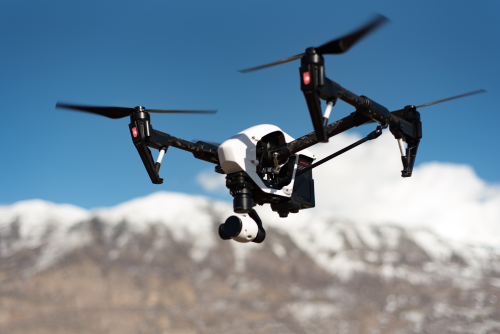
If you’re shopping for the best drones for reliable Return-to-Home, the wrong spec to obsess over is advertised range. A dependable RTH system is really a stack of things working together: satellite positioning, home-point accuracy, obstacle handling, wind performance, battery reserve, and clear pilot feedback. Buy the wrong drone for your environment, and the RTH button becomes a false sense of security instead of a genuine safety net.
Quick Take
If reliable Return-to-Home is one of your top buying priorities, here’s the practical answer:
- For most buyers, an Air-class camera drone is the sweet spot.
- For travel-first buyers, a Mini-class drone can be excellent, but wind and power margin matter more than many people expect.
- For serious creators and solo commercial operators, a Mavic-class drone usually gives you more confidence on the trip home.
- For enterprise teams, reliability comes from redundancy, operational workflow, and support infrastructure as much as from the aircraft itself.
- For FPV, RTH is a backup feature, not a reason to fly carelessly.
Here’s the shortlist by use case:
| Best fit | Drone | Why it stands out for RTH reliability | Main tradeoff |
|---|---|---|---|
| Best for most buyers | DJI Air 3 | Mature flight behavior, strong all-round stability, obstacle sensing, better wind margin than many sub-250g drones | Less pocketable than a Mini |
| Best ultra-portable option | DJI Mini 4 Pro | Very travel-friendly, strong software ecosystem, good sensing for its class | Lower wind authority and less margin in rough conditions |
| Best for serious photo/video work | DJI Mavic 3 Classic or Mavic 3 Pro | More confidence in wind, longer-distance recovery margin, prosumer-grade platform | Bigger, pricier, more travel friction |
| Best for enterprise teams | DJI Matrice 30 series or Matrice 350 RTK | Built for repeatable operations, stronger operational ecosystem, logging and team workflows | Cost, training, and complexity |
| Best FPV option with a real safety net | DJI Avata 2 | Better emergency recovery behavior than typical DIY FPV setups | RTH is still not the same experience as a camera drone |
If you want the shortest recommendation: buy the drone class that gives you extra margin on bad days, not just the smallest drone you can afford.
What “reliable Return-to-Home” actually means
Return-to-Home, or RTH, is the drone’s ability to navigate back toward its recorded takeoff point or updated home point after a button press, signal loss, or low-battery trigger.
But “has RTH” and “has reliable RTH” are not the same thing.
A reliable RTH system should do most of these well:
- Record the correct home point before takeoff
- Maintain stable positioning during flight
- Climb or route safely around obstacles, when supported
- Account for battery reserve realistically
- Handle temporary signal loss without confusion
- Give the pilot clear voice or app prompts
- Return consistently in real conditions, not just open-field demo conditions
That last part matters. Many drones can come home in a big open field on a calm day. The real buying question is whether the system still behaves predictably when you add:
- trees
- buildings
- light wind turning into strong headwind
- low light
- reflective water
- a moving takeoff location
- pilot stress
Reliable RTH is less about one miracle feature and more about overall system maturity.
The best drones for reliable Return-to-Home
DJI Air 3: best for most buyers
If reliable RTH is high on your checklist and you want the best balance of safety, portability, and value, the DJI Air 3 is the easiest recommendation.
Why it works so well for this use case:
- It sits in the middle ground where the aircraft is still portable, but not so light that every gust becomes a recovery problem.
- It comes from a mature ecosystem where the flight app, controller behavior, and failsafe logic are familiar and refined.
- Its obstacle-sensing and navigation package is meaningfully more confidence-inspiring than what you usually get on cheap GPS drones.
- It has enough airframe and power margin to deal with moderate real-world conditions better than ultra-light options.
Who it fits best:
- beginners who want a safer first “serious” drone
- travel creators who fly in mixed conditions
- real estate pilots
- hobbyists who want less stress on the flight home
- solo operators who need dependable behavior without moving into enterprise budgets
Who may regret it:
- buyers who need maximum pocketability
- travelers working in places where a lighter aircraft brings legal or practical advantages
- people who only fly in calm, open spaces and want the smallest possible kit
If your use case includes coastline, open countryside, elevated viewpoints, or locations where wind can change quickly, an Air-class drone often makes more sense than a Mini even if the Mini looks better on paper for portability.
DJI Mini 4 Pro: best ultra-portable RTH drone
The DJI Mini 4 Pro is the strongest pick for people who want a travel-friendly drone without dropping down into toy-grade behavior.
Why it makes this list:
- It offers a far more mature RTH experience than the bargain GPS drones many beginners compare it against.
- Its portability means people actually bring it with them, which matters more than buyers admit.
- Its sensing and flight software are good enough that many travelers and hobbyists will feel comfortable using RTH as a genuine backup.
Why it is not automatically the best choice:
- It is still a very light drone.
- Light drones have less margin in stronger wind, especially on the return leg.
- Small airframes can make pilots overestimate what “reliable” means in exposed environments.
This is the drone for:
- travel creators
- city-break flyers
- hikers who care about weight
- casual photographers
- beginners who will mostly fly in fair weather
This is not the smartest choice if your flying often includes:
- cliffs
- beaches
- boats
- mountain overlooks
- windy farmland
- colder or changeable conditions where return margin matters more than portability
A common buyer mistake is assuming the best mini drone is also the best RTH drone. It can be excellent, but once conditions get rough, size and power reserve matter.
Mavic 3-class drones: best for serious creators and solo pros
If your drone earns money, captures once-only footage, or flies in less forgiving locations, Mavic 3-class aircraft such as the Mavic 3 Classic or Mavic 3 Pro are the safer long-term buy.
Why they stand out:
- They typically give you more wind confidence on the way home.
- They offer stronger overall recovery margin when battery, distance, and conditions stop being ideal.
- The platform is aimed at buyers who care about repeatability, not just casual fun.
- Serious creators benefit from a drone that is less easily pushed around during return.
This class makes sense for:
- professional photographers
- filmmakers
- real estate and tourism operators
- inspection and site-documentation users
- buyers who want fewer “I hope it makes it back” moments
The downside is obvious:
- bigger bag
- higher cost
- more travel planning
- more painful repair bills
Still, if return confidence is part of your livelihood, the jump from Mini-class to Mavic-class can be easier to justify than buyers think.
Matrice 30 or Matrice 350 RTK: best for enterprise and team operations
For enterprise teams, “reliable RTH” means more than the aircraft getting back on its own. It also means:
- predictable behavior across multiple pilots
- strong logging and diagnostics
- integration into standard operating procedures
- support, parts, maintenance, and accountability
That’s why Matrice-class aircraft matter. Platforms such as the Matrice 30 series and Matrice 350 RTK are designed for teams doing inspections, public safety work, infrastructure, mapping, or industrial operations where operational consistency matters more than portability.
These are the right tools when you need:
- repeatable behavior across missions
- stronger confidence for managed operations
- better team-level workflow and documentation
- equipment that fits a professional maintenance culture
These are not lifestyle purchases. They are operational tools. If you are a solo creator or new hobbyist, this class is overkill.
DJI Avata 2: best FPV option if you still want a real backup
FPV pilots should read this carefully: RTH in FPV is useful, but it should never be the main reason you feel safe.
The Avata 2 deserves a mention because it gives buyers a more approachable safety net than most DIY or analog FPV builds. That matters for people moving into immersive flying without wanting a completely unforgiving platform.
Why it fits:
- It offers a more integrated recovery experience than many custom FPV setups.
- It is more beginner-friendly than a pure manual build.
- It can help when signal drops or orientation goes wrong.
But the limits are important:
- FPV flight paths are different from standard camera-drone operations.
- Environments are often tighter, more complex, and lower to the ground.
- RTH in FPV should be treated as emergency help, not a magic escape button.
If your number-one buying priority is trustworthy return behavior, a conventional camera drone still beats an FPV drone.
What actually matters before you buy
This is where buyers either save money intelligently or regret the purchase.
1. Home-point reliability
The drone has to know where “home” actually is.
Look for:
- clear confirmation that the home point was recorded
- the ability to update the home point when appropriate
- app prompts that are hard to miss
Be careful if you regularly launch from:
- moving boats
- vehicles
- dense tree cover
- balconies
- places with weak satellite visibility
A drone with excellent camera specs but sloppy home-point behavior is a bad RTH buy.
2. GNSS and positioning quality
GNSS stands for Global Navigation Satellite System. In plain English, it’s the satellite positioning layer behind the drone’s ability to know where it is.
RTH reliability improves when the drone can combine:
- good satellite lock
- barometer data
- compass health
- downward vision positioning when available
Red flags include:
- slow or inconsistent home-point capture
- drifting hover
- frequent compass warnings
- app behavior that leaves you guessing
If your environment includes tall buildings, heavy canopy, or narrow valleys, assume RTH performance will be less forgiving than marketing videos suggest.
3. Obstacle sensing is helpful, but it has limits
Obstacle sensing is useful. It is not magic.
A better RTH drone will usually have more mature obstacle detection and more intelligent avoidance behavior. But even good systems can struggle with:
- power lines
- thin branches
- glass
- low light
- repetitive textures
- reflective water
- fast or angled approaches
The buying lesson: obstacle sensing improves your odds, but it does not erase the need to set a smart RTH altitude and fly responsibly.
4. Wind performance matters more than advertised range
This is one of the most important points in the whole guide.
A drone can have excellent paper range and still be a weak RTH choice if it is easily overpowered by headwind on the trip back.
If you often fly in:
- coastal areas
- open fields
- hills
- mountain viewpoints
- cold-weather conditions
- elevated urban rooftops
then wind margin should rank above compactness.
This is why Air-class and Mavic-class drones are often better RTH buys than the smallest available aircraft.
5. Battery reserve and low-battery logic
Reliable RTH is partly about how conservative the system is.
You want a drone that:
- warns early enough
- estimates return energy realistically
- doesn’t tempt you into using the last few percent as if it were free flight time
What buyers get wrong:
- They assume “battery percentage remaining” equals “distance safely recoverable.”
- They ignore the energy required to fly into headwind.
- They expect the return trip to cost the same as the outbound trip.
When RTH is a top priority, battery behavior matters almost as much as positioning.
6. App clarity and controller behavior
A reliable RTH system should be easy to understand under stress.
Strong signs include:
- obvious status messages
- clear RTH alerts
- easy cancel/resume logic
- controller feedback that doesn’t require hunting through menus
Weak app design creates pilot hesitation, and hesitation creates mistakes.
7. Repair support and ecosystem maturity
If two drones look similar on a spec sheet, the better RTH buy is often the one with:
- more mature firmware
- wider user base
- easier access to batteries and props
- better repair pathways
- more predictable app updates and support
This is one reason serious buyers often avoid no-name marketplace drones. The issue is not just whether RTH works on day one. It is whether the platform remains trustworthy after months of updates, travel, wear, and the first minor crash.
How to choose based on your flying style
Choose a Mini-class drone if:
- portability is a top priority
- you mostly fly in good weather
- your flights are casual, scenic, or travel-focused
- you value convenience more than maximum return margin
Choose an Air-class drone if:
- you want the best all-round RTH value
- you fly in mixed conditions
- you want more confidence than a mini can always provide
- you need a strong balance of portability and operational margin
Choose a Mavic-class drone if:
- your footage or missions matter professionally
- you often fly in more exposed conditions
- you want stronger “get home” confidence
- you can justify the size and cost
Choose an enterprise platform if:
- you manage crews, missions, or client risk
- you need logs, maintenance discipline, and repeatability
- downtime costs more than the aircraft price difference
Choose an FPV platform only if:
- you understand that RTH is backup, not primary safety
- your flying style actually calls for FPV
- you accept a steeper discipline curve
Safety, legal, and operational limits to know
Return-to-Home is a recovery feature, not a permission slip.
Before relying on it, verify the rules that apply where you fly, including:
- registration requirements
- remote identification requirements where applicable
- altitude limits
- visual line of sight rules
- local park, venue, or property restrictions
- restricted or controlled airspace requirements
- commercial operating obligations if you fly for work
A few important realities:
- RTH does not make it okay to fly beyond what local rules allow.
- RTH does not guarantee obstacle-free routing.
- RTH does not override geofencing, airspace restrictions, or emergency limitations.
- Launching from boats, vehicles, rooftops, or crowded urban locations adds complications you should verify before flying.
Treat RTH as one layer in your risk management, not your entire safety plan.
Common mistakes buyers make
Buying for range instead of return reliability
Long advertised range is not the same as dependable recovery. Link strength, wind margin, and navigation quality matter more.
Assuming obstacle avoidance solves everything
It doesn’t. Thin wires, branches, poor light, and complex geometry still cause problems.
Choosing the lightest possible drone for windy places
This is one of the biggest causes of buyer regret. If you mostly fly in exposed locations, a slightly larger drone is often the safer investment.
Trusting RTH before testing it
Every pilot should test RTH in a safe, open area before relying on it in a real scenario.
Forgetting the moving-home-point problem
If you are walking, driving, or boating during flight, the original home point may no longer be where you actually want the drone to return.
Thinking FPV RTH equals camera-drone RTH
It does not. The use case and risk picture are different.
A simple day-one RTH test plan
Before you trust any drone’s return function, do this in a wide, open area with good visibility and light wind:
- Wait for strong satellite lock and home-point confirmation.
- Set a sensible RTH altitude for the location.
- Fly out a short, safe distance.
- Trigger RTH manually and watch the drone’s behavior.
- Cancel RTH and resume manual control so you know how that works.
- Repeat once at a slightly longer distance.
- Review the app prompts and logs so you know what normal behavior looks like.
Do not make your first RTH test a signal-loss event in a cluttered location. Controlled testing teaches far more.
FAQ
Which drone is the safest buy if Return-to-Home is my top priority?
For most buyers, the safest overall choice is an Air-class camera drone, especially something like the DJI Air 3. It gives you more margin than a mini without the bulk and cost of a Mavic or enterprise platform.
Are mini drones reliable enough for Return-to-Home?
Yes, good mini drones can be very reliable, especially in normal conditions. The catch is reduced wind margin and less forgiveness in exposed or changeable environments.
Do I need obstacle sensing for reliable RTH?
You don’t absolutely need it, but it meaningfully improves the safety picture. Just remember that obstacle sensing still has limits with wires, branches, reflective surfaces, and low light.
Does Return-to-Home work over water?
Sometimes, but water can complicate positioning and obstacle interpretation. You should be extra cautious with RTH over water, especially in wind, low light, or from moving boats.
Can a drone return to a moving boat or car?
Not automatically in the way many buyers assume. Some drones let you update the home point, but a moving launch point adds complexity and should be tested carefully and handled conservatively.
Is Return-to-Home enough for commercial work?
No. Commercial operators should treat RTH as one part of a broader workflow that includes site assessment, battery planning, observer support when needed, maintenance, logs, and compliance checks.
Is an FPV drone a good choice if I care most about getting back safely?
Usually not. If return confidence is your main priority, a conventional camera drone is the better tool. FPV platforms can include useful recovery features, but they are not the first choice for buyers who want the most predictable RTH behavior.
Should I buy a cheap GPS drone if it says it has RTH?
Only if your expectations are low and the consequences of poor behavior are low. If dependable RTH is a real buying requirement, it is usually smarter to buy into a more mature ecosystem rather than chase spec-sheet bargains.
The buying decision that usually ages best
If you care about reliable Return-to-Home, buy the drone with the most margin for the places you actually fly, not the one with the most exciting ad copy. For most people, that means an Air-class drone first, a Mini only if portability truly matters most, and a Mavic-class aircraft when your footage, business, or flying conditions justify the extra confidence.