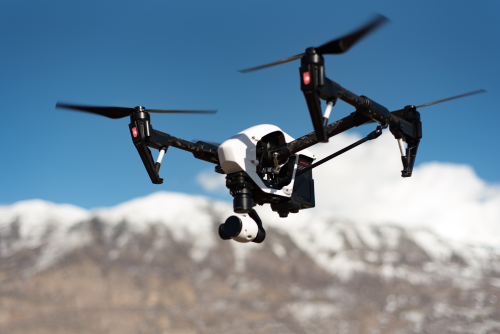
If you’re shopping for the best drones for roof inspections, the biggest mistake is buying for headline camera specs instead of inspection workflow. Roof work is mostly about safe stand-off distance, clear stills, wind confidence, stable hovering near structures, and getting imagery you can actually use in a quote, report, or client update. The right pick depends on whether you’re a beginner checking simple roof conditions, a creator capturing polished before-and-after content, or a working pro whose drone needs to earn money on every job.
Quick Take
For most buyers, the best drone for roof inspections is the DJI Air 3. It hits the sweet spot between portability, dual-camera flexibility, safe stand-off inspection, and day-to-day practicality.
If you want the shortest version:
- Best beginner/lightweight pick: DJI Mini 4 Pro
- Best overall for most roof inspection buyers: DJI Air 3
- Best for creators who also shoot marketing content: DJI Mavic 3 Pro
- Best for working pros doing visual inspection at scale: DJI Mavic 3 Enterprise
- Best for thermal roof diagnostics: DJI Mavic 3 Thermal
The core buying rule is simple:
- If you only need basic visual checks and maximum portability, go small.
- If you want one drone for inspections plus general business content, get a dual-camera prosumer model.
- If roof work is a revenue service, buy for workflow, zoom, support, and repeatability, not just image quality.
- If you are considering thermal, make sure thermal data will actually change the deliverable you sell.
First decide what kind of roof inspection you actually do
Not every “roof inspection” is the same job. That matters more than brand loyalty.
Visual roof checks and documentation
This is the most common use case:
- missing or lifted shingles
- flashing condition
- gutter issues
- ridge and vent checks
- chimney, skylight, and penetration areas
- storm damage overviews
- before-and-after project documentation
For this, a good visual camera and a useful zoom or tele option matter more than cinematic video features.
Roofing quotes, sales, and client communication
If you run a roofing business, the drone may do two jobs at once:
- inspect the roof
- create persuasive media for estimates, social proof, and marketing
That is where a drone like the Air 3 or Mavic 3 Pro makes sense. You are not just collecting evidence. You are also creating polished content clients can understand quickly.
Measurement, repeatability, and fleet work
If you inspect lots of roofs across commercial properties, facilities, insurance portfolios, or solar-related projects, you may need:
- repeatable flight plans
- map-friendly still capture
- more formal reporting workflows
- better team integration
- stronger accessory and support options
That is enterprise territory.
Thermal and diagnostic work
Thermal can help identify temperature anomalies related to issues such as moisture, insulation loss, heat leakage, or certain solar and building-envelope problems. But thermal is not magic.
It is only worth the extra cost if:
- you already know why thermal helps your service
- you understand how environmental conditions affect the reading
- your clients will pay for that added layer of information
For plain visual storm checks or basic roofing estimates, thermal is often unnecessary.
What actually matters in a roof inspection drone
A roof inspection drone does not need to be the “best camera drone” in a generic sense. It needs to do a few specific things well.
1. Safe stand-off inspection
A zoom or medium tele camera is one of the most useful upgrades for roof work. It lets you stay farther from the roof while still seeing:
- shingle damage
- flashing edges
- ridge caps
- vent seals
- chimney details
- gutter sections
That reduces collision risk and makes the job less stressful.
2. Wind handling
Roofs are often exposed. Wind over ridgelines, parapets, and taller structures can get messy fast. Small drones can absolutely work, but larger models usually feel more planted when conditions are less than ideal.
3. Stable hovering near structures
Inspection flying is different from scenic flying. You are often stopping, adjusting, reframing, and hovering close enough to see detail without crowding the building. Good control feel and reliable positioning matter.
4. Useful stills, not just attractive video
Many buyers overvalue video performance. For roof inspections, high-quality still images are usually more important because they are easier to:
- annotate
- compare over time
- add to quotes
- include in reports
- share with insurers, owners, or project managers
5. Obstacle sensing
Obstacle sensors are helpful, especially around gutters, eaves, walls, chimneys, and trees. But they are not a substitute for good pilot judgment. Thin objects, glare, repetitive textures, and awkward angles can still cause problems.
6. Workflow and support
If the drone is for paid work, think beyond the aircraft:
- spare batteries
- repair turnaround
- local dealer support
- controller visibility in bright sun
- reporting software
- team handoff
- replacement parts
That is where a “cheaper” drone can become the expensive choice.
Best drones for roof inspections
| Drone | Best for | Why it fits roof inspections | Main tradeoff |
|---|---|---|---|
| DJI Mini 4 Pro | Beginners, homeowners, light contractor use | Very portable, easy to deploy, strong safety features for its class, enough image quality for basic visual checks | No optical tele camera and more affected by wind |
| DJI Air 3 | Most buyers, solo operators, mixed inspection plus content work | Dual-camera setup with a useful medium tele view, strong all-around value, practical for daily jobs | Not a true enterprise platform and no thermal |
| DJI Mavic 3 Pro | Creators, agencies, roofing businesses that sell polished media too | Premium image quality and multiple focal lengths for both inspection and marketing | Costs more than the Air 3 and is less workflow-focused than enterprise models |
| DJI Mavic 3 Enterprise | Working pros, roof inspectors, facilities teams | Purpose-built inspection workflow, tele camera, stronger job-site utility, better fit for repeatable commercial work | Higher budget and more than casual users need |
| DJI Mavic 3 Thermal | Thermal specialists, advanced diagnostic teams, solar-adjacent work | Combines visual inspection with thermal capability in one aircraft | Only worth it if thermal is truly part of your service |
A practical note: the strongest roof-inspection options are concentrated in DJI’s lineup because the camera combinations and workflow maturity are hard to beat. If your organization needs a different ecosystem for procurement, data policy, or regional support reasons, compare local enterprise options carefully and prioritize dealer support over spec-sheet hype.
The right pick for each type of buyer
DJI Mini 4 Pro: best for beginners and lightweight kits
The Mini 4 Pro is the easiest recommendation for beginners who want a capable inspection drone without jumping straight into a larger, pricier platform.
Why it works:
- easy to carry and deploy
- friendly for occasional use
- capable stills and video
- obstacle sensing helps newer pilots
- low weight can be advantageous under some regulatory frameworks in some markets
It is a smart choice for:
- homeowners doing basic visual checks where lawful
- small roofing crews starting to use drones
- creators who want portability first
- contractors who mainly need overview shots and a few detail images
Where it falls short:
- no true tele camera for safer stand-off detail work
- less comfortable in wind than larger drones
- not the best option for busy commercial schedules
- can feel small and light around taller structures and unpredictable airflow
Buy it if
- you are new to drones
- you want the lightest serious option
- your jobs are simple and visual-only
- portability matters more than maximum job-site authority
Skip it if
- you regularly work in windy conditions
- you need frequent close-detail documentation from farther away
- roof inspections are a core paid service
DJI Air 3: best overall for most roof inspection buyers
For most people comparing roof inspection drones seriously, the Air 3 is the safest choice. The reason is simple: it adds a useful second camera that improves real inspection flying more than many buyers expect.
That medium tele perspective helps you inspect details without pushing so close to the roof edge, chimney, or gutter line. For practical field work, that is a big deal.
Why it stands out:
- dual-camera flexibility
- better stand-off inspection than a single-camera beginner drone
- strong all-around portability
- well suited to both inspections and general business content
- easier to justify as a one-drone purchase
It is the best fit for:
- solo roofers
- small inspection businesses
- real estate and roofing creators
- contractors who need one drone for both documentation and marketing
Its biggest advantage is that it reduces buyer regret. It is easier to outgrow a mini drone than an Air 3-class drone.
Buy it if
- you want one drone that can handle most visual roof jobs well
- you care about zooming in without crowding the structure
- you also shoot social, website, or sales content
- you want strong value without going enterprise
Skip it if
- you need formal enterprise workflows
- you need thermal
- you need mapping and inspection output to be a major part of your business
DJI Mavic 3 Pro: best for creators who also inspect roofs
Some buyers are not just inspecting roofs. They are selling jobs, producing polished before-and-after media, building brand credibility, or creating high-end commercial content around construction, restoration, or real estate.
That is where the Mavic 3 Pro makes sense.
Why people choose it:
- more premium imaging than midrange models
- multiple focal lengths give creative and practical flexibility
- excellent for businesses that want both documentation and standout visuals
- strong fit for agencies, premium roofers, and marketing-heavy contractors
This is not the most cost-efficient pure inspection tool. It is the best hybrid for buyers who know the drone will spend real time creating client-facing visuals, not just inspection stills.
Buy it if
- your drone needs to impress clients visually
- you produce premium before-and-after content
- brand presentation matters almost as much as inspection detail
- you want more image flexibility than the Air 3
Skip it if
- you mainly need efficient inspection workflow
- you do not need premium creative output
- you would rather put budget into enterprise reporting, software, or spare gear
DJI Mavic 3 Enterprise: best for working pros doing visual inspection
If roof inspections are a business process rather than an occasional task, the Mavic 3 Enterprise is the step-up that makes the most sense.
This is where the buying logic changes. You are no longer choosing a drone just because it flies well and takes good images. You are choosing for job repeatability, reporting, and operational fit.
Why it earns its place:
- better suited to professional inspection workflows
- tele capability helps with safer detail capture
- stronger fit for repeatable work across many roofs
- useful for contractors, facilities teams, solar planners, adjusters, and commercial operators
- better aligned with mapping and asset-documentation tasks than consumer-first drones
For paid inspection work, this is the drone that starts to feel like a tool instead of a gadget.
Buy it if
- roof inspection is a core revenue service
- you manage multiple sites or recurring clients
- you need more than pretty photos
- your team needs a more professional workflow
Skip it if
- you only inspect occasionally
- your jobs are mostly simple residential visuals
- you are not ready to support enterprise-level costs and process
DJI Mavic 3 Thermal: best for thermal roof work
The Mavic 3 Thermal is not the “best” roof inspection drone for everyone. It is the best one for buyers who specifically need thermal as part of the deliverable.
That distinction matters.
Thermal can be useful for:
- insulation and heat-loss investigations
- moisture-related temperature anomaly work
- solar roof checks
- certain building-envelope assessments
- more advanced diagnostic workflows
But thermal requires discipline. The quality of the result depends on:
- weather and ambient conditions
- time of day
- material behavior
- correct interpretation
- a clear inspection purpose
It is not a shortcut to professional judgment.
Buy it if
- you already know why thermal matters for your business
- clients pay for diagnostic value, not just photos
- you work in solar, facilities, or advanced roof/building analysis
- you want one aircraft for visual and thermal capture
Skip it if
- you mainly document obvious visual damage
- you are adding thermal because it sounds impressive
- you do not have a plan for interpreting and selling thermal findings
Safety, legal, and operational checks before you fly
Roof inspection sounds simple because it happens at low altitude near a building. In practice, it can be one of the easiest places to become overconfident.
Before flying, verify the rules that apply in your location and operation type. In many places, the requirements differ depending on whether the flight is recreational, business-related, near people, in controlled airspace, or at night.
At a minimum, check:
- whether your operation counts as commercial work
- local pilot qualification or registration requirements
- airspace restrictions near airports, heliports, hospitals, utilities, or sensitive sites
- privacy expectations when neighboring properties are visible
- whether the property owner or site operator has additional rules
- any insurance or contractual requirements for paid work
Operationally, roof jobs also bring some very specific risks:
- wind curls around ridgelines and roof edges
- antennas, wires, and branches may be hard to see
- metal, gutters, vents, and structures can affect situational awareness
- workers on ladders or roofs should never be surprised by the aircraft
- a roof is usually a poor launch point compared with an open ground area
Good habits matter:
- Launch from a clear, stable area on the ground whenever possible.
- Brief anyone working on the property before takeoff.
- Keep people out of the immediate operating area.
- Use the zoom or tele view before moving closer.
- Capture stills first, then video if needed.
- Leave extra margin around chimneys, wires, solar arrays, and wet surfaces.
If you are crossing borders or working in another country, verify local rules before traveling with the drone, batteries, and any commercial intent.
What people get wrong when buying a roof inspection drone
They buy for cinematic video instead of inspection stills
Roof work is mostly about usable evidence, not cinematic reveal shots. If the drone shoots beautiful video but lacks a practical tele view or reliable inspection workflow, it may disappoint quickly.
They underestimate the value of zoom
A tele or medium tele camera is not a luxury. It is one of the safest ways to improve roof inspection results because it lets you hold position farther away.
They assume obstacle sensing makes close flying safe
Obstacle sensing helps. It does not make a roof or gutter line collision-proof. Thin objects, wires, reflective surfaces, and awkward angles still demand manual caution.
They buy thermal too early
Thermal only pays off when you have a real use case, proper technique, and clients who understand the value. Otherwise, it becomes expensive complexity.
They ignore support and repair logistics
Downtime matters. A drone with weak local support, slow parts access, or no practical repair path can hurt a business faster than a slightly lower-quality camera.
They choose the smallest drone for every job
Small drones are great until wind, large roofs, or stand-off detail work become routine. The cheapest safe choice is not always the lowest-priced aircraft.
What to budget beyond the drone
A good roof inspection setup is more than the aircraft box.
Plan for:
- at least three batteries for real workdays
- spare propellers
- high-quality memory cards
- a bright controller or display solution
- a landing pad or clean launch surface
- storage and transport protection
- a clear file-naming and reporting process
- training time for safe, repeatable close-structure flying
If you are buying for business, the non-drone part of the workflow often matters more over time than the airframe itself.
FAQ
Can a sub-250 g drone inspect a roof properly?
Yes, for many basic visual jobs it can. A lightweight drone can capture overviews, common problem areas, and useful stills. The limits show up in wind, stand-off detail work, and heavy commercial use.
Do I really need a zoom camera for roof inspections?
Not strictly, but it is one of the most valuable upgrades. A zoom or tele view lets you inspect shingles, flashing, vents, and chimney areas from a safer distance.
Is thermal worth it for ordinary roofing work?
Usually not. For standard visual damage checks, quotes, and before-and-after documentation, a good visual camera is enough. Thermal becomes worthwhile when temperature anomalies are part of the service you actually sell.
Which drone is best if I need both inspections and marketing content?
For most buyers, the DJI Air 3 is the best balance. If premium visuals are central to your business and budget is less sensitive, the DJI Mavic 3 Pro is the stronger creator-focused option.
Do I need enterprise software to inspect roofs?
Not for occasional or simple jobs. You do need a more formal workflow when you are handling many properties, repeat visits, measurements, team reporting, or commercial asset management.
How many batteries should a roof inspection drone kit include?
For paid work, three is a sensible minimum. That gives you room for setup mistakes, wind, retakes, and a second roof without cutting the job short.
Can obstacle avoidance prevent collisions with roofs and gutters?
It helps, but no system makes close-structure flying fully safe. Repetitive surfaces, wires, glare, and angled roof geometry can still confuse sensing systems. Pilot judgment remains the main safety tool.
What should I verify before doing roof inspection work in another country?
Verify pilot and drone registration rules, commercial-use requirements, airspace restrictions, privacy rules, property permissions, and battery transport requirements. Do not assume your home-country setup carries over cleanly.
The buying decision in one line
If you want the safest recommendation for most buyers, get the DJI Air 3. If you are just starting and want the lightest serious option, choose the DJI Mini 4 Pro. If polished content is part of the business, step up to the DJI Mavic 3 Pro. If inspection output is a real revenue workflow, buy the DJI Mavic 3 Enterprise. And if thermal is not clearly part of your service, do not pay for it yet.