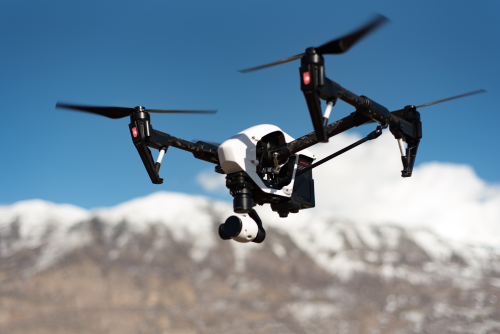
Roofing contractors do not need the most expensive drone on the market. They need the right mix of safe close-range inspection capability, clear photo evidence, fast deployment, and a workflow that actually fits estimating, documentation, and client communication. The best drones for roofing contractors depend less on headline specs and more on whether you are a solo estimator, a growing operations team, or a company building repeatable inspection and measurement workflows.
Quick take
If you want the short answer, here it is:
- Most roofing contractors should start with a DJI Air 3-class drone if they want the best balance of ease, image quality, zoom flexibility, and practical field use.
- Beginners and owner-operators who mainly need residential estimates, progress photos, and marketing shots can do very well with a DJI Mini 4 Pro.
- Larger firms or teams doing repeatable inspections, mapping, or multi-site documentation should look at the DJI Mavic 3 Enterprise.
- Thermal drones such as the DJI Mavic 3 Thermal or Autel EVO Max 4T only make sense if thermal imaging is a real billable workflow, not just a nice-to-have.
- The wrong buy is usually not “too cheap” or “too expensive.” It is buying a drone that does not match your actual job mix, pilot skill, software needs, or compliance responsibilities.
Key points before you buy
| Buyer profile | Typical budget band | Best fit | Why it fits | Biggest watchout |
|---|---|---|---|---|
| Solo roofer, beginner pilot | Lower | DJI Mini 4 Pro | Portable, easier to justify, quick for residential visuals | Easier to outgrow, less confidence in wind and larger commercial jobs |
| Sales estimator, frequent residential/commercial work | Mid-range | DJI Air 3-class drone | Best all-around balance for most roofing use | Not a true enterprise mapping or thermal platform |
| Growing contractor with repeatable inspection process | Upper mid-range to enterprise | DJI Mavic 3 Enterprise | Better workflow for structured inspections and mapping | Total cost rises with software, training, and fleet support |
| Specialized roof diagnostics or moisture/insulation work | Enterprise | DJI Mavic 3 Thermal or Autel EVO Max 4T | Thermal plus visible imagery for advanced inspections | Expensive, easy to misuse, requires interpretation skill |
| Non-DJI preference due to procurement or policy | Mid to enterprise | Autel options depending use case | Viable alternative where DJI is not preferred | Support, software fit, and local service network matter more |
What roofing contractors actually need from a drone
Roofing work rewards practicality more than flashy specs. The right drone helps you do four things well:
1. Capture clear evidence fast
For most roofing businesses, the core job is simple:
- show missing shingles, cracked tiles, ponding, flashing issues, storm damage, gutter condition, or membrane wear
- create before-and-after proof
- support estimates and homeowner conversations
- reduce unnecessary climbing for initial assessment
That means your drone needs a stable camera, predictable flight behavior, and enough image quality to inspect details without having to fly dangerously close.
2. Work in tight residential environments
A lot of roofing work happens around:
- houses
- fences
- trees
- parked vehicles
- utility lines
- neighbors
- active crews
So maneuverability, obstacle awareness, and pilot confidence matter. A drone that is too large or too demanding for the operator can slow the job down instead of helping.
3. Fit your reporting workflow
Buying the aircraft is the easy part. The bigger question is what happens after flight:
- Are you just sending annotated photos to a customer?
- Are you making insurance-friendly documentation packages?
- Do you need measurements or 3D models?
- Are you managing inspections across multiple crews or branches?
If you need structured reporting, software compatibility becomes as important as the drone itself.
4. Survive real business use
Roofing crews are hard on tools. The best drone for a contractor is one that is:
- easy to transport
- quick to launch
- supported by local or regional repair options
- affordable to keep flying after minor damage
- not so expensive that the team becomes afraid to use it
How to choose based on budget, skill level, and use case
Before looking at models, answer these five questions:
What is the main job?
Choose the answer that reflects 70% of your actual use:
- Residential estimates and roof overviews
- Storm damage documentation
- Progress updates and marketing
- Commercial roof inspections
- Measurement or mapping workflows
- Thermal diagnostics
If your answer is the first three, you probably do not need an enterprise drone.
Who will fly it?
This is where many companies buy wrong.
- Owner or salesperson flying occasionally: prioritize ease and low friction.
- Dedicated operations staff: prioritize workflow, repeatability, and software support.
- Multiple team members: prioritize standardization, training, and repair support.
How much precision do you really need?
For many roofing jobs, good photos and video are enough. You do not always need:
- RTK positioning
- survey-grade outputs
- thermal
- complex autonomy
If you do measurements for estimating, remember: capture method and software matter as much as hardware.
How often will you use it?
If the drone flies once every few weeks, a simpler, lighter platform often wins.
If it flies daily across multiple sites, durability, batteries, accessories, and workflow integration become more important than saving money on the airframe.
What is the full budget, not just the drone budget?
Your real spend includes:
- extra batteries
- spare propellers
- memory cards
- controller
- case
- charging gear
- insurance if required or prudent in your market
- software subscriptions
- staff training
- downtime or repair backup
A “cheap” drone with poor workflow fit can cost more than a better one.
Best drones for roofing contractors
Best budget-friendly starter for roofing: DJI Mini 4 Pro
For a solo roofer or small company buying its first drone, the DJI Mini 4 Pro is the easiest recommendation.
Why it works
- Small and fast to deploy
- Good image quality for roof condition photos and overview video
- Lower cost of entry than moving straight into larger platforms
- Easier to keep in the truck and actually use
- Less intimidating for newer pilots
For residential roofing, this is often enough. You can capture slope overviews, gutters, valleys, flashing, ridge lines, and storm-related damage without climbing for every first look.
Best for
- Owner-operators
- Estimators who are new to drones
- Residential roofing teams
- Marketing and social media capture
- Before-and-after proof of work
Where it falls short
- Wind handling is usually less confidence-inspiring than larger drones
- It is easier to outgrow if you move into larger commercial properties
- Measurement and structured inspection workflows are more limited than enterprise platforms
- A small drone does not make you immune to commercial flight rules
Buy this if
- You need a practical first drone
- You mainly inspect homes and small buildings
- You want the lowest-risk way to add aerial visuals to sales and documentation
Skip this if
- You already know mapping or thermal will become a core service
- You need a team-standard platform for frequent commercial inspections
- You regularly work in conditions where a larger aircraft gives better stability and confidence
Best overall for most roofing contractors: DJI Air 3-class drone
If you want the safest mainstream recommendation for most roofing businesses, this is it. A DJI Air 3-class drone hits the sweet spot between entry-level convenience and serious field usefulness.
Why it works
Compared with a mini drone, this class typically gives you:
- better presence and confidence in moderate wind
- stronger all-around field performance
- dual-camera flexibility, including a medium tele option on some models
- more comfortable stand-off inspection, so you do not need to fly uncomfortably close
- better longevity before you feel the need to upgrade
That medium tele viewpoint is especially useful in roofing. It helps you frame damage, ridge lines, flashing details, and slope sections from a safer distance while still getting usable detail.
Best for
- Most residential and light commercial roofing businesses
- Sales teams that need reliable estimate support
- Companies that want one drone for inspections and marketing
- Users who have some flying confidence but do not want full enterprise complexity
Where it falls short
- It is still not a true enterprise inspection or mapping platform
- You may outgrow it if you standardize multi-site inspection reports or need advanced thermal workflows
- Software options for structured capture may be narrower than with enterprise models
Buy this if
- You want one drone that covers 80% of roofing tasks well
- You value better optics and stand-off flexibility
- You want a platform that can serve both operations and marketing
Skip this if
- Your workflow depends on mapping outputs, fleet deployment, or thermal imaging
- You need enterprise procurement, device management, or very formal inspection standardization
Best for growing teams and repeatable inspection workflows: DJI Mavic 3 Enterprise
The DJI Mavic 3 Enterprise is where roofing drone buying stops being about “getting aerial photos” and becomes about building a repeatable operational system.
Why it works
This class is better suited for:
- larger roof footprints
- repeat site documentation
- mapping and measurement capture
- more structured inspection programs
- companies with dedicated drone operators or trained field leads
If your business handles commercial roofs, facility portfolios, storm response at scale, or standardized inspection deliverables, the Mavic 3 Enterprise makes more sense than trying to stretch a consumer drone past its ideal use.
Best for
- Larger roofing contractors
- Commercial roofing firms
- Multi-location operations
- Teams using drone capture inside a broader inspection/reporting workflow
- Buyers who already know software matters
What you are really paying for
Not just the aircraft. You are paying for:
- better workflow consistency
- higher confidence in repeatable data capture
- enterprise ecosystem compatibility
- easier scaling across crews or regions
Where it falls short
- It is overkill for many residential roofers
- The total system cost grows quickly once you add software and accessories
- If nobody on your team owns the workflow, the capability may go unused
Buy this if
- Drone output is becoming part of your operating process, not just occasional media capture
- You inspect larger or more complex roofs
- You plan to use mapping or measurement tools seriously
Skip this if
- You mainly want better estimate photos for homes
- You do not have time to train staff properly
- You are unlikely to use enterprise software or structured reporting
Best for thermal roof work: DJI Mavic 3 Thermal or Autel EVO Max 4T
Thermal gets oversold in roofing. It can be valuable, but only in the right hands and under the right conditions.
Where thermal can help
- identifying possible moisture patterns
- spotting insulation anomalies
- supporting commercial roof assessments
- adding another layer of evidence in some diagnostic workflows
Where thermal gets misunderstood
A thermal image does not automatically tell you:
- where a leak starts
- whether a roof must be replaced
- how severe hidden damage is
- whether a specific wet area is structurally significant
Thermal is best treated as a specialist tool, not a shortcut.
Why these models matter
The DJI Mavic 3 Thermal and Autel EVO Max 4T are relevant because they combine visible and thermal capture in a professional workflow tier. That matters if your company truly sells advanced inspection services or supports insurance, facilities, or commercial building diagnostics.
Best for
- Specialized inspection teams
- Commercial roofing diagnostics
- Contractors with trained thermal operators
- Businesses that can charge for advanced assessment work
Skip thermal entirely if
- You mainly inspect residential roofs visually
- You have no thermal interpretation training
- You want it because it “sounds professional”
- You do not know how local climate, roof material, sun loading, and time of day affect readings
When an Autel drone makes sense
DJI is the easiest answer for many buyers because of ecosystem depth and market familiarity, but it is not the only answer.
Autel is worth considering if:
- your organization prefers not to buy DJI
- local dealer support for Autel is stronger in your area
- your procurement process or client requirements make Autel easier to approve
For ordinary visible-light roofing work, simpler Autel camera drones can be viable alternatives. For advanced enterprise or thermal workflows, the more relevant comparison is usually with Autel’s higher-end inspection platforms, not its hobbyist line.
The key question is not brand loyalty. It is whether the aircraft, software, support, and repair path fit your business.
Matching the drone to the real roofing job
| Real use case | Minimum sensible choice | Better long-term choice | Notes |
|---|---|---|---|
| Residential estimate photos | DJI Mini 4 Pro | DJI Air 3-class drone | Mini is enough for many small jobs |
| Storm damage documentation | DJI Mini 4 Pro | DJI Air 3-class drone | Tele flexibility helps with safer stand-off shots |
| Before-and-after project updates | DJI Mini 4 Pro | DJI Air 3-class drone | Marketing and client reporting both benefit |
| Commercial roof overview and inspection | DJI Air 3-class drone | DJI Mavic 3 Enterprise | Larger sites often justify workflow step-up |
| Measurement or mapping for estimating | DJI Air 3-class drone in limited cases | DJI Mavic 3 Enterprise | Software and capture discipline matter heavily |
| Thermal diagnostics | Not recommended as entry workflow | DJI Mavic 3 Thermal / Autel EVO Max 4T | Only for trained, real-use cases |
What to budget beyond the drone
Many roofing contractors underbudget the system and overfocus on the aircraft.
The must-haves
- At least 3 batteries for real field usefulness
- Spare propellers
- A controller with a bright built-in screen if available in your chosen ecosystem
- Fast charging strategy for truck or office use
- Reliable storage and transport case
- High-quality memory cards
- Simple checklist and logging process
The likely extras
- inspection/reporting software
- mapping or photogrammetry software
- liability coverage or hull coverage where appropriate
- staff training time
- backup aircraft plan if the drone is revenue-critical
If the drone will support estimates or inspections every week, a better controller and extra battery set often improve workflow more than chasing minor camera differences.
Safety, legal, and operational limits to know
Roofing drone work is commercial aviation activity in many jurisdictions. Rules differ widely by country and region, so verify current requirements before you fly.
Check before operating
Confirm all of the following with the relevant authority in your market:
- whether the drone and operator must be registered
- whether commercial flights require pilot certification, permits, or operator approval
- whether remote identification or electronic ID applies
- whether you can fly near homes, roads, or work crews
- whether local privacy or data protection laws affect image capture
- whether the site is near controlled or restricted airspace
Roofing-specific operational risks
Roof work creates its own hazards:
- gusty air near roof edges
- wires and service drops
- workers looking up instead of at their footing
- bystanders entering the takeoff area
- debris on launch surfaces
- launch pressure when the crew is already busy
Good practice is simple:
- Set a clear takeoff and landing zone away from active workers if possible.
- Brief the crew so nobody walks under the aircraft.
- Keep visual line of sight.
- Do not force close passes just to prove you can.
- Abort early if wind, glare, congestion, or signal conditions feel wrong.
A drone is meant to reduce risk, not shift it from the roof to the air.
Common mistakes roofing contractors make when buying a drone
Buying thermal too early
Thermal sounds impressive, but many roofers would be better served by a higher-quality visible-light workflow, better capture habits, and cleaner reporting.
Buying the cheapest drone and calling it “good enough”
The cheapest airframe can become expensive if it creates:
- unreliable field performance
- poor evidence quality
- pilot hesitation
- rapid upgrade regret
Ignoring software and reporting
A drone does not create value by itself. Value comes from what your team can deliver after capture.
Underestimating training
Even easy drones need disciplined operators. A good pilot captures cleaner evidence, avoids client-facing mistakes, and reduces crash risk.
Flying too close when zoom would do
Roofing is not FPV stunt flying. The goal is useful evidence, not dramatic proximity.
Assuming under-250g solves compliance
In some markets, smaller drones may reduce certain requirements. In others, commercial operations still carry meaningful obligations. Always verify.
Forgetting repair and downtime risk
If the drone becomes part of your estimate or inspection process, ask how quickly you can get it repaired or replaced.
FAQ
Do roofing contractors really need a drone?
Not every roofing business does, but many benefit from one. Drones are especially useful for first-look inspections, estimate support, before-and-after documentation, storm response, and client communication. They are less useful if your team rarely needs aerial evidence or cannot maintain a safe, compliant workflow.
Is a mini drone good enough for roof inspections?
Often, yes. For residential estimates, visual roof checks, and progress photos, a mini drone can be enough. It becomes less ideal when you need more stand-off flexibility, larger-site confidence, or structured commercial inspection workflows.
Is thermal worth it for roofing contractors?
Only if it supports a real service line. Thermal can help with certain commercial and diagnostic tasks, but it is not a magic leak finder. If you do not have trained operators and a clear business case, skip it.
Do I need RTK for roofing work?
Usually not for everyday residential inspection and estimate support. RTK becomes more relevant when you need higher positional consistency for mapping, repeat site capture, or larger commercial measurement workflows.
How many batteries should I buy?
Three is a sensible minimum for professional use. That usually gives enough flexibility for travel, setup delays, repeat passes, and one-site-plus-one-more-job days without constant charging stress.
Can one drone handle inspections, marketing, and estimates?
Yes, for many companies. That is why the DJI Air 3-class drone is such a strong fit for roofing businesses. It can cover operational visuals and marketing work without forcing you into enterprise complexity.
Should I outsource drone work instead of buying?
If drone use will be occasional, specialized, or highly regulated in your area, outsourcing can make more sense. Buying is usually smarter when aerial capture is becoming a repeatable part of estimates, inspections, or project documentation.
What is the biggest buying mistake?
Choosing based on spec hype instead of workflow fit. The best roofing drone is the one your team can fly safely, compliantly, and consistently to produce useful client-facing outputs.
The best buying decision for most roofers
If you want the safest default choice, buy a DJI Air 3-class drone and a proper field kit. If you are just starting and mostly inspect homes, a DJI Mini 4 Pro is the lower-risk entry point. If your company is building structured inspection, mapping, or multi-site workflows, move straight to the DJI Mavic 3 Enterprise. And if you are tempted by thermal, only spend that money when you can clearly explain how it will earn its keep on real jobs.