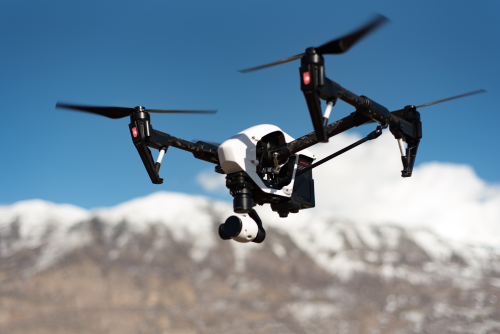
If you fly near beaches, mountains, rooftops, open farmland, or high-rise cities, wind will expose a weak drone faster than almost anything else. The best drones for windy conditions are not simply the heaviest or most expensive models. They are the drones with enough power, speed, battery margin, and stability to get home safely while still giving you usable footage.
Quick Take
For most buyers, the smartest choice for windy conditions is not an ultralight travel drone. It is a mid-size folding drone with stronger motors, more forward speed, and better battery reserve. If wind is a regular part of where you fly, buying one class above the smallest drone you were considering usually leads to fewer regrets.
Fast answer by buyer type
| Buyer type | Best fit in wind | Why it usually wins | Biggest tradeoff |
|---|---|---|---|
| Most hobbyists, creators, and buyers who want one drone | Mid-size folding drone, such as the DJI Air-class category | Best balance of portability, speed, stability, and battery margin | Larger bag, higher cost, may trigger stricter rules in some places |
| Travel-first buyers who value packing light above all | Mini-class ultralight drone, such as the DJI Mini category | Easier to carry, often easier to travel with, sometimes friendlier under local weight-based rules | Much less comfortable in gusts and coastal wind |
| Paid photographers and serious aerial shooters | Larger camera drone, such as the DJI Mavic 3-class category | Better platform stability, stronger wind margin, better camera system | Bigger investment, heavier kit |
| Experienced FPV pilots | 5-inch FPV build or similar fast manual platform | Strong thrust and speed through wind | Steep learning curve, not ideal for hover-stable cinematic work |
| Enterprise teams | Enterprise folding or larger industrial platform | Better workflow, payload, and support options | Cost, training, and operating complexity |
Key points
- Wind resistance on a spec sheet is only part of the story.
- The drone must have enough forward speed to return into a headwind.
- Gusts matter more than steady wind for most buyers.
- Image quality in wind depends on the airframe and gimbal, not just camera resolution.
- If your flights are often near cliffs, coastlines, rooftops, or ridgelines, skip mini drones unless portability is your top priority.
- For most people, the sweet spot is a mid-size folding drone rather than a sub-250 g model.
Why windy conditions cause so much buyer regret
A lot of drone buyers shop by camera specs first. In calm weather, that can work. In windy weather, it often leads to frustration.
A drone that looks great on paper can still become a bad purchase if it:
- drifts more than you expected
- burns battery too fast on the way home
- fights to hold a smooth shot
- lands hard because the wind near the ground changes direction
- feels fine at takeoff but struggles badly at altitude
This is why the best drones for windy conditions are really the best drones for margin. Margin means extra power, extra speed, extra battery, and extra stability when conditions get worse than expected.
If you only fly in parks on calm mornings, a very light drone may be enough. If you regularly fly on trips, commercial jobs, coastal areas, or elevated terrain, wind tolerance becomes a buying priority, not a bonus feature.
What actually matters before you buy
Thrust reserve matters more than marketing language
The most important wind question is simple: how much extra power does the drone have after it is already in the air?
That extra power is your thrust reserve. It is what lets the drone:
- push into a headwind
- recover from gusts
- brake with control
- climb safely when needed
- return home without draining the battery too fast
A drone that is always near its performance ceiling in normal flight will feel nervous in wind. A drone with healthy reserve feels calmer and more predictable.
Practical buying note: compare the drone class, motor power, and published top speed, not just the camera or the folded size.
Top speed is a safety feature, not just a fun number
Many people ignore top speed because they assume they will fly slowly for cinematic footage. That misses the point.
In wind, top speed is not about thrill. It is about whether the drone can make progress back to you.
A common trap looks like this:
- You fly out with a tailwind.
- Everything feels easy.
- Battery drops faster than expected.
- You turn around into a stronger headwind.
- Ground speed collapses.
That is why a drone that can fly much faster than your normal filming speed is often the better windy-conditions buy. You want performance in reserve, not just enough to cruise in calm air.
Weight helps, but weight alone is not the answer
Heavier drones generally handle wind better than ultralight drones, but “heavier” is not the whole story.
What matters is the combination of:
- weight
- motor power
- propeller efficiency
- airframe design
- control tuning
- available speed
A badly matched heavy drone can still feel sluggish. A well-designed mid-size drone can outperform a heavier one if it has better thrust and better control authority.
Still, in practical buying terms, weight does correlate with confidence in wind. This is why many pilots quickly outgrow mini drones in windy regions.
The manufacturer’s wind rating is useful, but limited
You should absolutely check the published maximum wind resistance in the manual. But use it carefully.
That number does not tell the full story because:
- it usually reflects controlled testing, not ugly real-world gusts
- steady wind is easier than turbulent wind
- wind can be much stronger at altitude than at takeoff height
- cliffs, ridges, and buildings create rotor and shear
- “can remain controllable” is not the same as “can capture smooth footage”
A smart buyer treats the published wind rating as a ceiling, not a target.
If you are still learning, or if you need clean video for clients, build a large safety margin below the published maximum.
Gimbal stability is not the same as flight stability
A lot of buyers think, “If the gimbal is good, I’ll be fine.”
Not quite.
A strong gimbal can keep the horizon level and reduce visible shake, but it cannot fully hide:
- abrupt yaw corrections
- sudden lateral drift
- jerky starts and stops
- subject framing problems in gusts
- soft frames in low light if the aircraft is fighting the air
This is why a bigger, steadier airframe often produces better-looking footage in wind even when a smaller drone has similar headline camera resolution.
If your main goal is polished video, buy the aircraft first and the camera second. Stability creates more usable footage than extra megapixels.
Battery margin matters more in wind than most buyers expect
Wind costs battery.
The drone uses more power to:
- hold position
- climb
- fight gusts
- return into headwind
- correct drift repeatedly
That means the right windy-condition drone is not just one that can survive a gust. It is one that still has enough battery to land with margin after dealing with the wind.
This is another reason mid-size and larger drones often feel so much better. It is not only their power. It is the combination of power and battery reserve.
When budgeting, do not buy just the aircraft. Buy enough batteries to avoid pushing flights too far because “this is my last pack.”
Sensors, braking, and control behavior also matter
Windy flying is not only about raw power. It is also about how the drone behaves.
Check or verify:
- how stable the hover looks in real-world reviews
- whether obstacle sensing limits speed in normal modes
- how the drone behaves in sport or manual modes
- whether return-to-home is conservative or aggressive
- how well it brakes and descends in gusty air
Some drones feel composed. Others feel twitchy. That difference becomes obvious in wind.
If you can, watch unedited flight footage from real users in non-perfect weather. Smooth promotional clips tell you very little.
Support, repairs, and spare parts matter more than you think
Windy environments increase the chance of:
- rougher landings
- prop damage
- sand and salt exposure
- harder recoveries from pilot error
A strong support ecosystem matters. Before buying, check:
- regional repair availability
- battery and prop availability
- turnaround time for service
- local dealer support
- insurance or care-plan options where relevant
This becomes especially important for commercial pilots and teams. A drone that is theoretically strong in wind is less valuable if replacement batteries or repairs are hard to get in your market.
The best drone types for windy conditions
Best for most buyers: mid-size folding drones
If you want one drone that can travel, shoot high-quality footage, and cope with wind better than a mini, this is the category to target.
Examples include drones in the DJI Air-class segment, such as the Air 3 or Air 3S category, and similar mid-size folding drones from other established brands.
Why this class is the sweet spot:
- noticeably better wind confidence than ultralight drones
- stronger return-home margin
- still portable enough for travel and hiking
- usually better cameras and battery performance than mini-class drones
- easier recommendation for beaches, open landscapes, and general creator work
This is the class most buyers should start with if they already know they live or travel in windy places.
Who should avoid it:
- buyers who absolutely must minimize bag size
- people flying mostly in calm suburban parks
- travelers choosing sub-250 g specifically for local rule flexibility in certain countries
Best for travel-first buyers: mini-class ultralight drones
Mini-class drones are incredibly attractive for good reason. They pack small, are easier to carry all day, and in some jurisdictions the sub-250 g class can simplify parts of the ownership or operating burden. But for windy conditions, they are a compromise.
Examples include the DJI Mini-class range, such as the Mini 4 Pro.
Buy a mini if:
- portability is your number one priority
- you are willing to wait for calm weather windows
- you mostly shoot in lower-wind environments
- you travel often and want the smallest realistic kit
Do not buy a mini if:
- you live near the coast
- you frequently shoot from lookouts, ridges, cliffs, or rooftops
- you need dependable commercial results
- you dislike canceled flights and “maybe it will be fine” decisions
Mini drones are not bad in wind because they are badly made. They are limited because physics is not negotiable.
Best for serious photo and video work: larger camera drones
If your aerial work is paid, brand-sensitive, or quality-critical, a larger camera drone is often the right answer.
Examples include the DJI Mavic 3-class category and similar larger folding camera drones.
Why they make sense:
- stronger platform stability
- more confidence in changing conditions
- more professional image options
- better fit for jobs where rescheduling is expensive
- more comfortable for wide open areas and longer flight paths
Who will love this category:
- real estate teams in exposed locations
- tourism and destination creators
- survey and inspection operators needing a reliable platform
- photographers who need cleaner footage with fewer weather compromises
Who may regret it:
- casual buyers who only fly occasionally
- travelers trying to stay ultralight
- beginners who will not use the extra capability
Best for FPV pilots: fast manual platforms, not ducted hype
FPV drones can handle wind differently from camera drones. A fast 5-inch FPV setup has the thrust and speed to punch through wind far better than many casual camera drones. But that does not mean it is the best windy drone for most buyers.
FPV is best if you:
- already know manual flying
- care more about action and dynamic movement than stable hovering
- understand battery management under heavy throttle
- accept a steeper repair and learning curve
What people get wrong:
- ducted cinewhoops are not magic wind solutions
- small prop guards can become a liability in open windy environments
- FPV speed does not replace the need for discipline and planning
- great wind penetration does not mean easy cinematic precision
If your goal is smooth, repeatable, low-stress aerial imaging, a GPS camera drone is usually the better purchase.
Best for enterprise teams: buy for workflow, not just wind
For enterprise users, wind tolerance is only one line item.
If your team is buying for inspections, public safety, mapping, utilities, or industrial operations, focus on:
- mission reliability
- payload fit
- regional support
- maintenance process
- pilot training
- operating procedures
- actual weather limits in your organization’s SOPs
A folding enterprise drone may be enough for many teams. Larger industrial platforms make sense when payload, redundancy, or operational requirements justify the cost and complexity.
For enterprise buyers, the wrong purchase is often not “too small.” It is “too much platform for the workflow.”
How to choose the right windy-condition drone in 5 steps
1. Define your real flying environment
Ask where you will actually fly most often:
- beaches and coastlines
- mountains and ridgelines
- cities with rooftop turbulence
- open farmland
- lakes and open water
- forests and sheltered parks
The more exposed the terrain, the more you should move up in drone class.
2. Decide whether portability or reliability matters more
Be honest here.
If you keep saying “I want the smallest drone possible,” you are prioritizing convenience. That is fine, but it comes with a wind penalty.
If you keep saying “I need to know I can get the shot,” buy larger.
3. Buy for return-home margin, not hover bragging rights
A drone that can hold itself in place for a few moments is not necessarily a good windy drone. The real test is whether it can come back safely with battery in reserve.
Look for enough performance that sport mode or maximum output feels like backup, not the normal plan.
4. Budget for the full kit
In wind, the real purchase is not just the drone body.
Budget for:
- at least several batteries
- spare props
- storage and transport protection
- charger workflow
- replacement support
- possibly insurance or a care plan
A better-supported mid-size drone often beats a theoretically capable bargain buy.
5. Consider the rule impact of going heavier
In many parts of the world, weight class affects registration, operating category, or where you can legally fly. That does not always mean you should buy the lightest drone. It means you should understand the trade.
Before purchasing, verify the rules that apply in your country or travel destination with the relevant aviation authority and any local park, venue, or protected-area rules.
Safety, legal, and operational limits to know
Wind is not just a comfort issue. It is a risk multiplier.
A few important realities:
- wind is often stronger above you than where you are standing
- gusts matter more than averages for small drones
- cliffs, hills, towers, and buildings create turbulent air
- flying over water removes your emergency landing options
- return-to-home may not save you if the drone cannot make headway
A few disciplined habits matter:
- Check wind at ground level and at your planned operating altitude.
- Compare steady wind and gusts, not just one headline number.
- Stay well below the manufacturer’s published limit, especially if you are new.
- Plan the return leg before takeoff.
- Do not trust a calm launch point if the terrain around you creates rotor or funneling.
For commercial and enterprise work, also verify whether your insurer, client contract, operations manual, or local approval places its own weather limits on flight.
Common mistakes buyers make
Buying the smallest drone and hoping software will solve physics
Obstacle sensing, return-to-home, and a good gimbal do not turn a travel drone into a wind specialist.
Thinking “wind resistant” means “good footage in wind”
Control authority and video smoothness are related, but not identical. A drone may remain controllable while still producing poor-looking footage.
Flying out with the wind and returning into it
This is one of the oldest drone traps. Buy a drone with enough speed and battery reserve that a stronger-than-expected return leg is still manageable.
Assuming beaches and mountains are the same as a breezy park
They are not. Coastal and elevated terrain can create harsher, less predictable air than the ground forecast suggests.
Overvaluing camera specs
A sharper sensor on an unstable airframe often produces worse results than a slightly lesser camera on a more stable drone.
Forgetting repair and support
Windy flying tends to punish weak support ecosystems. Spare batteries, props, and service access are part of the buying decision.
FAQ
Are heavier drones always better in wind?
Not always, but heavier drones usually have an advantage if they also have stronger motors, good tuning, and enough speed. Weight helps, but weight without thrust and control authority is not enough.
Can a sub-250 g drone still be worth buying in windy places?
Yes, if portability, travel convenience, or local weight-based rule flexibility matters more to you than all-weather confidence. Just accept that you will skip more days and more locations than a mid-size drone owner.
What matters more: wind resistance rating or top speed?
Both matter, but top speed is often more practical because it tells you whether the drone can actually fight a headwind and get home. Wind resistance without enough speed margin can still lead to stressful returns.
Are FPV drones better than camera drones in wind?
For raw speed and thrust, often yes. For stable hovering, easy framing, and beginner-friendly image capture, usually no. They solve a different problem.
Is the best windy-condition drone also the best travel drone?
Usually not. Great wind performance tends to mean more size and weight. Travel-first buyers often choose a mini-class drone and accept the weather compromise.
How should I read a manufacturer’s wind specification?
Use it as a maximum reference, not as a comfortable operating target. Verify the official manual, assume gusts are harder than steady wind, and leave a large margin if you are still learning or need clean footage.
Do obstacle sensors help in windy flying?
They help with collision awareness, but they do not solve poor wind performance. On some drones, speed and sensing behavior also change by flight mode, so verify how your model behaves.
What is the safest default choice for most buyers?
If you know wind will be a recurring part of your flying, buy a mid-size folding drone rather than a mini. It is the most reliable compromise between portability, image quality, and real-world confidence.
The decision that saves most buyers from regret
If you regularly fly in exposed places, buy one size up from the smallest drone you were planning to get. For most people, that means choosing a mid-size folding drone instead of an ultralight mini. You will carry a little more weight, but you will cancel fewer flights, get home with more margin, and keep more of the footage you worked to capture.