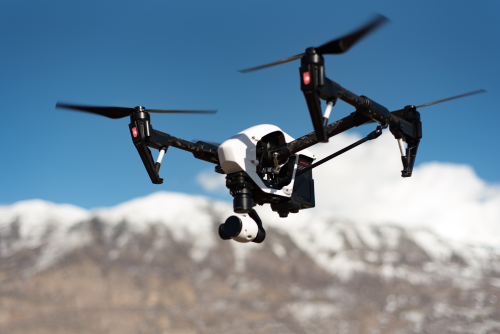
The best drones under $1,500 for mapping, inspection, and small business work are not all trying to do the same job. In this budget, you can get a very capable visual inspection and content aircraft, and in some cases a strong entry-level mapping platform, but you are still making tradeoffs around software, accuracy, repair support, and automation. If you buy for workflow instead of marketing specs, this price band can be a very smart place to start or upgrade.
Quick Take
If you’re shopping for the best drones under $1,500 for mapping, inspection, and small business work, these are the strongest fits for most buyers:
-
Best all-around business drone: DJI Air 3
Best for buyers who need one drone for inspection, marketing content, property work, and light mapping. -
Best lightweight travel and property-work option: DJI Mini 4 Pro
Best for solo operators, roofers, real estate shooters, and travel-friendly business use. -
Best mapping-first value: Used DJI Phantom 4 Pro V2.0
Still one of the most practical photogrammetry buys if you can find a clean used kit. -
Best non-DJI alternative: Autel EVO Lite+
Best for camera-first buyers who want a credible alternative ecosystem. -
Best low-cost entry into paid work: Used DJI Air 2S
A sensible starter if you want to preserve budget for batteries, software, and insurance.
A key reality: street price varies by region, taxes, bundle, and whether you buy new, used, or refurbished. Treat this article as a budget-band guide, not a live price list.
What this budget can and cannot do
Before comparing models, it helps to reset expectations.
What under $1,500 does well
In this range, you can realistically buy a drone that can handle:
- Roof and façade inspection
- Solar array visual checks
- Construction progress photos and video
- Real estate and hospitality marketing
- Small-area mapping and orthomosaics
- Site documentation for contractors, consultants, and agencies
- Repeatable before-and-after flights
What it usually does not do well
This budget usually does not get you:
- Thermal imaging from a current, reliable platform
- RTK or PPK geospatial accuracy as a standard feature
- Enterprise-grade zoom for stand-off industrial inspection
- Interchangeable payloads
- Serious weather hardening
- Full fleet management and enterprise support
- Survey-grade results without extra workflow discipline
For mapping, this matters a lot. A sub-$1,500 drone can produce useful photogrammetry outputs, meaning maps and 3D models built from overlapping images. But that is not the same as guaranteed survey accuracy. If a client needs engineering-grade coordinates or legally sensitive measurements, verify whether you need ground control points, RTK, or a licensed survey partner in your market.
Best drones under $1,500 at a glance
| Drone | Best for | Typical budget fit | Why it stands out | Main watch-out |
|---|---|---|---|---|
| DJI Air 3 | General small business work, inspection, mixed use | New | Dual-camera flexibility, strong endurance, broad ecosystem | Mapping app and controller compatibility must be checked |
| DJI Mini 4 Pro | Travel, property work, lightweight operations | New | Very portable, strong image quality, easy to carry daily | Wind and airframe size limit larger or rougher jobs |
| DJI Phantom 4 Pro V2.0 | Mapping-first buyers | Used/refurbished | Mechanical shutter, proven photogrammetry reputation | Aging batteries, bulk, support and parts risk |
| Autel EVO Lite+ | Camera-first inspection and marketing | New or discounted | Strong still-image value, alternative to DJI | Narrower software and service ecosystem |
| DJI Air 2S | Budget-conscious paid starter work | Used/refurbished | Good image quality, lots of market familiarity | Older platform with less long-term runway |
The best fits by buyer type
DJI Air 3
For most readers, the DJI Air 3 is the safest one-drone recommendation in this price band.
Why it stands out
It is the strongest all-arounder for small business use because it balances:
- reliable flight behavior
- strong image quality
- good endurance
- meaningful safety sensing
- flexible inspection and content capture
Its dual-camera setup is especially useful in paid work. The wider view handles general site documentation and marketing shots, while the tighter camera helps you inspect roofs, façades, and elevated features from a safer distance.
That matters more than it sounds. In inspection, a longer lens is not just a creative bonus. It can reduce the need to push the aircraft too close to edges, obstacles, or delicate structures.
Best for
- Contractors and consultants
- Roof and property inspection
- Construction progress work
- Tourism and hospitality marketing
- Solo operators who need one drone for many job types
Limits to know
The Air 3 is not a dedicated mapping platform. It can be useful for light mapping and repeatable documentation, but if automated grid flights are central to your business, verify support for your exact drone, controller, and mobile device in the mapping app you plan to use.
That check is essential. A lot of buyers assume a drone with waypoints can automatically drop into any mapping workflow. That is not always true.
Buy this if
Buy the Air 3 if you want the most balanced business tool under this budget and your deliverables are mostly visual rather than survey-grade.
If the DJI Air 3S base package happens to fit your local budget, it targets the same buyer profile and may be worth comparing as the more camera-forward version of this idea.
DJI Mini 4 Pro
The DJI Mini 4 Pro is the best lightweight option for people who value portability, low hassle, and daily practicality.
Why it stands out
This is the drone for people who actually carry their drone everywhere. That changes business value more than spec-sheet shoppers often admit.
A compact drone that goes with you on every roof check, property visit, resort shoot, or travel assignment will usually make more money than a larger drone left in the office.
The Mini 4 Pro is especially appealing for:
- real estate teams
- roofers
- tourism and travel creators with commercial clients
- solo inspectors doing quick documentation jobs
- consultants who need a drone in a backpack, not a hard case
In many jurisdictions, the sub-250 g class can also reduce regulatory friction for some operations. But that does not mean “no rules.” Commercial use, airspace limits, privacy obligations, and registration or pilot requirements may still apply depending on where you fly.
Best for
- Small property inspections
- Roof reports
- Real estate and hospitality
- Travel-friendly commercial content
- Lightweight construction progress documentation
Limits to know
The Mini 4 Pro is not the best choice for:
- frequent windy sites
- larger mapping jobs
- extended standoff inspection
- operators who need strong zoom capability
- rough industrial environments
It can map small sites, but its lighter airframe and smaller overall platform make it less comfortable for repeated large-area work.
Buy this if
Buy the Mini 4 Pro if portability, ease of travel, and low deployment friction matter as much as raw capability.
Used DJI Phantom 4 Pro V2.0
If mapping is your first revenue stream, the used DJI Phantom 4 Pro V2.0 is still one of the most practical buys in this budget band.
Why it still matters
This is the old workhorse that refuses to become irrelevant.
The reason is simple: it has a mechanical shutter. For mapping, that matters because a mechanical shutter captures the frame all at once, reducing image distortion while the drone is moving. A rolling shutter, used by many newer consumer drones, captures line by line, which can introduce skew and reduce mapping quality if your flight speed, overlap, or conditions are not well controlled.
That is why many mapping professionals have kept the Phantom 4 Pro in service far longer than normal consumer upgrade cycles would suggest.
Best for
- Small surveying businesses entering photogrammetry
- Construction progress mapping
- Stockpile and site documentation
- Buyers who care more about map consistency than portability
Limits to know
There is an obvious catch: in many markets, this is now a used or refurbished purchase.
That means you must check:
- battery age and cycle count
- charger condition
- prop and motor wear
- controller condition
- parts availability
- local service options
A beautiful-looking used airframe is not enough. Old batteries and shrinking support can turn a “great deal” into downtime.
Buy this if
Buy the Phantom 4 Pro V2.0 if mapping is your core use case and you can source a clean, well-documented kit. Skip it if you need a compact travel drone or want the broadest future support.
Autel EVO Lite+
The Autel EVO Lite+ is the best pick here for buyers who want a legitimate non-DJI option and care heavily about image quality.
Why it stands out
For camera-first business users, the EVO Lite+ can make a lot of sense. It is attractive to operators doing:
- hospitality and tourism visuals
- premium real estate
- site marketing
- general inspection photo capture
- content production for client businesses
If your work leans more toward beautiful stills and high-value visual deliverables than structured mapping, it deserves a serious look.
Best for
- Brand and marketing work
- General visual inspection
- Buyers avoiding the DJI ecosystem
- Small agencies that prioritize image output
Limits to know
The big caution is ecosystem depth.
Before buying, verify:
- battery availability in your region
- repair turnaround
- local dealer support
- spare prop and accessory supply
- mission-planning and mapping app support
That last point is the most important. The EVO Lite+ is not my first recommendation for a mapping-led business model. It is stronger as a camera and inspection buy than a photogrammetry-first tool.
Buy this if
Buy it if you want a strong camera drone outside the DJI stack and your work is mostly visual documentation and marketing.
Used DJI Air 2S
The DJI Air 2S remains a smart starter option if your goal is to begin paid work without burning the entire budget on the aircraft alone.
Why it still works
The Air 2S was one of the clearest “prosumer sweet spot” drones of its generation, and it still holds up for:
- real estate
- roof documentation
- social content for businesses
- construction updates
- simple inspection jobs
- entry-level client work
Its biggest advantage today is value. In many used or refurbished markets, it lets you put more money into the things that actually make paid operations smoother: batteries, storage, insurance, software, and a backup plan.
Best for
- First-time commercial operators
- Buyers on tight budgets
- Agencies adding drone as a secondary service
- People who need a capable but not bleeding-edge platform
Limits to know
It is an older drone. That means:
- less future runway
- older obstacle sensing and automation feel
- lower margin for buying a rough used unit
- more need to check controller and app workflow before committing
Buy this if
Buy it if cash discipline matters more than having the newest hardware. It is often the better business choice than overspending on an airframe and then underfunding the actual workflow.
How to choose the right drone for your workflow
The right drone depends less on “best overall” and more on what you sell.
If mapping is the main job
Prioritize these first:
- Mission-planning compatibility
- Image consistency
- Flight endurance
- Battery availability
- Mapping accuracy expectations
If you are building revenue around orthomosaics, progress maps, stockpile visuals, or 3D site models, the used Phantom 4 Pro V2.0 is still the smartest specialized choice here.
If you want a newer all-around drone that can also do some mapping, the Air 3 becomes the better business compromise, but only after you verify workflow support.
If inspection is the main job
Prioritize:
- Safe standoff distance
- Obstacle awareness
- Stable hover
- Repeatable flight paths
- Fast deployment
For roofs, façades, solar arrays, and general property work, the DJI Air 3 is the best overall pick because its dual-camera setup is genuinely useful on the job.
If you mostly inspect homes, villas, lodges, small commercial buildings, or travel sites and want maximum portability, the Mini 4 Pro is often enough.
If you need one drone for a small business
Prioritize:
- Versatility
- Client-friendly image quality
- Ease of travel
- Repair and accessory support
- Replacement cost
For mixed business use, most buyers should choose between the Air 3 and Mini 4 Pro.
- Choose Air 3 if the drone is a revenue tool first.
- Choose Mini 4 Pro if you need a revenue tool that also fits daily travel and lighter operations.
The hidden costs that change the real winner
A lot of drone buyers think they are shopping for a drone. They are actually shopping for a working system.
Before you spend the full budget on the aircraft, account for:
- at least 2 to 3 batteries
- spare propellers
- high-quality memory cards
- a charging setup that fits field work
- a case or bag that protects the kit
- mapping or inspection software
- photo and video processing time
- cloud storage and file delivery
- liability insurance where needed
- training and test flights
- maintenance and replacement downtime
For many small businesses, a cheaper aircraft plus better workflow is more profitable than the most expensive drone you can barely afford.
A common example: a used Air 2S with spare batteries and a stable editing or mapping process can outperform a brand-new premium purchase that leaves you with one battery and no software budget.
Safety, legal, and operational limits to verify before paid work
Commercial drone work is not just a hardware decision.
Before you take client jobs, verify the rules that apply in your country, region, and flight area. That may include:
- pilot registration or competency requirements
- commercial operation rules
- remote identification or equivalent requirements
- local airspace restrictions
- site owner permission
- flights near people, roads, or buildings
- privacy and data handling expectations
- insurance requirements from clients or worksites
A few practical reminders:
- A client owning the property does not always mean you can freely launch and fly there.
- A small or lightweight drone does not automatically remove commercial restrictions.
- Mapping and inspection near roads, neighborhoods, utilities, ports, parks, or critical sites can trigger extra limitations.
- If you are producing deliverables that look like formal survey products, verify whether licensed professionals must review or sign off in your market.
Also think about operational risk, not just legal compliance. Roof edges, antennas, glass façades, power lines, and reflective surfaces can all make visual inspection trickier than buyers expect.
Common mistakes buyers make in this price band
1. Buying for camera hype instead of workflow
The best image sensor in the group is meaningless if your drone does not fit your planning app, battery budget, or client deliverable process.
2. Assuming every drone can map well
A drone may support waypoints or route repeats and still be a poor fit for structured mapping. App compatibility and shutter behavior matter.
3. Spending the full budget on the aircraft
If you cannot afford spare batteries, memory, software, and recovery time after a problem, you did not buy a business tool. You bought a fragile toy with invoices attached.
4. Ignoring used-battery risk
This is the biggest mistake with older platforms like the Phantom 4 Pro V2.0 and Air 2S. Always assess battery condition before trusting a used kit.
5. Promising survey-grade accuracy too early
Visual photogrammetry can be very useful, but “useful” and “certified” are not the same thing.
6. Treating sub-250 g status as a free pass
Lighter drones may reduce some regulatory burden in some places, but they do not erase airspace rules, safety obligations, or privacy issues.
FAQ
Can a drone under $1,500 do real mapping work?
Yes, for many small-business use cases. Construction progress maps, site overviews, stockpile visuals, and small orthomosaics are all realistic. What this budget usually does not guarantee is survey-grade accuracy without extra workflow controls such as ground control points or higher-end positioning tools.
Is the DJI Mini 4 Pro enough for paid inspection work?
Yes, for many property, roof, hospitality, and small commercial jobs. It is especially strong where portability matters. It is less ideal for windy sites, larger structures, or inspection tasks that benefit from stronger stand-off capability.
Do I need a mechanical shutter for mapping?
Not always, but it helps. A mechanical shutter reduces distortion while the drone is moving, which is why older mapping-focused platforms still hold value. Rolling-shutter drones can still produce useful maps, but they require more care with flight speed, overlap, and expectations.
Should I buy new or used in this budget?
If mapping is your main job, a clean used Phantom 4 Pro V2.0 can be a smart buy. If you want lower risk, better portability, and longer support runway, buy a newer model like the Air 3 or Mini 4 Pro. Used can save money, but only if battery health and parts support check out.
Which is better for roof work: Air 3 or Mini 4 Pro?
For most professional roof work, the Air 3 is the better tool because of its added camera flexibility and stronger all-around business feel. The Mini 4 Pro is better when portability, low-profile operation, and travel convenience are bigger priorities.
Do I need RTK for small business mapping?
Not for every job. Many clients only need clear visual documentation, area context, or progress tracking. If they need high-confidence coordinates, tighter measurement accuracy, or regulated survey outputs, RTK or a different workflow may be necessary.
What should I verify before buying a drone for mapping software?
Check the exact combination of:
- drone model
- controller model
- phone or tablet operating system
- mission-planning app support
- processing software output needs
This is one of the easiest places to make an expensive mistake.
How many batteries should a working drone kit have?
For real paid work, think in terms of at least three total batteries if the platform supports that comfortably. One battery is a demo. Two is a short session. Three starts to feel like a usable field kit.
The smartest buy for most readers
If you want one clear answer, the DJI Air 3 is the best all-around drone under $1,500 for most buyers doing inspection, content, and general small business work. If portability and travel matter more, get the DJI Mini 4 Pro. If mapping is the reason you are buying at all, hunt carefully for a clean used Phantom 4 Pro V2.0.
The best move now is simple: decide what your first paid deliverable will be, verify the software workflow that supports it, and then buy the drone that fits that job without using your entire budget on the airframe alone.