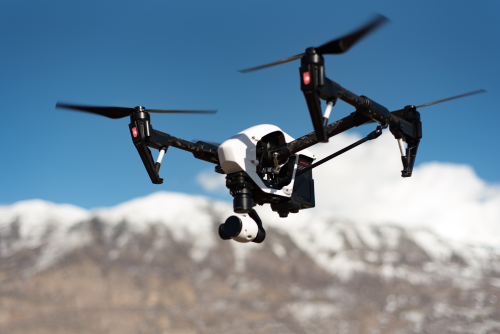
Shopping for the best drones under $2,500 for mapping, inspection, and small business work is harder than it looks. This budget buys some excellent camera drones and one very important used-market mapping option, but the wrong pick can leave you with great footage and weak survey results, or good maps and a frustrating day-to-day business tool. The key is to buy for your real deliverable: inspection detail, repeatable maps, premium visuals, or a balanced mix of all three.
Quick Take
If you want the short version, here it is:
- Best overall for most small businesses: DJI Air 3S
- Best for inspection-heavy mixed work: DJI Mavic 3 Pro
- Best for premium visuals and client-facing media: DJI Mavic 3 Classic
- Best portable starter option: DJI Mini 4 Pro
- Best mapping-focused buy under this budget: Used DJI Phantom 4 RTK
- Best value if found at the right discount: DJI Air 3
A few honest caveats matter:
- Under $2,500, inspection and general business imaging are much easier to solve than true high-accuracy mapping.
- If mapping is your main revenue stream, a used enterprise mapping drone can be smarter than a new consumer flagship.
- If your work includes roofs, facades, towers, or difficult access, a tele camera often matters more than the absolute best wide-camera image quality.
- If your client expects measurement-grade outputs, verify your aircraft’s automation support, shutter type, geotag quality, and your processing workflow before buying.
The honest reality of this budget
This price band is excellent for:
- roof and property inspections
- construction progress updates
- tourism and hospitality content
- site overviews
- marketing photo and video
- basic 2D mapping and 3D modeling
- small business documentation jobs
It is less ideal for:
- survey-grade mapping without a disciplined workflow
- thermal inspection with current-generation hardware
- large industrial inspections that need strong zoom, redundancy, or specialized sensors
- procurement-heavy enterprise programs with strict approved-vendor lists
That is why “best” depends on the job.
If you mainly sell visual deliverables, you want sensor quality, flight time, and reliable handling.
If you mainly sell inspection outputs, you want safer stand-off distance, stable hover, and zoom flexibility.
If you mainly sell maps, you want repeatable mission planning, clean image capture, and ideally RTK (real-time kinematic positioning) or a solid GCP (ground control point) workflow.
Best drones under $2,500 at a glance
Street pricing, bundles, and regional taxes vary, so think in terms of typical market position rather than fixed numbers.
| Drone | Best fit | Why it stands out | Main limit |
|---|---|---|---|
| DJI Air 3S | Best overall small-business drone | Strong all-round camera package, tele flexibility, good flight time, capable inspection and content tool | Mapping workflow support must be verified before buying |
| DJI Mavic 3 Pro | Inspection-first business work | Multiple focal lengths help you inspect from safer distances | More expensive, and overkill if you do not need tele reach |
| DJI Mavic 3 Classic | Premium visual deliverables | Excellent wide camera, strong stills and video, simple premium tool | No tele camera, so some inspections require closer flight |
| DJI Mini 4 Pro | Portable starter business drone | Travel-friendly, lower entry cost, quick deployment | Less confidence in wind and tougher sites |
| DJI Phantom 4 RTK (used) | Budget serious mapping | RTK and mechanical shutter make it the standout mapping pick here | Aging platform, used-market risk, bulky |
| DJI Air 3 | Discount value pick | Dual cameras, mature platform, solid business utility | Harder to justify if the Air 3S is priced close |
The best picks by use case
DJI Air 3S: best overall for mapping, inspection, and small business work
For most buyers, the DJI Air 3S is the safest recommendation in this budget.
Why it works:
- It is genuinely useful across multiple job types.
- The dual-camera setup gives you both a strong general view and more reach for inspections.
- It is easier to run as a one-person business drone than bulkier older platforms.
- Flight time, portability, and obstacle sensing make it a practical day-to-day work tool.
This is the drone I would point most solo operators toward if they do a mix of:
- roof and property inspection
- construction progress
- resort, venue, or tourism content
- social media and website visuals
- light mapping or 3D model jobs where absolute survey accuracy is not the core promise
Where it can disappoint:
- If your mapping workflow depends on automated grid flights, verify current support in your chosen flight-planning app first.
- If your client expects survey-grade results, you may outgrow it quickly.
- If you need thermal, it is not the right platform.
Best for: – one-drone businesses – content-led service providers – property, construction, hospitality, and local commercial work
Skip it if: – mapping accuracy is your primary product – your inspection jobs regularly require more stand-off distance than a mid-tele camera provides – your organization has platform approval restrictions
DJI Mavic 3 Pro: best for inspection-heavy mixed work
If inspection is a major part of your workload, the DJI Mavic 3 Pro makes a strong case because of its multiple focal lengths.
Why that matters:
- You can inspect roofs, facades, upper structures, and awkward details from a safer distance.
- You do not have to push the aircraft as close to obstacles just to see a crack, flashing issue, or damaged edge.
- It is also a strong content drone, which helps if your clients want both technical shots and polished marketing images.
This drone makes sense for businesses that regularly deliver:
- building and roof inspection imagery
- hotel, resort, or commercial property visuals
- mixed photo/video plus detail shots
- before-and-after documentation
- high-value marketing content with occasional inspection work
Its main tradeoff is value. If you rarely use tele cameras, you are paying for flexibility you may not need. It is also not the cleanest mapping buy under this budget.
Best for: – inspection-first operators – businesses needing both high-end visuals and closer-look framing options – buyers who want one premium drone instead of a starter plus later upgrade
Skip it if: – you mostly shoot nadir maps and wide overviews – you want the simplest possible workflow – budget is tight enough that extra batteries and accessories become a problem
DJI Mavic 3 Classic: best for premium visuals and client-facing media
The DJI Mavic 3 Classic is one of the smartest buys here if your business wins on image quality more than inspection reach.
Why it stands out:
- Its wide camera is still a very strong fit for premium stills and polished business video.
- It feels like a “serious tool” without forcing you into a more complex multi-camera workflow.
- For tourism, hospitality, real estate marketing, venue content, and branded small-business work, it remains highly competitive.
This is the better buy than the Mavic 3 Pro if most of your paid jobs are:
- marketing visuals
- destination and travel business content
- real estate and hospitality media
- construction updates for client reports
- polished social content for brands and local businesses
Its biggest weakness for inspection is simple: no tele camera. If your inspection work requires detail from a safer distance, the Classic is harder to justify. For mapping, it can produce good imagery, but it is still not a dedicated mapping platform.
Best for: – visual-first businesses – premium stills and video deliverables – buyers who care more about image quality than zoom flexibility
Skip it if: – inspection is more than an occasional add-on – you need safer detail capture from a distance – mapping is the main reason you are buying
DJI Mini 4 Pro: best portable starter business drone
The DJI Mini 4 Pro is the easiest low-risk entry point for many solo operators.
It is especially good for:
- travel-heavy work
- quick roof photo sets
- lightweight site documentation
- social content for local businesses
- simple exterior inspection in calmer conditions
- creators testing whether drone services will become a real business line
Why people like it:
- It is easy to carry and deploy.
- It lowers the upfront risk of getting started.
- For many basic deliverables, clients care more about clarity and consistency than aircraft size.
But the limits are real:
- Wind performance is not in the same class as larger drones.
- Some job sites simply feel better suited to a larger aircraft.
- Stand-off inspection options are limited.
- Longer, repetitive commercial days can expose its “small drone” compromises faster.
One important note for global buyers: a lighter drone can change the regulatory path in some countries, but do not assume sub-250 g automatically makes paid work exempt from registration, pilot, or operational requirements. Commercial rules vary widely.
Best for: – solo operators starting small – travel creators expanding into client work – local service businesses that need a fast, portable tool
Skip it if: – you work in windy coastal, mountainous, or exposed industrial areas – your jobs often involve tight inspection details – you want a drone that feels future-proof for heavier commercial use
Used DJI Phantom 4 RTK: best mapping-focused option under $2,500
If mapping is the real reason you are shopping, the most interesting option in this budget is often not a new drone. It is a used DJI Phantom 4 RTK.
Why it matters:
- It was built for mapping rather than general content work.
- RTK improves positional consistency.
- A mechanical shutter is better suited to photogrammetry than the rolling shutters common on consumer camera drones.
- It remains relevant for orthomosaics, site mapping, and repeat documentation when bought carefully.
This is the drone to consider if you primarily sell:
- 2D orthomosaics
- stockpile and site volume work
- construction mapping
- top-down progress tracking
- repeat site capture where consistency matters
But there are serious warnings:
- It is an aging platform.
- Battery health matters a lot.
- Spare parts, chargers, and repair support vary by region.
- It is bulkier and less convenient than modern folding drones.
- You need to understand your correction-data or control workflow, not just the aircraft itself.
If you buy used, verify:
- battery cycle count and battery condition
- controller condition
- gimbal health
- sample raw images and geotag behavior
- total airframe condition and crash history
- availability of local parts and repair support
Best for: – operators selling maps, not just visuals – buyers who understand used-hardware risk – businesses that care more about repeatable mapping than portability
Skip it if: – you want one drone to do everything well – you dislike used-market uncertainty – you mainly need inspection and marketing, not mapping
DJI Air 3: best value if heavily discounted
The DJI Air 3 is still a good business drone, but its place depends on pricing.
It makes sense when:
- you find it meaningfully cheaper than the Air 3S
- that savings pays for extra batteries, storage, insurance, or software
- your work is more about dependable business output than having the newest model
It still offers:
- useful dual-camera flexibility
- solid endurance
- good day-to-day portability
- strong value for real estate, tourism, property, and progress work
I would choose it over newer options only if the price gap is big enough to improve the full kit, not just the aircraft purchase.
Best for: – value-focused buyers – operators who prioritize total kit cost – businesses that need a capable all-rounder without chasing the latest release
Skip it if: – the Air 3S is close in cost – you are trying to buy your one long-term business drone and can stretch slightly higher
How to choose the right one
1. Start with the deliverable you sell
Ask yourself what clients actually pay you for:
- polished marketing photo/video
- inspection detail
- repeatable maps and models
- progress reporting
- a mix of all of the above
That answer narrows the list fast.
2. Decide what matters more: sensor quality, tele reach, or mapping accuracy
A lot of buyer regret comes from optimizing for the wrong thing.
- Choose sensor quality if premium visuals win work.
- Choose tele reach if inspection safety and detail matter most.
- Choose mapping accuracy if your client will measure from the output.
3. Verify software compatibility before you buy
This is the step many buyers skip.
Before spending money, confirm:
- whether your drone works with your planned flight-automation workflow
- whether your mapping software supports the aircraft
- whether your local team uses phone, tablet, or controller-based mission planning
- whether your processing and deliverable workflow matches the outputs you promise
A great camera drone can be a poor mapping purchase if mission support is weak.
4. Budget for the workflow, not just the aircraft
A drone under $2,500 does not mean a complete business kit under $2,500.
At minimum, budget for:
- at least 3 batteries for inspection and photo work
- ideally 4 to 6 batteries if mapping is core
- spare props
- fast charging
- reliable storage media
- case or backpack
- landing pad
- software
- insurance where needed
- local training or licensing costs where applicable
5. Think about downtime and support
A cheaper drone is not cheaper if it sits grounded for weeks.
Ask:
- Can I get batteries and props easily in my region?
- Is there repair support nearby?
- Will I lose work if this airframe is grounded?
- Am I buying a drone or buying a reliable business process?
Safety, legal, and operational risks to check before taking paid jobs
Once you move from hobby flying into client work, the aircraft is only part of the decision.
Before operating commercially, verify with the relevant aviation and local authorities:
- pilot qualification or competency requirements
- registration or operator identification rules
- remote identification or electronic visibility requirements where applicable
- airspace approvals near airports, cities, or sensitive sites
- site permissions from landowners, property managers, or clients
- privacy and data-protection requirements for recorded imagery
- insurance expectations in your market or contract terms
Inspection work adds extra risk. Be especially careful around:
- power lines and energized infrastructure
- steel-heavy structures that can affect compass or positioning behavior
- rooftop turbulence and updrafts
- reflective glass facades
- cranes, temporary works, and active construction traffic
- crowded or public-facing sites
Do not treat obstacle sensing as permission to fly close. It is a backup aid, not an inspection method.
If your mapping output may influence construction, engineering, land, or asset decisions, be clear about what your deliverable is and is not. A visually useful map is not automatically a survey-grade product.
Common mistakes buyers make in this budget
Buying a “great drone” instead of the right workflow
People often buy based on headline camera specs, then discover their software, mission planning, or deliverable process is the real bottleneck.
Underestimating battery needs
Two batteries may feel fine on day one. They are usually not enough for paid work, especially for mapping.
Confusing consumer drones with enterprise mapping tools
Consumer drones can do useful mapping. That does not make them measurement-grade by default.
Ignoring telephoto needs for inspection
If you inspect roofs, gutters, facades, solar, or elevated assets, a tele camera can be worth more than a slightly better wide camera.
Assuming small drones solve regulation
In some markets, lighter drones can reduce restrictions. In others, commercial work still triggers pilot, operator, or location-based obligations. Always verify.
Buying used enterprise hardware without checking support
A cheap Phantom 4 RTK can become an expensive mistake if the batteries are weak and parts are hard to source locally.
FAQ
Can you do professional mapping with a drone under $2,500?
Yes, but with limits. You can absolutely produce useful orthomosaics, progress maps, and some 3D models in this budget. If the client expects high-accuracy outputs for engineering, boundary, or formal measurement use, your workflow needs more control, and a used RTK mapping platform may make more sense.
Do I need RTK for mapping?
Not always. For visual maps, progress reporting, and many internal business uses, RTK may not be essential. For more accurate, repeatable, and measurement-sensitive work, RTK or a careful ground-control workflow becomes much more important.
Is the DJI Mini 4 Pro enough for paid inspection work?
For many lightweight jobs, yes. Roof exteriors, simple property checks, travel-friendly content, and quick documentation can all be realistic. It becomes less convincing in wind, on larger sites, or when you need more stand-off distance and stronger client confidence.
Should I buy a used Phantom 4 RTK in 2026?
Only if mapping is a real revenue line and you are comfortable evaluating used hardware. It is still one of the most sensible mapping buys in this budget, but battery health, repair options, and total ownership risk matter far more than the purchase price alone.
Is thermal inspection realistic under $2,500?
New, not really in a way most professionals would feel good about recommending. In the used market, older thermal-capable drones may appear near this budget, but you need to be careful about battery age, sensor usefulness, software support, and parts availability.
How many batteries should a small business drone kit include?
For most paid work, start with three. If mapping is a core workflow, four to six is more realistic. Battery planning affects job efficiency more than many first-time buyers expect.
Can one drone handle mapping, inspection, and marketing content?
Yes, but it will be a compromise. The Air 3S is probably the best current “do most things well” answer in this budget. If mapping is core, a dedicated mapping drone is better. If inspection is core, more tele reach helps. If premium media is core, the Mavic 3 Classic remains compelling.
Final decision
If you want one drone that covers the widest range of small-business jobs well, buy the DJI Air 3S. If your money comes from safer stand-off inspection, choose the DJI Mavic 3 Pro. If you mainly sell premium visuals, go with the DJI Mavic 3 Classic. And if mapping accuracy is the real priority, stop chasing consumer flagships and shop carefully for a used Phantom 4 RTK instead.
Before you buy, define the deliverable, confirm software support, and price the full kit, not just the aircraft. That is the difference between buying a drone and building a business tool.