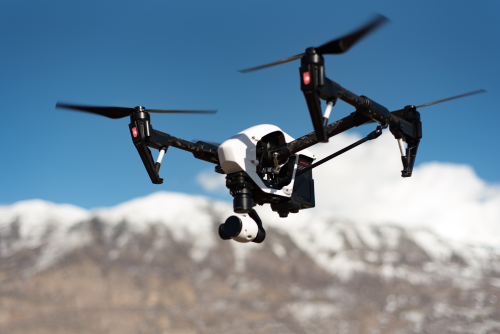
Shopping for the best drones under $500 for mapping, inspection, and small business work is mostly about separating real tools from cheap spec-sheet bait. At this budget, a few compact camera drones can absolutely handle visual documentation, roof overviews, construction progress, real estate content, and basic photogrammetry experiments. What they cannot do reliably is replace enterprise mapping, thermal inspection, zoom inspection, or survey-grade workflows.
Quick Take
If you want the short version, here’s the buying answer:
- Best overall for most buyers: DJI Mini 4K
- Best value alternative: Potensic ATOM (3-axis gimbal version)
- Best under-$500 option for basic mapping experiments: Used or refurbished DJI Mini 2, but only after you verify software and controller compatibility
- Best for social-first small businesses: DJI Neo
- Best advice: if your work is paid, buy for workflow stability, batteries, app reliability, and repair support, not headline camera numbers
A hard truth: sub-$500 drones are best for visual work first, data work second. If your revenue depends on repeatable mapping accuracy, automated grid missions, thermal imaging, or safe stand-off inspection with optical zoom, you are shopping below the class you really need.
What a drone under $500 can realistically do
This budget can still be useful if your expectations are right.
Good fits
A drone in this class can work well for:
- Roof and gutter overviews from a safe distance
- Small construction site progress photos
- Real estate and hospitality marketing
- Property and landscape documentation
- Travel and tourism content for small brands
- Top-down images for rough planning
- Basic 3D model or orthomosaic experiments
An orthomosaic is a stitched top-down map made from many overlapping photos. A consumer drone can contribute to that workflow, but the output will not automatically be survey-grade.
Weak fits or poor fits
This price class is usually the wrong tool for:
- Thermal inspection
- Detailed facade or utility inspection that needs optical zoom
- Contractual or engineering-grade mapping
- Boundary surveys
- Industrial asset work in complex airspace or hazardous sites
- Windy coastal or mountain operations
- Repeated long-duration site coverage with heavy daily use
That matters because many buyers think “commercial work” automatically means “professional results in every scenario.” It does not. A good budget drone is often a documentation tool, not a full inspection or survey platform.
Best drones under $500 at a glance
| Drone | Best for | Why it stands out | Main tradeoffs |
|---|---|---|---|
| DJI Mini 4K | General small business work, visual inspection, travel-friendly documentation | Strong image quality for the class, 3-axis gimbal, compact, proven ecosystem | No zoom, no thermal, limited technical mapping workflow unless compatibility is confirmed |
| Potensic ATOM (3-axis) | Best-value alternative for creators and business owners | Good stabilization, portable, strong value if you want a non-DJI option | Smaller support ecosystem, verify spare parts and software fit before buying |
| DJI Mini 2 (used/refurbished) | Budget mapping starter, site documentation, general visual work | Mature platform, solid camera, often better than a brand-new no-name drone | Battery age, warranty risk, and mapping app compatibility must be checked |
| DJI Neo | Social content, solo business marketing, lightweight travel capture | Fast to deploy, tiny, easy for quick content creation | Not a serious mapping or inspection platform |
1. DJI Mini 4K: best overall for small business work
If you want one recommendation that fits the largest number of buyers, this is it.
The DJI Mini 4K hits the sweet spot for people who need a drone for:
- Property overviews
- Jobsite updates
- Roof and exterior photo capture
- Social and marketing content
- Travel-light business use
- General visual inspections where a normal wide camera is enough
Why it works
The big reason this drone makes sense is balance. You get:
- A real 3-axis gimbal for smoother and more consistent footage
- Predictable hovering and GPS stability
- Compact size for easy transport
- A mainstream ecosystem with accessories, community knowledge, and resale value
A gimbal is the mechanical stabilizer that keeps the camera level. For work, that matters more than most beginners realize. Electronic stabilization can look okay for casual clips, but for mapping, inspection stills, and repeatable documentation, a real gimbal usually gives you cleaner and more consistent frames.
Where it fits best
This is a strong choice if you are:
- A small business owner creating content for your own brand
- A freelancer doing basic site visits
- A property marketer or tourism creator
- A solo operator who values portability and quick setup
- A beginner who wants a serious tool without jumping into enterprise cost
Where it falls short
Be realistic about the limits:
- No thermal capability
- No proper stand-off optical zoom
- Not built for engineering-grade mapping
- Budget-class obstacle sensing or avoidance is limited or absent in this segment
- Mapping workflow depends heavily on whether your software and controller setup actually support repeatable capture
For many buyers, that is still fine. If your clients want clear roof photos, site overviews, promo content, and progress imagery, the Mini 4K can do the job well.
2. Potensic ATOM (3-axis version): best value alternative
If you want to stay under budget without defaulting to DJI, the Potensic ATOM is one of the few alternatives worth serious attention.
The key detail is important: choose the 3-axis gimbal version, not a cheaper model that relies mainly on electronic stabilization.
Why it deserves a place on the list
The ATOM is appealing because it combines:
- Good portability
- Respectable image stability
- Beginner-friendly flying
- Competitive value for the money
For many small business owners, that is enough. If your main jobs are promotional content, property flyovers, simple documentation, and occasional top-down stills, the ATOM can make sense.
Who should consider it
This is a good fit for:
- Buyers who want a lighter investment than a larger ecosystem buy
- Travel creators doing client content
- Small business teams that need a drone occasionally, not daily
- Cost-conscious operators who still want something more credible than a random marketplace drone
The caution
With Potensic, the main issue is not that the drone cannot fly. It is ecosystem depth.
Before buying, check:
- Spare battery availability in your market
- Propeller and repair part availability
- App quality on your phone platform
- Local after-sales support
- Whether your intended workflow needs software integrations beyond casual capture
For simple visual work, that may not matter much. For paid repeat jobs, it matters a lot.
3. Used or refurbished DJI Mini 2: smartest budget mapping starter
For many buyers, the best mapping-oriented drone under $500 is not a brand-new drone at all. It is a clean used or refurbished DJI Mini 2.
That recommendation comes with a major condition: only buy it if you have already checked your exact software path.
Why a used Mini 2 can be smarter than a cheap new drone
The Mini 2 remains attractive because it is:
- A known platform with solid image quality
- Stable in the air for its size
- Widely understood by the drone community
- Often a better real-world work tool than flashy no-name “6K” or “8K” drones
For mapping, what matters is not only image resolution. It is whether the aircraft can capture repeatable, stable, overlapping imagery that your processing workflow can actually use.
Why this is only a “conditional” recommendation
Budget mapping is where buyers get burned.
You must verify:
- Mission planning support, if you need automated grids
- App compatibility with your phone or tablet
- Controller compatibility
- Operating system support
- Whether your chosen photogrammetry software can process the images the way you need
A lot of people assume “DJI plus mapping app” is automatic. It is not. Compatibility changes over time, and it can differ by controller, mobile device, app version, and region.
What it is good for
A used Mini 2 can be useful for:
- Rough top-down site documentation
- Small orthomosaic tests
- Progress tracking on simple sites
- Basic stockpile or terrain visualization if carefully validated
- Budget-friendly business content with better file quality than toy-class drones
What it is not good for
Do not oversell it to yourself or to clients.
It is not the right choice for:
- Certified survey deliverables
- High-accuracy engineering work
- Utility inspection at a distance
- Thermal workflows
- Heavy daily commercial use if battery condition is unknown
What to check when buying used
If you go used or refurbished, inspect or verify:
- Battery condition and swelling
- Gimbal smoothness and horizon level
- Arm and hinge wear
- Camera clarity
- GPS lock and stable hover
- Return-to-home behavior in a safe test area
- Controller condition and charging health
- Whether the aircraft has been properly unbound and reset for resale
A reputable refurb seller is usually safer than a mystery private listing.
4. DJI Neo: best for social-first small businesses
The DJI Neo is the easiest drone on this list to recommend for one narrow reason: convenience.
If your business mainly needs:
- Short marketing clips
- Behind-the-scenes content
- Travel reels
- Personal brand video
- Lightweight, fast deployment
then Neo can be more useful than a more “serious” drone you rarely carry.
Why people like it
Neo is tiny, quick to launch, and well suited to casual solo capture. It lowers the friction between “I should get a drone shot” and “I actually got one.”
For small brands, coaches, tour operators, hospitality businesses, and creators, that matters.
Why it is not a technical work pick
For mapping and inspection, Neo is not the answer.
Its limits are the reason:
- It is not built around a true inspection workflow
- It is not a proper mapping platform
- Wind handling and camera-control limits reduce technical usefulness
- It is more about fast content capture than disciplined data collection
If your revenue depends on technical deliverables, skip Neo. If your revenue depends on consistent content, it becomes more interesting.
How to choose the right one for your work
If you are stuck between two options, answer these five questions.
1. Are you selling media or measurements?
If you are selling:
- marketing video
- property overviews
- progress photos
- tourism or brand content
buy for camera stability, portability, and speed.
If you are selling:
- maps
- measurements
- technical site outputs
- repeatable capture sets
buy for workflow compatibility first. Under $500, that often means being very cautious or buying used intelligently.
2. Is mapping occasional or central to your business?
If mapping is occasional, a Mini 4K or ATOM may still help with rough documentation.
If mapping is central, a sub-$500 drone is a stopgap. It may help you learn, but it is usually not the right long-term business tool.
3. Will you travel with it often?
If yes, lightweight drones win. Small folding drones reduce friction, get packed more often, and tend to be used more consistently.
4. Do you need easy support and resale?
If yes, mainstream ecosystem value matters. Support, batteries, cases, props, and repair access can be more important than tiny differences in raw camera specs.
5. Are you willing to buy used?
If yes, your best under-$500 business buy may be a higher-quality older drone, not a brand-new budget model.
The features that matter most in this budget
Ignore the loudest box claims and focus on these.
3-axis gimbal
For work, this is one of the biggest separators between a usable tool and a frustrating one.
GPS and reliable return-to-home
These are basic safety and workflow features. If a drone does not hold position well, it is not a business tool.
Battery ecosystem
One battery is rarely enough for site work. You want at least two or three in rotation.
App reliability
A shaky app can ruin a job faster than a slightly weaker camera.
Repair and accessory availability
Props, batteries, chargers, and cases should not be impossible to source.
File consistency
For mapping and documentation, predictable image output is more useful than inflated marketing claims.
Limits to know before you take paid jobs
This is the section too many buyers skip.
Mapping limits
Sub-$500 consumer drones usually have:
- No RTK or PPK positioning
- Consumer camera sensors
- Rolling shutters in many cases
- Limited automation compared with enterprise platforms
RTK means real-time kinematic positioning, used to improve positional accuracy. If that term is central to your client’s requirement, you are outside the right budget class.
What these drones can do is create rough visual data products, especially when paired with careful flight planning, high image overlap, and ground validation.
Inspection limits
At this price, inspection is usually:
- visible-light only
- wide-angle only or mostly wide-angle
- best for overview and condition spotting, not deep defect analysis
Digital zoom is not the same as real optical inspection capability.
Workflow limits
Many budget buyers underestimate how much time gets lost to:
- app quirks
- battery charging
- file sorting
- firmware issues
- device compatibility
- lack of repeatable automated capture
A drone that flies well but fits badly into your workflow is still a bad business purchase.
Safety, legal, and compliance checks before commercial flying
Because this article covers mapping, inspection, and business use, the legal side matters.
Before you fly for work, verify all of the following with the relevant aviation and local authorities in your area:
- Whether commercial use requires registration, operator ID, pilot competency, or certification
- Whether sub-250g drones receive any special exemptions in your country
- Airspace restrictions near airports, cities, infrastructure, parks, or government-sensitive areas
- Whether you need permission to take off, land, or operate over a private site
- Local privacy and data protection rules when filming homes, worksites, or people
- Whether business insurance or liability cover is expected for your type of operation
- Any local rules around remote identification or equivalent electronic identification
- Battery transport rules if you fly while traveling
A drone can reduce ladder and rooftop exposure, but it does not erase operational risk. Do not use a budget drone to push into unsafe wind, tight spaces, or hazardous industrial environments you are not trained or authorized to work around.
Common mistakes buyers make
Buying on resolution alone
A fake “8K” claim on a budget drone often hides weak stabilization, poor hover, bad apps, and unusable files.
Assuming under 250g means “no rules”
In many places, it can reduce some obligations. In others, commercial use still triggers requirements. Always verify.
Spending the whole budget on the drone body
For work, extra batteries and spare props matter more than you think.
Expecting cheap drones to do real inspection
Without optical zoom or thermal tools, you are limited to broad visual overviews.
Ignoring mapping software compatibility
This is the biggest trap for people chasing photogrammetry on a budget.
Buying a no-name drone with no parts pipeline
A drone that cannot be repaired affordably becomes e-waste the first time a prop mount or battery fails.
FAQ
Can a drone under $500 really do mapping?
Yes, but usually only basic mapping or photogrammetry experiments. It can produce useful top-down imagery and rough stitched outputs, but not guaranteed survey-grade results. If your client needs accuracy-backed deliverables, you should validate heavily or move up to a more capable platform.
Which is better for business: DJI Mini 4K or Potensic ATOM?
For most buyers, the DJI Mini 4K is the safer all-around choice because of ecosystem strength and general workflow confidence. The Potensic ATOM is a strong value alternative if you want a lower-cost mainstream option and have confirmed support and accessory availability in your market.
Is a used DJI Mini 2 a better buy than a brand-new cheap drone?
Often, yes. A clean used or refurbished Mini 2 is usually a more credible work tool than a brand-new no-name drone with exaggerated camera claims. Just check battery health, controller condition, and software fit before you buy.
Can these drones be used for roof inspections?
Yes, for visual overviews and safer preliminary imaging. No, they do not replace a qualified structural assessment, thermal scan, or close-range zoom inspection where those are required.
Do I need a license or registration for paid drone work?
Possibly. Rules vary widely by country and sometimes by aircraft weight, purpose, and operating area. Always check with your aviation authority and any local site, park, or municipal authority before flying commercially.
Is under 250g always the best choice for business?
Not always. It helps with portability and may reduce some regulatory friction in some places, but it does not solve wind performance, battery duration, zoom needs, or mapping accuracy. Under 250g is convenient, not magical.
What accessories matter most for business use?
Start with: – at least one extra battery – spare propellers – reliable memory cards – a case or protective bag – a disciplined charging routine
For mapping or repeat documentation, battery consistency matters more than filters or cosmetic extras.
What if my main goal is paid mapping?
Then under $500 is probably the wrong long-term budget. Learn with it if needed, but do not build your core service around assumptions. Confirm your flight app, processing workflow, and accuracy expectations before spending anything.
Final buying advice
If you want the safest recommendation for real-world small business use, buy the DJI Mini 4K. If you want the strongest value alternative, buy the Potensic ATOM 3-axis. If mapping is the real reason you are shopping, the best under-$500 path is usually a verified used or refurbished DJI Mini 2, but only after confirming your capture and processing workflow.
The wrong budget drone is expensive twice: once when you buy it, and again when it cannot deliver the files, reliability, or compliance confidence your work actually needs.