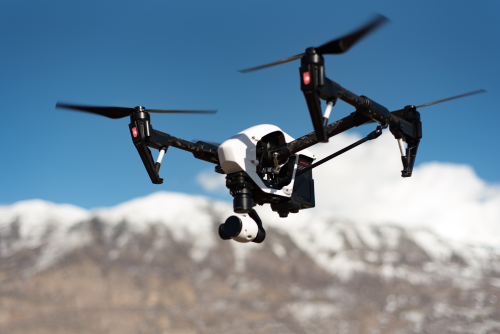
Deciding between foldable drones or cinewhoops is really deciding between two different flying lives. One path gives you a compact aerial camera that is easy to carry, easy to operate, and built for polished results. The other gives you a far more immersive way to fly and unlocks dynamic close-proximity shots that a typical camera drone usually cannot do well.
If you want the smarter drone path for the way you actually fly, buy for your repeatable missions, not for the highlight reels you admire online.
Quick Take
If you want the shortest possible answer, here it is:
- Choose a foldable drone if you mostly want travel footage, landscapes, standard aerial video, still photos, easier setup, longer flight sessions, and lower day-to-day friction.
- Choose a cinewhoop if you specifically want indoor fly-throughs, close-proximity motion, action-oriented FPV footage, and you are willing to practice more and manage a more hands-on workflow.
- If this will be your only drone and you are unsure, the lower-regret path is usually a foldable drone.
- If your paid work or creative identity depends on the shot moving through spaces, around subjects, or following action, the smarter path may be a cinewhoop, not a foldable camera drone.
- For many professionals, the real answer is not “which is better,” but “which one matches 80 percent of my work right now.”
A simple rule:
- Buy a foldable drone if you need a reliable aerial camera.
- Buy a cinewhoop if the movement itself is the product.
Foldable drones vs cinewhoops in plain English
What a foldable drone is
A foldable drone is the camera-drone format most buyers already recognize: folding arms, a stabilized gimbal camera, GPS positioning, and flight-assist features that make takeoff, hovering, and returning home much easier.
Think of them as the most appliance-like drones in the market. They are built to help you get usable footage quickly, especially outdoors.
They are usually best for:
- Travel and vacations
- Landscapes and cityscapes
- Real estate exteriors
- Tourism and hotel content
- Social media aerial B-roll
- Beginner hobby flying
- General business documentation
- Still photos as well as video
Their biggest strength is predictability. Their biggest weakness is that they are not built for aggressive, tight, immersive flying.
What a cinewhoop is
A cinewhoop is a small FPV drone, usually with ducted or guarded propellers, designed for close, controlled, cinematic movement. FPV means “first-person view,” which means the pilot typically flies while viewing a live feed through goggles.
Cinewhoops are popular because they can create shots that feel like a floating action camera: through doorways, around furniture, under structures, between objects, around vehicles, or close to people in controlled environments with proper safety planning.
They are usually best for:
- Indoor fly-throughs
- Tight-space filming
- Action and chase footage
- Event and venue reveals
- Dynamic brand content
- FPV creators who want immersive control
- Commercial shoots where movement and proximity are the signature look
Their biggest strength is creative motion. Their biggest weakness is friction: more practice, more gear, more battery management, and more operational discipline.
Side-by-side comparison
| Buying factor | Foldable drone | Cinewhoop |
|---|---|---|
| Easiest for beginners | Strong advantage | Steeper learning curve |
| Best for still photos | Strong advantage | Usually not the right tool |
| Best for smooth, high-altitude aerials | Strong advantage | Limited |
| Best for indoor/tight-space video | Weak fit | Strong advantage |
| Best for dynamic close-proximity shots | Limited | Strong advantage |
| Travel convenience | Usually easier | More gear to carry |
| Flight time per battery | Usually longer | Usually shorter |
| Automation and assist features | Usually stronger | More manual flying |
| Repairability after minor bumps | Often weaker, more integrated | Often better, especially custom builds |
| Maintenance and troubleshooting | Lower | Higher |
| Wind handling for casual users | Often better in this category | Depends heavily on size, pilot skill, and conditions |
| One-drone ownership | Better for most buyers | Better only for specific needs |
| “Wow” motion for social/video ads | Limited compared to FPV | Major advantage |
The 7 questions that should decide your purchase
1. What is your 80 percent mission?
Forget dream shots for a moment. What will you actually do most weeks?
If your real-world use looks like this:
- travel clips
- scenic flights
- family trips
- rooftop reveals
- destination content
- standard client aerials
- simple social media B-roll
then a foldable drone is probably the smarter tool.
If your real-world use looks like this:
- flying through spaces
- chasing movement
- entering a venue and revealing the interior
- following a subject along a line
- moving close to objects with intention
- creating an FPV-style brand reel
then a cinewhoop is much more aligned.
A lot of buyer regret starts when people buy for the 5 percent scenario instead of the 80 percent scenario.
2. What kind of footage do you actually want to make?
This is the biggest creative split.
Foldable drone look
A foldable drone gives you:
- smooth reveals
- overheads
- wide establishing shots
- classic cinematic push-ins and pull-backs
- stable horizon and gentle movement
- stronger still-photo capability
That is the look many clients and casual viewers expect from a “drone shot.”
Cinewhoop look
A cinewhoop gives you:
- movement through space
- speed changes
- low-altitude energy
- close passes
- transitions between rooms or zones
- a more immersive, kinetic perspective
That look can feel much more modern and attention-grabbing, especially in short-form video. But it is also more specific. Not every project needs it, and not every audience wants everything to feel like an FPV sequence.
If you mostly want your footage to look polished and calm, choose foldable. If you want it to feel present and inside the action, choose cinewhoop.
3. Where do you really fly: open air or tight spaces?
This question removes a lot of confusion.
Foldable drones are at home in open spaces
They are built around outdoor aerial operation with GPS support and room to move. They do best when you can launch, climb, compose, and fly clean lines with distance from obstacles.
Cinewhoops are built for tighter environments
They shine when the space itself is part of the story: homes, gyms, warehouses, restaurants, event halls, workshop floors, garages, indoor attractions, or carefully controlled exterior paths with lots of obstacles.
Important nuance: a foldable drone can sometimes be flown in controlled indoor environments, but that does not make it a good indoor tool. GPS-poor environments, obstacle proximity, and exposed propellers can change the risk profile quickly.
If you are regularly thinking, “Can I get through that doorway, around that pillar, or under that structure?” you are asking a cinewhoop question, not a foldable-drone question.
4. How much learning curve are you willing to accept?
This is where many buyers fool themselves.
Foldable drones are easier to own
Most foldable camera drones are designed to help the pilot with:
- stable hover
- assisted positioning
- return-to-home functions
- simple camera control
- straightforward takeoff and landing
- easier shot repetition
That does not mean you can fly carelessly. It means the platform reduces friction.
Cinewhoops demand more from you
Even beginner-friendly FPV systems still ask more of the pilot. Depending on the setup, you may need to think about:
- simulator practice
- manual stick control
- goggles workflow
- video-link reliability
- battery rotation and charging discipline
- prop and frame maintenance
- post-stabilization workflow for some footage
- repairs after learning mistakes
If you hate troubleshooting, want to fly occasionally, or need something that feels dependable after long gaps between flights, a foldable drone is usually the smarter path.
If you enjoy learning a craft and view flying itself as part of the hobby or business advantage, cinewhoops become much more attractive.
5. What happens when you crash, clip, or go down on a job?
This is not a fun buying question, but it is one of the most important.
A foldable drone usually feels safer and easier to manage in normal outdoor use. But when it does hit something, the integrated design can make repairs slower or more expensive.
A cinewhoop is more likely to encounter bumps because it is meant to fly closer to things. The upside is that many cinewhoop setups, especially custom ones, are more field-repairable. Frames, props, and motors are often more modular.
For professionals, the smarter question is not “which one crashes less?” It is:
- Which one is easier for me to operate safely in my environment?
- Which one keeps me working if something breaks?
- Do I have backup gear or a subcontractor option?
If you earn money with drone work, downtime matters as much as image quality.
6. Do you need stills, standard deliverables, or only motion?
This is where foldables win hard.
If your work includes:
- still photography
- straightforward aerial surveys of a site’s appearance
- property exteriors
- tourism photography
- destination marketing
- standard client expectations for wide aerial coverage
a foldable drone is the more versatile tool.
A cinewhoop is a specialist. It can create memorable footage, but it is not usually the best answer for stills or broad all-purpose aerial coverage.
Many buyers underestimate this. They fall in love with dynamic FPV clips and forget that a lot of real client work is still about clean, stable, conventional deliverables.
7. How much total kit do you want to carry and manage?
A foldable drone kit is usually cleaner:
- drone
- controller
- a few batteries
- charger
- spare props
- maybe filters and a case
A cinewhoop kit often expands quickly:
- drone
- goggles
- radio controller
- multiple batteries
- charger
- spare props
- action camera or mounting solution, depending on setup
- tools and repair spares
- more charging time and battery logistics
If you travel often, shoot on the move, or want to keep your drone as a compact add-on rather than a separate production system, foldable drones are easier to live with.
If you are happy carrying a more dedicated FPV setup because it gives you the exact footage style you want, the extra bulk may be worth it.
Who should choose a foldable drone
A foldable drone is the smarter buy for most of these buyers:
Beginners who want less friction
If you are new to drones and want to spend more time shooting than troubleshooting, start here.
Travel creators
If your drone lives in a backpack, cabin bag, or small production case, foldables make more sense.
Aerial photographers
If stills matter at all, a foldable drone is usually the right answer.
Small businesses and marketing teams
If the goal is repeatable, professional-looking aerial content without a specialist FPV workflow, foldable is the safer business decision.
Real estate, hospitality, and tourism shooters
For exteriors, establishing shots, location context, and classic property coverage, foldables are still the default choice. If you also need interior fly-throughs, that is usually an argument for adding a second tool later, not replacing the foldable entirely.
Occasional operators
If you may fly only a few times per month, or less, you will probably appreciate a system that asks less of your memory and muscle memory.
You will probably regret not choosing a foldable drone if:
- you want one drone to do many jobs reasonably well
- you care about stills and video
- you dislike tinkering
- you travel often
- you want faster setup and teardown
- you are not committed to learning FPV as a craft
Who should choose a cinewhoop
A cinewhoop is the smarter buy for buyers like these:
FPV-first creators
If the reason you are buying is the FPV look itself, do not buy a foldable drone hoping it will scratch the same itch. It usually will not.
Indoor fly-through specialists
If you want to move through venues, properties, restaurants, retail spaces, gyms, studios, or event environments, cinewhoops are the right category to study.
Action and automotive shooters
When the subject moves and the camera needs to feel attached to the action, cinewhoops make much more sense than a traditional foldable aerial platform.
Production teams selling “wow” movement
If clients are paying specifically for the immersive shot, the tool choice is obvious.
Pilots who like building skill
If you enjoy simulator time, manual control, repairability, and improving line choice, cinewhoops can be much more rewarding than appliance-style camera drones.
You will probably regret not choosing a cinewhoop if:
- close-proximity motion is your core creative goal
- your clients ask for fly-throughs and chase shots
- you are comfortable with a steeper learning curve
- you do not mind carrying a more complete FPV kit
- you want a tool that is built around movement, not just aerial stability
Consumer cinewhoop system or custom cinewhoop?
If you are leaning cinewhoop, there is a second decision underneath the first.
Consumer integrated systems
These are better if you want:
- lower setup friction
- one-brand ecosystem simplicity
- less configuration
- a more appliance-like entry into FPV-style filming
They are often the easiest way for a non-builder to get started, but they may be less flexible when it comes to repairs, tuning, or long-term component swapping.
Custom or bind-and-fly cinewhoops
Bind-and-fly means the drone comes prebuilt but still depends on compatible goggles, radio gear, and setup choices.
These are better if you want:
- easier parts replacement
- more tuning flexibility
- a stronger repair culture
- frame and component choice
- deeper commitment to the FPV ecosystem
They are the smarter path for many serious FPV pilots, but not for someone who wants a casual, low-maintenance ownership experience.
If you do not have a local FPV community, repair support, or patience for setup issues, be careful with the custom path.
The hidden costs and smarter upgrade path
The wrong drone decision is often caused by comparing airframes instead of ecosystems.
Foldable drone extra costs usually include
- extra batteries
- charging hub
- spare props
- filters
- protective case
- optional prop guards for specific controlled scenarios
- service or replacement plan, where available
Cinewhoop extra costs usually include
- goggles
- radio controller
- more batteries than you expect
- charger and safe charging workflow
- spare props and parts
- action camera or mounting system, depending on the setup
- tools and repair supplies
- simulator time before confident real-world flying
That matters because the total ownership burden is very different.
A practical buying rule:
- If you are unsure and want a dependable first step, buy a foldable drone.
- If you are certain the reason for buying is immersive motion, start with FPV training and a cinewhoop path.
- If you run a business and only occasionally need FPV shots, consider renting, partnering, or subcontracting before building a dedicated cinewhoop kit.
That last point saves a lot of money. Many businesses do not need to own both systems immediately.
Safety, legal, and operational risks to verify before you buy
No matter which path you choose, do not assume the drone category decides what is legal or safe. You need to verify the rules where you fly.
Check current requirements with the relevant aviation authority, venue owner, land manager, park authority, insurer, and airline before operating or traveling.
Key issues to verify include:
- whether your drone must be registered
- whether you need a pilot certificate, competency proof, or local authorization
- whether remote identification rules apply in your area
- where you can and cannot fly
- whether flying near people, vehicles, or private property is restricted
- whether FPV goggle use requires a visual observer or additional conditions
- whether indoor event or venue flights need explicit permission and separate insurance review
- whether airline battery limits affect your travel kit
- whether privacy, filming consent, or property rules apply even when aviation rules are less direct
Two common safety misunderstandings:
Prop guards do not make a flight automatically safe or legal
A cinewhoop may be more forgiving around light contact than an open-prop drone, but that does not mean it is harmless, and it does not automatically authorize flight near people.
Indoor does not automatically mean unregulated
Even if a specific aviation rule does not apply the same way indoors in your location, property permission, public safety, privacy, client contract terms, and insurance still matter.
If you plan to fly for work, document your process and verify before the shoot.
Common mistakes buyers make
1. Buying for online inspiration instead of real missions
A lot of people love FPV clips but mostly fly parks, beaches, viewpoints, and travel spots. That buyer often should have chosen foldable.
2. Assuming cinewhoops are “safe beginner drones”
Prop guards help with certain contact risks, but cinewhoops are still not beginner-simple. The flying style and workflow are more demanding.
3. Expecting a foldable drone to replace FPV
A foldable drone can produce beautiful motion, but it does not truly replace close, immersive FPV movement.
4. Ignoring total kit size and battery workflow
This especially hurts travelers and solo creators. The airframe is only part of the system.
5. Underestimating how often they need stills
A buyer says “I mainly shoot video,” then later discovers clients still want hero photos, location shots, or standard aerial coverage.
6. Choosing custom FPV without support
If you do not enjoy setup, repairs, or problem-solving, custom FPV can turn into abandoned gear fast.
7. Treating one drone like a universal solution
Some workflows really do need two different tools. The smart move is to buy the one that covers your main work first.
FAQ
If I can buy only one drone, should I start with a foldable drone or a cinewhoop?
For most buyers, start with a foldable drone. It covers more common use cases, is easier to own, and gives you both photo and video capability. Choose a cinewhoop first only if dynamic close-proximity FPV footage is the actual reason you are buying.
Are cinewhoops better for real estate videos?
Only for specific parts of the job. Cinewhoops are great for interior fly-throughs and dynamic venue reveals, but foldable drones are usually better for exteriors, neighborhood context, and standard aerial coverage. Many serious property shooters eventually use both.
Can a foldable drone fly indoors?
Sometimes, in controlled environments and with appropriate permission, but it is usually not the ideal tool for indoor flying. GPS behavior, tight space management, and exposed propellers can make indoor work much less forgiving.
Are cinewhoops safer because they have prop guards?
They may reduce some contact risk compared with open-prop drones, but they are not automatically safe to fly near people or in careless conditions. Operational planning, pilot skill, permissions, and local rules still matter.
Do I need simulator practice before buying a cinewhoop?
If you are new to FPV, simulator practice is strongly recommended. It is one of the cheapest ways to build control habits before risking real equipment or real environments.
Can a cinewhoop replace a foldable drone for travel content?
For some creators, yes, but usually only if travel content means dynamic action and immersive motion. If you also want scenic aerials, stills, low-friction operation, and broad versatility, a foldable drone is the better travel tool.
Should I buy a consumer FPV system or a custom cinewhoop?
Choose a consumer integrated system if you want easier setup and less configuration. Choose a custom or bind-and-fly cinewhoop if you value repairability, tuning flexibility, and deeper FPV ecosystem control.
What if I need both styles of footage for client work?
Buy for your most common deliverable first. If standard aerials pay the bills, start foldable and add or outsource FPV later. If FPV fly-throughs are the signature service, go cinewhoop and add a foldable drone when clients start asking for broader coverage and stills.
The decision that saves the most regret
If you want a drone that behaves like a reliable aerial camera, buy a foldable drone. If you want a drone that creates motion no normal camera move can imitate, buy a cinewhoop.
And if you are still torn, pay attention to that hesitation. Most buyers who are unsure should start with the foldable path, build real flight habits, learn what footage they truly need, and add a cinewhoop only when close, dynamic FPV shots become a recurring creative or commercial demand.