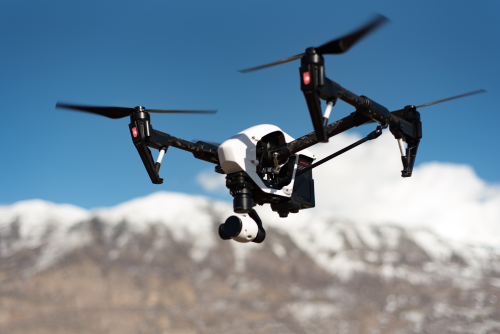
If you want to move from occasional drone gigs to dependable commercial income, you need more than good stick skills and a clean reel. Enterprise buyers pay for repeatable outcomes: safer inspections, documented progress, usable data, and reports that fit into existing business processes. To build enterprise drone workflows that produce real revenue, think less like a freelance pilot and more like a service operator.
Quick Take
- Enterprise drone work is not just flying for a client. It is a repeatable process from inquiry to delivery, invoice, and renewal.
- The best early revenue usually comes from narrow, repeatable services such as construction progress, site documentation, roof or solar inspections, and clearly scoped mapping.
- Start with one workflow, one deliverable, and one buyer type before expanding.
- Price for planning, site risk, travel, processing, reporting, revision rounds, and project management, not just flight time.
- Compliance is part of the product. Verify local aviation rules, site permissions, privacy limits, insurance needs, and client safety requirements before every job.
- Real margin comes from standardization. If every project is custom, every project will be harder to sell, deliver, and profit from.
What an enterprise drone workflow actually is
A lot of pilots think “enterprise work” means using a bigger drone, charging more money, or landing a corporate logo on a proposal. That is not the real difference.
An enterprise drone workflow is a system a client can trust repeatedly. It covers:
- lead intake and discovery
- scope definition
- compliance and risk checks
- site planning
- capture standards
- data processing
- quality control
- delivery format
- billing
- follow-up and renewal
In other words, the flight is only one step.
A hobbyist mindset says, “Tell me where to fly.”
An enterprise mindset says, “Tell me what business decision this drone output needs to support, how often you need it, who will use it, and what format makes it useful.”
That shift matters because enterprise clients rarely buy “drone footage.” They buy:
- fewer manual inspections at height
- cleaner project records
- faster progress checks
- better asset visibility
- fewer site visits by senior staff
- more consistent documentation across multiple locations
If your offer is built around the aircraft, you will sound like a vendor. If it is built around a repeatable business result, you start to sound like a service partner.
Choose the right revenue lane before you buy more gear
Many pilots stall because they try to offer everything: cinematic video, mapping, inspections, thermal, events, real estate, agriculture, and industrial work all at once. That usually leads to weak marketing, inconsistent delivery, and low confidence when quoting.
A better move is to choose one workflow that has repeat demand, clear deliverables, and manageable risk for your current level.
Good first enterprise workflow options
| Workflow | Typical buyers | Main deliverable | Why buyers renew | Fit for a solo pilot |
|---|---|---|---|---|
| Construction progress | Builders, developers, EPC firms, site managers | Recurring photo sets, annotated updates, orthomosaics, monthly reports | They need consistent records and progress visibility | Strong starting point |
| Roof, facade, or solar inspection | Facilities teams, property managers, contractors, solar operators | Defect imagery, inspection summaries, condition records | Faster and safer than manual access in many cases | Good if scope is controlled |
| Mapping and stockpile reporting | Earthworks, aggregates, mining, large sites | Orthomosaics, surface models, volume reports | Repeatable site measurement and change tracking | Good if you do not overpromise accuracy |
| Asset documentation | Utilities, industrial sites, telecom, infrastructure owners | Tagged imagery, asset photo libraries, condition records | Useful for maintenance planning and records | Better after you tighten your data discipline |
| Marketing content for enterprise clients | Hotels, developers, tourism brands, venues | Edited photo/video packages | Valuable, but more subjective and revision-heavy | Better as an add-on than a core enterprise workflow |
For most pilots who want real revenue, the sweet spot is work that repeats on a schedule and produces structured outputs. Monthly progress documentation is often more sustainable than one-off promo videos. A recurring inspection program usually beats waiting for the next cinematic project.
Build the workflow backwards from the deliverable
The fastest way to create an enterprise drone service is to start with the exact output the client will use, then work backward into the flight plan, processing steps, and pricing.
A straightforward build process
1. Define the business problem first
Ask what the client is trying to know, prove, compare, or avoid.
Examples:
- A construction manager wants a consistent weekly visual record.
- A facilities team wants to inspect roofs without repeated manual climbing.
- An earthworks contractor wants volume changes between reporting periods.
- An asset owner wants a documented condition baseline before maintenance.
If you cannot describe the business problem in one sentence, the workflow is not ready.
2. Lock the deliverable before the mission plan
Do not schedule a flight until the output is clear.
Possible deliverables include:
- a fixed set of inspection photos from the same viewpoints
- a monthly progress report with annotated images
- an orthomosaic map for site review
- a defect log with image references
- a short executive summary plus raw archive
- a structured folder for the client’s internal system
This is where many pilots go wrong. They think the deliverable is “photos and video.” It is not. The deliverable is a decision-ready package.
3. Standardize the capture method
Once the output is clear, create a repeatable capture standard.
That usually means defining:
- launch and recovery area
- flight path or photo points
- altitude and angle ranges
- overlap requirements if mapping is involved
- time-of-day preference
- weather limits
- minimum image quality checks
- file naming rules
- whether a visual observer is used
- site-specific safety boundaries
This is how you make the second job easier than the first.
For example, a construction workflow should not be “fly around and get what looks useful.” It should be more like: same vantage points, same framing, same site sectors, same naming structure, same turnaround target, every visit.
4. Build the preflight admin into the workflow
Enterprise clients care about predictability. That means your workflow must include admin, not treat it as hidden effort.
Your preflight phase should cover:
- client contact and access confirmation
- local airspace or operating restriction review
- weather and environmental check
- site hazard review
- permission from the site owner or controlling party
- crew roles and communication plan
- equipment checklist
- contingency plan for delay or cancellation
Even as a solo operator, this is where professionalism becomes visible.
5. Define quality control before you deliver anything
Quality control is not just checking whether the files exported.
Create simple acceptance rules, such as:
- all required viewpoints captured
- images sharp enough for intended use
- no critical areas missing
- files named correctly
- location or project metadata attached where needed
- report template filled consistently
- revision history tracked if files are replaced
If the client later asks, “Why is this month different from last month?” your quality process should answer that before the question ever comes up.
6. Design the handoff so the client can actually use it
A strong workflow ends with a usable package, not a giant folder dump.
Enterprise-friendly delivery often includes:
- clear folder structure
- date and site naming convention
- summary PDF or brief notes
- annotated key images
- exports in the file type the client actually uses
- archive policy
- clear statement of what is included and what is not
Turnaround time matters too. A solid service-level agreement, meaning your promised delivery standard, is part of the workflow.
7. Add the renewal trigger
Recurring revenue does not appear automatically. Build the next step into the process.
That can be:
- weekly or monthly site schedule
- inspection cycle per building or asset
- seasonal reporting cadence
- milestone-based capture
- annual baseline plus follow-up visits
The more the workflow is tied to a recurring business process, the less you need to resell each job from scratch.
A simple example
For a construction client, the workflow might look like this:
- Site manager requests weekly capture.
- You confirm access, operating conditions, and schedule.
- You fly the same photo points and mapping pattern each visit.
- You review, sort, and label images the same day.
- You deliver annotated progress images within 24 hours.
- You deliver a monthly orthomosaic and summary report.
- You archive the project by site and date.
- You review whether the cadence, angles, or report format need adjustment at month end.
That is an enterprise workflow. “I flew around for 18 minutes and sent 94 images” is not.
The minimum stack you need to run this well
You do not need the most expensive hardware to start winning enterprise work. You need reliability, repeatability, and a stack that supports delivery.
Keep your stack boring and dependable
Aircraft and payload
Use an aircraft that is proven, supportable, and suited to the job. Reliability, spare battery availability, image consistency, and service support matter more than headline features.
Planning and compliance tools
You need a dependable way to review airspace or local restrictions, monitor weather, document site risks, and store preflight checklists. This can be simple, but it should be consistent.
Processing software
Choose software based on the deliverable:
- mapping and measurement workflows need photogrammetry processing
- inspection workflows need efficient image review and labeling
- media workflows need editing and export discipline
- recurring client programs need standardized reporting templates
Do not buy advanced software before you know a buyer will pay for outputs that require it.
Delivery and storage
Cloud storage, clear version control, and clean archive structure matter quickly once you have multiple sites and repeated visits.
Business operations
At minimum, have:
- a quote template
- a scope-of-work template
- a project checklist
- an invoice process
- a way to track actual job time and cost
If you are not tracking job cost, you do not know whether a workflow is profitable.
Price for the workflow, not just the flight
One of the biggest reasons drone businesses stay small is bad pricing logic. Pilots often quote based on airtime or how long they expect to be on site. That misses most of the real work.
Your quote should reflect the full service:
- planning and scheduling
- travel and mobilization
- risk review and compliance effort
- on-site capture
- processing and analysis
- reporting and file prep
- client communication
- revision rounds
- archive and data retention
- margin for equipment wear and business overhead
If a job takes two hours on site but six hours in prep, processing, and delivery, you are not selling a two-hour service.
Pricing models that usually work best
| Pricing model | Best for | Strength | Main risk |
|---|---|---|---|
| Per site or per asset | Roofs, buildings, solar arrays, recurring inspections | Easy for the client to understand | Scope creep if site complexity varies |
| Per deliverable | Maps, reports, fixed output packages | Aligns price to the result | Dangerous if revisions are unlimited |
| Monthly retainer | Construction progress, multi-site programs, recurring documentation | Most stable revenue model | Requires tight scope and cadence |
| Day rate | Unclear or changing projects, support roles on larger jobs | Flexible for one-offs | Can commoditize your service |
For early enterprise work, packaged pricing usually beats pure hourly pricing.
A strong package might include:
- one site visit
- defined capture scope
- one report format
- one delivery deadline
- one revision round
- archive for a set period
That gives the client clarity and protects your margin.
Sell outcomes, not drone jargon
Most enterprise buyers are not impressed by aviation vocabulary. They care about whether you reduce friction in their job.
What decision-makers usually care about
- Can you do this safely and legally?
- Will the output be consistent every time?
- How fast can their team use the result?
- Who is accountable if access, weather, or data issues appear?
- Can this scale to multiple sites?
- Is the cost predictable?
That means your sales process should sound operational, not gadget-focused.
Discovery questions worth asking
Before quoting, ask:
- What decision will this output support?
- Who inside your team uses the result?
- How often do you need it?
- What does a “good” deliverable look like?
- Do you need visuals, measurements, or both?
- What accuracy or consistency level actually matters?
- Who controls site access and internal approvals?
- What turnaround do you need?
- How will the files be stored or shared internally?
These questions do two things: they help you scope correctly, and they make you sound like someone who understands business workflows.
Start with a paid pilot program
For larger buyers, a paid trial often works better than a giant proposal.
A smart pilot program can include:
- one or two sites
- one limited workflow
- fixed deliverables
- defined success criteria
- review meeting after delivery
- option to convert into recurring service
That lowers buyer risk and gives you real feedback before expanding.
Compliance, safety, and operational risk are part of the product
If you are selling commercial drone services, compliance is not background admin. It is one of the reasons a serious client hires you instead of sending a staff member to “just fly something.”
Because rules vary by country, region, airspace class, and job type, verify all requirements with the relevant aviation authority and any site-specific authority before operating.
Areas you must verify for every serious workflow
Flight legality
Confirm pilot and operator requirements, aircraft registration or identification rules where applicable, airspace access, altitude limits, operations near people or property, and any special approvals required for the mission profile.
Site permission
A legal flight does not automatically give you the right to take off, land, or operate over a private or controlled site. Confirm access with the owner, manager, or authorized site contact.
Privacy and data protection
Inspection and documentation work can capture people, vehicles, homes, or sensitive infrastructure. Know the client’s expectations for storage, sharing, retention, and confidentiality. Local privacy laws may also apply.
Insurance and contractual risk
Enterprise clients often want proof of liability coverage and may require you to meet vendor onboarding standards. Read contract language carefully, especially around indemnity, data loss, and performance obligations.
Worker and site safety
Industrial and construction sites add hazards the drone itself does not solve: moving equipment, live operations, overhead obstacles, electrical infrastructure, dust, heat, and access controls. Your workflow should include a site safety review, crew brief, and abort conditions.
Cross-border and travel issues
If you travel for work, check local drone import rules, battery transport limits, customs declarations, and any restrictions on mapping or imaging sensitive areas. Do not assume rules transfer cleanly across borders.
Build repeatability before you build scale
A lot of pilots try to scale by buying more equipment or hiring help too early. That usually multiplies inconsistency.
First, document the workflow.
The documents that make scaling possible
At minimum, create:
- a service scope template
- a preflight checklist
- a site risk checklist
- a capture standard
- a file naming and folder structure guide
- a quality control checklist
- a delivery template
- a post-job review note
Once those exist, one person can deliver more consistently, and a second person can be trained without guessing.
In a very small operation, one person may handle every role. That is fine. The important thing is that every responsibility exists:
- pilot in command
- observer or support role when needed
- project coordinator
- data processor
- quality reviewer
- client contact
When those responsibilities stay informal, important tasks get skipped. When they become part of the workflow, the business becomes easier to trust.
Common mistakes pilots make when chasing enterprise revenue
Selling the drone instead of the result
The aircraft is a tool. Buyers care about inspections completed, progress documented, or reports delivered.
Offering too many services too early
Breadth feels ambitious but often makes your process weak. Depth in one workflow is more profitable than shallow competence in six.
Quoting from flight time only
This hides your real labor and leads to underpricing, especially on jobs with heavy processing or client communication.
Overpromising on accuracy
Mapping and measurement outputs depend on method, terrain, control points, equipment, processing, and quality checks. If the client needs specific tolerances, verify what is required before making claims.
Treating compliance like paperwork after the sale
A contract is not secured revenue if the mission later hits airspace, site access, privacy, or insurance issues.
Delivering raw files with no structure
Dumping images into a folder shifts the real work onto the client. Enterprise buyers usually want organized, usable outputs.
Letting revision rounds stay open-ended
Unlimited revisions can quietly destroy margin. Define what is included.
Buying “enterprise” hardware before validating demand
A better camera or bigger aircraft does not fix a weak offer. Sell the workflow first, then upgrade where the workflow clearly needs it.
FAQ
Do I need an expensive enterprise drone to win enterprise clients?
No. Many buyers care more about reliability, consistency, and clean delivery than about the most advanced platform. Start with gear that is dependable for your chosen workflow, then upgrade when a client need clearly justifies it.
What is the best first enterprise drone service for a solo pilot?
Usually a repeatable service with simple, clear outputs: construction progress, site documentation, roof inspections, or tightly scoped mapping. These are easier to standardize than highly specialized industrial or beyond visual line of sight operations.
Can a solo pilot serve enterprise clients professionally?
Yes, if the workflow is documented and the scope is realistic. Many enterprise buyers are comfortable with a small vendor as long as communication is strong, compliance is clear, and delivery is consistent.
How should I quote a recurring client?
Use a package or retainer when the cadence is predictable. Define frequency, capture scope, turnaround, report format, revision limits, and archive period so both sides know exactly what is included.
Should I promise “survey-grade” accuracy in mapping work?
Only if you fully understand the client’s required tolerance and your workflow is built to achieve it. Accuracy depends on much more than the drone itself, so clarify expectations before you commit.
What documents might enterprise clients ask for?
That varies by industry and country, but many buyers may request proof of pilot qualifications where applicable, insurance, risk assessments, safety procedures, and company or vendor onboarding details. Verify what the client requires before the first site visit.
Should I give clients raw footage and raw images?
Sometimes, but not by default. Decide in advance whether raw files are included, how they will be organized, and whether edited or annotated deliverables are the primary product. Raw handoff should be defined in the scope, not improvised later.
How do I turn a one-off job into real recurring revenue?
Look for the repeatable need behind the first project. If a client needed one roof inspection, they may have ten properties. If they wanted one progress update, they may need weekly documentation. After delivery, propose a structured program instead of waiting for another ad hoc request.
Your next move
Pick one workflow, one buyer type, and one deliverable you can repeat without guesswork. Then document the process, package the pricing, and sell the business outcome rather than the flight. Real revenue in drone services usually starts when your work becomes a system a client can buy again next month, not just a mission they happened to need today.