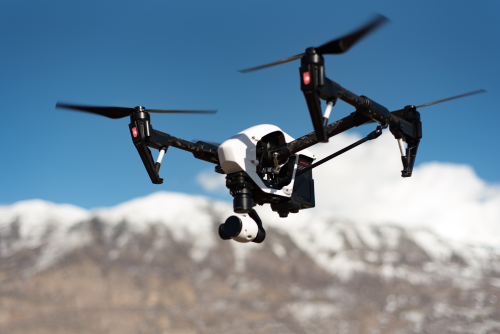
Knowing how to choose ND filters for your drone without wasting money starts with one simple truth: not every pilot needs them. ND filters can be extremely useful for video, but they are easy to overbuy, easy to misuse, and often marketed as must-have gear for everyone. If you match the filter set to your drone, your camera mode, and the light you actually shoot in, you can usually skip the oversized bundle and buy only what will earn a place in your kit.
Quick Take
- If you shoot drone video in daylight, ND filters are often worth it because they help you keep a more natural shutter speed.
- If you mostly shoot still photos, mapping, inspections, or survey work, ND filters are usually not a priority and can even hurt results.
- The best first purchase for most fixed-aperture camera drones is a small plain-ND set, not the largest bundle and not a specialty kit.
- For many pilots, the sweet spot is ND16, ND32, and ND64. Travel creators who shoot softer light may prefer ND8, ND16, and ND32.
- Buy filters made for your exact drone model and camera. Fit, weight, color cast, and gimbal clearance matter more than marketing claims.
- Plain ND is the safest starting choice. ND/PL and variable ND filters are more niche and easier to get wrong.
What ND filters actually do
ND stands for neutral density. In simple terms, an ND filter is like sunglasses for your drone camera. It reduces the amount of light hitting the sensor.
Why does that matter? Mostly for video.
When filming, many creators aim for a shutter speed that is roughly double the frame rate. This is often called the 180-degree shutter rule. It is not a law, but it is a useful starting point for natural-looking motion blur.
Examples:
- 24 fps video: aim around 1/50
- 25 fps video: aim around 1/50
- 30 fps video: aim around 1/60
- 60 fps video: aim around 1/120
In bright daylight, especially on drones with fixed apertures, the camera may want to use much faster shutter speeds like 1/1000 or 1/2000. That can make motion look extra crisp, but also more jittery or harsh. An ND filter cuts the light so you can stay closer to the shutter speed you want.
For still photos, the value is much lower. A fast shutter is often helpful because the drone is moving, the air is moving, and you want a sharp frame. ND filters for stills are mainly for specialty long-exposure shots.
Step 1: Decide whether ND filters solve a real problem for your kind of flying
This is where most wasted money starts. Pilots buy filters because they are told filters are “essential,” when what they really mean is “helpful for certain video styles.”
Here is the practical breakdown:
| Use case | Need for ND | Money-smart advice |
|---|---|---|
| Cinematic video with a camera drone | High | Good investment, especially on fixed-aperture drones |
| Travel vlogs and social clips | Medium to high | Worth it if you care about smoother motion and shoot in daylight |
| FPV cinematic cruising | Medium | Useful, but many FPV pilots prefer a slightly faster shutter than the classic rule |
| Standard aerial photos | Low | Usually skip at first |
| Long-exposure creative photos | Medium | Buy only if you specifically want this style |
| Real estate photos | Low | Usually not needed for stills; more useful for video walkthrough-style shots |
| Mapping and photogrammetry | Usually avoid | Fast shutter and crisp detail matter more than motion blur |
| Inspection, public safety, utility, search tasks | Usually avoid | Sharp, readable imagery is usually the priority |
When ND filters are worth buying
Buy them sooner rather than later if most of your flying looks like this:
- You film at 24, 25, or 30 fps in daylight
- You use a drone with a fixed aperture
- You want smoother-looking movement in pans, reveals, and forward flight
- You shoot travel, tourism, landscape, lifestyle, or promotional footage
- You often fly over bright scenes like beaches, snow, water, or city rooftops
When ND filters can wait
You can save your money for batteries, storage, or training if this sounds more like you:
- You mostly take still images
- You fly in automatic settings and are still learning exposure basics
- You do mapping, surveying, roof work, or inspection jobs
- You only shoot around sunrise, sunset, or heavy overcast conditions
- Your drone has an adjustable aperture and you rarely feel exposure is running away from you
A note for commercial teams
If you fly for clients, do not assume cinematic motion blur is always the goal. Marketing footage and branded video often benefit from ND filters. Inspection, evidence capture, survey missions, and machine-vision workflows often do not. Ask what the deliverable needs to be before putting glass in front of the lens.
Step 2: Choose the strengths you will actually use
This is the second place money gets wasted. Many pilots buy a huge pack with six or eight filters, then use only two.
ND filters are usually labeled by strength. The higher the number, the more light they block.
A “stop” is a halving of light. Common drone ND strengths work like this:
| Filter | Light reduction | Best starting use |
|---|---|---|
| ND8 | 3 stops | Overcast bright days, late afternoon, morning sun |
| ND16 | 4 stops | Bright daylight without harsh reflection |
| ND32 | 5 stops | Strong midday sun |
| ND64 | 6 stops | Very bright midday light, beaches, snow, water, desert |
| ND128 and above | 7+ stops | Specialty use, long exposure, extreme brightness |
The simplest buying rule
For most camera-drone pilots, buy the smallest set that covers the light you actually see most often.
That usually means one of these:
- Travel and mixed-light creators: ND8, ND16, ND32
- Daylight video creators: ND16, ND32, ND64
- Specialty long-exposure shooters: add ND64 or stronger later, after you know you need it
Frame rate changes what you need
Your filter choice depends partly on the frame rate you shoot.
If you shoot 60 fps, your target shutter is already faster than at 24 or 30 fps, so you usually need less ND.
Examples:
- 24 fps target around 1/50: often needs stronger ND in full sun
- 30 fps target around 1/60: similar, but slightly less demanding
- 60 fps target around 1/120: may let you use one lighter filter strength
A quick way to estimate the right ND
- Set your frame rate.
- Set the shutter speed you want.
- Keep ISO at its cleanest low setting.
- Look at what shutter speed the drone wants with no filter.
- Count how many times that shutter speed doubles from your target.
Example:
- You are shooting 30 fps, so you want about 1/60
- Without a filter, the camera reads 1/960
- 1/60 to 1/120 is 1 stop
- 1/120 to 1/240 is 2 stops
- 1/240 to 1/480 is 3 stops
- 1/480 to 1/960 is 4 stops
That points to roughly an ND16.
This does not have to be perfect. The goal is to get close enough that motion looks natural without pushing ISO too high or making the image too dark.
Step 3: Buy for your exact drone, not just for “a drone”
Filters are not universal. One of the easiest ways to waste money is buying a filter kit that is only “sort of” compatible.
Check these before you buy:
Exact model compatibility
A filter that fits one compact drone may not fit the next generation, even if the cameras look similar. Always match the filter kit to the exact drone model and camera version.
Single-camera vs multi-camera coverage
Some drones have multiple cameras. A filter set may fit only the main wide camera, or include separate pieces for wide and tele lenses. Make sure you are buying for the camera you actually use.
Weight and gimbal balance
Drone gimbals are sensitive. A filter that is too heavy or poorly balanced can cause:
- startup errors
- gimbal overload warnings
- horizon drift
- shaky footage
- extra battery drain
Optical quality
This matters more than many pilots think. A bad filter can reduce image quality more than it improves exposure.
Look for:
- optical glass rather than the cheapest plastic-like alternatives
- low color cast
- decent anti-reflective coatings
- scratch and smudge resistance
- clean edge-to-edge sharpness on wide lenses
Practical workflow details
Good filters are easier to live with in the field.
Useful features include:
- a secure mounting system
- clear labels you can read quickly
- a protective case that is easy to pack
- coatings that resist fingerprints, sea spray, and light rain droplets
Step 4: Start with a small kit, not the big bundle
If your goal is not wasting money, the best move is usually buying the smallest useful set first.
Best starter kits by pilot type
For most beginner and hobby video pilots – Start with ND16 and ND32 – Add ND64 only if you often shoot in strong midday sun or reflective environments
For travel creators – Start with ND8, ND16, and ND32 – This covers morning, afternoon, and a lot of normal daylight conditions without overbuying
For FPV cinematic pilots – Start with ND8 and ND16 – Add ND32 if you regularly fly in hard sun – If you fly aggressive acro more than smooth cinematic lines, ND may be less important
For drones with adjustable aperture – Start smaller – ND16 and ND32 are often enough to begin with because the aperture gives you another exposure control
For mapping, inspection, and survey work – Skip ND as an early purchase – Spend that money on batteries, storage, landing gear protection, training, or backup props instead
Step 5: Know which filter types are worth paying for
Not every filter sold to drone pilots deserves a place in your bag.
Plain ND
This is the best first buy for most people.
Why: – predictable – simple – good for learning exposure – easier to choose in the field – less risk of weird side effects
If you are new to drone filters, start here.
ND/PL
ND/PL combines neutral density with a polarizer. This can reduce glare and boost contrast, especially over water, glass, foliage, or wet surfaces.
But there are tradeoffs:
- the polarization effect depends on the sun angle
- the effect changes as the drone changes direction
- very wide shots can show uneven skies
- setup is more fiddly than plain ND
ND/PL can be useful, but it is not automatically “better.” For a first kit, plain ND is usually the safer buy.
UV or clear filters
These are sometimes sold as protection filters. They do not do the same job as ND filters.
On modern drone cameras, a clear protective filter is usually a transport or lens-protection choice, not an image-improvement choice. If your goal is better daylight video, a UV filter will not solve that problem.
Variable ND
Variable ND sounds convenient, but it is usually not the best choice for drones.
Common problems include:
- extra weight
- balance issues
- cross-polarization artifacts
- uneven darkening
- weaker fit on small gimbals
For most drone pilots, fixed-strength ND filters are the better choice.
Common mistakes that waste money
Buying ND before learning exposure basics
If you do not yet understand frame rate, shutter speed, and ISO, a filter set can become confusing instead of helpful. Learn the basics first, then buy the smallest useful set.
Buying for still photography when you mostly want sharpness
A lot of drone buyers assume filters will improve all image quality. They do not. For standard stills, faster shutter is often better.
Treating the 180-degree rule like a hard rule
It is a creative guideline, not a requirement. Some FPV pilots and action-heavy shooters prefer faster shutter speeds for cleaner detail. Some commercial jobs need maximum crispness, not blur.
Buying the darkest filters first
ND128 and stronger filters look exciting in product listings, but most hobbyists rarely use them. Start with what fits normal daylight, not edge cases.
Choosing ND/PL as a first kit without understanding polarization
This is one of the most common buyer-regret mistakes. Plain ND is easier to use consistently.
Ignoring drone-specific fit
A filter that causes gimbal warnings is not a bargain. Exact fit matters.
Leaving an ND filter on all day
Light changes. If you leave a strong ND on from bright midday into evening, the drone may raise ISO too far and hurt image quality.
Stacking filters
Stacking is rarely a good idea on drones. It adds weight, increases glare risk, and can upset gimbal balance.
Safety, compliance, and operational limits
Filters are simple gear, but they still affect flight operations.
- Install only filters designed for your exact drone and camera.
- After mounting one, let the gimbal initialize fully before takeoff.
- If you see a gimbal overload, startup error, vibration, or horizon issue, remove the filter and recheck fit.
- Do not swap tiny filters carelessly in dusty, sandy, or windy launch areas. Contamination on the lens or filter can ruin footage.
- For commercial work, confirm the deliverable before using ND. Cinematic blur is often wrong for inspections, evidence capture, mapping, or AI-based analysis.
- If you plan long-exposure or low-light flights, verify local operating rules, site permissions, and visibility requirements before flying. Night and low-light operations can have extra restrictions in some locations.
FAQ
What ND filter should a beginner buy first for a drone?
If you are shooting daylight video, start with ND16 and ND32. If you shoot more mornings, evenings, or mixed travel light, add ND8.
Do I need ND filters for drone photos?
Usually no. For normal aerial stills, fast shutter speeds help keep images sharp. ND filters for photos are mainly for creative long exposures in calm, controlled conditions.
Is ND/PL better than plain ND?
Not automatically. ND/PL can help with glare, but it is less predictable and easier to misuse. For most first-time buyers, plain ND is the better starter choice.
Can I use variable ND on a drone?
You can on some setups, but it is usually not ideal. Fixed ND filters are lighter, simpler, and less likely to cause optical or gimbal problems.
Why does my drone show gimbal issues after I install a filter?
The filter may be too heavy, poorly fitted, dirty at the mount point, or not designed for your exact model. Remove it and verify compatibility before flying again.
Do adjustable-aperture drones still need ND filters?
Sometimes, yes. Adjustable aperture reduces how often you need ND, but in bright conditions you may still want ND to keep shutter speed under control without relying only on aperture changes.
Are cheap ND filters good enough?
A budget set can be fine if the fit is correct and the optics are decent, but very cheap filters often introduce color shifts, flare, softness, or gimbal issues. It is usually better to buy a small good set than a big mediocre one.
Should I leave an ND filter on my drone all the time?
No. ND filters are for specific light conditions and shooting goals. Leaving one on all the time can force higher ISO in dimmer light and reduce image quality.
The decision that saves the most money
If you want the short version, here it is: only buy ND filters if you regularly shoot daylight video and care about shutter control. Then buy a small plain-ND set for your exact drone, starting with the two or three strengths that match your real flying conditions. That approach beats the oversized bundle almost every time.